Jaishankar Takes Global South Concerns to G-7 Foreign Ministers
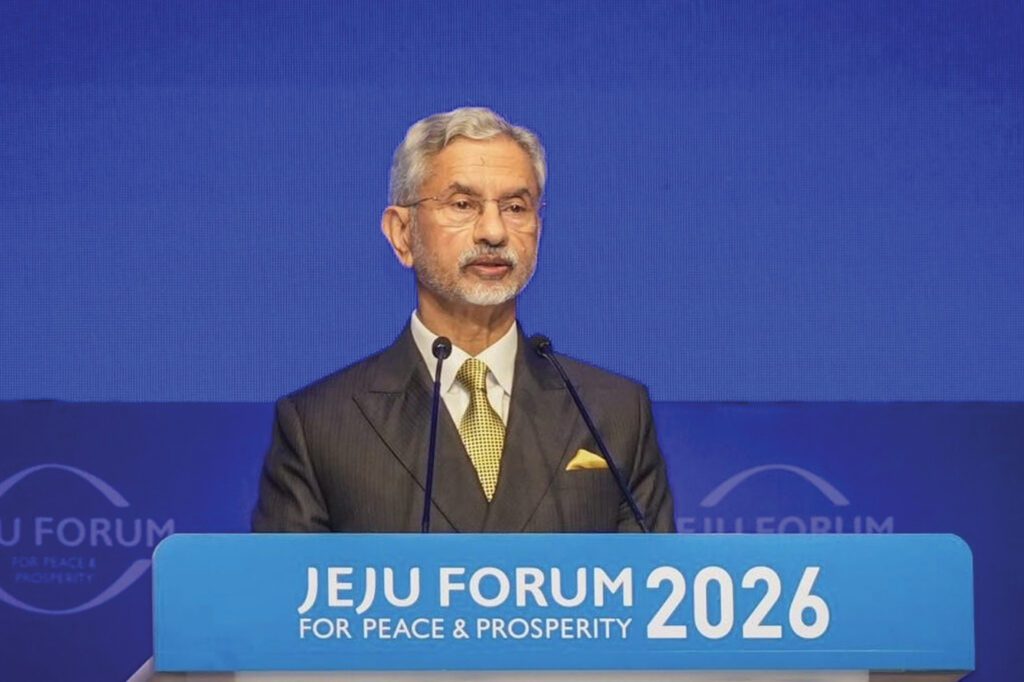
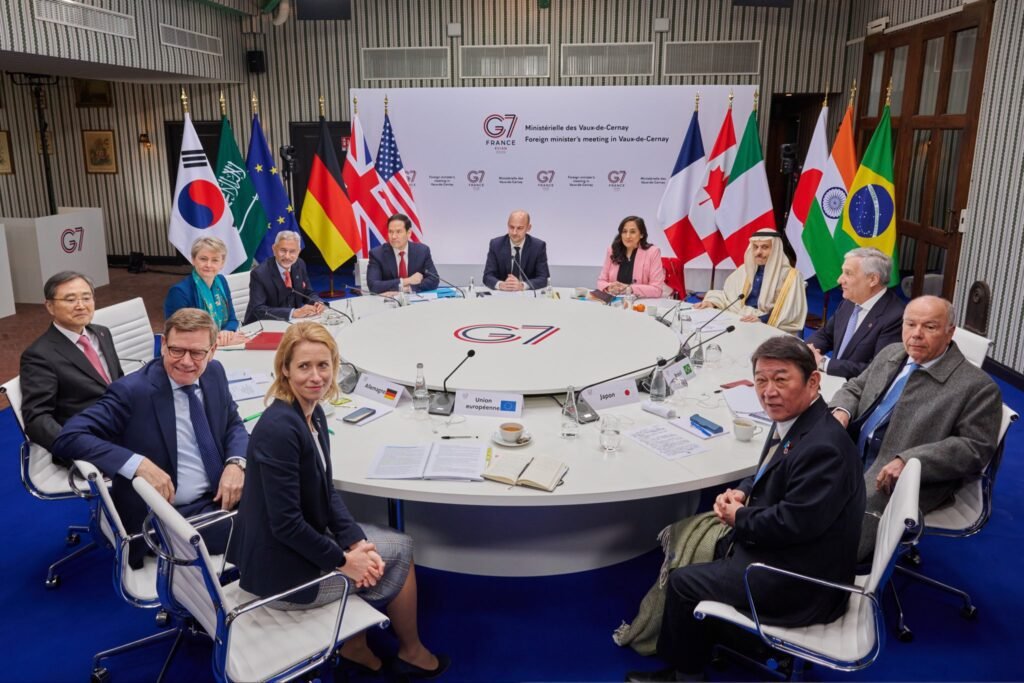
From 26 to 27 March 2026, External Affairs Minister S. Jaishankar attended the G-7 foreign ministers’ meeting in Vaux-de-Cernay, France, as an invited guest, and raised Global South concerns relating to energy challenges, fertiliser supplies, and food security amid escalating tensions in West Asia. He also addressed global governance reform, peacekeeping and humanitarian supply chains, while underscoring resilient trade corridors, including the India-Middle East-Europe Economic Corridor. The intervention reinforced India’s effort to position itself as a bridge between advanced and developing economies.
Sanand Positioned as a Bridge to Silicon Valley
On 31 March 2026, Prime Minister Narendra Modi, speaking at the inauguration of a Kaynes Semicon assembly and test facility in Sanand, Gujarat, described the town as a bridge to Silicon Valley and highlighted India’s growing semiconductor ambitions. Referring to projections that India’s semiconductor market could exceed $100 billion by the end of the decade, he reinforced the government’s push to build a full-stack semiconductor ecosystem amid global supply chain shifts.
INS Aridhaman Joins India’s Nuclear Submarine Fleet
On 3 April 2026, India’s nuclear triad crossed a major milestone with the quiet commissioning of INS Aridhaman—the country’s third nuclear ballistic missile submarine or SSBN (Ship Submersible Ballistic Nuclear)—at the Ship Building Centre in Visakhapatnam in Andhra Pradesh. The induction moves India closer to a more credible sea-based deterrent posture and strengthens the underwater leg of its nuclear triad, reinforcing the credibility of India’s second-strike capability and retaliatory doctrine.
Revised Theatre Command Blueprint Moves Towards Clearance
As per media reports, the broad contours of India’s proposed theatre command restructuring had been finalised within the military and were moving towards government review. Under the revised blueprint, the western theatre focused on Pakistan is expected to be led by an Air Force officer, the northern theatre oriented towards China by an Army officer, and the maritime theatre by a Navy officer. If approved, the reform would represent the most significant overhaul of India’s military architecture in decades and is aimed at advancing jointness and multi-domain coordination.
F-414 Jet Engine Technology Transfer Agreement Advances
Media reports indicated India and the United States had reached a technical understanding on co-producing the General Electric F414 in India, involving substantial transfer of manufacturing know-how and related technologies, marking a first-of-its-kind military technology transfer between the two countries. The arrangement, expected to be complemented by a planned F404 maintenance facility, is expected to reduce a longstanding vulnerability in combat aircraft propulsion and deepen India’s integration into US defence industrial supply chains.
Defence Exports Touch Record 38,424 Crore Rupees in FY26
On 2 April 2026, Defence Minister Rajnath Singh announced that India’s defence exports reached a record ₹38,424 crore in the financial year 2025-26, a 62.66% increase over the previous fiscal. Defence Public Sector Undertakings accounted for 54.84% of exports, while private industry contributed 45.16%. The figures reflect the continued operationalisation of India’s indigenisation agenda and the expanding global footprint of its defence manufacturing sector.
DAC Clears 55 Capital Proposals, Including S-400 Procurement
In FY2025-26, the Defence Acquisition Council accorded Acceptance of Necessity for 55 capital procurement proposals worth ₹6.73 lakh crore, the highest annual total on record. At its 27 March 2026 meeting, the Council also cleared proposals worth ₹2.38 lakh crore, including procurement approval for additional S-400 long-range air defence capability. Separately, on 31 March 2026, the Defence Ministry signed a ₹1,950 crore contract with Bharat Electronics Limited for two indigenous mountain radars for the Indian Air Force. Together, these decisions reflect a calibrated effort to strengthen layered air defence through a mix of imported high-end systems and domestic capability development.
India and Azerbaijan Advance Pragmatic Stabilisation in Ties
In April 2026, India and Azerbaijan held the sixth Foreign Office Consultations in Baku, where senior officials reviewed bilateral ties and discussed cooperation in energy, trade, technology, and regional issues. The consultations underscored pragmatic re-engagement aimed at rebuilding confidence and advancing India’s broader economic and strategic interests in the Caucasus.
Army Reshuffles Top Commanders Across Strategic Commands
On 1 April 2026, Lieutenant General Dhiraj Seth assumed charge as Vice Chief of Army Staff as part of a wider reshuffle in senior Indian Army leadership, alongside leadership changes in Western, Eastern and Southern Commands. The realignment refreshed leadership across key operational commands and came amid broader efforts to sustain preparedness, continuity, and operational readiness.
India-Russia RELOS Enters Operational Phase
India and Russia’s Reciprocal Exchange of Logistics Support (RELOS) agreement has entered its operational phase, bringing renewed attention to a framework that expands military access and logistics cooperation between the two countries. Signed in Moscow on 18 February 2025, ratified by Russia under Federal Law No. 458-FZ on 15 December 2025, and in force since 12 January 2026, the agreement allows both sides to station up to 3,000 troops, five warships, and ten aircraft in each other’s territory at any given time.
Jaishankar Frames a Multi-Polar Global Order at Nalanda
On 31 March 2026, speaking at the convocation of Nalanda University, S. Jaishankar argued that the world is becoming increasingly multipolar and that a democratisation of global order is underway. He placed India and Asia as active participants in this changing order while linking that vision to the revival of Nalanda as a civilisational institution.
Indian Business Delegation Returns to China After Five-Year Hiatus
From 29 March to 4 April 2026, an Indian business delegation visited China after a five-year gap, focusing on technology, clean energy and supply chain collaboration. Coming amid cautious improvement in economic engagement, the visit signalled calibrated sector-specific re-engagement even as the broader strategic relationship remained unsettled.
South Korean President’s India Visit Deepens Strategic Technology Partnership
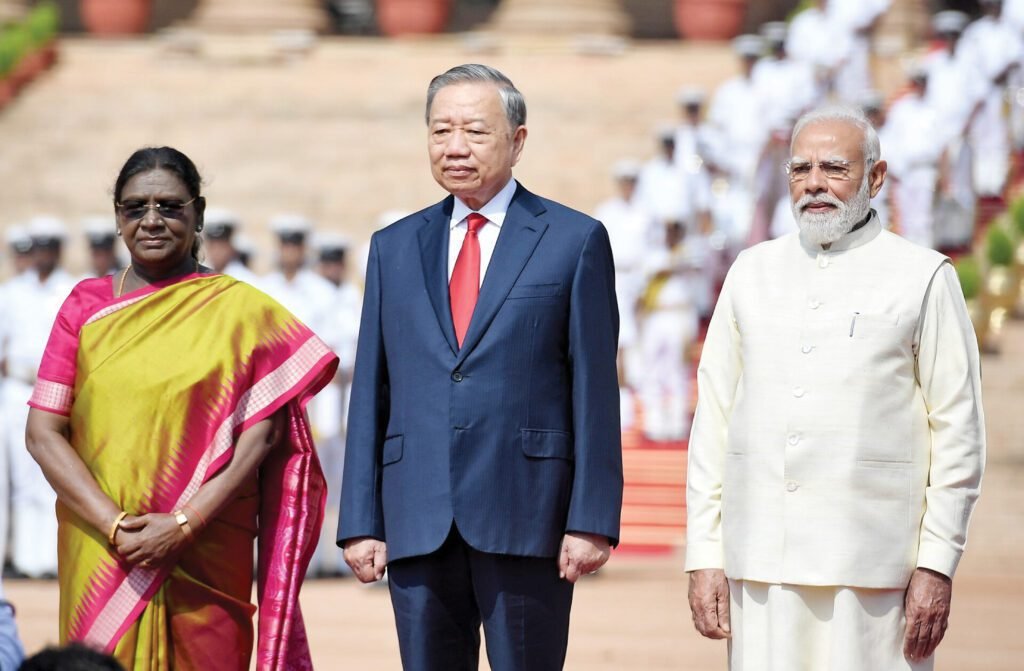
From 19 to 21 April 2026, South Korean President Lee Jae-myung visited India, marking the first bilateral presidential visit in eight years. Talks focused on semiconductors, shipbuilding, critical minerals, clean energy and maritime security cooperation. The two sides agreed on a roadmap to raise bilateral trade to $50 billion by 2030, advance reforms to the India-ROK CEPA, and expand supply chain cooperation, signalling a broader elevation of the strategic partnership.