In June 2026, India’s World published an essay by its Editor, Happymon Jacob, arguing that India’s grand strategy should be “de-Americanised”. The essay contended that New Delhi has increasingly viewed the world through a strategic framework shaped by Washington and that changing geopolitical realities call for a reassessment of those assumptions. To broaden the discussion, India’s World invited five distinguished scholars and practitioners to engage with Jacob’s central argument. Published over the coming weeks, these essays offer diverse perspectives on the future of India’s grand strategy. In this second contribution, Lt Gen Raj Shukla argues that de-Americanisation should not be India’s central strategic objective. Instead, he calls for a broader approach centred on strategic pragmatism, stronger domestic capabilities, integrated deterrence, and diversified partnerships.
Happymon Jacob’s recent essay on the need to “de-Americanise” India’s grand strategy has set the cat among Delhi’s diplomatic pigeons. The unease, anxiety, and bitterness towards the Trump administration that come through in the article are understandable. The essay also raises several other critical issues. C. Raja Mohan, in a separate article, “India Should Stop Panicking About Trump” (Foreign Policy, 1 July 2026), argues that the Indo-US relationship is rather like what Mark Twain once said about Richard Wagner’s music, arguing that the Indo-US relationship is “much better than it sounds”. He concludes that the strategic competition between the US, India, and China remains strong enough to drive long-term Indo-US strategic convergence. But is that really the case?
The principal challenge before Indian statecraft today is to navigate India’s rise amidst a narrowing and intensifying contest between a challenged hegemon (the US) and a risen challenger (China). What India needs is a grand strategy rooted in a deft amalgam of principle, clarity, pragmatism, and, above all, strategic cunning.
The challenged hegemon, eager to prove predictions of its decline wrong, is not only being more assertive in its own periphery, West Asia, and the wider globe (with Trump’s “blow them up” approach representing a particularly stark manifestation of that urge), but also expects partners like India to do far more to contain China in the Indo-Pacific. Having crossed the Rubicon a while back, India, in Washington’s view, should engage with Pax Americana with far greater enthusiasm and alignment. India, however, is wary of such commitments turning into entanglements. Truth be told, there is a fairly substantial community in India whose cautionary advice always is that “the Americans are fickle friends, they can’t be trusted”.
Thus, far from the “Americanisation” of India’s grand strategy, the reality is that the Indo-US relationship, despite strenuous efforts by both sides over the past two decades, has failed to acquire the necessary energy and traction.
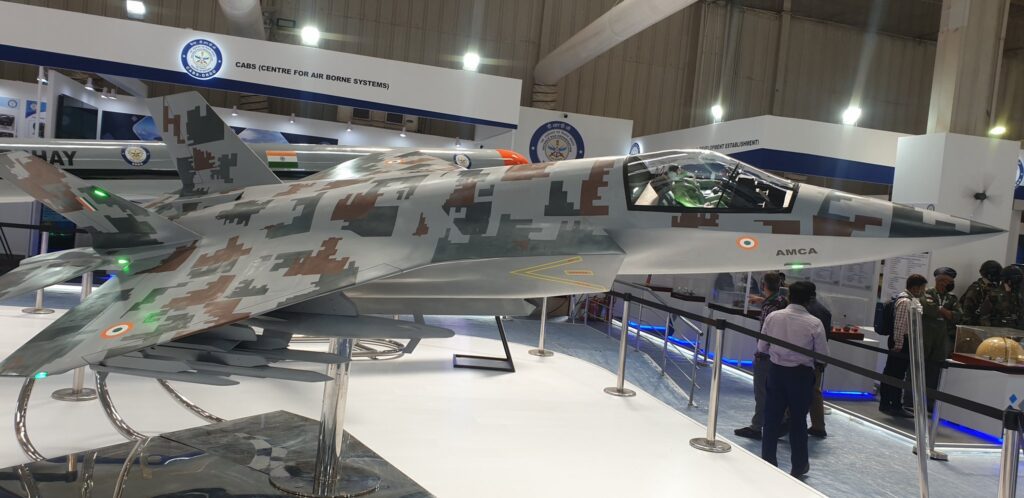
Despite a bold strategic shift, the tangible benefits have not quite flowed. The promise of “seas to the stars” hope in technology collaboration has largely gone unfulfilled. From the DTTI (Defence Technology and Trade Initiative) to COMPACT (Catalysing Opportunities for Military Partnership, Accelerated Commerce and Technologies) to INDUS-X (India-US Defence Acceleration Ecosystem), delivery has been underwhelming. The Indo-US relationship, in fact, may be one of the weakest strands in India’s grand strategy.
Coming to the risen challenger, if China’s primary competition is with the US, common sense would dictate that Beijing settles its differences with India so that it can focus exclusively on the US. But China’s cold geopolitical estimates seem to suggest that there can be only one tiger atop the Asian hill. India, therefore, must be kept in a state of perpetual, strategic imbalance. This could explain Doklam, Galwan, the brazen violation of established peace and tranquillity protocols, Chinese penetration of India’s periphery, the use of water as a weapon, and many other Chinese shenanigans designed to keep India on the ropes.
The moot point, therefore, is that India’s strategic autonomy has to grapple concurrently with American indifference (leading to poor delivery) and Chinese antagonism. The Indian desire to remain equidistant, while wise in many ways, is also the principal challenge for India’s strategic equipoise. The US, for example, will continue to place obstacles in the way of technological collaboration, remain cold on trade, the supply of jet engines, and the Quad, unless India is willing to display greater congruence and make stronger commitments. There is the other fear too, expressed aloud by the US deputy secretary of state, Christopher Landau, that the US should not repeat with India what it did with China by facilitating its rise. As a result, strategic convergence in the Indo-US relationship is being held back by a range of tactical motivations.
Chinese antagonism, meanwhile, is evolving into a larger challenge. As part of its encirclement strategy, China is not only integrating operationally with Pakistan, but is also drawing Bangladesh and Turkey more closely into its strategic orbit. The operational integration between Pakistan and China is now so laser-focused that India effectively faces a unified Sino-Pak combat theatre. The saga continues: there are reports of the Chinese helping Pakistan build the maritime leg of its nuclear deterrent. Turkey has been providing financial assistance, military-industrial support, as well as naval and autonomous platforms to both Pakistan and Bangladesh.
Added to this are two other structural realities: first, the military component of the power differential with China is estimated to be US$425 billion annually; and second, a 500-ship Chinese Navy is pivoting increasingly towards the IOR. India’s threat calculus, therefore, is becoming considerably more complex. Whatever the cause – either excessive American transactionalism or Indian bureaucratic inertia – the Indo-US relationship has not provided a useful antidote to the Chinese threat. There is little evidence that shared concerns about China’s rise are sufficient to drive Indo-US strategic convergence.
In historical terms too, while non-alignment and strategic autonomy have served a useful political purpose, they have proved brittle when subjected to severe strategic stress. In 1962, India’s non-alignment lay in tatters. PM Nehru’s letters to President Kennedy, beseeching the US for all kinds of military assistance, are proof of the fragility of that framework in times of crisis. In 1971, by contrast, it was India’s pronounced tilt towards the Soviet Union – embodied most clearly in the Indo-Soviet Treaty of Peace, Friendship and Cooperation – that served as a vital deterrent during the Bangladesh Liberation War.
India, it must also be appreciated, is now moving into the big league. It is not only the world’s sixth-largest economy (actually fourth, sixth due to a temporary blip), but also one of the fastest-growing major economies, with growth projected at 6.5% in 2026. The Lowy Institute ranks India third in terms of comprehensive national power in Asia, behind only the US and China, while the Stanford Institute for Human-Centered AI recently ranked India third in AI competitiveness.
In a world that is being re-ordered and remade, de-Americanisation of Indian grand strategy may not be the central objective
This elevated status has two major implications. Proximity to either of the two principal poles is not an option, not because India wishes it to be that way, but because that is the reality of geopolitics. Neither will Chinese antagonism ease, nor is the Indo-US relationship likely to become more enabling. Pakistan can afford to be supine; India’s size and strategic heft do not give it that option. As a prospective rival to the two superpowers, India cannot expect to be a beneficiary of either friendship or technological collaboration from the G-2.
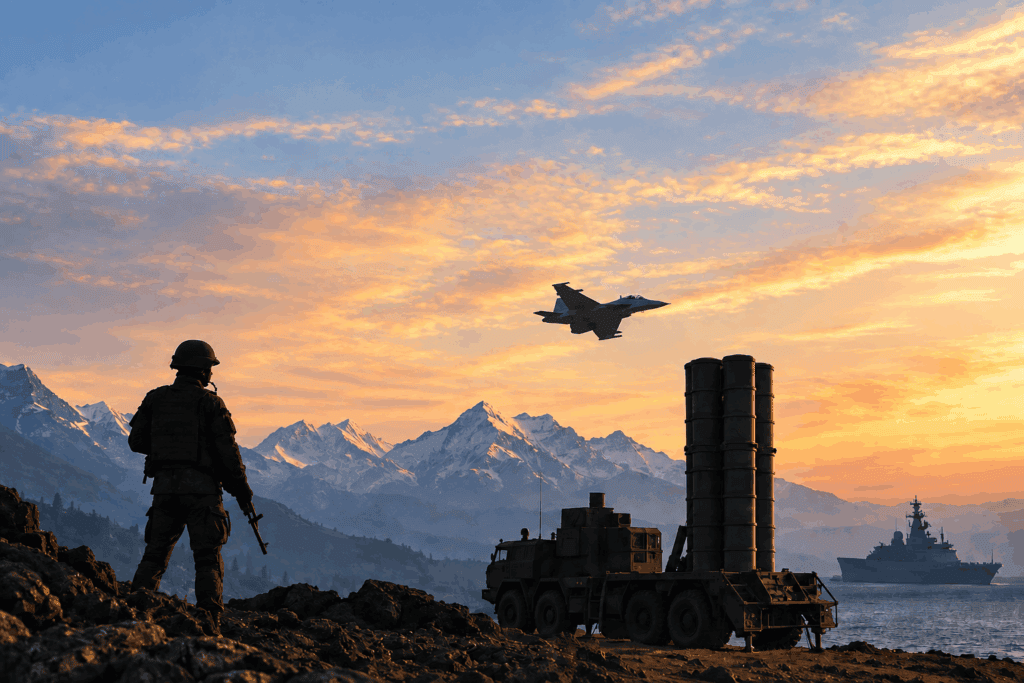
India’s great challenge, therefore, is to temper the lofty principle of strategic autonomy with a healthy dose of pragmatism and strategic cunning. Over the next couple of decades, what the Indian state needs is a robust peace dividend – avoiding conflict through agile diplomacy underpinned by strong strategic and military deterrence.
In a world that is being re-ordered and remade, de-Americanisation of Indian grand strategy may not be the central objective. There are other, broader/grander and more pressing objectives to pursue. India’s grand strategy for the next couple of decades must swivel accordingly, making major strategic and tactical adjustments to stay ahead of the profound changes that are reshaping the international system.
Three pathways could be prioritised.
First, India must realign with the major power shift in the international system. In 2000, almost all the world’s major economies/powers hailed from the West, across the transatlantic space – the US and Europe. By 2050, while the US will remain among the world’s leading economies, much of the global expertise in advanced manufacturing, frontier technologies, semiconductors, quantum technologies, autonomous systems, biotechnology, shipbuilding, material science, economic cooperation, and security will come from other geographies.
So, while India must do everything to keep the Indo-US relationship in good health, it must also leverage the opportunities emerging across an increasingly diverse geopolitical landscape. Strategic autonomy must be undergirded with calculated diversification: in the pursuit of new and novel relationships with Japan, South Korea, Indonesia, Australia, New Zealand, Israel, and Brazil. In Europe, countries like Poland and Germany are in the midst of major defence makeovers. Ukraine has already become an important hub for defence innovation. All of them together may not be as salient as the US, but each by themselves offer unique pathways to strengthen India’s strategic-military posture by an order of magnitude.
Second, over the next decade, India must assume the proverbial hide and posture, focusing resolutely on the trinity of reform, capacity-building, and integrated deterrence, guided by the principle of civil-military fusion. If pursued with wisdom and resolve, these efforts will contribute more to the strengthening of India’s long-term strategic posture than any benefits that the Indo-US relationship could bestow.
Third, India needs to accelerate its transition towards the defining technologies of the AI, digital, and autonomous age. The AI era offers enormous opportunities for economic productivity and growth, as also game-changing pathways to strengthen the metrics of India’s strategic-military deterrence. India needs to develop a sovereign defence technological and industrial base – a cornerstone of strategic autonomy, which will lead, in turn, to strategic ascendancy. In the national security realm, sustained investment in AI, military autonomy, and algorithmic warfare could fundamentally reshape deterrence in the subcontinent. Such capabilities could provide conventional overmatch against Pakistan while strengthening our asymmetric deterrence vis-à-vis China.
If India’s grand strategy can successfully pursue these objectives, it could chart a new course in its geo-strategic destiny.
And here is a final thought. Perhaps, for the first time in history, the world’s largest and third-largest economies (in PPP terms), China and India, are growing in close proximity, with advances in technology diminishing the significance of the Himalayan barrier. Their geo-strategic territories/interests are bound to clash; the only way to ensure that this competition remains peaceful is through robust deterrence. Not one tiger on a hill, but two tigers on either slope. Attaining such a strategic equilibrium will be a long-term endeavour requiring sustained effort. Only when India commands the respect of the United States as an independent strategic actor, is Washington likely to become a more forthcoming partner in areas such as advanced technology and defence cooperation.
This is an ambitious agenda, but not an unattainable one.
India may be entering a new epoch in its strategic evolution. We need to think through and evolve a grand strategy that moves beyond preoccupations with traditional tilts and alignments, and focus instead on building autonomous capabilities, sovereign technological capacity, integrated deterrence pathways, and diversified partnerships that secure India’s rise, regardless of the changing predilections of the US.