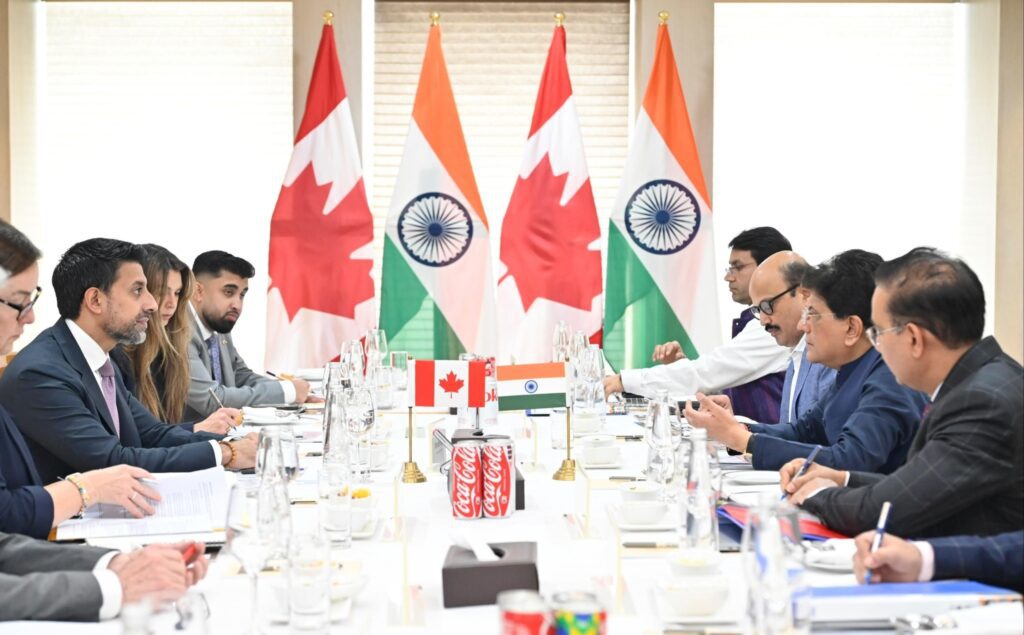
India and Canada are making a concerted effort to turn improving diplomatic relations into a stronger economic partnership. The latest sign came in October, when Canadian International Trade Minister Maninder Sidhu led nearly 300 business delegates to India for a trade mission spanning Mumbai and Bengaluru. The visit, described by the Canadian government as its largest trade mission to India in more than 30 years, concluded with 34 commercial agreements worth close to C$300 million across sectors including aerospace, clean technology, energy, information technology, and agri-food. These agreements indicate growing commercial interest, even as negotiations on a broader trade pact continue.
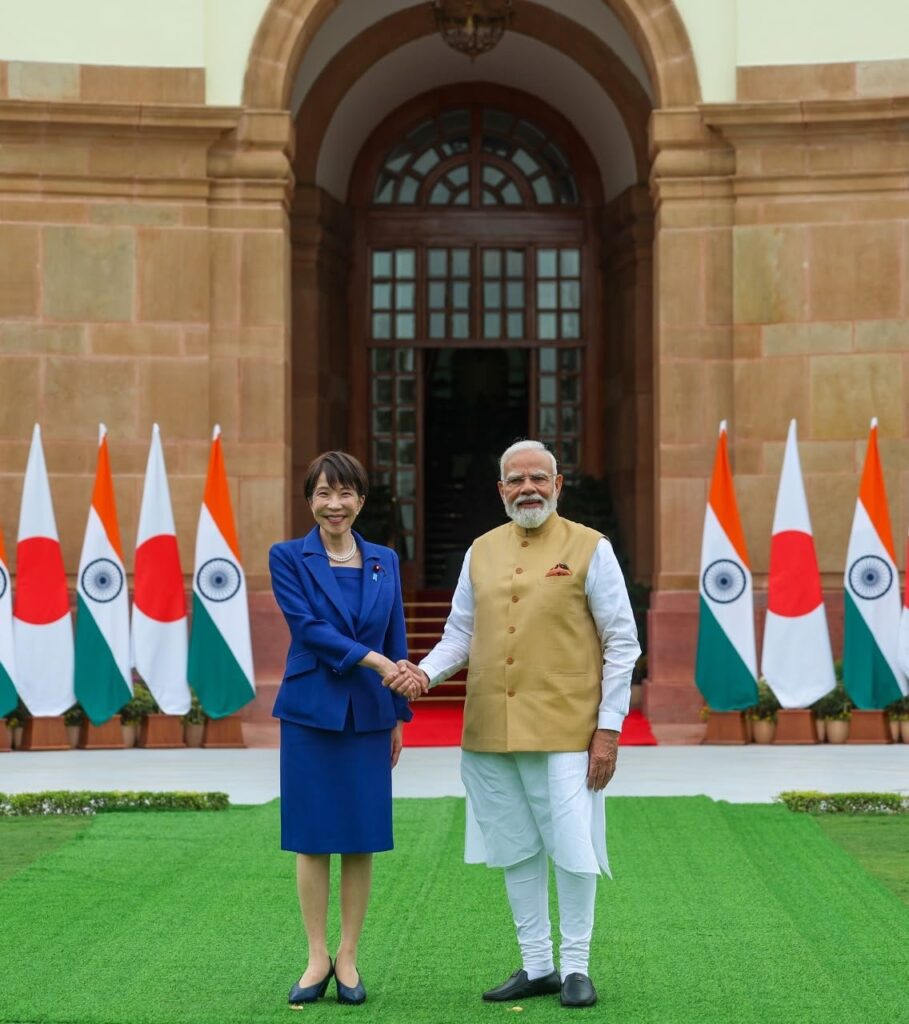
The diplomatic calendar has been equally busy. Canadian Foreign Minister Anita Anand visited New Delhi, where she met External Affairs Minister S. Jaishankar and called on Prime Minister Narendra Modi. On 13 October, Modi and Canadian Prime Minister Mark Carney spoke by telephone and reiterated their commitment to concluding a Comprehensive Economic Partnership Agreement (CEPA) at the earliest opportunity. Modi is expected to visit Canada in December 2026, giving the two governments another occasion to demonstrate progress. There has also been speculation about Carney being invited as the chief guest for India’s Republic Day celebrations in January 2027, although no such invitation has been officially confirmed.
These developments matter because India–Canada relations have spent the past few years under considerable strain. The diplomatic dispute that followed the 2023 killing of Hardeep Singh Nijjar in Canada affected political engagement and raised serious security concerns. The subsequent restoration of diplomatic channels, renewed ministerial exchanges, and the resumption of security dialogue suggest that both governments are seeking a more stable relationship, even though their underlying differences have not disappeared.
Trade offers a practical way to give this reset greater substance. The proposed CEPA could provide a framework for expanding commercial ties beyond individual agreements and sector-specific arrangements. Both countries are working towards concluding negotiations by the end of 2026, but the real test will be whether they can agree on terms that deliver meaningful economic gains without compromising sensitive domestic interests.
The Deal Is Not Signed Yet
The idea of a comprehensive trade agreement between India and Canada predates the current diplomatic reset.
The two countries formally launched CEPA negotiations in November 2010 and held several rounds of discussions before the process stalled, with the tenth round taking place in 2017, before the process stalled. Their renewed effort gathered momentum in November 2025, when Modi and Carney agreed to pursue a CEPA as part of their broader commitment to rebuild bilateral relations. The decisive step came during Carney’s visit to India from 27 February to 2 March 2026. On 2 March, Indian Commerce and Industry Minister Piyush Goyal and Canada’s Minister of International Trade Maninder Sidhu signed the Terms of Reference for the CEPA negotiations, in the presence of both prime ministers. The document established the framework for talks covering trade in goods, services, and other mutually agreed policy areas. It did not constitute the final trade agreement.
Five rounds of negotiations have since been completed. The latest took place in Ottawa from 5 to 9 October 2026, with discussions covering market access for goods and services, investment, rules of origin, intellectual property, and trade remedies. The next round is expected to take place in New Delhi in early November. The pace of negotiations has picked up, but completing a comprehensive agreement within the remaining weeks of the year will require both sides to narrow their differences on commercially sensitive issues. The stated ambition is to increase bilateral trade to C$70 billion by 2030, a target repeatedly emphasised in Canadian communications. India’s announcement in March referred to a US$50 billion trade target for the same year. The figures use different currencies, but express a shared ambition to expand economic ties substantially.
What Exactly Is CEPA?
A Comprehensive Economic Partnership Agreement is a broad trade arrangement designed to improve economic access between two countries. It can reduce or eliminate customs duties on goods, facilitate trade in services, establish investment rules, and make cross-border business more predictable. Depending on the final text, it may also cover digital trade, intellectual property, professional services, customs procedures, and regulatory cooperation. For India and Canada, the breadth of a CEPA is particularly important. Their economic relationship is not limited to the exchange of physical goods. It also encompasses Indian IT and business services, Canadian investment, energy supplies, education, agricultural commodities, critical minerals, and advanced technologies. A comprehensive agreement could help connect these areas through a more predictable framework for businesses and investors.
The distinction between signing an agreement and implementing it also matters. Negotiators first need to settle the terms; the resulting text must then go through the applicable legal and domestic processes before it can enter into force. Even if the two governments announce a conclusion to negotiations by December, that would not necessarily mean the agreement becomes operational immediately.
Why Canada Wants It
For Canada, the proposed CEPA is part of a wider effort to diversify trade and expand access to markets beyond its traditional trading partners, particularly the United States. Its government has committed to more than doubling trade with India to C$70 billion annually by 2030, from approximately C$30.4 billion in goods and services trade in 2025. India offers a large consumer market, expanding industrial demand, and opportunities for Canadian companies seeking growth across the Indo-Pacific.
Market access is a central concern. Canadian exporters face Indian tariffs and regulatory requirements that can affect their competitiveness, particularly in agriculture, industrial products, and machinery. Ottawa is therefore seeking commercially meaningful concessions on goods and services, alongside clearer procedures and greater predictability for companies operating in India. Canada’s published negotiating objectives set out these ambitions, while also identifying areas where it intends to protect sensitive domestic interests.
Agriculture and fertilisers are among the most visible areas of interest. Canadian producers export pulses, including lentils and peas, while potash and other agricultural inputs are important to Canada’s commercial relationship with India. Greater access could help Canadian exporters expand sales, but the outcome will depend on the tariff concessions, import conditions, and safeguards negotiated by the two countries.
Energy, critical minerals, and advanced technology offer another set of opportunities. Canada wants to expand its role as a supplier of resources needed for India’s industrial development and energy transition. Its companies are also exploring partnerships in aerospace, clean technology, digital innovation, and infrastructure. More broadly, Ottawa wants rules that make investment and services trade more predictable, including provisions relating to intellectual property, digital trade, financial services, and government procurement.
The underlying calculation is strategic as well as commercial. Canada wants to build more resilient trade relationships and reduce its exposure to disruptions in established markets. An agreement with India would give Canadian businesses a more structured route into one of the world’s largest economies, although the scale of the eventual gains would depend on the terms agreed and the extent to which companies use them.
What India Stands to Gain
India’s interests extend beyond increasing exports. A CEPA could improve access for Indian manufacturers and service providers in Canada while providing a framework for investment, technology collaboration, and more diversified supply chains.
Indian pharmaceuticals, textiles, garments, chemicals, seafood, machinery, electronics, and engineering goods already feature in bilateral trade. Preferential tariff treatment could improve their competitiveness in Canada, but the extent of that benefit would depend on the products covered, the size of the tariff reductions, and the schedule for implementing them. For exporters, the agreement would be most valuable if better market access translated into sustained commercial opportunities rather than nominal concessions.
Services are another important area. India’s telecommunications, computer and information services, and other business services already contribute to its exports to Canada. Clearer rules could help Indian firms expand commercial relationships and pursue new contracts. Provisions relating to professional services and the temporary movement of businesspeople could also matter, although a trade agreement would not automatically guarantee visas, work permits, or unrestricted migration.
India also has a strong interest in strengthening energy security and gaining access to resources needed for industrial growth. Cooperation with Canada could diversify supplies of uranium, potash, energy, and critical minerals, while supporting investment in clean energy, storage, aerospace, and advanced manufacturing. Some of this cooperation is already advancing outside the CEPA negotiations: in March 2026, the two countries announced a C$2.6 billion commercial agreement involving Canadian company Cameco and India’s Department of Atomic Energy for the long-term supply of uranium. That agreement is a separate commercial arrangement, not a benefit contingent on the CEPA.
For New Delhi, the broader opportunity is to use closer economic relations to support manufacturing, services exports, technological collaboration, and supply-chain diversification. The balance will lie in securing meaningful gains while retaining room to protect sensitive domestic sectors and pursue its own economic priorities.
The Hard Bargains
The recent diplomatic momentum should not obscure the fact that trade negotiations involve competing interests. Agriculture is likely to remain a sensitive subject, particularly because Canada wants better access for its agricultural and food exports while India must account for the consequences of greater import competition for domestic farmers and producers.
Canadian exporters have raised concerns about tariffs, import procedures, fumigation requirements, sanitary and phytosanitary measures, and other technical requirements. Such rules can affect the cost and reliability of exporting even when customs duties are reduced. Negotiators will need to determine which procedures can be simplified without weakening legitimate protections for public health, food safety, and domestic producers. Canada has its own domestic limits. Its published negotiating objectives state that it will not provide additional market access for supply-managed dairy, poultry, and egg products. This is a reminder that neither country is approaching the negotiations without political and economic constraints. The question is not whether all barriers can be removed, but whether the two sides can agree on a workable balance of concessions and safeguards.
Beyond agriculture, the areas of investment protection, services, digital trade, intellectual property, and government procurement will require careful negotiation. Canada is seeking stronger and more predictable rules for companies operating in India, while India will need to assess how far such commitments align with its own regulatory and development priorities. The publicly available literature does not establish the exact terms either side has offered or accepted on these issues, so it would be premature to describe any specific provision as a settled point of disagreement. There is also a political risk. The two governments are rebuilding relations after serious security and diplomatic disputes, and renewed dialogue does not mean these differences have been resolved. A durable agreement would need to withstand fluctuations in the wider relationship. That makes institutional mechanisms, clear procedures, and sustained government engagement important to its long-term success.
What Happens Next?
The next round of negotiations in New Delhi in early November will be important in determining whether the remaining gaps can be narrowed before the year-end deadline. Modi’s expected December visit to Canada could provide an opportunity for a political announcement, but it should not be treated as a guaranteed signing date. Concluding negotiations, formally signing the agreement, and bringing it into force are separate stages, each with its own requirements. The recent trade mission has already produced commercial agreements, while the uranium arrangement illustrates that sector-specific cooperation can advance independently of CEPA. The proposed agreement’s broader value will depend on whether it creates opportunities beyond individual deals and improves the environment in which businesses trade, invest, and establish long-term partnerships.
The C$70 billion target is an ambition, not a guarantee. Reaching it will require companies in both countries to use the market access created by the agreement, investment to expand, and regulatory barriers to become easier to navigate. The headline trade figure alone will not show whether the benefits are broadly shared or whether the agreement has addressed the structural obstacles that constrain bilateral commerce. The central question is whether India and Canada can turn political momentum into a commercially meaningful agreement. The recent engagement has created an opportunity to do so. Whether it produces a durable CEPA will depend on the concessions both governments are prepared to make, the quality of the final terms, and their willingness to implement them consistently.