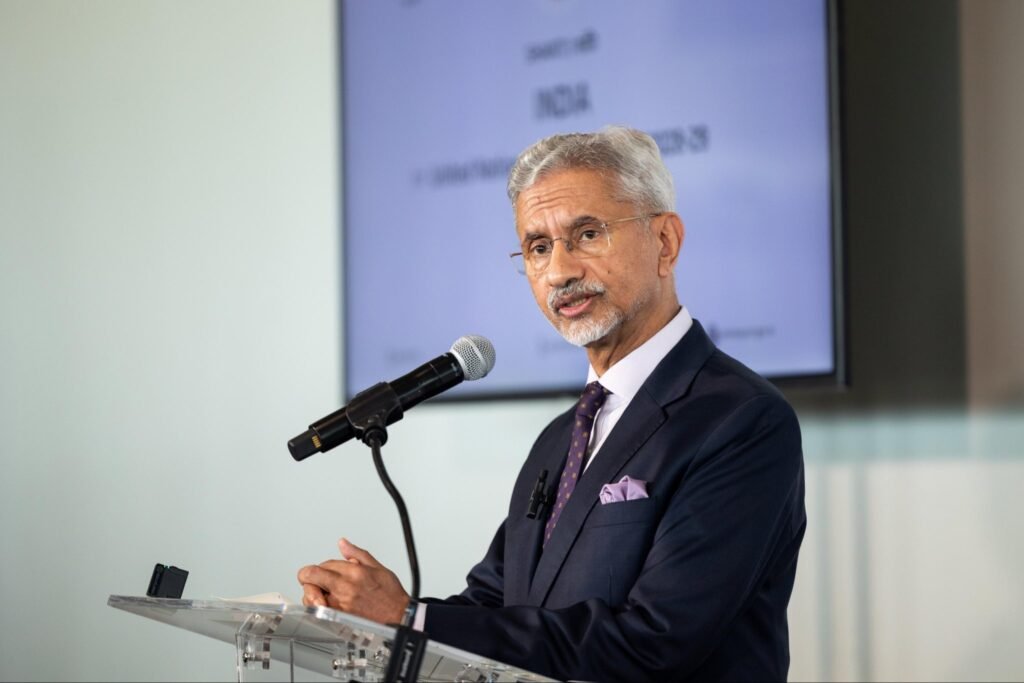
On 13 July 2026, External Affairs Minister S. Jaishankar stood before an audience of ambassadors, diplomats, and officials at the United Nations (UN) headquarters in New York to formally launch India’s candidature for a non-permanent seat on the United Nations Security Council (UNSC) for the 2028–29 term. The campaign carries a name designed for diplomatic shorthand: SHANTI, an acronym for “Securing Holistic Advancement through Norms, Trust and Integrity”, and a Sanskrit word meaning peace.
Jaishankar framed the bid in terms that were at once aspirational and pointed. “We do so at a time when the world is facing a profound paradox”, he said. “Never before has the world possessed such immense capabilities to advance human welfare at this scale. At the same time, we are witnessing levels of conflict, violence and instability that threaten even those who may be far away”. That paradox, he argued, placed a premium on the Security Council functioning as something more than a bystander. India’s pitch is that it can help make that happen.
The six-point agenda Jaishankar outlined covered amplifying the voice of the Global South in Council deliberations, modernising peacekeeping mandates, advancing multilateral reform, governing the risks and benefits of artificial intelligence, securing maritime commons under the UN Convention on the Law of the Sea, and choking the financing networks that sustain terrorism. India also used the occasion to signal its humanitarian credentials. Jaishankar announced fresh commitments to the State of Palestine at an EU-backed donor group meeting in Brussels the previous day, pledging to establish a specialty hospital, an artificial limb fitment centre, and a vocational training institute. He noted that the United Nations Relief and Works Agency for Palestine Refugees in the Near East (UNRWA) recognises India as its “top emerging donor”, a characterisation the agency itself has confirmed. India has maintained its $5 million annual contribution to UNRWA even as the United States severed its funding in 2024, a position the Trump administration has since reiterated.
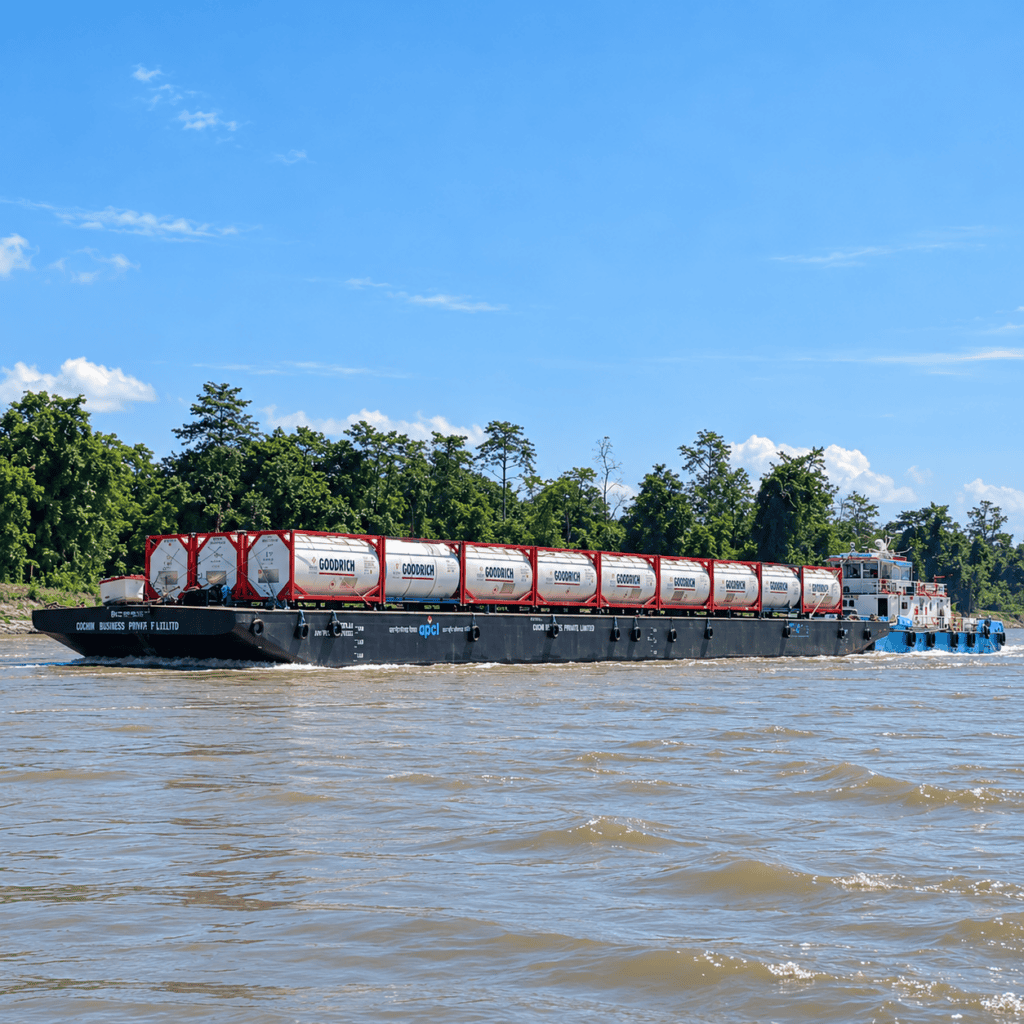
Of the six priorities, maritime security received particular emphasis. Jaishankar framed it as inseparable from the functioning of global supply chains: “In an era where supply chains connect our economies, the world is also increasingly focused on securing the maritime commons. Recent events have only underlined the need to do so”. The “recent events” were an unmistakable allusion to the disruption of shipping through the Strait of Hormuz following the US-Israel military campaign against Iran, which has threatened energy and fertiliser supplies to much of the developing world. Jaishankar called for adherence to the UN Convention on the Law of the Sea (UNCLOS), flagged the safety of seafarers as “a major concern thrown up by developments in the Gulf”, and highlighted that Indian forces are currently protecting sea lanes across the Indo-Pacific, from the Arabian Sea and the Gulf of Aden to the Malacca Straits and the Gulf of Guinea. India’s Information Fusion Centre for the Indian Ocean Region (IFC-IOR), established in 2018 at Gurugram, anchors a cooperative maritime domain awareness network with liaison officers from 12 partner nations. Jaishankar positioned the centre as evidence that India already operates the kind of multilateral security infrastructure it proposes to champion at the Council.
Why This Bid, and Why Now
The timing is shaped by several converging pressures.
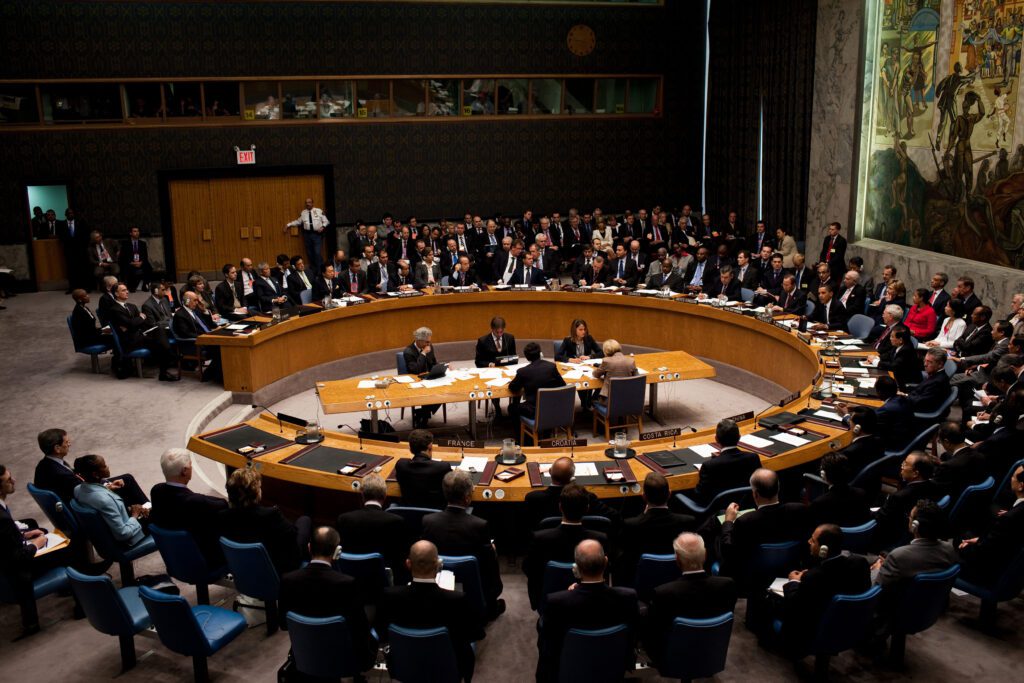
India last sat on the Council during the 2021–22 term. A successful election in June 2027 would place New Delhi back at the horseshoe table by January 2028, shortening the gap between terms to roughly five years. That matters because India has historically suffered from long absences. After its 1991–92 tenure, it waited 19 years before returning in 2011. After 2011–12, another decade elapsed before the 2021–22 stint. The bid for 2028–29 reflects a conscious effort to maintain a more consistent presence in the body that holds primary responsibility for international peace and security.
The geopolitical backdrop reinforces the urgency. The Security Council has been largely gridlocked on the defining crises of recent years. Russia’s veto has blocked action on Ukraine. The United States has shielded Israel from censure over Gaza. The Council’s inability to respond to the US-Israel military campaign against Iran, which disrupted energy and fertiliser supplies across much of the developing world, has deepened frustration among Global South states. Jaishankar’s speech leaned into this frustration: “multilateralism must be democratic, representative, and effective”, he said, arguing that “nations like India, which have a long history of bridging differences and building consensus, can certainly make their due contribution”.
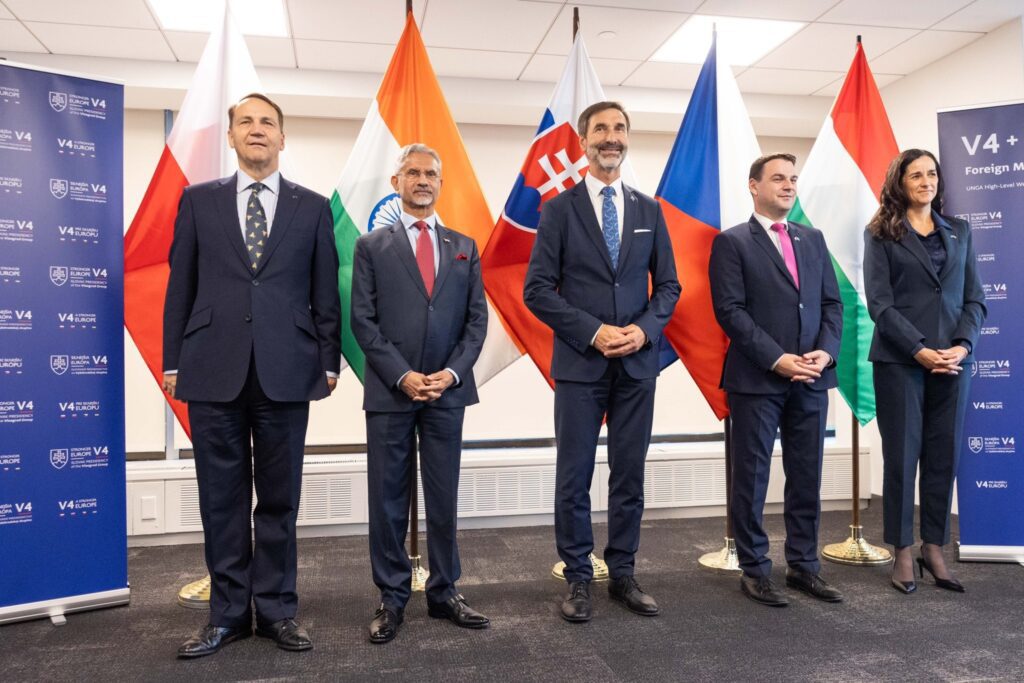
The launch also came days after a Gulf tour that took Jaishankar to Qatar, Bahrain, Kuwait, and Oman between 5 and 10 July. That itinerary was not incidental. Several of these states are members of the Organisation of Islamic Cooperation (OIC), and outreach to them matters because India’s principal rival for the seat, Tajikistan, holds the OIC’s formal endorsement. From New York, Jaishankar travelled to Brussels for the third India-EU Trade and Technology Council meeting on 14–15 July, combining the UNSC campaign launch with broader diplomatic engagement.
India at the Security Council: A Long History
If elected, this would be India’s ninth term as a non-permanent member, a record exceeded among Asian states only by Japan. India’s previous eight terms span the arc of the post-independence state.
1950–51 saw India on the Council during the Korean War, a period when Jawaharlal Nehru navigated between Cold War blocs and famously declined alleged offers of a permanent seat, insisting it should not come “at the cost of China”. 1967–68 coincided with the aftermath of the 1967 Arab-Israeli War and India’s own tense relations with Pakistan. 1972–73 followed the Bangladesh Liberation War and the creation of a new state on India’s eastern border. 1977–78 fell during the Emergency’s aftermath and the brief Janata Party government. 1984–85 and 1991–92 bracketed a period of transition from non-alignment to economic liberalisation.
The 19-year gap that followed, from 1992 to 2011, reflected a combination of factors: India’s relative diplomatic quiescence during its economic reform period, the absence of a sustained campaign infrastructure, and the rotating arithmetic of Asia-Pacific seat allocations. India returned in 2011–12 and then again in 2021–22, when it held the Council presidency in August 2021 and December 2022, focusing on counter-terrorism, maritime security, and peacekeeping reform.
The pattern reveals an uneven relationship with the Council. India’s eight terms amount to 16 years of non-permanent membership across more than seven decades. For a state that considers itself a natural candidate for permanent membership, the gaps have been conspicuous.
India and the Reform Question
India’s non-permanent seat bid runs on a parallel track to a longer and far more difficult campaign: securing permanent membership on a reformed Security Council. New Delhi pursues this alongside Brazil, Germany, and Japan through the G4 grouping, which has proposed expanding the Council from 15 to 25 or 26 members, adding six new permanent seats (two for Asia-Pacific, two for Africa, one for Latin America and the Caribbean, and one for Western Europe and Other States) and four or five additional non-permanent seats.
The reform debate has sharpened in recent months. At the Intergovernmental Negotiations (IGN) on Security Council reform in April 2026, India’s permanent representative, Parvathaneni Harish, rejected proposals for a “two-tier” system of permanent membership that would grant new permanent seats without veto power. “Expanding the permanent category with veto is critical to real reform of the Security Council”, Harish said. At the same time, the G4 has signalled tactical flexibility through a compromise: new permanent members would defer exercising veto powers for 15 years, after which a review would determine how to proceed. The proposal, presented by Brazil on the G4’s behalf, is designed to break a deadlock that has persisted since intergovernmental negotiations on Council reform began in 2008.
India’s argument for permanent membership rests on a convergence of scale and contribution. It is the world’s most populous country and its fifth-largest economy. Its cumulative peacekeeping contribution, as Jaishankar emphasised in his speech, stands at “nearly 300,000 deployments in about 50 missions worldwide”, with 4,300 personnel currently serving across 10 of 11 active missions. India also frames its candidacy through what it has done for the developing world: the G20 presidency in 2023, which engineered the African Union’s admission as a formal member; the Voice of Global South summits; and development partnerships spanning more than 100 countries.
The obstacle is structural. Amending the UN Charter requires approval by two-thirds of the General Assembly and ratification by all five current permanent members. China has consistently avoided endorsing India’s permanent seat aspirations, even as the United States, the United Kingdom, France, and Russia have offered varying degrees of support. The non-permanent seat bid is, in effect, a way to remain at the table and build the case for permanence while the larger reform effort grinds on.
The Contest: India vs. Tajikistan
Unlike India’s last run in 2020, when it was elected without opposition within the Asia-Pacific regional group for the 2021–22 term, this time the seat is contested. Tajikistan declared its candidacy for the same Asia-Pacific slot, the one Bahrain will vacate at the end of 2027, and has carried the OIC’s formal backing since 2023. The OIC resolution described its endorsement as rooted in “the principle of Islamic solidarity as being inherent to the joint Islamic action”.
The OIC commands 56 votes in the 193-member General Assembly. The threshold for election is a two-thirds majority by secret ballot, roughly 129 votes if all members participate. That arithmetic makes the OIC bloc consequential, though not decisive. India’s structural advantages are considerable: eight prior Council terms against Tajikistan’s zero, a far larger economy and diplomatic network, and early declared support from countries including the United States, Fiji, Austria, and Sri Lanka. The Jaishankar Gulf tour and the broader diplomatic outreach across the Caribbean and Africa are aimed squarely at widening that coalition.
The June 2026 UNSC election offered an instructive precedent. Kyrgyzstan defeated the Philippines in four rounds of voting, 142 to 49, for the Asia-Pacific seat on the 2027–28 Council. Kyrgyzstan, which had never previously served on the Council, benefited from OIC endorsement, Central Asian solidarity, and what analysts described as blowback against Manila’s close alignment with Washington. The result demonstrated that UNSC elections in the Asia-Pacific are no longer formalities; bloc politics, geopolitical signalling, and sustained campaigning determine outcomes.
India’s campaign is conscious of this. Jaishankar’s speech devoted considerable time to recent humanitarian operations, from Operation Amistad in earthquake-hit Venezuela, where an Indian Army field hospital conducted over 8,000 medical procedures, to disaster relief following Cyclone Ditwah in Sri Lanka and Hurricane Melissa in Jamaica. The emphasis on tangible contributions rather than abstract principles is a deliberate pitch to smaller states whose votes will determine the outcome.
The postponement of the India-Africa Forum Summit in May due to the Ebola outbreak in the Democratic Republic of the Congo and Uganda has complicated one dimension of India’s outreach. The summit was expected to consolidate African support, and its indefinite deferral means India will need to pursue that diplomatic groundwork through other channels over the next 11 months. India’s medical assistance to the Africa CDC for Ebola containment, which Jaishankar highlighted in his speech, represents one such channel.
What Next
The election will take place at the UN General Assembly in June 2027. Between now and then, India faces a diplomatic sprint with several milestones to watch.
The Shanghai Cooperation Organisation (SCO) summit in Kyrgyzstan, expected later this year, will place India and Tajikistan in the same multilateral room. Both are SCO members, and the summit’s margins will likely see each side canvassing support from Central Asian and Eurasian states.
India’s outreach to African, Caribbean, and Pacific Island states will intensify, particularly given that these blocs collectively hold a substantial share of General Assembly votes. The rescheduled India-Africa Forum Summit, whenever it takes place, will carry outsized diplomatic weight.
The OIC factor remains the most consequential variable. India is not an OIC member, but several OIC states maintain strong bilateral ties with New Delhi. The Gulf tour preceding the UNSC launch was an early move to peel away support within the OIC bloc, and the pattern of high-level engagement with OIC members will almost certainly continue.
On the broader reform track, the G4’s 15-year veto deferral proposal will face further scrutiny at future rounds of IGN negotiations. Whether the Africa group, which demands full veto rights for new permanent members, converges with the G4 position could reshape the reform landscape. India’s non-permanent seat campaign and its permanent membership aspiration are formally separate, but each reinforces the other: presence on the Council demonstrates the capacity to contribute, while the reform argument contextualises why that presence should eventually become permanent.
If elected, India would take its seat on 1 January 2028 for a two-year term. The Council it would join will still be grappling with the consequences of the Ukraine war, the aftermath of the Iran crisis, the humanitarian catastrophe in Gaza, and the structural question of whether a body designed in 1945 for 51 member states can govern a world of 193. India’s bet is that being inside the room, even as a rotating member, is better than watching from outside it.
Note: This explainer has been researched, edited, and fact-checked by India’s World staff and prepared with AI assistance.