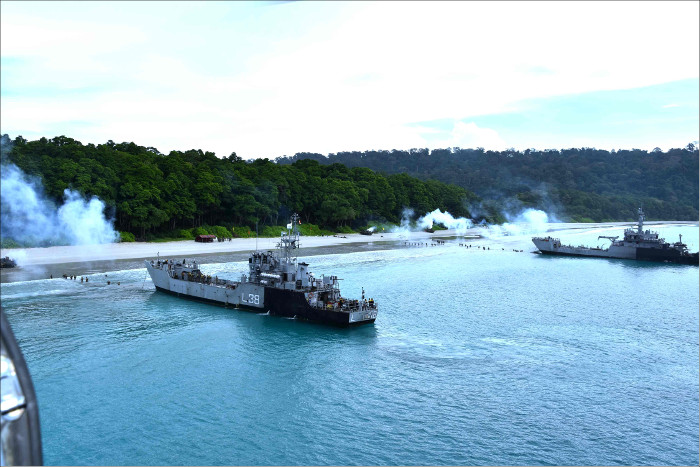
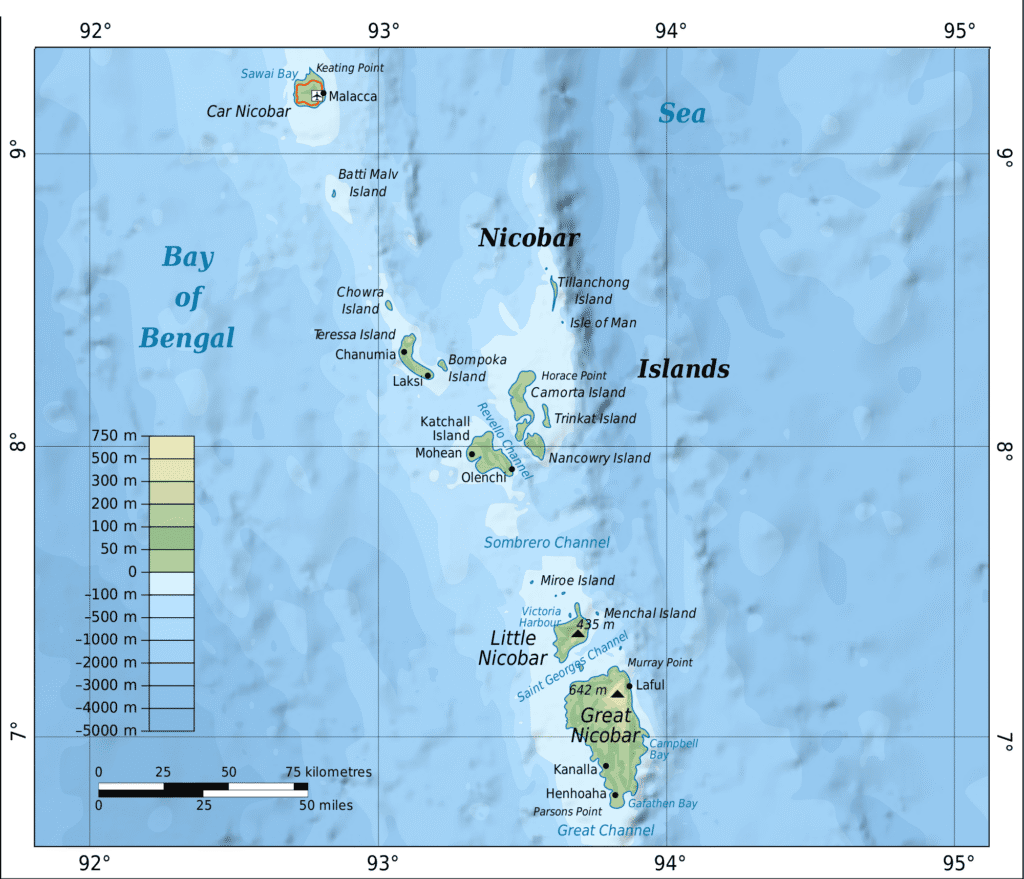
The Great Nicobar Island (GNI) lies at the southernmost tip of India’s archipelagic chain of the Andaman and Nicobar Islands (A&NI), barely 90 km from the Strait of Malacca. Remote, rain forested, and once long neglected by mainland policy, GNI has recently become the centrepiece of one of independent India’s most ambitious and contested development ventures. The project’s initial cost of Rs. 72,000 crore (approximately $8.6 billion) is presently pegged at Rs. 81,000 crore (approximately $9.12 billion) though the figure dates to November 2025. Therefore, there is the possibility of an increase in the cost of the project. Launched in 2021 under the Holistic Development of Islands programme, the project named Great Nicobar Island Development Project (GNIDP) was aimed at transforming the GNI into a multi-modal hub comprising a transhipment port, an international airport, a township, and a power plant. The project expected to be executed in three phases over 30 years was based on a March 2021 pre-feasibility report prepared for the NITI Aayog with the vision, “To leverage the locational advantage of being on International sea route and develop Great Nicobar as a sustainable, green, global destination for business, trade, and leisure.” The project encompasses developing an international container transhipment terminal (ICTT) at the Galathea Bay, a greenfield international airport, a township, and a 450 MVA gas and solar-based power plant on the island.
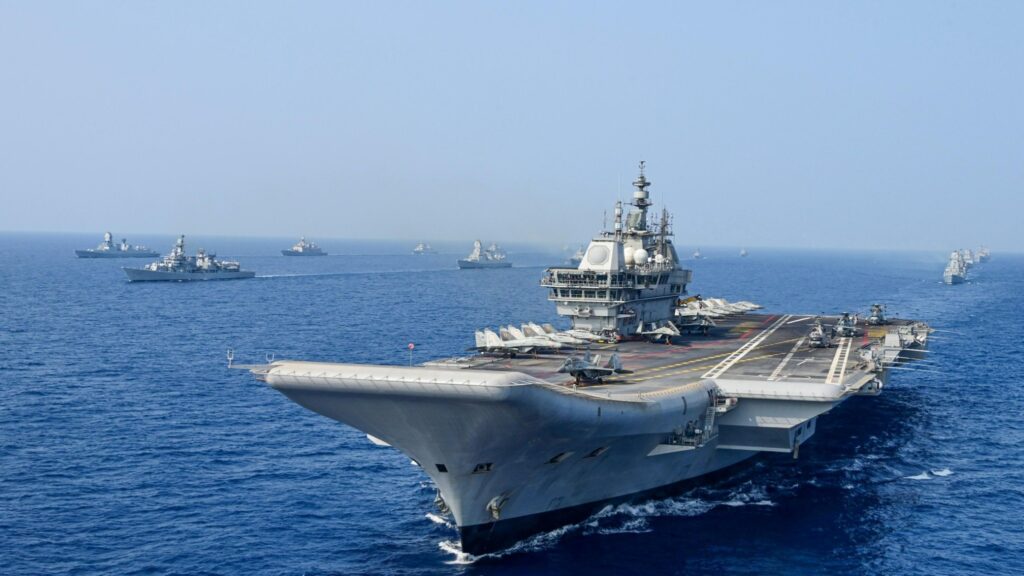
Due to several factors, the project has come under scrutiny and very few infrastructure projects in recent Indian history have generated such a heated debate of this intensity or breadth. On one side are strategists, economists, and maritime planners who see the project as an opportunity to build a commercially viable geographically advantageous hub through which India can project economic and military power into the Indian Ocean Region (IOR) thereby challenging China’s maritime manoeuvrings in the region. On the other side stand ecologists, indigenous rights advocates, and environmental scientists who warn that the project, as currently conceived, threatens irreplaceable biodiversity, violates international norms on indigenous communities, and places critical infrastructure on a seismically volatile shoreline. Between these two poles lies the imperative of balance and the unresolved question whether India can pursue both development and ecological integrity or must choose one option.