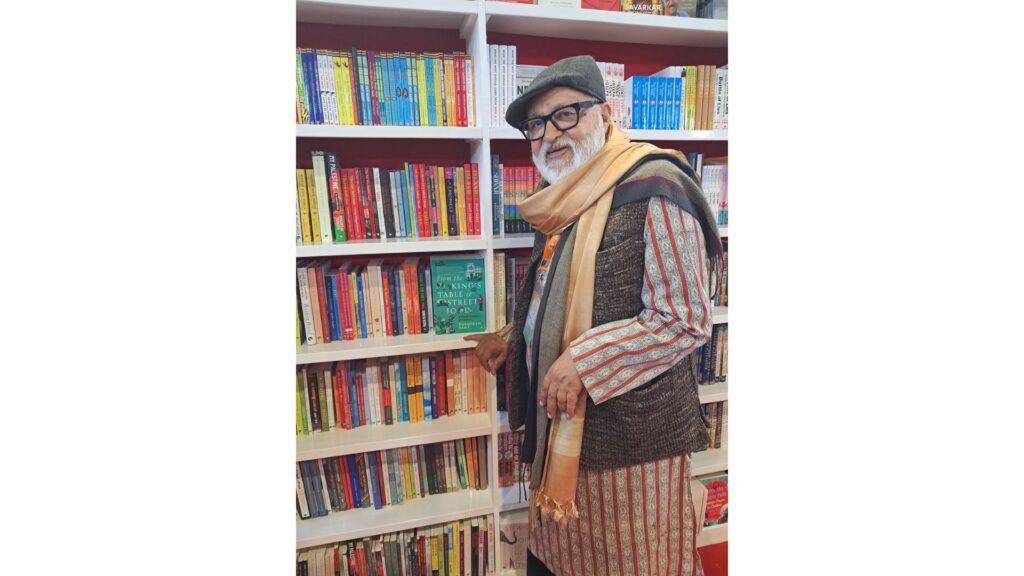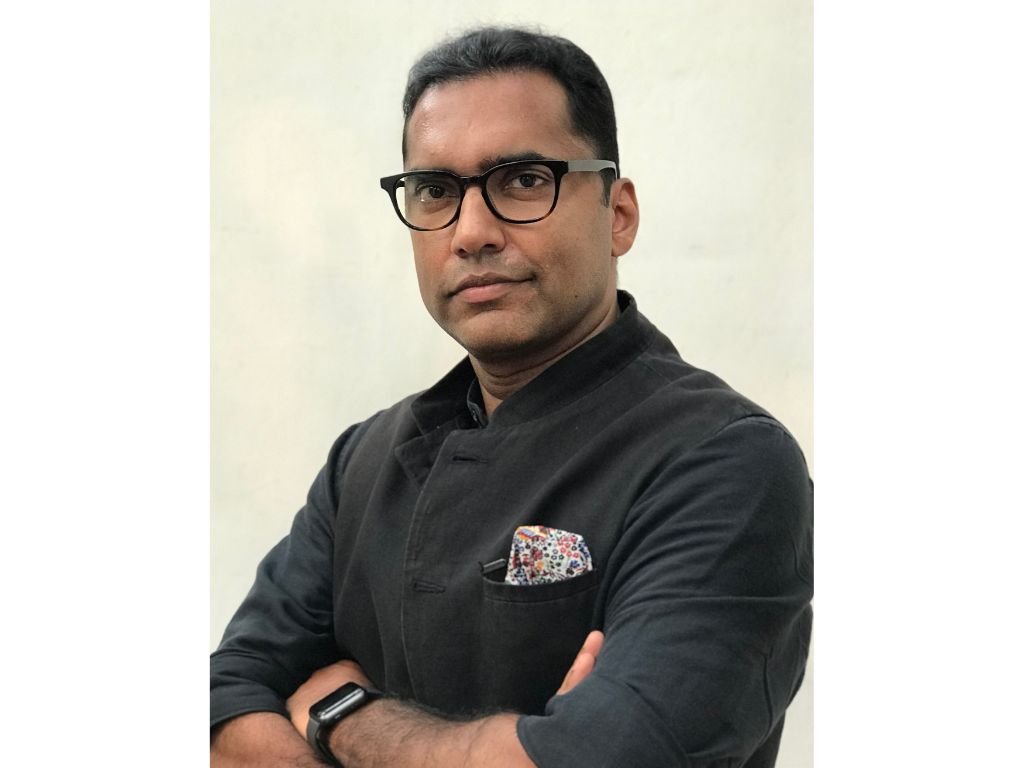
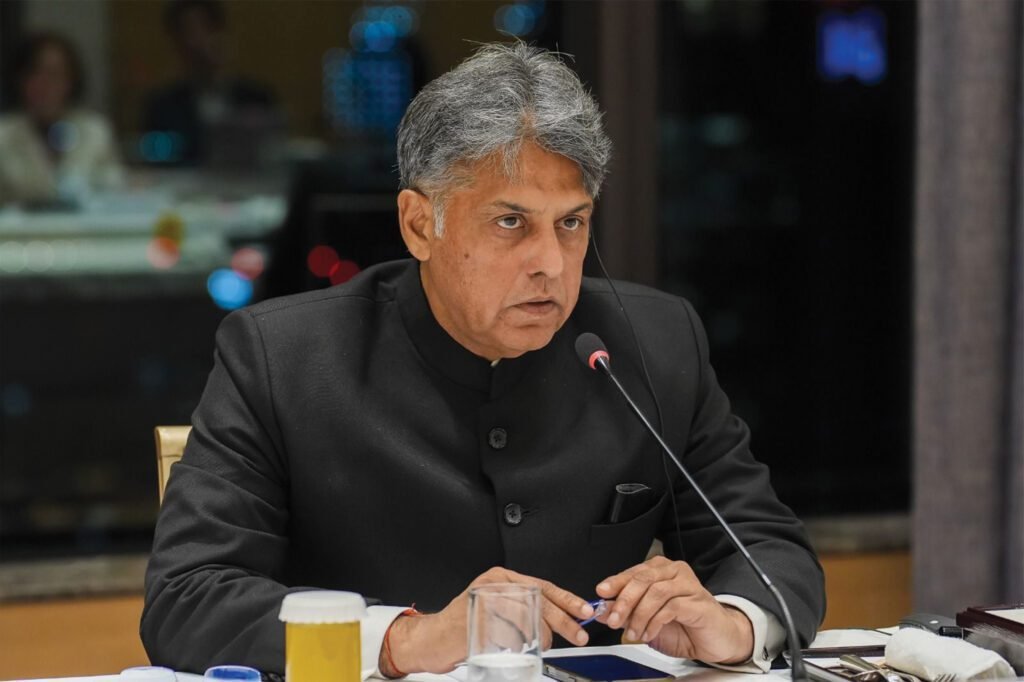
For nearly four decades, Manish Tewari has watched the international order evolve—from the Cold War era uncertainty to the present-day fragmentation and disorder. A lawyer, former Union Minister, and three-term Member of Parliament, Tewari was in Prague / Berlin when the Berlin Wall fell in November 1989 and has since witnessed India’s foreign policy debates from close quarters.
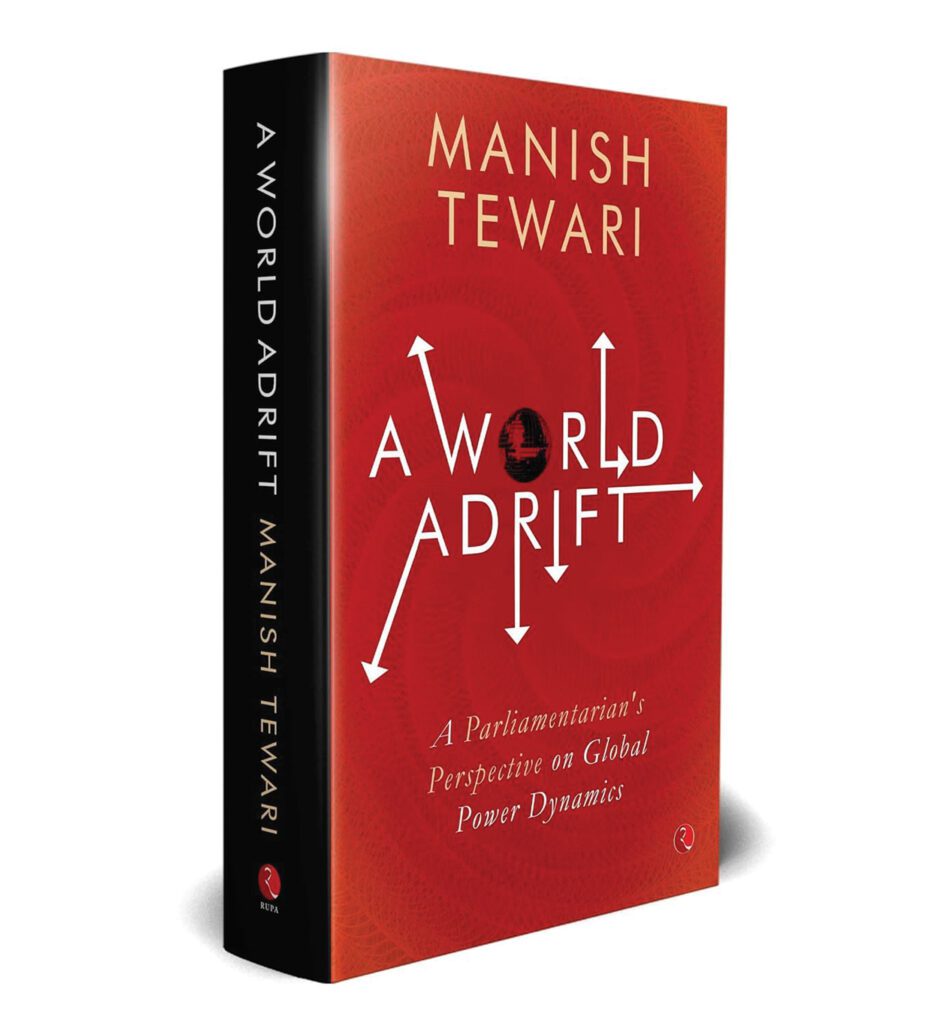
Those experiences form the backbone of his latest book, A World Adrift: A Parliamentarian’s Perspective on Global Power Dynamics, a much-needed analysis of geopolitical transition, technological disruption, and the growing uncertainty of the international system.
Tewari has long engaged with questions of foreign policy, national security, and global affairs through writing. His earlier books include 10 Flashpoints; 20 Years: National Security Situations That Impacted India (2025), The Fables of Fractured Times (2019), and Tidings of Troubled Times (2017). A recurring theme across his writing is how political uncertainty and strategic change are reshaping both India and the wider world.
In this conversation with India’s World, Tiwari speaks candidly about the decline of American primacy, the rise of China, the meaning of strategic autonomy, and why “memes can be as dangerous as missiles.” What emerges is less the voice of a politician performing expertise and more that of an observer who has spent decades thinking through the changing nature of power.
The title A World Adrift suggests a system losing direction. What inspired you to write this book now?
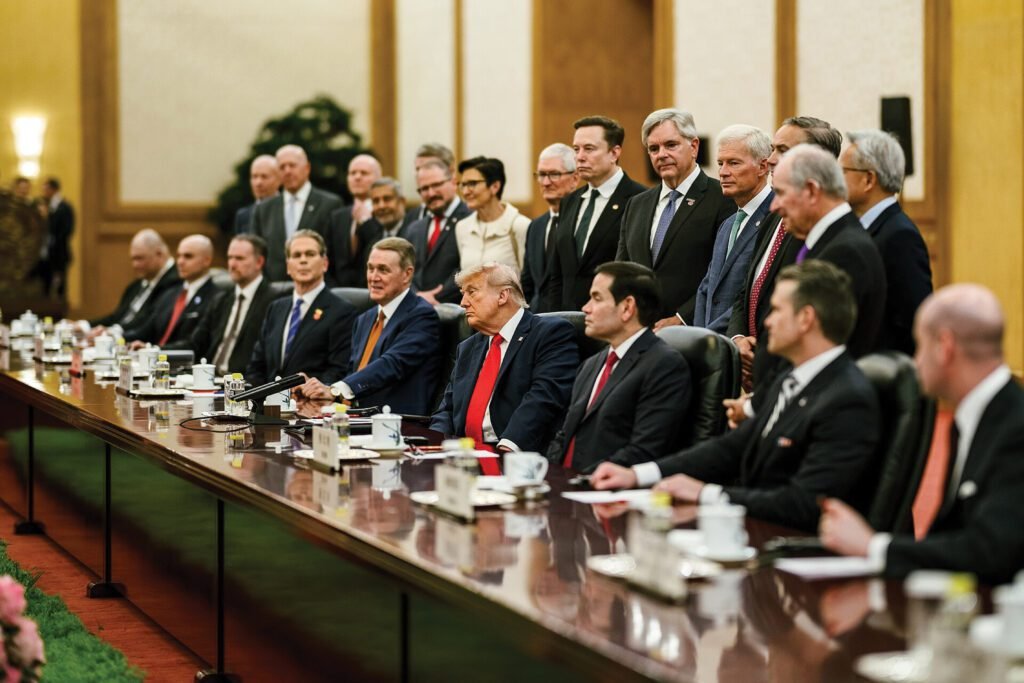
The origins of this book go back to my years as a Distinguished Senior Fellow at the Atlantic Council between 2016 and 2019, which coincided with the first presidency of Donald Trump. Even then, it was becoming evident that the US was an exhausted power, if not a declining one. There was visible discomfort with its role as the principal outside balancer in different parts of the world. That naturally created a vacuum, and nature abhors a vacuum. If the anchor of the post-World War II order begins retreating from the system it created, the consequences are bound to affect the entire international order/system.
Then came COVID-19, the American withdrawal from Afghanistan, and the broader fragmentation of global politics. By the time Trump returned to the White House for a second term, the shift was becoming impossible to ignore. The US no longer seemed to be stepping back merely from its traditional role in global leadership; it was also visibly retreating from the post-war security framework it had spent decades building and defending.
If the anchor of the post-World War II order begins retreating from the system it created, the consequences are bound to affect the entire international order
These were questions that had been on my mind for a long time. We began working on the book in 2022, originally hoping to publish it before the 2024 Lok Sabha elections. But politics has its own rhythm and unpredictability. By the time the book was finally appeared in 2026, both the world and the book itself had changed considerably.
You have observed world politics from the Cold War era to today’s fractured order. Does the present moment feel fundamentally different?
Very much so. The world I entered as a young political activist feels extraordinarily distant today. At that time, global politics was still defined by the Cold War and the rivalry between two competing blocs. India remained formally non-aligned, though there was clearly a strategic tilt towards the Soviet Union.
One memory from that period has stayed with me vividly: being in Prague soon after the Berlin Wall came down. I was then serving as president of the International Union of Students, and you could sense that history itself was shifting. Entire societies seemed to be rediscovering themselves. There was a different openness, a new energy in public life, and a widespread belief that the world had entered a new phase.
Since then, we have passed through several distinct eras—the end of the Cold War, the period of overwhelming American dominance, and now a much more uncertain and fragmented moment. Today, politics is shaped as much by technological disruption and populism as by traditional geopolitics. The assumptions that shaped the post-Cold War order no longer feel stable, and no new equilibrium has fully emerged.
Your book repeatedly returns to the idea of “strategic autonomy.” In practical terms, what does that mean for India today?
Strategic autonomy essentially means retaining the freedom to make decisions based on one’s own national interests, without external pressure. A country like India should not have to seek anyone’s permission to secure its energy needs or shape its foreign policy choices.
At the same time, strategic autonomy should not be confused with isolationism. It requires nimbleness—the ability to engage with multiple powers simultaneously while preserving independent decision-making. That balance is far more difficult than it sounds. In a fragmented world where old alliances are weakening and new alignments remain fluid, maintaining flexibility becomes critical.
You argue that there are deeper continuities in Indian foreign policy than many assume. What has remained constant despite political change?
The roots of Indian foreign policy actually predate independence. India’s freedom struggle unfolded during one of the most turbulent periods in modern history—the First World War, the Treaty of Versailles, the rise of fascism, the Second World War, and eventually the arrival of nuclear weapons. What distinguished India’s freedom movement was its fundamentally non-violent character, and those impulses deeply shaped our worldview.
Even before independence, initiatives such as the Asian Relations Conference reflected a desire among newly decolonising societies in Asia, Africa, and Latin America to imagine an alternative to great-power blocs.
In some ways, we were financing the rise of a power that was simultaneously challenging us strategically
There is a tendency today to assume that Indian foreign policy has always operated through broad national consensus. That is not accurate. There were fierce debates on almost every major issue—whether India should acquire nuclear weapons, whether non-alignment was sustainable, or whether India should move closer to one bloc or another. Even the Indo-US civil nuclear agreement triggered an enormous national debate.
What has endured, however, are certain broad continuities: non-alignment (today reframed as multi-alignment) and self-reliance (now articulated through the language of Atmanirbhar Bharat). At their core, both are about preserving India’s strategic autonomy.
China occupies a central place in your analysis. How should India think about China’s rise?
The defining reality of contemporary geopolitics is not simply the rise of China, but what I describe as the relentless rise of China. That trajectory began with the reforms initiated by Deng Xiaoping.
China is unquestionably India’s principal strategic competitor in Asia. It seeks to constrain India’s rise, and historically, much of that containment strategy was outsourced to Pakistan. The power differential between India and China has widened significantly. China has expanded its footprint across South Asia, a region India traditionally viewed as its strategic neighbourhood.
What is deeply paradoxical is that during the military standoff along the Line of Actual Control, India’s trade deficit with China continued to widen. In some ways, we were financing the rise of a power that was simultaneously challenging us strategically. Engagement with China is necessary, but it has to be extremely calibrated.
Your book argues that geopolitical competition today extends far beyond conventional military power. One of the striking sentences in the book is that “memes are missiles.” Do you think warfare itself is being fundamentally redefined?
The battlefield today is no longer purely physical; it is increasingly cognitive. We have moved from traditional warfare to what I call intelligentised warfare, where information, narratives, and psychological influence are as important as kinetic capability.
In the book, I trace the technological competition between the US and China across fields such as artificial intelligence, robotics, quantum computing, genomics, and advanced manufacturing. India is still not a major player in many of these frontier technologies.
At the same time, control over narratives has become central to modern conflict. Social media platforms increasingly shape political legitimacy and public perception. You can see this clearly in recent conflicts in West Asia, where digital platforms have become parallel battlefields. If you cannot dominate the information space, you cannot dominate the cognitive space. That is why memes can become as important as missiles.
You describe West Asia as a region of overlapping crises rather than a single conflict. Why is that especially significant for India?
The US today maintains nearly twenty military relationships across the Greater Middle East, yet the region’s strategic architecture still revolves around the US–-Israel relationship.
But West Asia cannot be reduced to one conflict alone. Multiple fault lines intersect there—the Iran-Saudi rivalry, the Sunni-Shia divide, hydrocarbon politics, and the aftershocks of the Iraq War. For India, and indeed much of Asia, instability in the region has immediate consequences because we remain deeply dependent on energy flows passing through critical choke points such as Hormuz, Bab-el-Mandeb, and the Suez Canal. Even a temporary disruption in these routes can destabilise the global economy.
The tyranny of geography still matters. No matter how digital the world becomes, physical choke points continue to shape international politics.
Earlier, you spoke about the importance of dominating the information space and shaping narratives. Yet, at a time when public discourse increasingly celebrates India as a rising power, you caution against triumphalism. Why?
India’s foremost priority must remain internal consolidation. We still face enormous developmental challenges. There is sometimes a tendency in public discourse to indulge in triumphalist rhetoric about becoming a Vishwaguru. While emotionally appealing, such rhetoric must remain grounded in reality.
If you cannot dominate the information space, you cannot dominate the cognitive space
India’s rise will come, but it requires patience, institutional strengthening, and long-term consolidation. The Chinese spent decades consolidating internally after Mao Zedong. India, too, must use this period wisely.
Our relationships in South Asia also require patience and sensitivity. Take Nepal: the relationship is deeply civilisational and historical, and India cannot afford to neglect it. Countries across South Asia are increasingly vulnerable to Chinese influence, which means India must be willing to walk the extra mile with its neighbours.
Afghanistan, meanwhile, has been a tragedy for centuries because it has always stood at the crossroads of empires. The Soviets failed there. The Americans eventually exhausted themselves there. Even Pakistan now struggles with forces it once believed it could shape. The Taliban are not willing to simply roll over.
You have written extensively on politics and national security. Did your years in public life shape the analytical framework of this book?
I make it clear at the outset that this is an open-source book. Having served as a minister and as a Member of Parliament, I did not want to rely on privileged information or classified assessments that I may have encountered in public office. Instead, the book offers an analytical interpretation of publicly available material.
That is why it is exhaustively annotated. Every assertion is carefully sourced because I wanted readers to know exactly where the information comes from. Of course, one cannot completely separate experience from analysis. When you spend decades in politics and public life, your understanding of events is inevitably shaped by what you have witnessed firsthand.
Has any historical leader influenced the way you think about strategy and power?
Every time I quote him on social media, there is backlash, but I do think that Winston Churchill was one of the great strategic thinkers of the twentieth century.
Let me be absolutely clear: his attitude towards India was vile, especially during the Bengal famine of 1943. But if one studies his wartime conduct objectively, his strategic clarity was remarkable. Whether in the difficult decisions he took during the Second World War or in the “Iron Curtain” speech at Fulton, Churchill displayed an extraordinary grasp of global strategy. One can strongly oppose his views on India and still study the strategic mind behind them.
Finally, what do you hope readers take away from A World Adrift?
The world today feels far less stable and predictable than it did even a decade ago. Artificial intelligence, technological disruption, shifting alliances, and geopolitical uncertainty are reshaping how nations think about power, security, and influence.
Amid these transformations, India’s challenge is not only to adapt quickly but also to preserve the principles that have long shaped its foreign policy—strategic autonomy, self-reliance, and the ability to engage multiple powers without surrendering independent judgment.
But India’s standing in the world is inseparable from the kind of society it remains internally. India’s pluralism is not merely a constitutional phrase; it is part of what has enabled the country to hold together despite its immense diversity and complexity. Social, cultural, and religious diversity have often been sources of resilience and confidence.
When divisions deepen or institutions weaken, the consequences extend far beyond politics because they erode the trust and cohesion that hold societies together. The countries most likely to navigate this uncertain period successfully will be those that remain cohesive at home while being pragmatic and flexible abroad. For India, preserving that balance may be one of the defining challenges of the years ahead.