During the final decades of the Cold War, an unlikely mix of American jazz musicians, Eastern Bloc performers, Indian classical maestros, and European artists converged in Bombay. The result was Jazz Yatra, one of the world’s most extraordinary experiments in cultural internationalism.
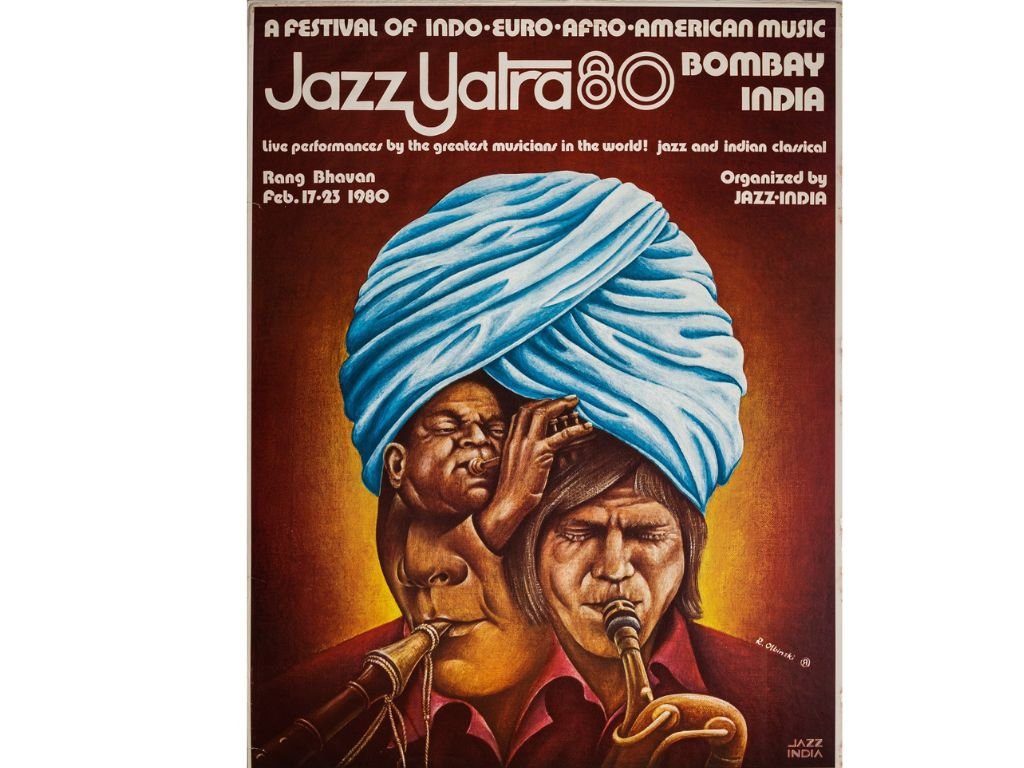
Three human heads emerge from vibrant hues of molten lava and are arranged to form another head. Three heads, with one ear, four eyes, and three noses, feature black, brown and beige complexions. This uncanny assemblage is bound together by a single blue turban. One of the men plays a trumpet, another a baritone saxophone, and the third a nāgasvaram, the double-reed aerophone of South India. Above the turban, an all-caps text proclaims: “A Festival of Indo•Euro•Afro•American Music.” This is an advertisement for a week-long 1980 event in Bombay, India, called the Jazz Yatra, which promises to feature both “jazz and Indian classical” music with “live performances by the greatest musicians in the world!”