Hidesign’s first customer, a German, ordered 1,400 leather bags.
It had just one cobbler then, named Murugan.
On the terrace of a modest home in Auroville, Dilip Kapur spent time making leather bags with Murugan, a local cobbler. There was no business plan, no production line, and certainly no ambition to build one of India’s best-known luxury brands. Having returned to India after years in the United States, Kapur was simply working with leather because he enjoyed it. Then, almost by chance, a German visitor to Auroville placed an order.
The story, however, began long before that order.
Raised in the Sri Aurobindo Ashram in Pondicherry, Kapur left India to study in the United States, first at Princeton University and later at the University of Denver, where he pursued a doctorate in International Affairs. Yet despite the opportunities abroad, one place kept drawing him back.
Auroville Calling
“I came back for Auroville,” he says. “I believed in the utopia of Auroville.”
Returning was less a business decision than a personal one. Auroville’s ideals of creativity, sustainability, and human unity had shaped his worldview from childhood. It was there, with no grand entrepreneurial ambition, that he began experimenting with leather. A summer job at a small leather goods company, Poor Richards, in Denver introduced him to the craft, while Murugan brought generations of inherited knowledge as a traditional leather artisan. Together, they developed products that neither imagined would one day travel the world.
Kapur had never studied design. He simply made the kind of bags he felt he liked—very natural, rugged, handmade, not so perfect. “I was not trying to copy trends,” he says. “I was trying not to be like others.”
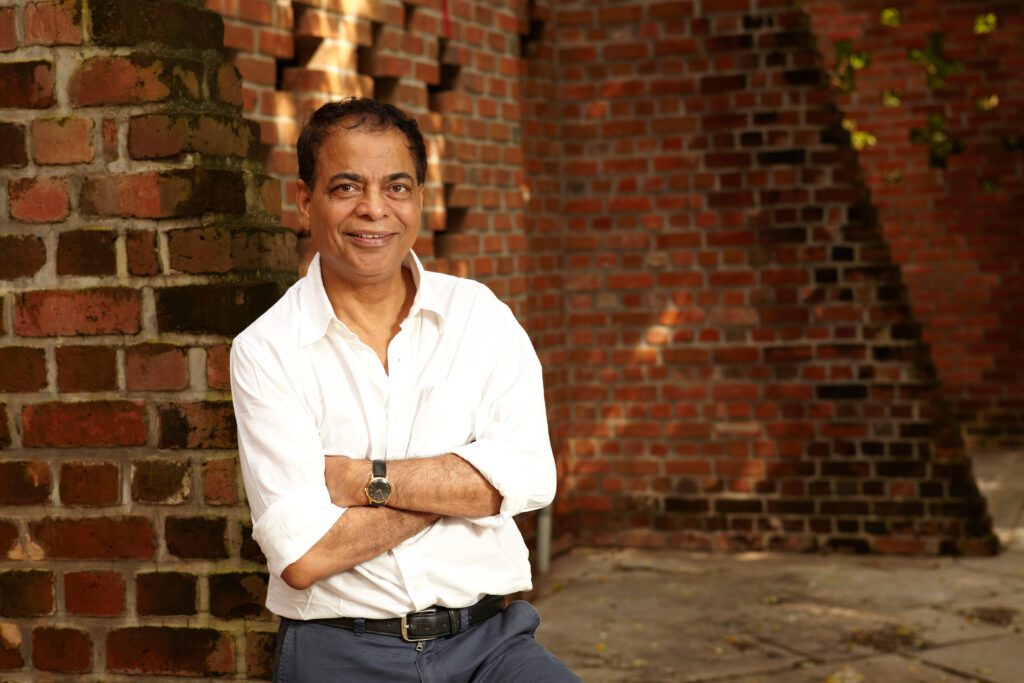
That instinct became Hidesign’s defining philosophy. Rather than presenting itself as an Indian version of a European luxury house, the brand built a design language rooted in its surroundings. It has long described itself as proudly Pondicherrian, that is, cosmopolitan in outlook, deeply Indian in character, but never dependent on visual clichés. A brand could be unmistakably Indian “without having to put a paisley on it, or do an embroidery, or be a wedding gift,” Kapur says. Its identity came instead from the things that mattered more: East India leather, skilled craftsmanship, and an unwavering confidence in where it came from.
Leather bags tanned in Pondicherrian identity shaped the brand’s politics, its advertising, and even the markets it chose to enter.
Hidesign Was Never Intended to Be Just a Fashion Brand
For Dilip Kapur, business was another expression of the values he had grown up with. His years at Princeton University were shaped as much by political activism as by academics. He founded the Third World Liberation Front, campaigned against apartheid and racial discrimination, and remained deeply influenced by the ideals of equality and human unity that had defined his upbringing in Auroville. Those convictions naturally found their way into Hidesign.
“Hidesign has always been political,” Kapur says, “partly because I am political as a person.”
During apartheid, Hidesign refused to sell its products in South Africa, choosing principle over profit. The brand’s advertising was instrumental in putting the message across. Its campaigns featured people of different races, cultures, and backgrounds at a time when fashion advertising largely conformed to narrow ideas of beauty and identity.
Some campaigns courted controversy. An early advertisement featuring a naked Black sailor and a white girl was banned from several shops and media. But Hidesign was never interested in appealing to everyone. Instead, it found its audience among people who valued individuality as much as craftsmanship, from Castro Street and Haight-Ashbury in San Francisco to Portobello Road in London and alternative stores in Melbourne.
Diversity was never introduced as a branding exercise; it was embedded in Hidesign from the beginning.
The Leather Survived. The Tanneries Did Not
East India leather continues to carry a Geographical Indication (GI) tag and remains prized for its strength, durability, suppleness, and the rich patina it develops over time. Yet in Tiruchi, the historic centre of East India leather production, the industry that built its reputation has steadily declined. Tanneries that once supplied markets across Europe have shut their doors because of the rising costs, environmental regulations, and changing market dynamics. The craft is celebrated around the world. The ecosystem that sustained it is struggling at home.
Ironically, Dilip Kapur first encountered East India leather not in Tamil Nadu, but in Denver at the small company where he interned. The leather most valued in it was known simply as “E.I. Leather.” Only later did he discover that the initials stood for East India and that it came from less than a hundred miles from his hometown in Pondicherry.
That discovery stayed with him. When Hidesign began taking shape in Auroville, East India leather became the foundation of the brand. It was not simply because it was locally sourced, but because it embodied a craft tradition that had quietly earned a global reputation long before India began speaking the language of luxury branding.
Developed in the Madras Presidency, East India leather is produced through a distinctive vegetable-tanning process using natural extracts such as wattle tree bark and myrobalan seeds. Unlike chrome tanning, which dominates much of the leather industry today, the process is far more ecological. Icing on the leather is its strength, natural finish, and the character it acquires with age, like a fine wine!
For Kapur, preserving that tradition also meant proving that sustainability and luxury could coexist. Hidesign invested in ecological tanning, wastewater treatment, and responsible manufacturing practices, not because sustainability had become fashionable, but because it aligned with the values on which the brand had been built.
Hidesign alone cannot revive East India leather, nor can it reverse the decline of Tamil Nadu’s traditional tanning industry. But it demonstrates that material choices and craft rooted in Indian heritage give India the competitive advantage that the West can’t replicate. Hence, India must learn to preserve it and build upon its craft heritage, but it’s too late.
The Average Hidesign Craftsman Has Been with It for More than 23 Years
This number is illustrative of the experienced, skilled pool of craftsmen that not just Hidesign has, but India has. “India can deliver serious artisan skill at a labour cost structure that simply isn’t available in Europe anymore,” emphasises Dilip. That skill is built over decades. Around Hidesign’s workshops, craftsmanship is passed from one artisan to another through years of apprenticeship and practice. Cutting leather, hand-stitching seams, polishing brass fittings, and finishing each bag are processes that demand precision, patience, and an understanding that cannot be learnt overnight.
India’s greatest strength, he believes, lies in the continuity of its “cultural heritage.” While many countries have seen artisan skills decline with industrialisation, India continues to produce generations of craftsmen whose knowledge has been inherited, refined, and adapted over time.
Further, Dilip suggests that India’s competitive edge lies in vertical integration from leather tanning to brass buckle sand-casting to manufacture and retail, all under one roof.
If India possesses the craftsmanship, the materials, and the heritage, why does India still have so few globally recognised Indian luxury brands?
India Has the Craftsmanship. So Why Aren’t There More Indian Global Luxury Houses?
For Kapur, the answer is not a lack of talent. It is the challenge of building a luxury brand from India.
One reason lies in the nature of the domestic market itself. Historically, Indian fashion earned prestige and money through bridal and occasion wear, thus most creative talent remained concentrated there itself.
Scaling presents another challenge. Luxury customers expect the same standard whether a brand produces one hundred pieces or one hundred thousand. Maintaining that consistency while remaining handcrafted is no easy task. Every new artisan must be trained, every process refined, and every product subjected to uncompromising quality control. “Great brands take decades,” Kapur says.
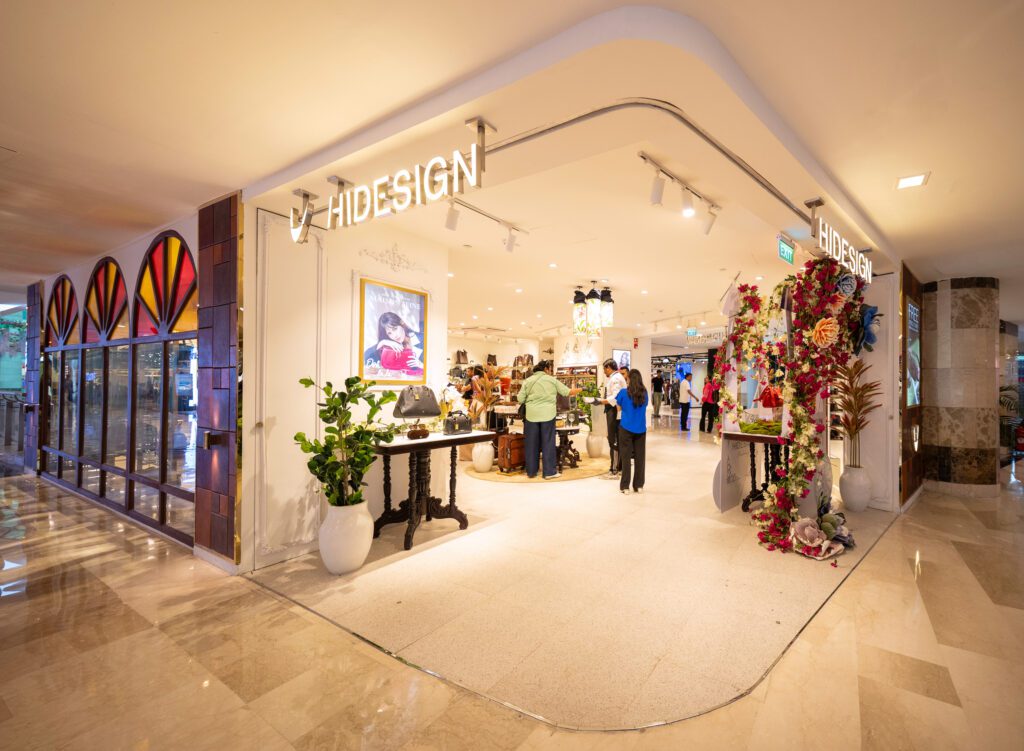
Infrastructure, too, remains a constraint. Retail spaces come at a high cost, limiting brand visibility. The ancillary ecosystem needed to support luxury brands is absent. While India possesses exceptional artisans, the broader ecosystem needed to support globally competitive luxury brands is still evolving. “Indian brands underestimate how long that runway genuinely is,” Kapur says, validating his point. European luxury houses have spent generations cultivating their reputations and building distribution. Indian brands attempting to enter the same space are, in many ways, competing against centuries of accumulated brand equity.
Yet, according to Kapur, the biggest challenge is psychological.
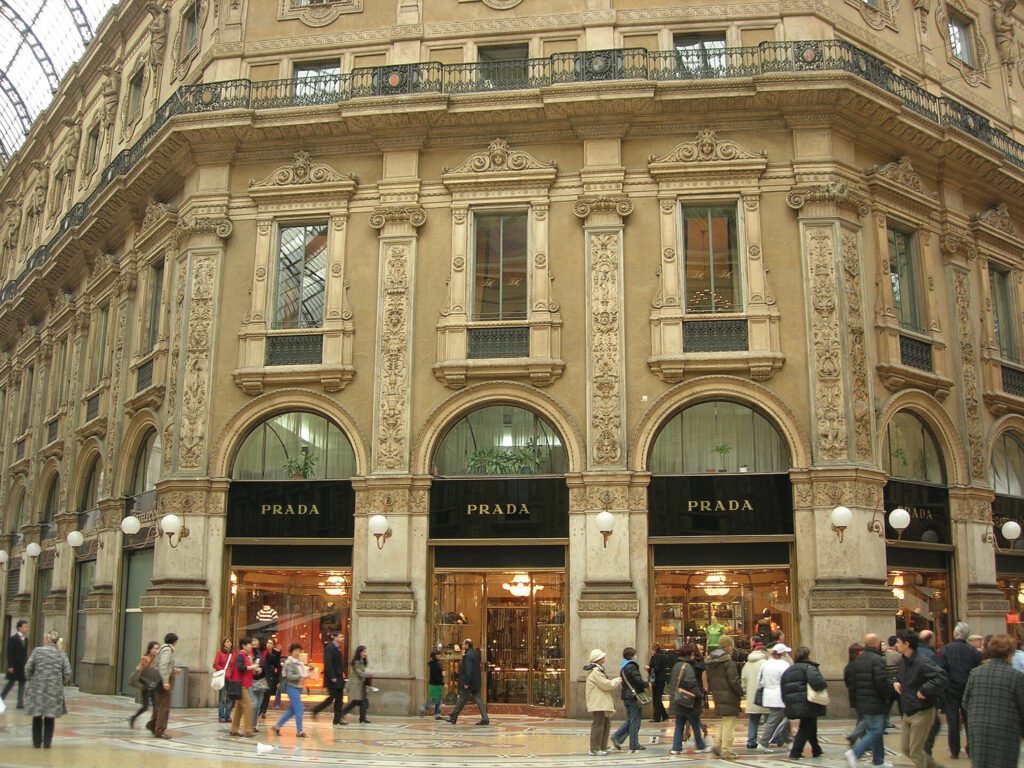
For decades, Indian brands have sought validation by looking outward, drawing inspiration from Paris, Milan, or London, often believing that international appeal requires a European identity. Kapur disagrees. During his interactions with French luxury houses at Comité Colbert, he found a common message: “unmistakable Indian element”, “a unique story”, that the world cannot find elsewhere is key to building a globally recognised luxury brand, something that Hidesign has been able to do.
Thus, brands must build “cultural confidence without losing cosmopolitanism”.
Asked what advice he would offer young entrepreneurs hoping to build the next generation of Indian luxury brands, Kapur answers,
“Be unique. Be yourself.”
It is advice that has shaped Hidesign from the very beginning. The brand never set out to become an Indian version of a European luxury house. It chose to draw on the ideals of Auroville, the craftsmanship of Tamil Nadu, the legacy of East India leather, and a design philosophy rooted in authenticity rather than imitation.
Nearly five decades after a German visitor walked into Auroville and placed an order for 1,400 bags, Hidesign crystallises the fact that India’s place in the world of luxury will not be secured by replicating Paris or Milan, but by building brands with the confidence to tell distinctly Indian stories.