The India–Canada relationship is moving from diplomatic rupture towards strategic engagement. High-level visits have resumed, trade negotiations are gaining momentum, and both countries are exploring cooperation in critical minerals, energy, artificial intelligence, and defence. Yet the speed of the rapprochement raises a difficult question: are New Delhi and Ottawa building a more resilient partnership, or responding to a changing global order that has made closer ties a strategic necessity?
For Vina Nadjibulla, co-founder and CEO of the Centre for Strategic Statecraft, the case for closer ties goes beyond pressures from Washington. Canada and India have much to offer each other, but economic opportunity cannot, by itself, overcome the mistrust left by the diplomatic crisis. Security concerns remain unresolved, and political momentum does not automatically translate into public confidence.
Her belief in patient diplomacy is shaped by a life spent close to conflict, from growing up in Afghanistan to working in countries emerging from war. The long campaign for the release of her former husband, Canadian diplomat Michael Kovrig, who was detained in China for nearly three years, further reinforced her conviction that principled engagement and sustained relationships matter, even when trust breaks down.
In this conversation with India’s World, Nadjibulla reflects on how unofficial diplomacy kept channels of communication open during the freeze, why the current reset must go beyond trade, and what both countries need to do differently. She argues that the real test is not how quickly New Delhi and Ottawa can rebuild ties, but whether they can create a partnership strong enough to withstand the next serious disagreement.
You were one of the few people who kept working on Canada-India relations through the worst of the freeze, when official channels had largely shut. What did that Track 1.5 and Track 2 work actually involve once the governments had pulled back?
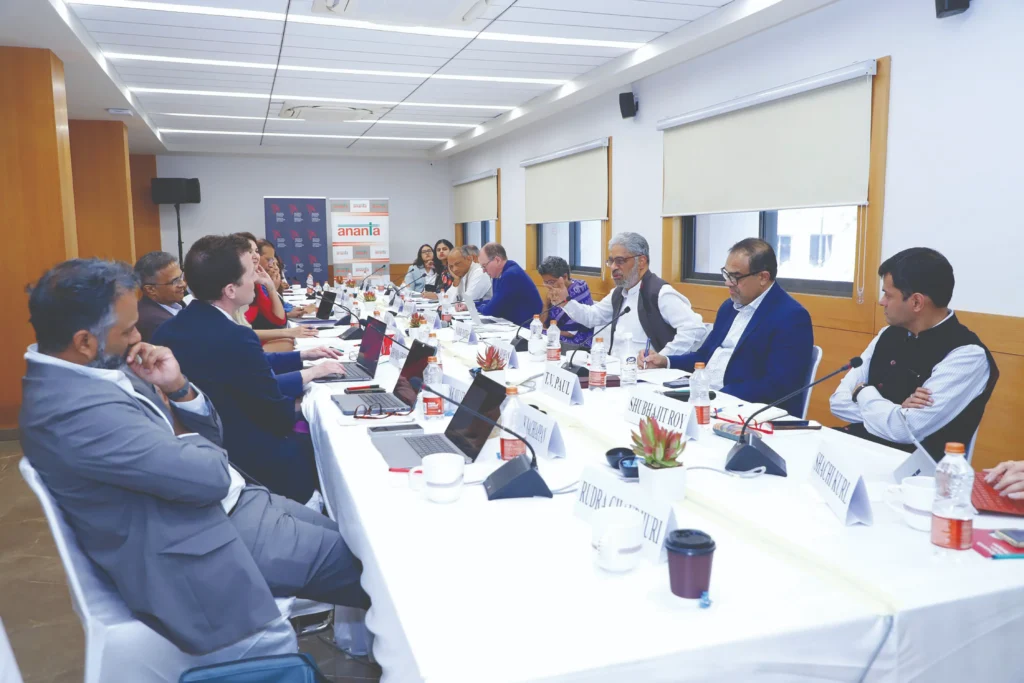
Our first priority was to ensure that the diplomatic rupture did not turn into a complete breakdown of the relationship. That meant keeping channels of communication open at a time when official diplomacy had largely stalled. So our Track 2 work was about preserving connections between people who understood that the relationship was bigger than the crisis—former diplomats, business leaders, academics, think-tank experts, people from the security community and civil society.
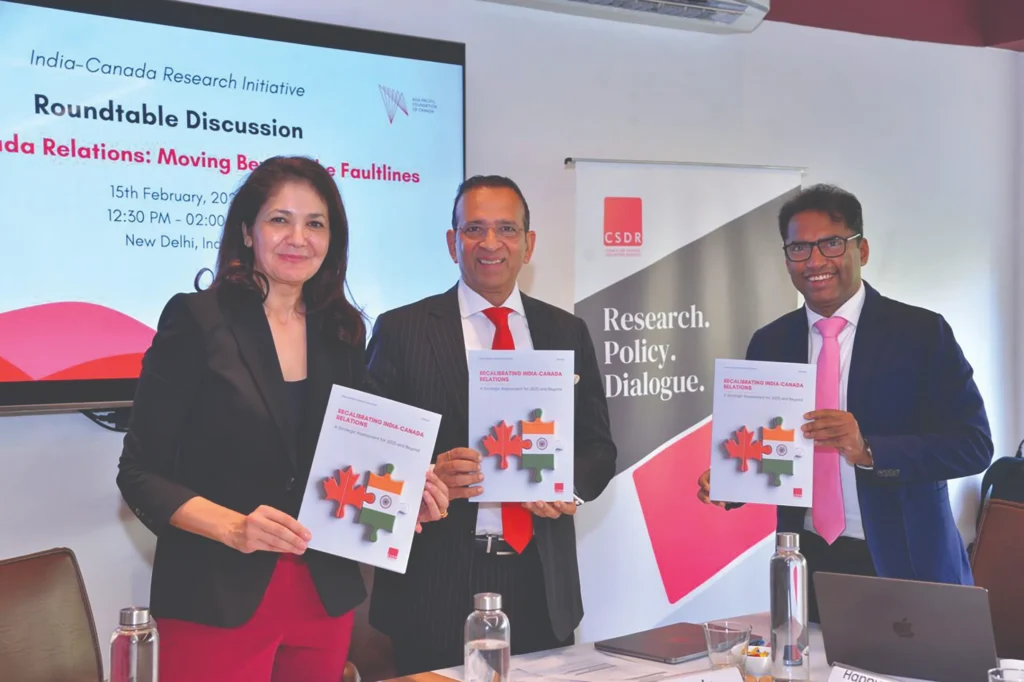
Even at our first dialogue in New Delhi in February 2025, the discussions were quite candid. We did not avoid the difficult issues around national security, foreign interference or extremism. But we also asked a different question: when political conditions improve, what would a responsible reset actually look like? Participants talked about restoring diplomatic representation, resuming trade discussions, creating dedicated security channels and rebuilding public trust.
By the time we held the second dialogue in Ottawa in October 2025, the conversation had already changed. We were no longer asking whether the relationship could be restarted; we were asking how to make the reset durable—how to institutionalise ministerial and security dialogues, anchor the relationship in economic resilience, restart trade negotiations and move into areas such as technology, energy, and critical minerals.
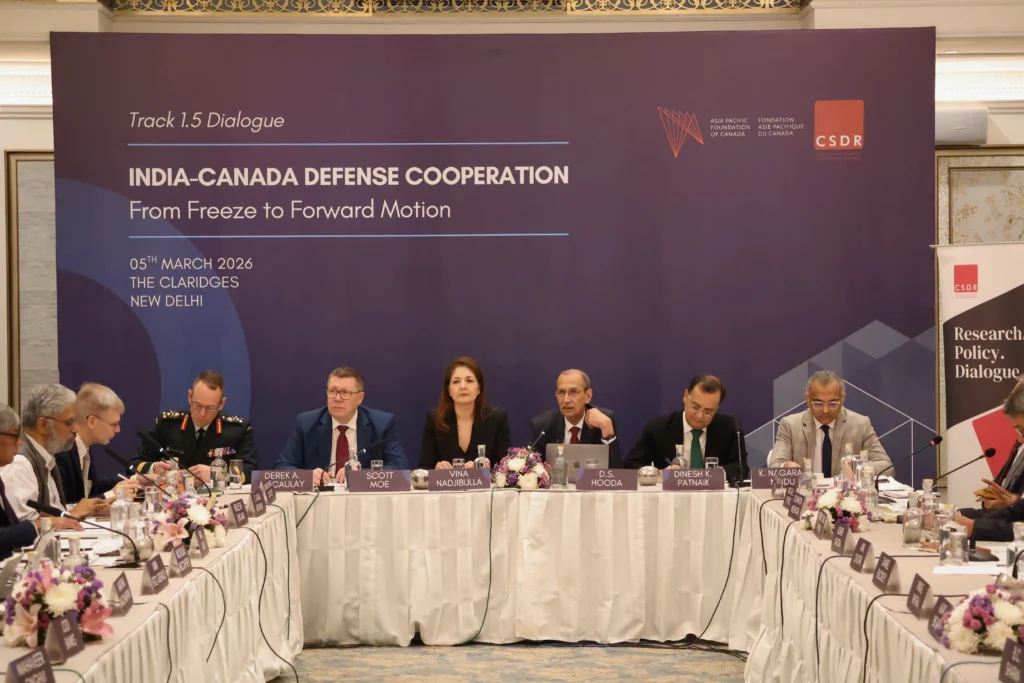
Then the work moved into Track 1.5 discussions on critical minerals and defence, where the focus became even more practical: supply chains, co-production, investment, cybersecurity, and defence-industrial cooperation.
What is interesting in retrospect is that many of those same building blocks later appeared in the official reset and the Canada–India joint statements.
I think the overall contribution of these dialogues was threefold: they preserved relationships and channels of communication during a period of deep mistrust; they created space to test ideas and better understand each other’s concerns; and they helped develop a practical agenda for rebuilding the relationship. When the political opening came, there was already a foundation of relationships, mutual understanding and concrete policy options to build upon.
When formal diplomacy collapses, what can the non-governmental side realistically do, and where are the limits of Track 2 when envoys have been withdrawn?
I think of Track 2 as scaffolding. It is valuable, sometimes enormously so, but it cannot substitute for the building itself.
Non-governmental actors cannot restore ambassadors, resolve criminal investigations or negotiate trade agreements. And they certainly cannot create political trust where leaders are unwilling to engage.
What they can do is make sure that a rupture does not become complete estrangement. They can preserve personal relationships, help each side understand how the other is interpreting the dispute, identify areas where interests still overlap and test ideas that governments may not yet be ready to discuss formally.
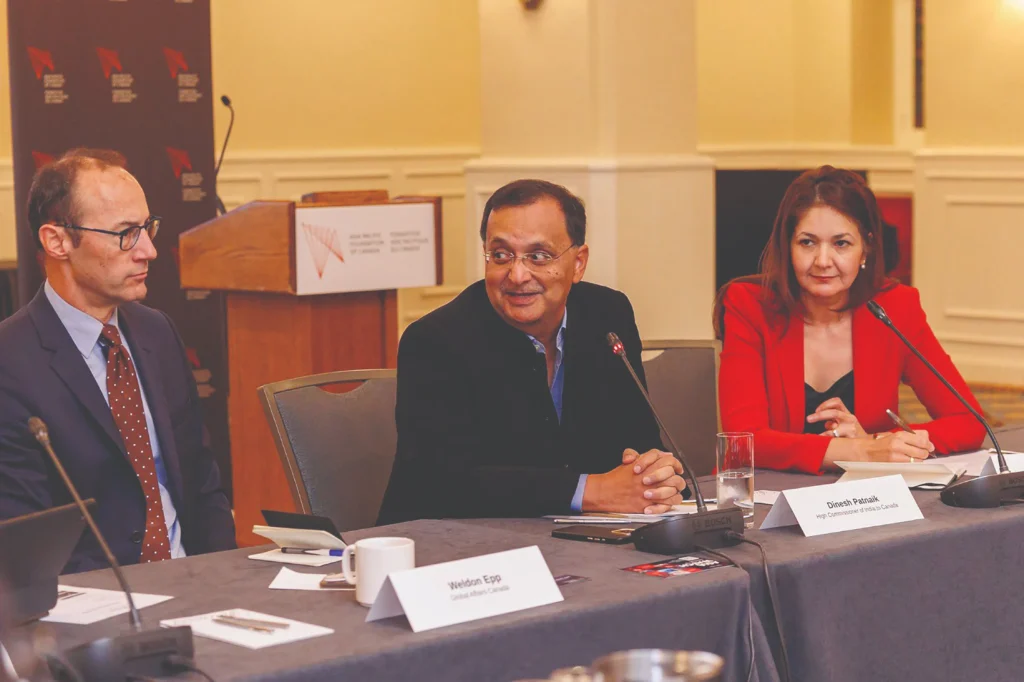
That mattered during the freeze because the narratives in both countries were hardening. It was important to create dialogue spaces where Canadians could explain why sovereignty, foreign interference and transnational repression were so serious domestically, and where Indian participants could explain their own concerns around extremism, security and Canada’s political discourse.
But there was a ceiling to what we could do. That ceiling was political leadership.
PM Carney’s invitation to PM Modi to attend the G7 in Kananaskis was the moment that created political space for re-engagement. Once leaders decided that rebuilding the relationship was in both countries’ interests, all the work below the official level became much more useful.
So Track 2 can keep the door from being permanently locked. Political leadership still has to decide to open it.
You have argued that Trump’s pressure on Canada is speeding up the reset with India. How much of this is genuine conviction on both sides, and how much is two countries pushed together by a difficult Washington?
I see President Trump as an accelerator, not the architect, of the Canada–India reset. There is an inherent logic to this relationship that has very little to do with Donald Trump. Our economies are highly complementary. Canada has energy, uranium, critical minerals, food, capital, AI and aerospace capabilities. India brings scale, technology, and engineering talent, a rapidly expanding market, and growing industrial capacity. And of course, there are extraordinarily deep people-to-people connections.
But external pressure has had a clarifying effect. Both Canada and India have had to think much more seriously about what dependence on a dominant economic partner means when trade and market access can be used coercively. Neither country is walking away from the United States, nor could it. But both now have a stronger incentive to diversify.
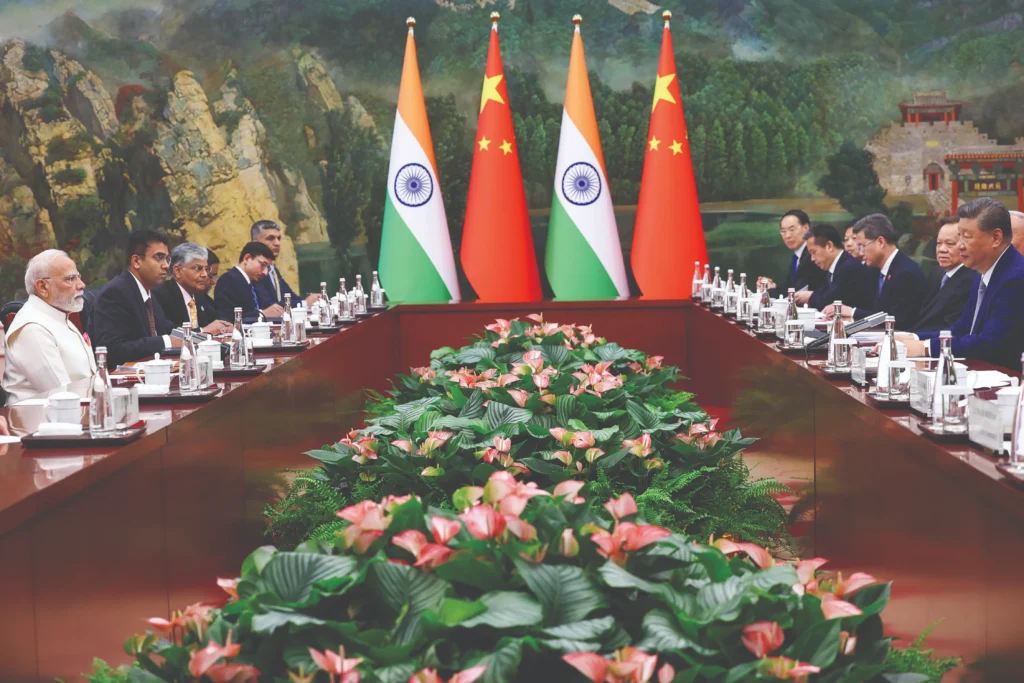
You can see that urgency in the remarkable pace and breadth of engagement: Prime Minister Carney’s visit to India, preparations for Modi’s December visit, a steady stream of ministerial exchanges and trade delegations, renewed dialogues on energy, finance, and national security, and accelerated CEPA negotiations that both governments are aiming to conclude by the end of the year. That is an extraordinary turnaround for a relationship that was effectively frozen just two years ago.
The real test, though, is whether this momentum survives the immediate Trump shock. I think it will. India is becoming more economically and geopolitically consequential to Canada regardless of who occupies the White House, and Canada has resources, capital, and technological capabilities that align closely with India’s long-term ambitions. The strategic logic for a deeper Canada–India partnership extends well beyond the current geopolitical moment.
You founded the Centre for Strategic Statecraft in the midst of this momentum in Canada–India relations. What gap were you trying to fill, and why was this the moment?
Our mission at the Centre for Strategic Statecraft is to strengthen Canada’s capacity to think and act strategically at a moment of profound change in the international order. Canada needs to be much more deliberate about the capabilities it builds, the partnerships it develops and how it advances its interests in an increasingly competitive and fragmented world.
India is critical to that effort, which is why we have made it one of CSS’s flagship initiatives. India’s growing economic weight, technological ambitions, military modernisation and geopolitical influence make it increasingly consequential to Canada’s prosperity and security. Canada needs to develop much deeper and more sustained expertise on India. We have tended to engage India episodically, paying attention during a crisis, a prime ministerial visit or a major trade mission. That is increasingly inadequate for a country of India’s importance.
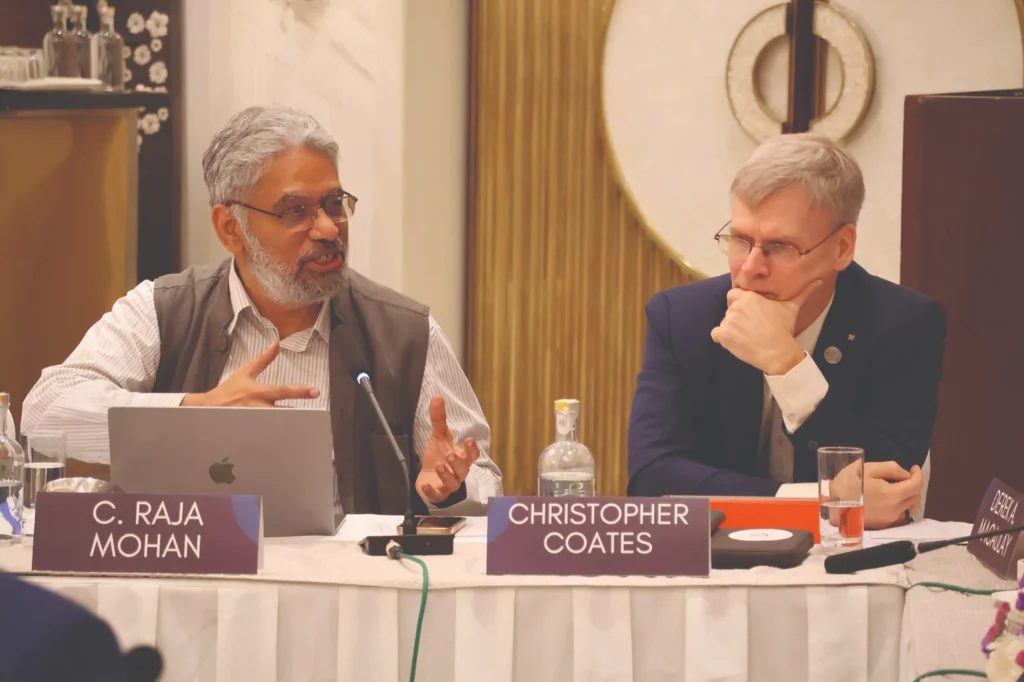
India is not just a large market. It is a major power with its own strategic culture, political economy, federal dynamics, regional diversity, and increasingly influential role in shaping the international order. Canadian decision-makers need to understand not just what India buys, but how India thinks, what drives its decisions and where its strategic priorities are heading. We need that competence across government, business, universities, and other institutions. That is the gap the CSS India Initiative is designed to address.
Ultimately, the opportunity now is to turn the political momentum of the reset into lasting institutional capacity and a more resilient partnership. We need a relationship that is not only capable of delivering results when political conditions are favourable, but strong enough to withstand the next serious disagreement.
One could argue that the fundamental issues between the two sides have not been resolved. If so, is the reset moving faster than the trust meant to underpin it?
Yes, in some ways trust is lagging behind the political momentum. But I am not sure that means the rest of the relationship should wait. Trust in international relations is not always a precondition for cooperation. Often, it is something you rebuild through sustained engagement, predictability, and concrete results.
It is important to recognise that the reset is proceeding on two parallel tracks. The diplomatic and economic track is highly visible. We can see the ministerial visits, trade negotiations, commercial agreements and new mechanisms for cooperation. The security and law enforcement track is less visible. But it is also active. There is a regular NSA-level dialogue working to improve cooperation on issues such as organised crime, extremism, foreign interference and transnational repression.
I think this two-track approach is fundamentally right. Difficult security issues need dedicated channels where they can be addressed seriously without holding the entire relationship hostage. But the two tracks cannot become disconnected. Progress on economic and political engagement needs to be accompanied by credible progress on the security concerns that contributed to the rupture in the first place.
You have called on Ottawa to explain publicly what its security engagement with India has actually achieved. Why does that candour matter, and is it happening?
Because silence creates its own narrative.
We know the security dialogue is happening and NSAs are meeting. But Canadians understandably want to know what it means in practice. There are obvious things the government cannot discuss publicly. No one expects details of intelligence operations or active criminal cases. But there is a lot of space between revealing operational information and saying almost nothing.
Our government should be able to explain the direction of travel. Is information-sharing better? Are the institutional channels working? Has the threat environment changed? Which concerns remain unresolved?
This matters particularly because different parts of the Canadian system sometimes appear to be saying different things. CSIS’s latest public report continues to identify India among the main perpetrators of foreign interference and espionage against Canada, while comments from law-enforcement officials about particular investigations have at times been more qualified. Those statements can coexist because intelligence assessments and criminal investigations answer different questions. But the government has not always explained that distinction very well.
So I think there is still a significant gap in public communication. We hear about meetings and commitments to cooperate on security and law enforcement, but much less about what has actually changed.
And this is ultimately about bringing the Canadian public along. You cannot build a durable India policy on elite consensus alone. Canadians need to understand both why a stronger relationship with India serves our national interests and how the serious security concerns that drove the rupture are being addressed. Ultimately, the durability of the reset will depend not only on how much the two governments achieve together, but also on whether they can demonstrate that the issues which drove them apart are being meaningfully addressed.
Canada and India are both called middle powers. From where you sit, is there a real shared worldview there, or two countries with very different histories reaching for the same label?
I actually think the label can get in the way of the more interesting point.
Canada is a middle power. India increasingly is not. Minister Jaishankar recently used the phrase “power in the middle,” which I think captures India’s position much better. So I would not base the relationship on the idea that Canada and India somehow occupy the same place in the international system. We do not.
The interesting convergence is around agency. Both countries are asking how to preserve greater room for manoeuvre in a world where trade, finance, technology, energy, and supply chains are increasingly used as instruments of leverage. Both want diversified relationships. Both understand that sovereignty today depends not only on military power but on economic resilience and access to strategic capabilities.
Canada and India’s convergence is therefore not based on alignment so much as shared interests. The two countries will disagree on important geopolitical questions. But they can still work together on critical minerals, energy security, technology, AI, resilient supply chains, maritime issues, and reform of international institutions.
That is much more compelling to me than trying to manufacture a common middle-power identity or coalitions.
You have said doubling the trade is ambitious but reachable, and that CEPA has to cover more than tariffs. What are the things that must go right for this to become structural rather than just a rebound?
The question I would ask is not simply whether trade doubles. It is whether the relationship becomes harder to unwind. CEPA matters because it can create predictability on goods, services, investment, digital trade, professional mobility, and regulatory issues. But a trade agreement by itself does not make a strategic economic relationship.
The encouraging development is that we are beginning to see the architecture around CEPA deepen as well. The finance ministers have opened discussions on investment, capital markets, fintech and payments; India has said it is ready to begin bilateral investment treaty negotiations; and the two countries are exploring cross-border payments and broader use of UPI in Canada.
Business also has to move from participating in trade missions to building long-term positions in each other’s markets. The October trade mission was encouraging because its 34 agreements were spread across aerospace, clean technology, AI, education, infrastructure, and other sectors. The next step should be deeper co-production and co-investment.
In critical minerals, for example, the opportunity is not simply for Canada to mine and India to buy. It is to connect Canadian upstream resources and expertise with Indian processing, manufacturing and market scale. The same logic can apply in aerospace, defence, AI and clean technology.
That is what would make the relationship structural: when companies, capital, technologies and supply chains become embedded across the two economies.
You have called Canadians’ lack of knowledge about India a strategic weakness. What has to change on the Canadian side for this relationship to hold, whoever is in office in either capital?
That kind of knowledge we need on India takes time to build. We need it across the federal government, not only in Global Affairs, as well as at the provincial governments, who are deepening their engagement with India. We need it in corporate boardrooms and investment institutions. We need stronger university and think-tank networks. And we need journalists and public commentators who can explain India without reducing it either to an enormous market or to the controversy of the moment.
The same is true in reverse. India also needs deeper Canada competence. Canada should not be understood simply through diaspora politics, immigration or its relationship with Washington.

That is why I keep coming back to institutional density. The CSS India Initiative is designed around sustained education, research, dialogue, and partnership-building. If the relationship is going to survive changes of government and future crises, it needs many more people and institutions invested in understanding it.
A durable relationship requires both countries to know each other better, not simply to want more from each other.
From Afghanistan to the long fight for Michael Kovrig, you have spent your life at the hard edge of geopolitics. Where does your faith in patient, relationship-building statecraft come from, given how much you have seen it tested?
Thank you. That’s very kind of you to say. I wouldn’t describe it as faith in relationships for their own sake. It is really a belief in preserving options, and in not accepting that everything has to be zero-sum.
Growing up in Afghanistan, I learned early that geopolitics is not an abstraction. It has profound consequences for people’s lives. Later, working with the United Nations in countries emerging from conflict, I saw how difficult it is to rebuild trust and institutions once they have broken down. And during the long fight for Michael’s freedom, I experienced both the harsh realities of power politics and the extraordinary solidarity of Canadians and international partners.
Those experiences have made me realistic about the world, but not cynical. I still believe that principled and pragmatic approaches can reinforce each other. We need to stand firmly for our values, but also have the relationships, capabilities and strategic judgment to advance and defend them. Canada is a country I chose to call home, in large part because of what it stands for. I care deeply about preserving those values and ensuring that Canada remains secure, prosperous and influential in a changing world. That is also what motivates my work today through CSS.