What happened:
On April 6, INS Trikand arrived in Dar es Salaam as part of its deployment in the Indian Ocean Region.
Why it matters:
The visit enhances maritime cooperation and interoperability between India and Tanzania.
On April 6, INS Trikand arrived in Dar es Salaam as part of its deployment in the Indian Ocean Region.
The visit enhances maritime cooperation and interoperability between India and Tanzania.
On April 6, the India-flagged vessel Green Asha safely crossed the Strait of Hormuz amid ongoing tensions.
It signals continued energy supply flows for India despite the conflict, with multiple Indian vessels navigating the critical route under monitoring and support.
On April 6, Naveen Srivastava met Shishir Khanal in Kathmandu following the formation of Nepal’s new government.
The talks focused on strengthening bilateral ties, including cooperation in connectivity, energy, and development projects.
On April 6, INS Sunayna arrived in Malé under the IOS SAGAR initiative, conducting joint exercises with the Maldives National Defence Force.
The visit strengthens India’s ‘Neighbourhood First’ policy and enhances maritime cooperation and interoperability in the Indian Ocean Region.
On April 4, S. Jaishankar held calls with Mohammed bin Abdulrahman Al Thani and Abdullah bin Zayed Al Nahyan to discuss the ongoing West Asia conflict.
The talks focused on energy security amid disruptions in the Strait of Hormuz, critical for global oil flows and India’s energy imports.
On March 31, the Ministry of Defence initiated the design and development of a 1000-kg aerial bomb similar to the Mk-84 bomb for the Indian Air Force under the Defence Acquisition Procedure 2020.
The project boosts Aatmanirbharta by reducing import dependence, with plans to procure 600 bombs and ensure compatibility with both Russian and Western aircraft.

A landmark study of Operation Sindoor, co-produced by CSDR and India’s World, this volume unpacks India’s bold shift in deterrence strategy and the evolving dynamics of conflict under the nuclear shadow.
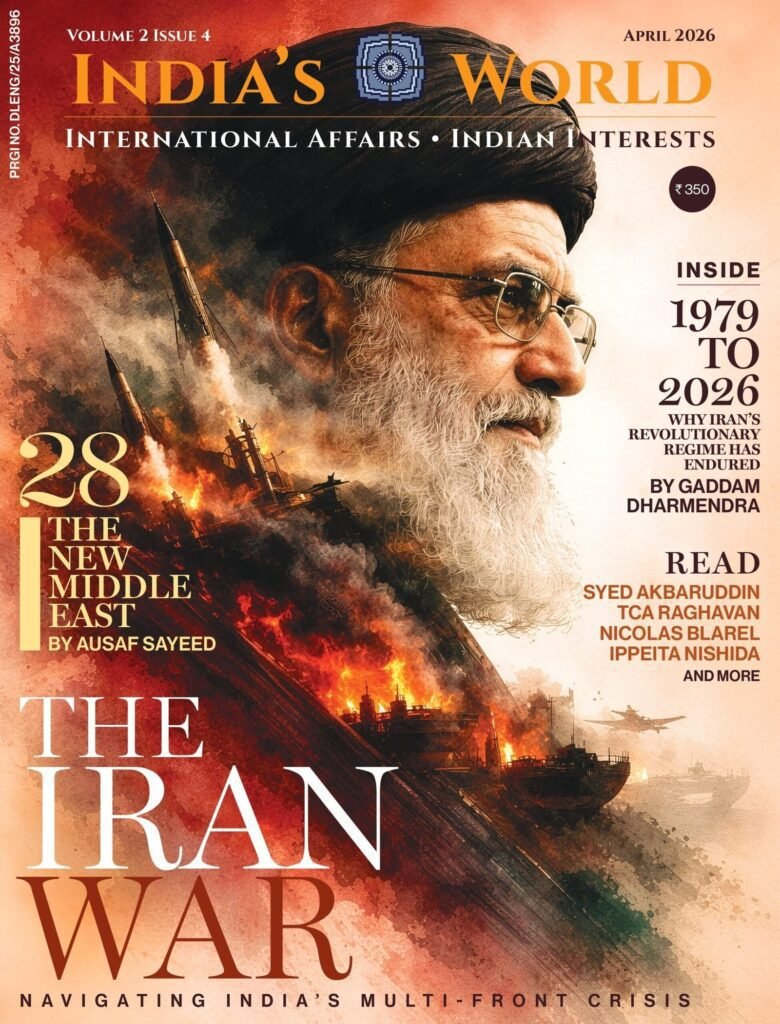
I am delighted to bring you the April issue of India’s World, dedicated to examining what the Iran war means for India and the world. I belong to the school of thought that believes that the US-Israeli strikes on Iran on 28 February 2026 were not just another Middle Eastern conflict, but a strategic mistake with long-term implications. The war has exposed, with uncomfortable clarity, the miscalculations of almost every actor in the conflict, and even some not directly involved.
The revolution that overthrew Mohammad Reza Shah was not originally an Islamist project. It was a broad coalition of liberals, nationalists, Marxists, clerics, and merchants united by opposition to the Shah’s autocracy.
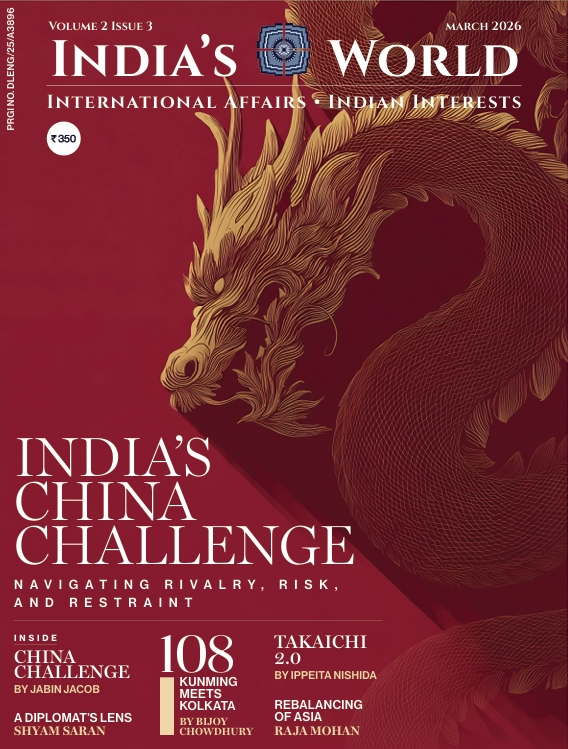
I am delighted to bring you this issue dedicated to examining India’s China challenge. I belong to the school of thought that believes that India’s “China Challenge” is no longer a periodic crisis at the contested borders; it has become the permanent structural backdrop against which Indian strategic thinking must now be measured. It is India’s primary contradiction. In this issue of India’s World, we move beyond the immediate headlines of disengagement or escalation to unpack the multidimensional nature of this contradiction.
Marx argued that the technological means to produce goods and services shape everything else: society’s institutions, laws, and political arrangements. As they develop, productive forces will inevitably come into conflict with the political superstructure.
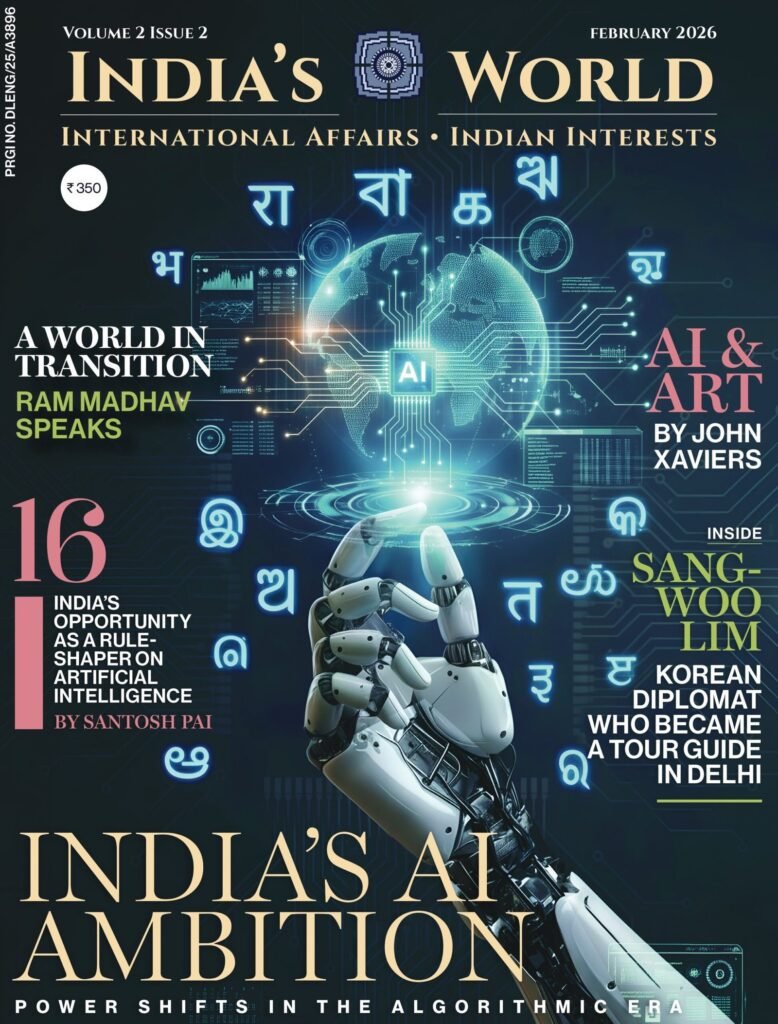
Artificial intelligence is the rage today, reshaping the global architecture of power, productivity, and governance. Technology is no longer merely a product or a tool; it has become the site of the most consequential contestations of the twenty-first century. For India, this moment represents a defining crossroads: will it remain a taker of rules written by others, or will it seize the opportunity to become a rule-shaper? Our latest issue, “India’s AI Ambition,” is dedicated to addressing this question by examining India’s AI preparedness from multiple angles.
India must craft its own model of AI
development and governance, managing
tensions between the state and capital,
citizen rights against the temptations
of an overbearing state, promotion and
regulation, and the natural antinomy
between national sovereignty and
international collaboration
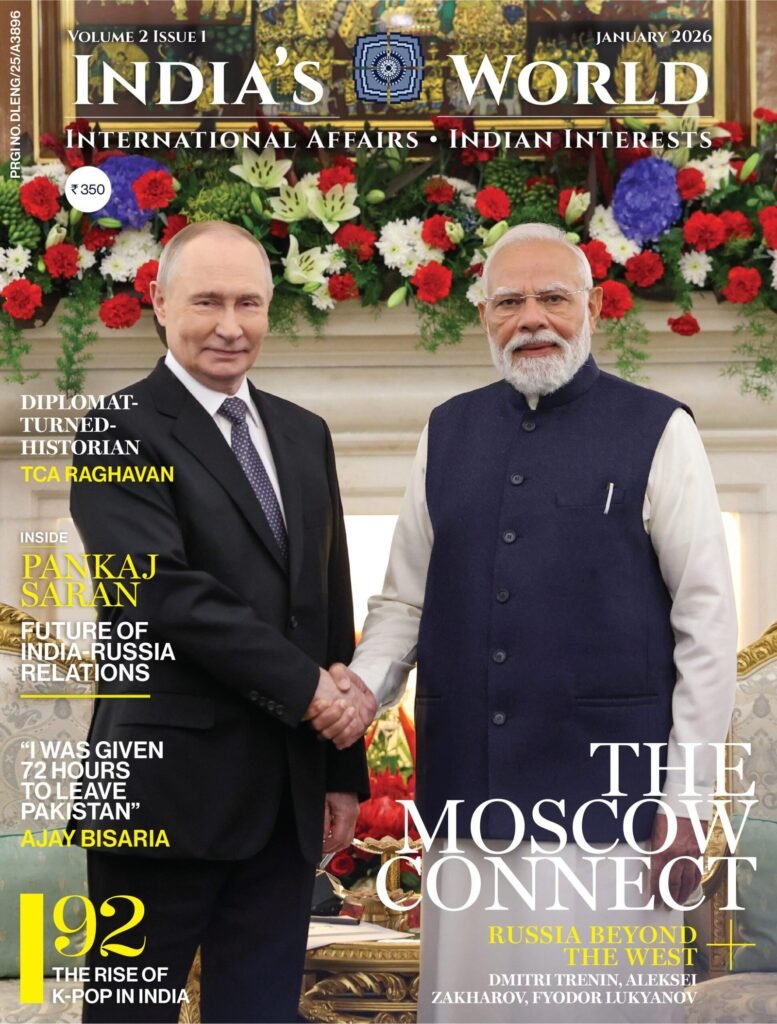
With immense joy and profound gratitude, we present our first issue of 2026. This is a significant milestone for me and for everyone at India’s World. Exactly twelve months after our launch as a once every-two-months magazine, we now take the next step in our journey by becoming a monthly publication. The past year has taught me that as international politics and India’s relationship with the world continue to evolve, the demand for timely, incisive, and well-argued analysis is greater than ever.
Russia does not seek the destruction of the West; it seeks recognition within it. Its rhetoric of sovereignty and resistance to Western dominance masks a persistent quest for acknowledgement. Moscow’s quarrel with the West is less about separation than about status
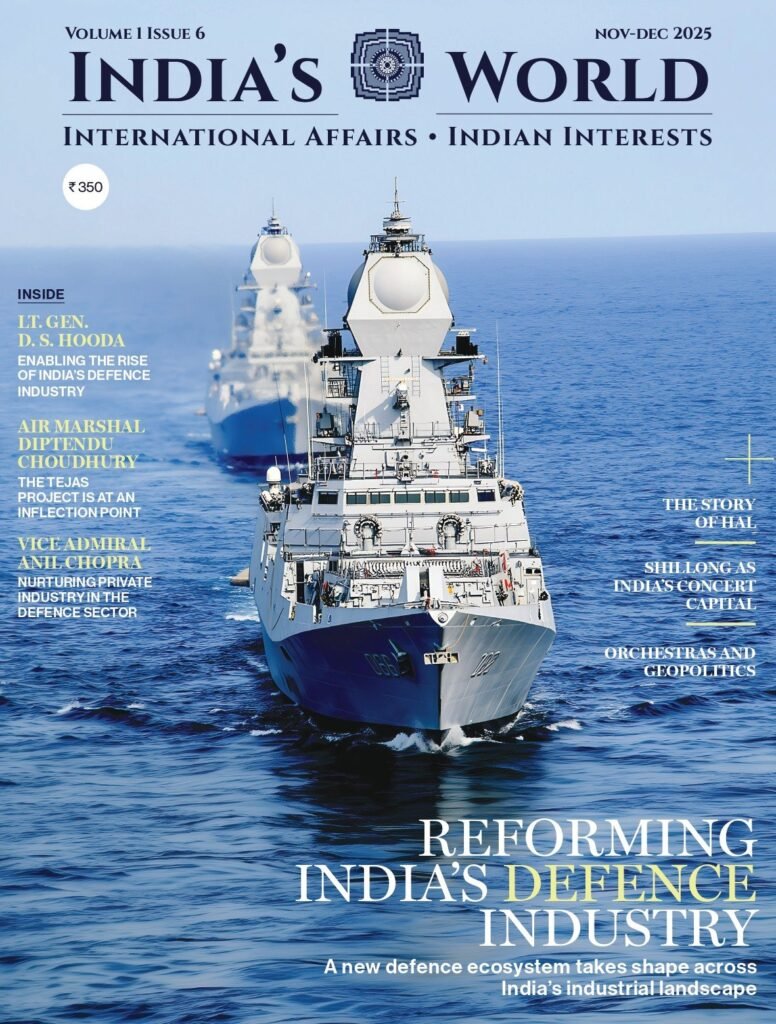
As we proudly present the sixth issue of India’s World, we feel a strong sense of fulfilment, satisfaction, and gratitude for the not-so-easy journey we have undertaken over the past year. India’s World was born out of a deep belief in the power of stories—stories about India and its relationship with the world. For me and my team, India’s World has become more than just a publication; it’s a shared dream, nurtured by the passion of our contributors and readers who believe in our ability to narrate the story of this complex, beautiful, and diverse place called India.
One of the defining attributes of a great power is its ability to produce the weapons it needs for its own defence. Only a handful of nations meet this standard—the United States, Russia, and France among them. That capacity rests on an advanced industrial base and technological sophistication. A rising China has now joined their ranks
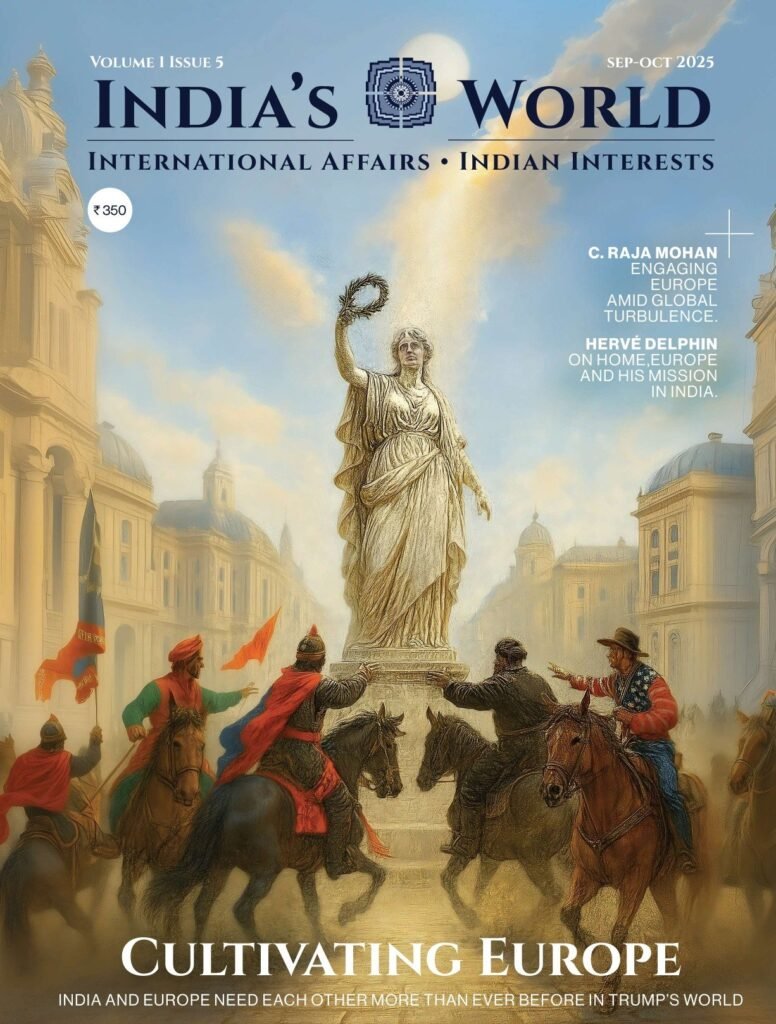
Geopolitically speaking, Europe and India stand at critical crossroads today. Europe is grappling with renewed assertiveness from emerging powers, internal political recalibrations within the continent, and a rapidly unravelling multilateral order. India is carefully navigating regional and global geopolitical uncertainties and is choosing to be more multi-aligned, moving more decisively into the Indo-Pacific, negotiating FTAs, and managing the rapidly rising China challenge in the region and beyond.
Adding insult to injury, Trump’s “Make America Great Again” ideologues have intervened brazenly in Europe’s domestic politics. The U.S. State Department—once fond of lecturing non-Western nations on human rights—has turned its gaze on European democracies, raising alarms about restrictions on free speech. U.S. Vice President J.D. Vance has publicly scolded Europe for abandoning “classical Western values”
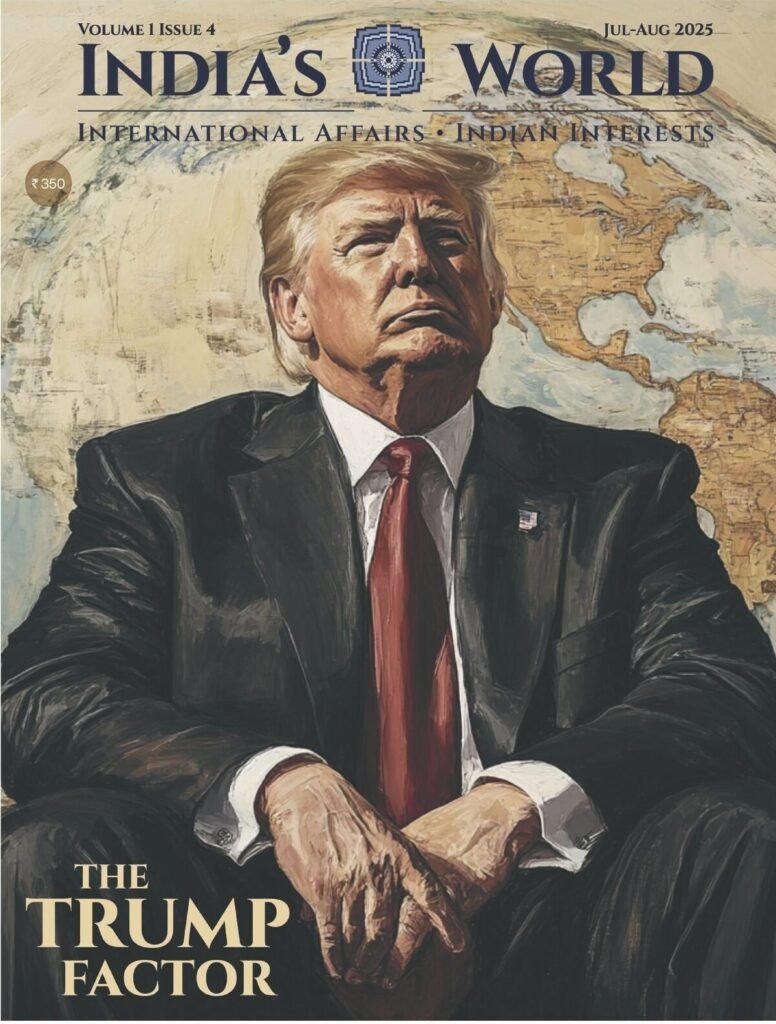
Donald Trump’s return to the White House has almost single-handedly altered the course of contemporary international politics. Under his watch, Washington seems to have become disinterested in its leadership of the world. The transatlantic relationship has been damaged, if not altogether dismantled; the war in Ukraine is turning in Russia’s favour; and China continues its assertive global rise. There is little clarity about what comes next. And it has only been a little over five months since Trump assumed office in Washington.
Few elites around the world welcomed the re-election of Donald Trump as U.S. President in late 2024 more than in India. That enthusiasm appeared justified by Prime Minister Narendra Modi’s highly productive engagement with President Trump at the White House in February 2025. India’s optimism on Trump however, has quickly soured into anxiety after the India-Pakistan conflict of April-May 2025—amid Trump’s repeated claims for credit in ending hostilities and brokering a ceasefire.
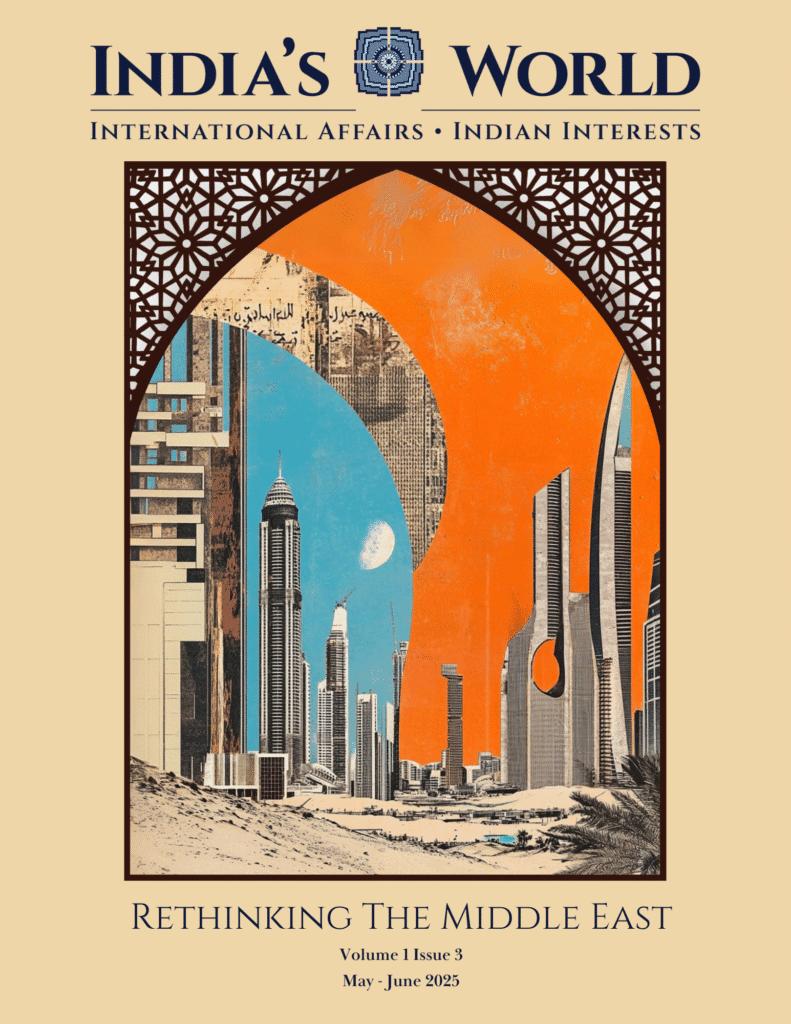
We bring you the third issue of India’s World at an important moment, as the Middle East undergoes a profound transformation, reshaping the region’s internal dynamics and its relationship with the wider world, including India. For India, the old paradigms it once used to define the region are rapidly dissolving, demanding a fundamental reassessment of how it must engage with this vital geopolitical space. The Middle East is no longer merely from which India imported energy and to which its people migrated to work, or a region seen only through the lens of conflict.
Official Delhi rarely acknowledges big changes in foreign policy. The discourse on Indian foreign policy that celebrates continuity and enduring principles such as strategic autonomy is even more reluctant to reflect on India’s changing foreign policy orientation. Yet, change has been the dominant feature of India’s engagement with the world over the last three decades. Some of that change has accelerated under Prime Minister Narendra Modi. For example, Modi himself has claimed that India has shed its ‘historic hesitations’ in building a partnership with the United States.
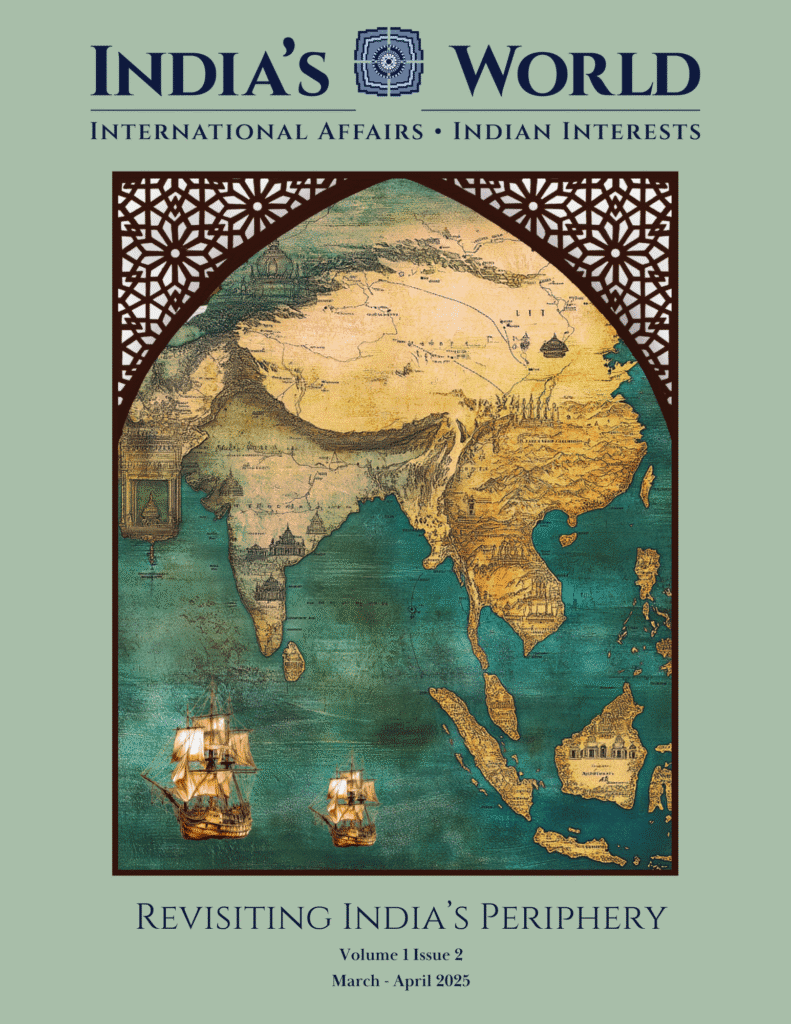
Geography, they say, is destiny, and that you can’t alter destiny. If that’s true, it’s important to understand one’s destiny—not necessarily to change it, but at least to work with it. This issue of India’s World aims to explore the history of India’s neighbourhood, examine how India’s relationship with its destiny has evolved, and consider ways to improve the nature of that destiny.
Historically, India’s worldview has been shaped by its region, influenced by its changing landscape, interconnectedness,
Seventy-five years after independence, the subcontinent remains at odds with itself. Bemoaning this tragedy is no substitute for hard-headed analysis. There has been plenty of reflection on the state of the subcontinent in this issue of India’s World.
No analysis of the region can overlook the historical burden of the Partition that continues to weigh down on Bangladesh, India and Pakistan. So is the inevitable fragmentation of the broader subcontinent, whose heartland and periphery were held together by the paramountcy of the British Raj until 1947.
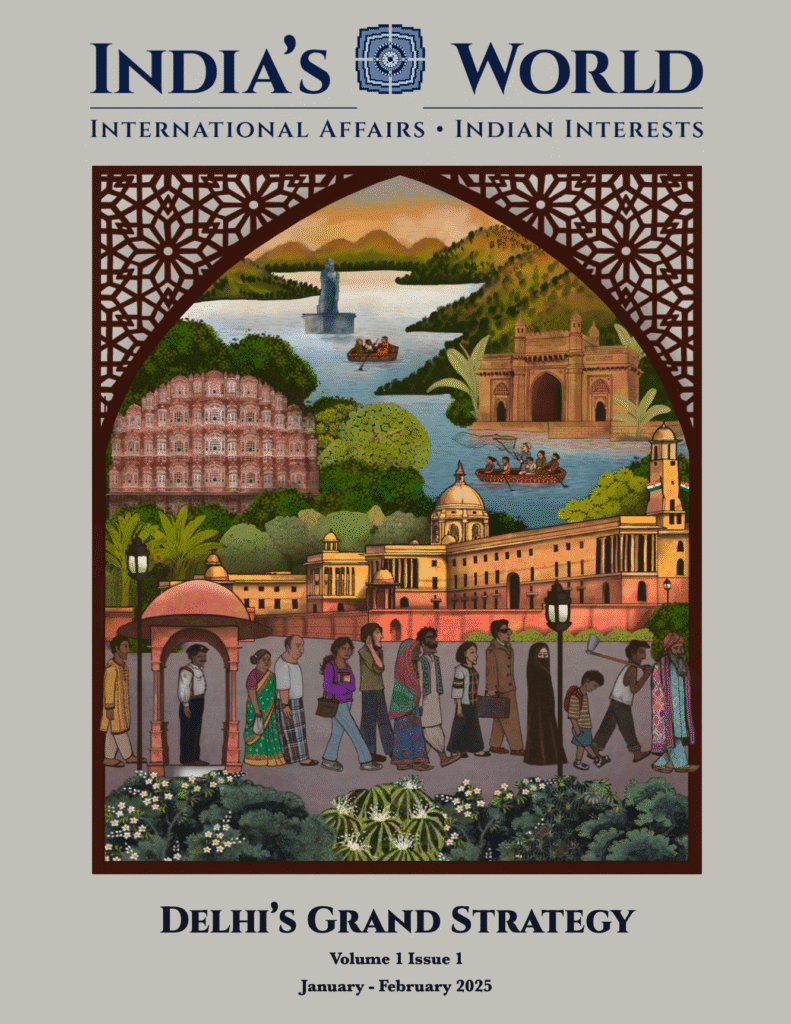
The inaugural issue of India’s World explores the various dimensions of India’s Grand Strategy – the challenges, choices, and opportunities. It features thoughtful takes on India’s diplomatic history, relationships with neighbors like China and Bangladesh, and broader global engagements, such as with the Middle East. This issue also highlights the intersections of culture and international relations—through interviews with authors, film reviews, and reflections on how the arts and media shape India’s global image. In the coming months, India’s World will delve deeper into sports, music, arts, and their intersections with foreign policy.
India’s World, we must remember, is not just about India! It’s about the world too! India’s international relations and the unambiguous pursuit of its national interests must be anchored deep in an appreciation of other countries–their histories, political evolution, economic trajectories, and their internal and external contradictions. Understanding other societies and developing a comprehensive knowledge of the world is a precondition for successful Indian grand strategy, irrespective of its means and goals.
In this segment, our editorial team provides in-depth background and comprehensive analysis on key issues to help our readers go beyond news headlines and understand what impacts India today.
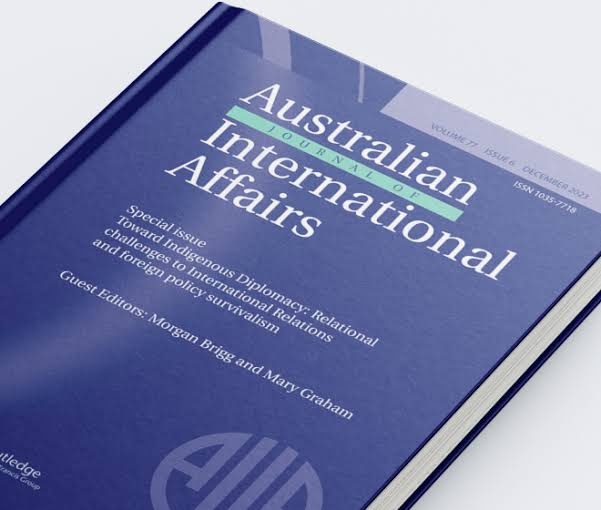
This section brings to you noteworthy or unique academic perspectives and debates on India from reputed and peer-reviewed journals across the world.
Think tanks have emerged as vital sources of policy input for major powers across the world today, which, in turn, renders their research work valuable to India. To curate this segment, our editorial team surveys the analyses on India by top global think tanks and flags the articles you must not miss.
The inaugural issue of India’s World explores the various dimensions of India’s Grand Strategy – the challenges, choices, and opportunities. It features thoughtful takes on India’s diplomatic history, relationships with neighbors like China and Bangladesh, and broader global engagements, such as with the Middle East. This issue also highlights the intersections of culture and international relations—through interviews with authors, film reviews, and reflections on how the arts and media shape India’s global image. In the coming months, India’s World will delve deeper into sports, music, arts, and their intersections with foreign policy.
India’s World, we must remember, is not just about India! It’s about the world too! India’s international relations and the unambiguous pursuit of its national interests must be anchored deep in an appreciation of other countries–their histories, political evolution, economic trajectories, and their internal and external contradictions. Understanding other societies and developing a comprehensive knowledge of the world is a precondition for successful Indian grand strategy, irrespective of its means and goals.
Sign up for a free account to access expert analysis of India’s foreign policy. Create your account now!