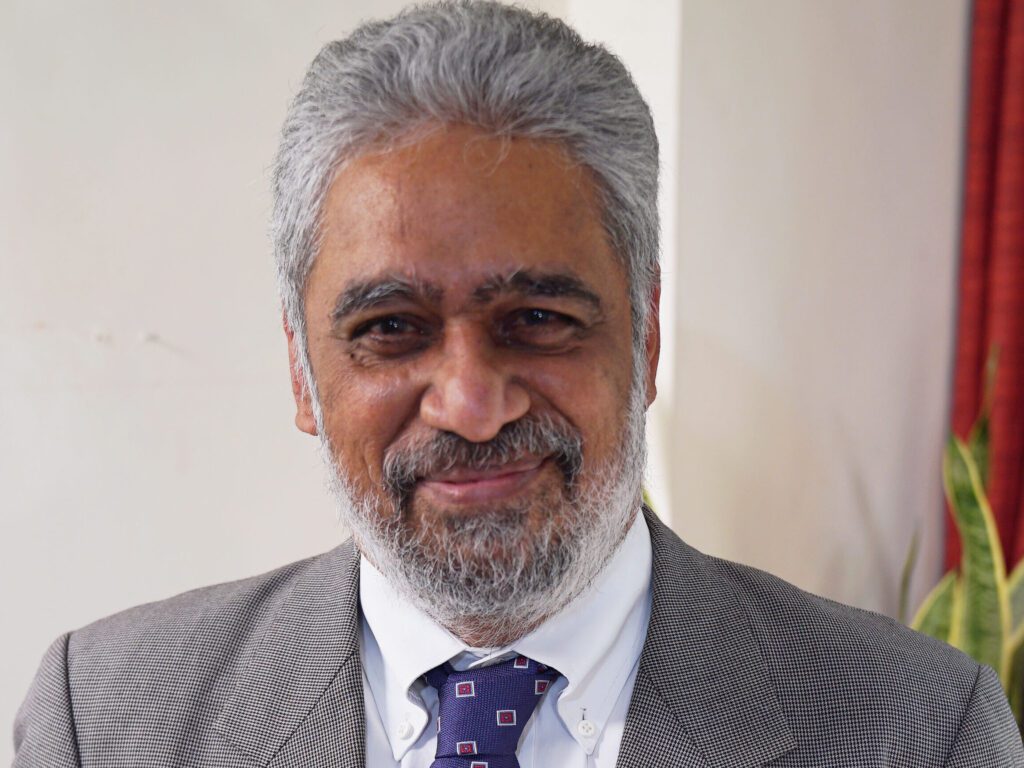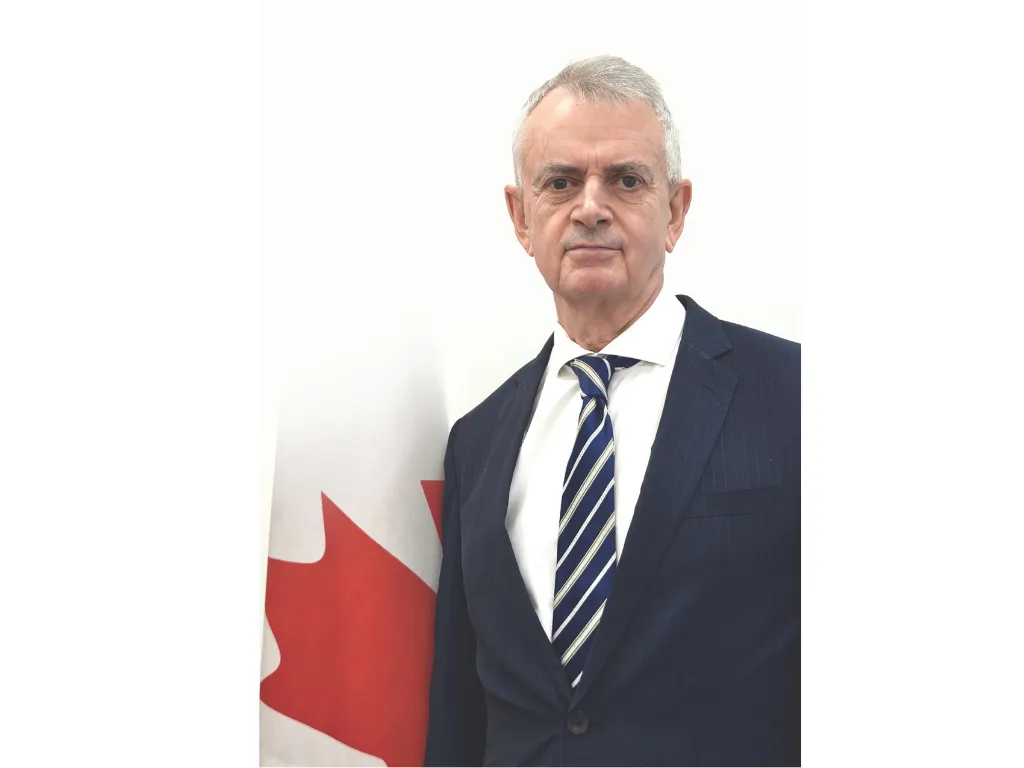
Christopher Cooter, High Commissioner of Canada to India, on Canada remaking itself, a relationship rebuilt after the rupture of 2023, and why he thinks this time the momentum will hold. He spoke to Happymon Jacob at the High Commission in New Delhi on 23 October 2026.
Christopher Cooter arrived in New Delhi in the autumn of 2025, a quarter of a century after his first posting here, to fill an office that had sat empty through the worst period in India–Canada relations. Thirteen months on, the two prime ministers are in regular contact, a Comprehensive Economic Partnership Agreement is being negotiated for a year-end finish, security advisers have met three times, and Narendra Modi is expected in Canada in December. This interview has been edited and condensed for length and clarity.
Because our relationship is going to be shaped as much by what is going on in Canada as by what is going on in India. We are broadening alignment from north-south to east-west. That is diversification, on the economic side certainly, but on the political side too, and it is quite profound. And it is not just Prime Minister Carney. It is the large majority of Canadians who support him, one of the highest approval ratings of any prime minister in recent decades, and the Alberta referendum on 19 October showed the same thing. People are for Canada, but for a different kind of Canada, one less tied to the United States and freer to build partnerships with countries like India.
This is not about being critical of the United States. Canadians have decided they would like a new place in the world, and that is the part that matters for India.
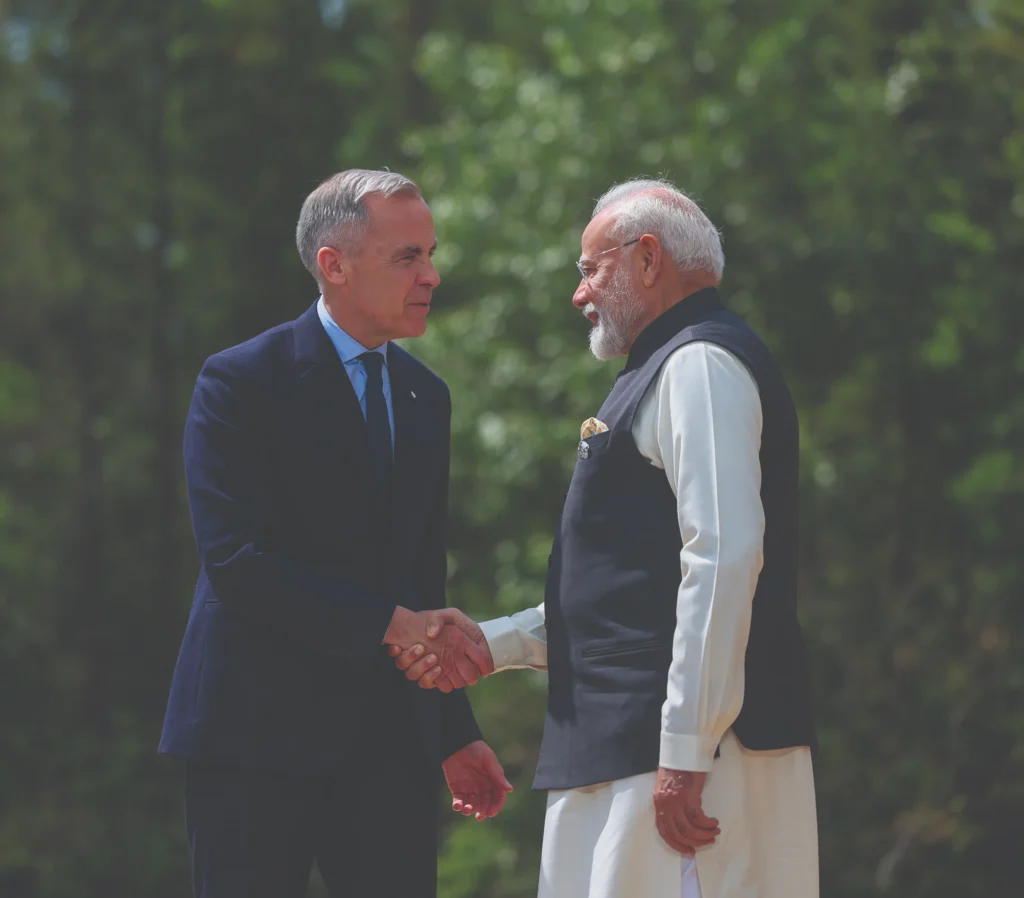
I was here in the late 1990s, when we had an upswing and then a downswing after the nuclear tests. That has been the pattern: up and down, diverted by a political event or something on the security side. Coming back after 26 years, the surprise is how little we have done. Critical minerals, energy, agriculture, defence: a little, and in some cases almost nothing. The one exception is investment. Canadian investment in India is heading towards about C$120 billion. Fairfax announced the purchase of a bank last week, and the Canada Pension Plan has put in several billion more in recent weeks. That is money in real assets, in infrastructure, life sciences, and the Bangalore airport. We are putting our pension money into India’s future. I hope you get it right.
And now?
Now almost everything is changing, and almost all of it in the last year. Take defence. We are going from one of the lowest spenders in NATO to one of the highest per capita, from just over one per cent of GDP towards five per cent, which puts something like C$500 billion extra into procurement. We have barely done anything with India in defence, whether joint ventures, procurement or military-to-military exercises. That could move up quickly.
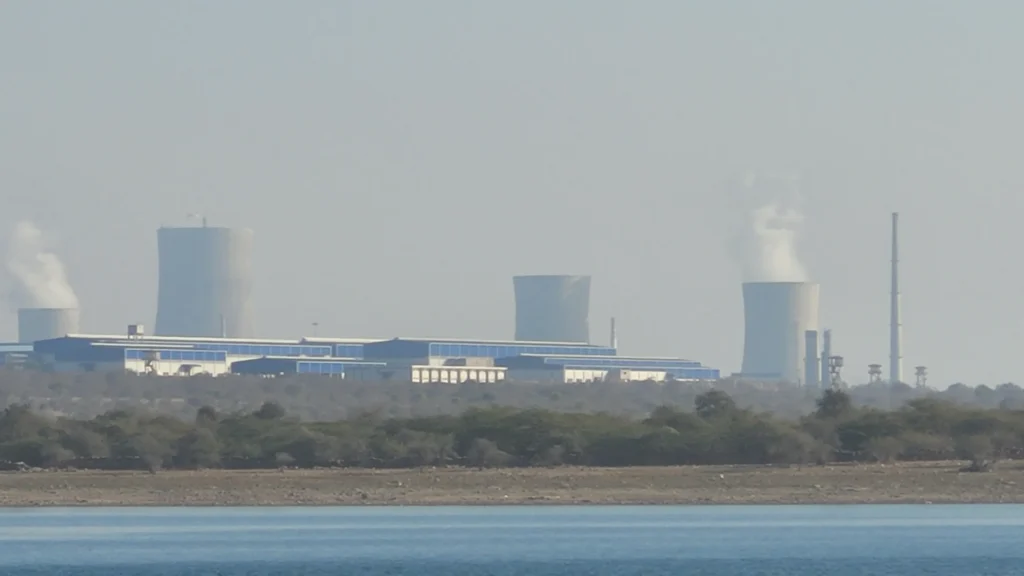
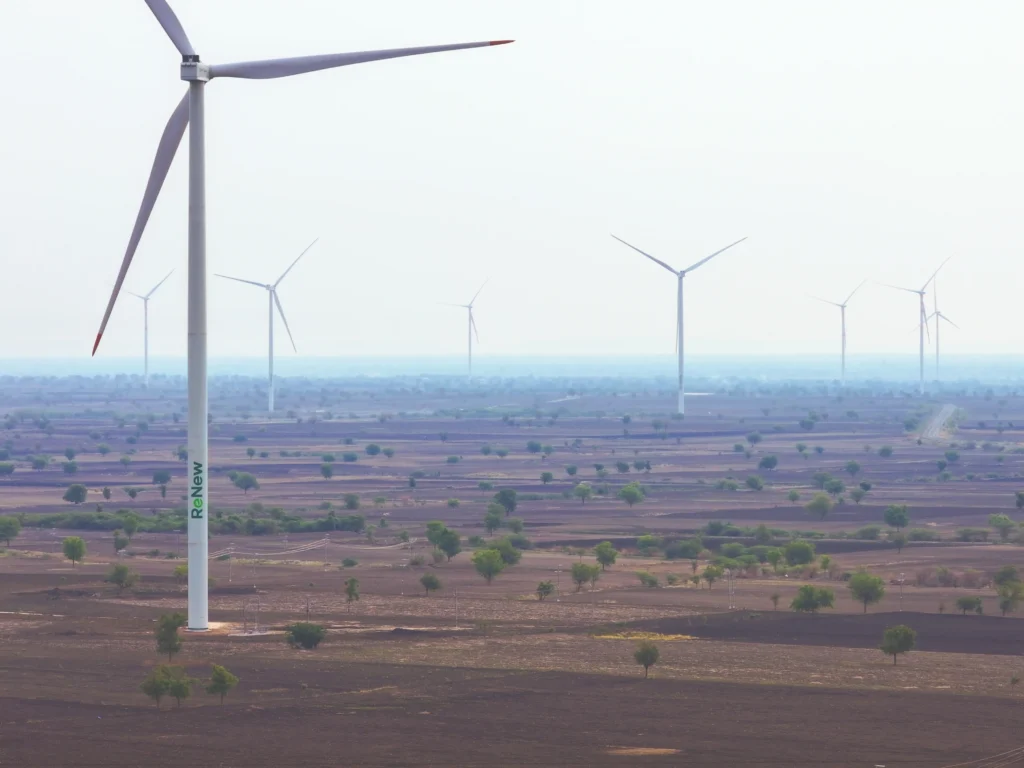
Take energy. We will build a new oil pipeline to the west coast, Pacific Link, which gives us another million barrels a day on top of the existing line, so about two million barrels a day looking at Asia. Until last year, we had no LNG export capacity on the west coast, none. We will have about 50 million tonnes by 2030 and are aiming for 100. LPG I was not even familiar with until it became an issue in the West Asia war; now our LPG producers are in regular contact with Indian buyers. We just need a little time to get the infrastructure in place.
So yes, we have had an up-and-down relationship. But we are not dealing with the same two countries anymore. Canada can bring resources, human and natural. India brings scale. Put them together, and you have something globally competitive, and if you are not globally competitive and we are not at the table, to paraphrase my prime minister, you will be eaten for lunch.
What triggered this rethink? The rupture with the United States, anxieties about the post-war order, the rise of China?
Several things. There is a natural cycle in human affairs; every 25 or 30 years, a new generation wants to put its own stamp on things, and that is happening in Canada. Some of the old certainties about how we did things since the Second World War had to move on. Apart from the United States having a different attitude, there is the rise of the Global South. We have talked about it since I joined the foreign service more than thirty years ago, but we still tended to deal with the friends we had habits of cooperation with. The relationship with the rising South is now actually beginning to happen.

Then there were shocks. COVID exposed how dependent we were on narrow supply chains. The United States changed its attitude, and it is by far our biggest trading partner. And climate change, which for us is not an abstraction. A very large part of the Arctic is under Canadian sovereignty, and it is getting warmer.
Canada was known for a different kind of foreign policy personality: rules, regimes, order, human security. Are we going to see a more hard-headed, realist Canada?
I would put it a little differently. Canada’s foreign policy was always realist. The strong relationship with the United States was realism. And multilateralism was not Pollyannaish. Mid-sized countries like ours helped build the post-war architecture because we benefited from it. The great powers had failed miserably; they had dragged us into two colossal wars. The people of the 1940s said, “Let us put a system in place that will never fully constrain them but will help contain them and give us a voice”. That was realism dressed up in noble words.
The realism of 2026 has to take into account the meaningful rise of the South. India, but also Brazil, Indonesia, and Nigeria. So what we have is a new form of realism. It still emphasises doing things collectively, because no one country can combat climate change or keep the oceans from being poisoned. The emphasis on human rights remains, but the South is not the South of 1982. You are a very developed democracy. We do not need to tell India how to handle its strains. We need to be full partners rather than what we were in the past.
Is the difficulty with the United States, then, a blessing in disguise?
That would be a controversial thing to say. We want a great relationship with the US, and, on many levels, we have one. We will work through renewing the trade agreement; we have even talked about doing it before the American midterms. What I can say is that it has obliged Canadians to look at themselves and realise that Canada is getting stronger and more self-confident. We do not call it Viksit Canada yet, but it is something like that, a project that brings people together.
You were posted here 25 years ago. What has changed in India, and what has stayed the same?
The most interesting change is the self-confidence. India in the 1990s was in the early days of reform. Internationally, it took, as you say in your book, a non-aligned approach, but it was often unclear to others what that meant, and the engagement was more formalistic than substantive. Today’s self-confidence is not hubris. You feel you can do it, and you have shown you can.
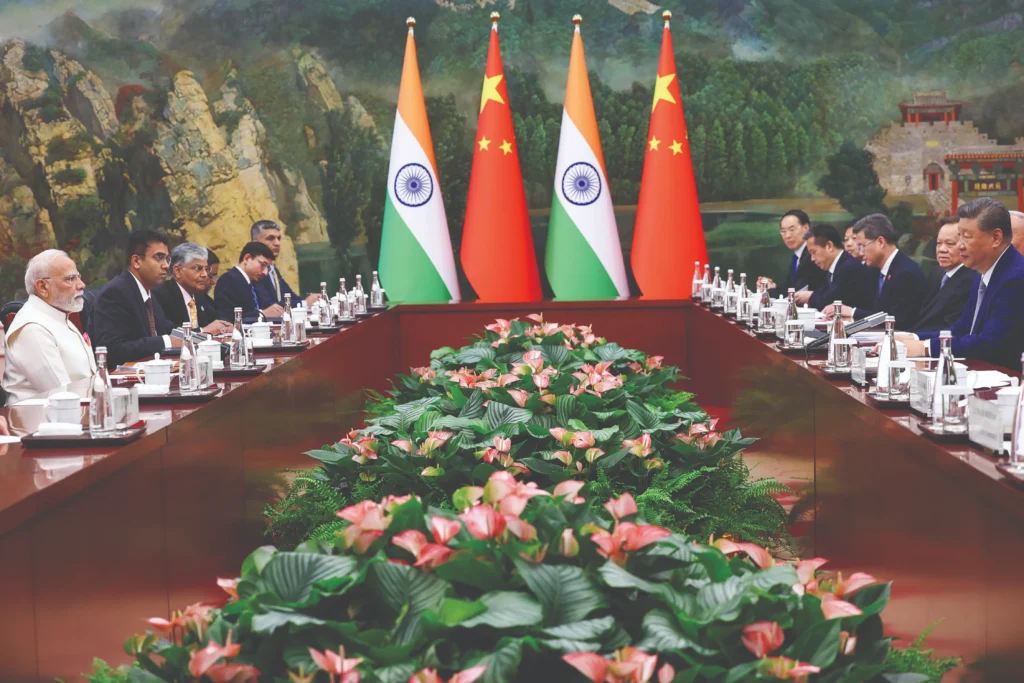
On foreign policy, the most recent example is India co-sponsoring the Partners for Multilateralism group at the UN General Assembly in September. I am not sure you would have done that thirty years ago. But the middle has shifted. There is no Cold War, no first, second and third world, so alignment and non-alignment mean something completely different now. Protectionism has gone, and the stated goal is trade agreements with all the developed countries. Our two prime ministers have met four times in one year. That is hyperactivity by the standards of the 1990s.
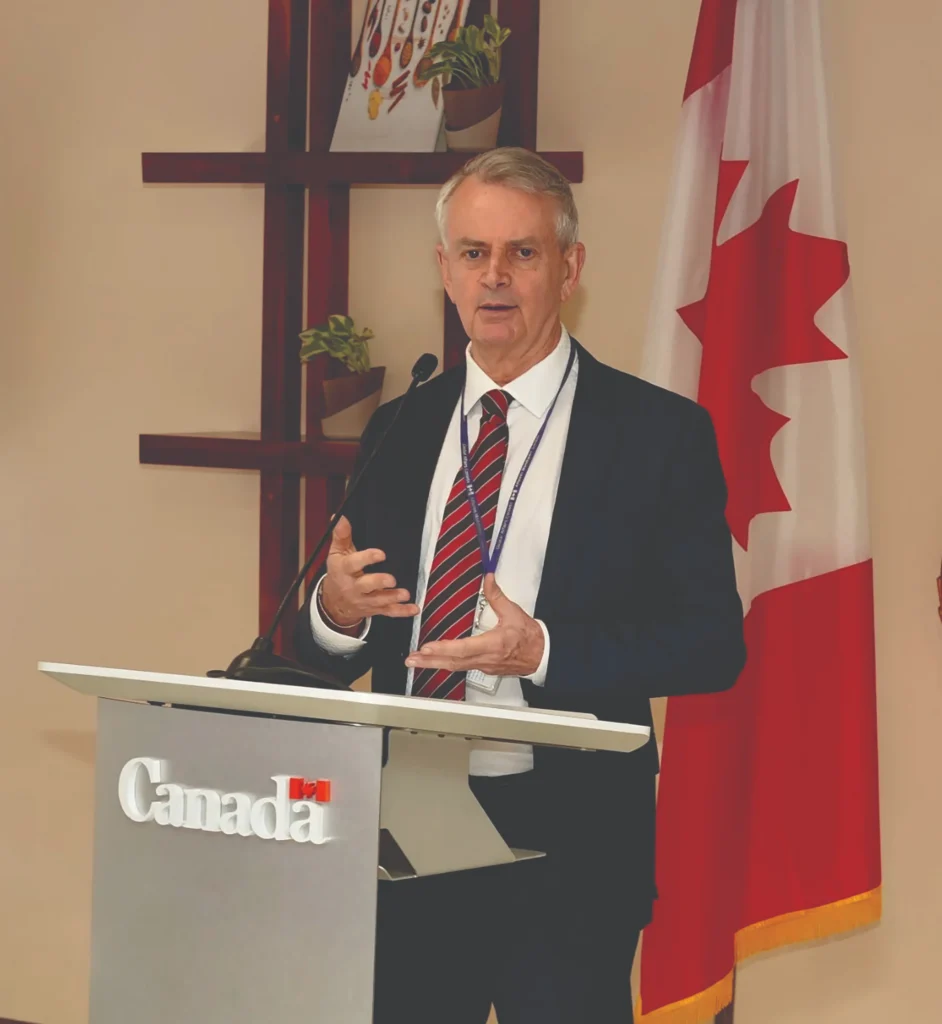
And there is far less local conflict than there was: the Naxalites, Kashmir, the north-east. I was in Odisha just after the cyclone of 1999, and people there say it was the moment the state decided it would never lose another person to a disaster like that. Growth is spreading to parts of the country where, in the 1990s, it was not.
What brought the relationship back on track after the rupture of 2023?
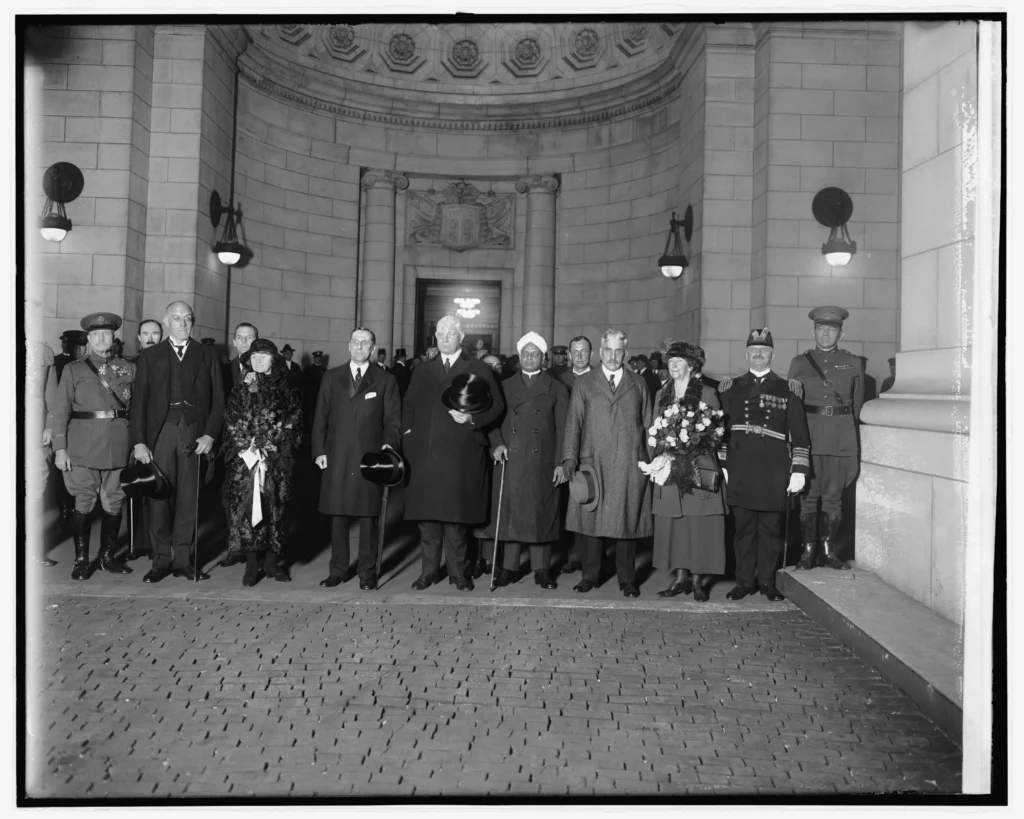
Common sense and good political leadership. We should have done this years ago; we never quite made the dance work. The underlying sensibleness was: let us deal with the political difficulties, not get over them, but deal with them. We have had three security dialogues now, the third a couple of weeks ago. Then the political chemistry between the two leaders set the tone for everything else. Underneath it all is a very large business relationship and a diaspora that is at least four per cent of Canada’s population, two million people of Indian origin. The ties that are there, and the ties that should be there, were too compelling.
Those difficulties have not disappeared. Could they disturb the relationship again?
One thing we should all learn is that you never take anything for granted. So you manage them. We have put processes in place to anticipate problems and deal with them in ways that defuse rather than inflame. We have commemorated the Air India disaster of 1985 both here in India and in Ireland, where it happened; symbolic things matter. Practical steps have been taken to control criminal violence in Canada carried out by groups such as the Bishnoi gang, and there have been arrests. Trust has been built between our security agencies, and between the individuals who head them, to a level I do not think we have ever seen. Things we simply did differently from you were a source of friction. Now we understand how you do it.
So the objective is to build so much positivity that the negatives look puny.
That is the objective. Put enough ballast in the ship of state that the flags can wave on top, but the thing steams forward, and a dispute is handled within parameters without the whole relationship going backwards. In the past year, the change has been more than gradual. I think the Prime Minister said, when we met him last week with our foreign minister, that he had never seen such acceleration in any relationship. We had 300 business people here last week for the Team Canada trade mission, and the mood was effervescent. Many of them had never really thought about India. They did not have a negative view; they had no view. Now they have one, and it is overwhelmingly positive.
Indian students have been one of the strongest links, and there is anxiety here about the changes to study permits. Is it a problem?
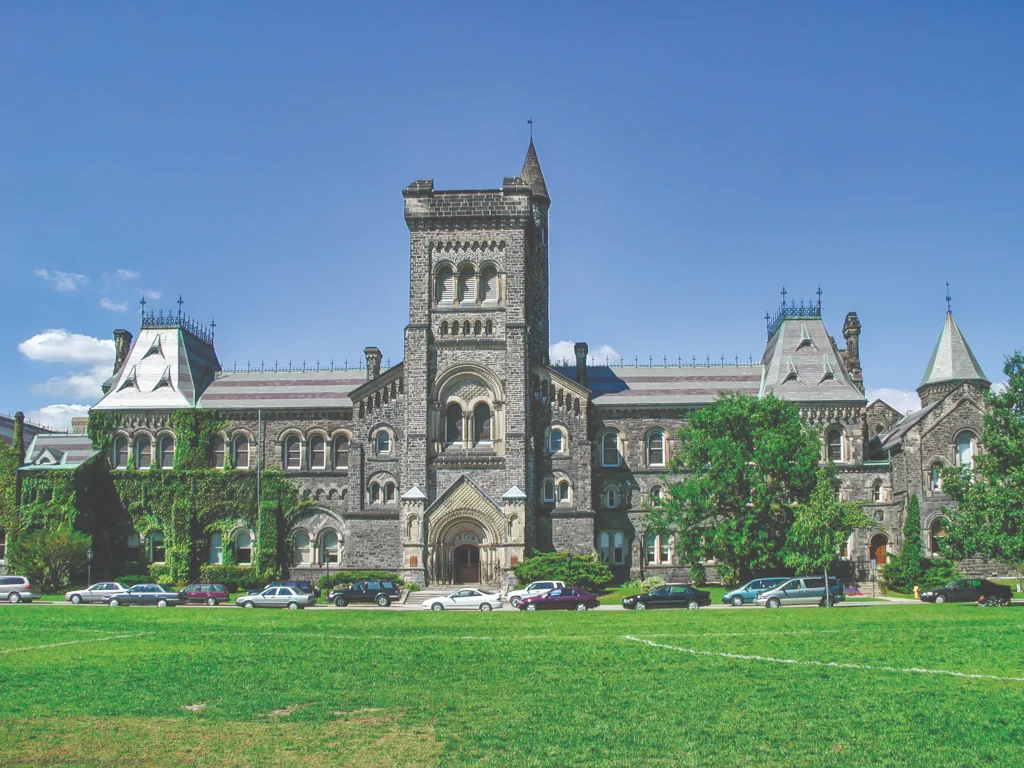
Start with the facts. Canada hosts more Indian students than any other country, somewhere between 300,000 and 400,000 right now. There were abuses: students who were really after permanent residence, and colleges that were not really colleges. That hurt legitimate Indian students and communities under housing pressure, and it is being wound down. We do have a cap, but it is a high one: 155,000 new students a year for the whole world, and India has typically been around 40% of that. For a legitimate student seeking a quality education at a good price, this is the best time to apply. McGill, Toronto, and UBC would love more Indian students. We have given the impression that we do not want them. That is not the case at all, and we need to get the message across more clearly.
And Canadian universities coming to India?
They all want to be here. Around 30 university presidents have visited in the past year, representing roughly 30% of all our universities, including every one of the leading ones. It is much more than bricks and mortar: joint degrees, research clusters in areas like clean energy and AI. The universities and colleges have announced a talent and innovation strategy, and I am sure it will feature when Prime Minister Modi goes to Canada, which we expect in December. It is part of the fun of being here.
Finally, three one-word answers. The first thing that comes to mind when you think of India?
Diversity.
Favourite Indian food?
Paneer, actually.
Favourite part of India?
I have to divide that between the most northerly and the most southerly: Ladakh and the backwaters of Kerala.