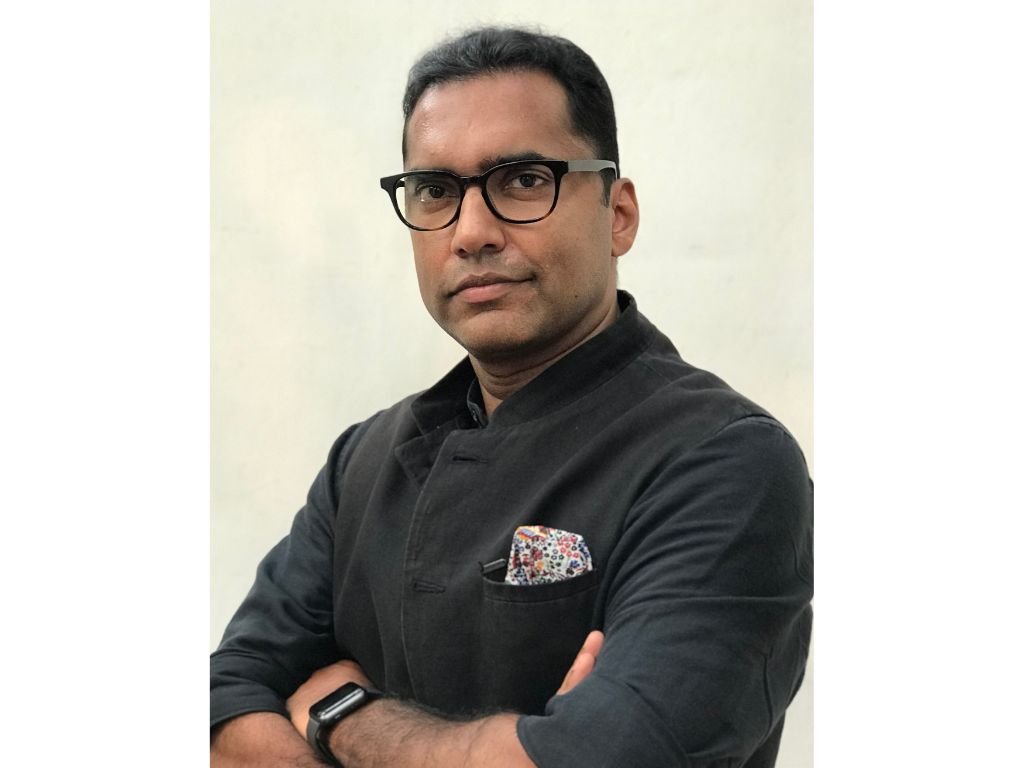
I am delighted to bring you the June 2026 edition of India’s World, on Indian business going global. If you are wondering what business has to do with foreign policy, turn the pages.
Indian business is abroad now in a way it has never quite been before, buying steel mills and luxury car brands, refining other nations’ crude, parking its capital in Singapore, Mauritius, and the Netherlands. It is a remarkable story, of how far a country has travelled from where it stood in the summer of 1991. But we read these headlines, impressive as they are, and move on. What we have not done is ask the harder question: what is the relationship between business and statecraft?
The Indian state’s instinct has been to keep the two apart: diplomacy as something that happens between governments, business as something that happens between business houses, with neither straying into the other’s sacred territory. Business and diplomacy were two very different instincts. That instinct does not hold up in today’s world.
Is the Indian capital going abroad necessarily a flattering story?
But is Indian capital going abroad necessarily a flattering story? Some of our companies are going out because they are confident. Others are going out because they believe it is easier to do business abroad than at home. Both can be true at once, and that is the conversation we need to have, alongside a tougher one: what the spread of Indian wealth abroad means for Indian power.
Rajat Kathuria kicks it off with a strong argument that the surge in outward FDI is not necessarily a vote of confidence. Kishan Rana and Deepak Bhojwani, who between them carry several decades in diplomacy, argue that Indian diplomacy does help business, but could do far more, and they tell you precisely where it falls short. In a similar vein, Dhananjay Sahai and Prashant Khurana discuss how our firms have walked onto the global stage well ahead of any state machinery built to protect them there.
Medha Kudaisya brings back a forgotten pre-history: the Birlas setting up mills in Thailand and the Tatas finding their feet in Singapore long before liberalisation made business look respectable. Dinakar Peri’s longer piece looks hard at the defence export boom, and at the awkward gap, often spoken about only in hushed tones in New Delhi, between assembling someone else’s aircraft under licence and building your own.
From abroad, Peter Jones sends a rueful letter on how Canadians have simply stopped going to America. We know why! Ippeita Nishida writes from Tokyo on why Japan would rather India go global with it than without it. And Christoph Mohr says what European capitals prefer to leave unspoken: when cargoes are scarce, and Europe and India are bidding for the same ones, whose demand is allowed to break first?
Japanese scholar Eri Ikeda weighs the promise of Japan-India defence cooperation, and Chinese scholar Xie Chao, writing from Shanghai, gives us a view from inside China on why Beijing is wary of Washington’s offer of a G2, however flattering it may seem.
Do not miss our Art and Culture section. I have written this time on mangoes and diplomacy, and my verdict is clear: the mangoes of Uttar Pradesh are the best in the world. Tanushree Bhowmik writes on India’s unlikely arrival on the world cheese scene, and who would have thought Indian cheese would go global.
My personal favourite this time is Vincent Kelley’s “Jazz Yatra”, one of the most extraordinary experiments in cultural internationalism the world has seen. Take a look, you will like it.
I hope you enjoy the rich fare of geopolitics, history, theory, diplomacy, art and culture, book reviews, and much more. I look forward to hearing from you. Write to me at editor@indiasworld.in.

Happymon Jacob