The fifth BIMSTEC National Security Chiefs’ meeting in New Delhi produced two sets of non-binding maritime guidelines that reflect India’s effort to build practical security arrangements in the Bay of Bengal at a time when its strategic influence across the region faces growing competition from China.
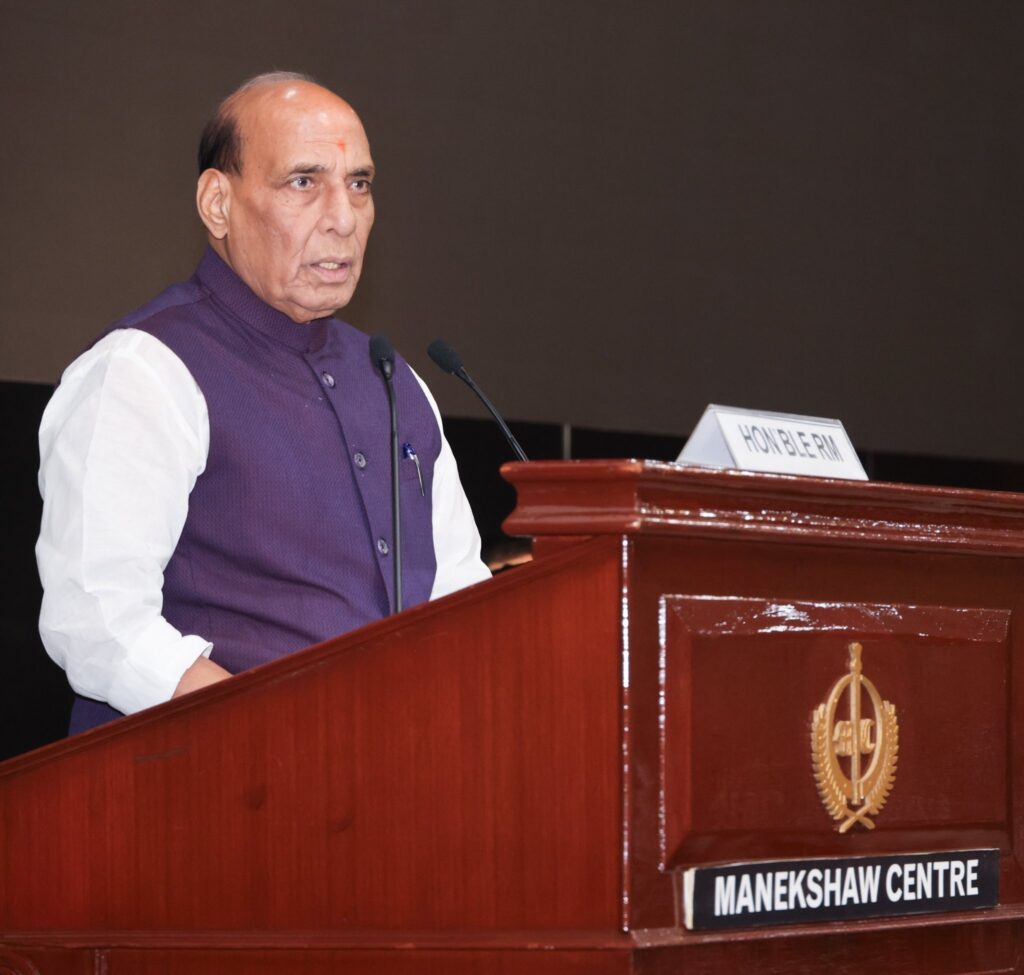
The fifth meeting of the Bay of Bengal Initiative for Multi-Sectoral Technical and Economic Cooperation (BIMSTEC) National Security Chiefs was held in New Delhi on 16 July 2026 under the chairmanship of National Security Adviser (NSA) Ajit Doval. Representatives from Bangladesh, Bhutan, Myanmar, Nepal, Sri Lanka, and Thailand attended, making it a full gathering of the seven-member grouping. The meeting took place amid growing strategic competition in the Bay of Bengal, where China’s economic presence has expanded across much of the region and several BIMSTEC members continue to navigate the effects of recent political transitions.
The plenary produced two operational outcomes. The chiefs adopted guidelines for the maritime component of humanitarian assistance and disaster relief (HADR) and separately endorsed a set of guiding principles on the conduct of maritime law enforcement agencies during interactions at sea. Together, they represent an incremental effort to develop common operating practices rather than a shift in the grouping’s institutional character. The distinction in language is worth noting. The HADR guidelines, which were formally adopted, carry a firmer institutional commitment than the maritime law enforcement principles, which were endorsed as reference points.
The HADR guidelines address an area where regional coordination has long depended on improvised bilateral arrangements during emergencies. Cyclones cross the Bay on a predictable seasonal schedule, and relief in the first 72 hours has historically relied on phone calls between navies, coast guards, and civilian ministries rather than any common protocol. Seven states have now agreed, in writing, on shared procedures for the hours after a cyclone makes landfall.
The guiding principles for maritime law enforcement, though non-binding, effectively provide a common framework for coast guards and other maritime agencies operating in the Bay of Bengal. Maritime traffic, fisheries enforcement, and cross-border policing have all expanded in these waters over the past decade, and the frictions that produce incidents at sea (India–Sri Lanka fisheries disputes, Bangladesh–Myanmar refugee flows, Thai–Myanmar smuggling routes) are precisely the kind that benefit from agreed procedures. It is, in effect, a coast guard code of conduct.
BIMSTEC’s Gradual Evolution
BIMSTEC was established through the Bangkok Declaration in June 1997 as a four-member economic cooperation initiative. Institutional development has been slow. The permanent secretariat in Dhaka was set up only in 2014, and the charter entered into force in 2024. Over nearly three decades, BIMSTEC leaders have met at summit level only five times.
Against that record, security cooperation has advanced more steadily than most other areas of BIMSTEC’s work. The National Security Chiefs’ mechanism was launched in Delhi in 2017, following the Uri attack and India’s decision not to attend the South Asian Association for Regional Cooperation (SAARC) summit in Islamabad later that year. Five meetings have followed in nine years. Although this frequency is modest compared with the Association of Southeast Asian Nations (ASEAN), it represents one of BIMSTEC’s more active institutional tracks, alongside India’s lead role on counter-terrorism and transnational crime within the grouping’s sectoral structure. The HADR guidelines and maritime law enforcement principles adopted in New Delhi reinforce the security track’s position as the most operationally productive part of the organisation.
The timing of this year’s meeting also matters. As K. Yhome of the Asian Confluence has argued, domestic political crises in Bangladesh, Myanmar, Nepal, and Sri Lanka in recent years slowed BIMSTEC’s institutional momentum considerably. The relative stabilisation across several member states has created greater space for practical initiatives, which helps explain why the 2026 meeting produced concrete outcomes where the 2024 Naypyidaw round made more limited progress.
India’s Strategic Calculus
For New Delhi, BIMSTEC serves three purposes no other regional platform can. It functions as a substitute for a SAARC that has remained inactive since 2016. It connects India’s Neighbourhood First and Act East policies through a single institutional frame. And it positions the Bay of Bengal as a space for India-led regional engagement that excludes both Pakistan and China.
NSA Doval linked the meeting to India’s MAHASAGAR initiative (Mutual and Holistic Advancement for Security and Growth Across Regions), which extends the earlier Security and Growth for All in the Region (SAGAR) framework beyond the Indian Ocean rim. Both the HADR guidelines and the maritime law enforcement principles reflect this approach. Rather than creating legal obligations, they establish practical arrangements in areas where member states share common operational interests.
NSA Doval cited a combined population of 1.7 billion people, about 22% of the world’s population, and a collective GDP of about $5 trillion. These figures illustrate BIMSTEC’s economic scale. Its strategic value for India, however, rests on geography. Bangladesh occupies the centre of the Bay. Myanmar provides India’s only land connection to Southeast Asia. Sri Lanka sits astride the sea lanes off the southern peninsula. Thailand connects the grouping to mainland Southeast Asia. Each occupies a distinct position in India’s regional strategy, despite differing political circumstances and foreign policy priorities. Strengthening BIMSTEC’s security agenda is therefore also about building habits of coordination among neighbouring states whose strategic relationships increasingly extend beyond India.
The Bangladesh SAARC Signal
Bangladesh’s intervention stood out because it diverged from India’s preferred framing of regional cooperation. AKM Shamsul Islam, Bangladesh’s defence adviser and a retired brigadier general, used Dhaka’s national statement to argue that BIMSTEC and SAARC “ought to move hand in hand”. He cited SAARC’s four decades of norm-building, listed disaster management, public health, food security, and energy security among its contributions, and framed the two organisations as complementary rather than substitutable.
The remarks were consistent with Bangladesh’s recent diplomacy. Since the interim government led by Muhammad Yunus, Dhaka has repeatedly expressed support for reviving SAARC, and Prime Minister Tarique Rahman reiterated that position after taking office in February. He has also argued that SAARC reflects the vision of his father, former president Ziaur Rahman, though historians continue to debate the extent of that role. Post-Hasina Dhaka, first under Yunus and now under Rahman, has moved to normalise ties with Islamabad even as it works to stabilise relations with New Delhi. Bangladesh’s intervention indicated that its approach to regional cooperation does not fully align with India’s preference for BIMSTEC as the primary platform.
India has publicly maintained that SAARC’s paralysis stems from Pakistan’s conduct. Ministry of External Affairs (MEA) spokesperson Randhir Jaiswal, in September 2025, said “one particular country” was holding up progress. India boycotted the 2016 Islamabad summit after Uri, and the grouping has not convened at leaders’ level since. That the SAARC pitch was made in an India-hosted plenary is itself a measure of how Bangladesh’s diplomatic posture has shifted. Dhaka nevertheless endorsed both maritime frameworks, which suggests the disagreement concerns the wider institutional architecture rather than the operational outputs the meeting produced.
NSA Doval had spent 15 July preparing the ground bilaterally. He met the Bangladesh, Sri Lanka, Myanmar, and Thailand delegation heads separately before the plenary opened. The Sri Lanka conversation, with Defence Secretary Sampath Thuyacontha, focused on maritime security. The Thailand meeting with Chatchai Bangchuad, secretary general of the National Security Council, covered intelligence sharing and law enforcement cooperation. This pattern underlines a persistent feature of BIMSTEC diplomacy. Progress at the regional level depends substantially on bilateral engagement before common positions are formalised.
The Limits
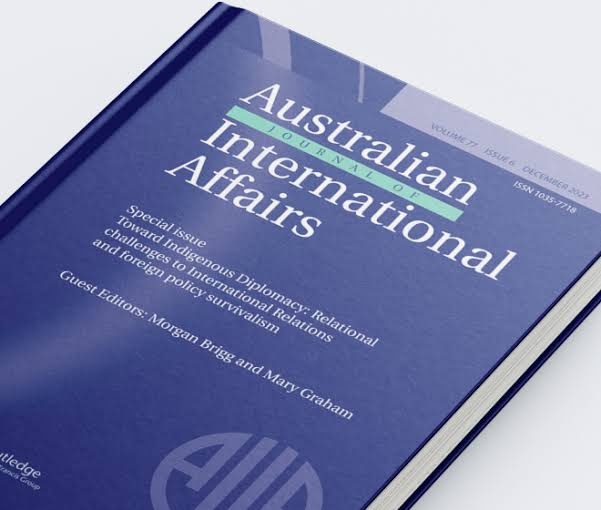
The guidelines and principles adopted in New Delhi should be viewed against broader constraints. Shubhrajeet Konwer and Obja Borah Hazarika, writing in the Australian Journal of International Affairs, argue that BIMSTEC has produced only “shallow cooperation” in 28 years. Intra-regional trade remains modest. The BIMSTEC Free Trade Agreement is unconcluded. Member states pursue “multi-alignment” and “hedging” strategies rather than committing to a bloc.
China’s expanding presence is central to this picture. Beijing has become a leading source of infrastructure finance, investment, and defence cooperation across much of the Bay of Bengal region. Belt and Road projects extend through every BIMSTEC member except Bhutan and India. In Bangladesh, Sri Lanka, Myanmar, Nepal, and Thailand, China’s economic role has grown substantially over the past decade. The maritime frameworks adopted on Thursday do not alter these realities. Their value for India lies in strengthening a regional security mechanism that BIMSTEC members lead themselves, without requiring a Chinese vote.
Myanmar presents a separate constraint. Continuing conflict has reduced the country’s function as India’s land gateway to Southeast Asia, a role that has long underpinned BIMSTEC’s strategic rationale for New Delhi. India has maintained official engagement. NSA Doval met Myanmar’s National Security Adviser U Tin Aung San ahead of the plenary, following an earlier meeting in Moscow in May on the sidelines of the International Security Forum. Instability on the ground, however, continues to limit cross-border connectivity in ways that institutional agreements alone cannot address.
What to Watch
Sri Lanka will host the sixth meeting in 2027, when BIMSTEC marks its thirtieth anniversary. The period between now and then will indicate whether the HADR guidelines and maritime law enforcement principles become part of regular regional practice or remain largely declaratory.
The HADR guidelines face their first practical test during the next cyclone or major disaster affecting more than one member state. The maritime law enforcement principles will be judged by how effectively they manage routine encounters at sea, particularly those involving fisheries enforcement, migration, and maritime policing. For India, however, the broader challenge extends beyond implementing these arrangements. Several BIMSTEC members continue to deepen their economic engagement with China while participating in security initiatives led by New Delhi. Managing that dual dynamic, rather than expecting strategic alignment, is likely to define India’s BIMSTEC diplomacy in the near term.
BIMSTEC’s value to India stems less from the scale of its institutional output than from its composition. It is the only regional body linking South and Southeast Asian neighbours that excludes both Pakistan and China. That composition gives the grouping a durability that its modest record might not otherwise support, but it also places a ceiling on the pace of integration, since seven governments with divergent external partnerships cannot move faster than the most cautious among them is prepared to go. The guidelines and principles adopted on 16 July sit within that ceiling. They do not transform the grouping. They demonstrate that member states remain willing to cooperate on practical maritime issues despite broader strategic differences, and for now, that is what India needs the grouping to produce.
Note: This explainer has been researched, edited, and fact-checked by India’s World staff and prepared with AI assistance.