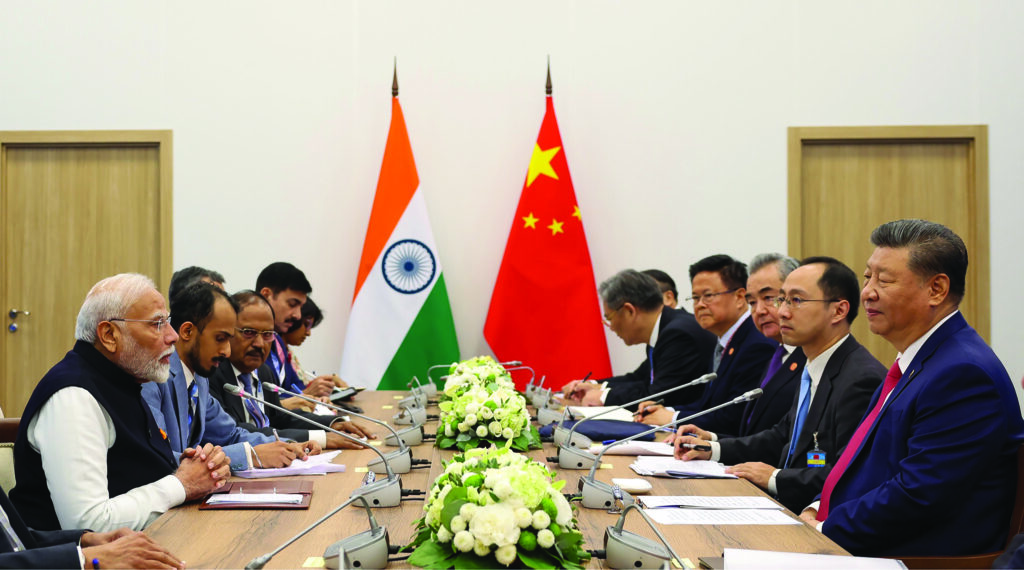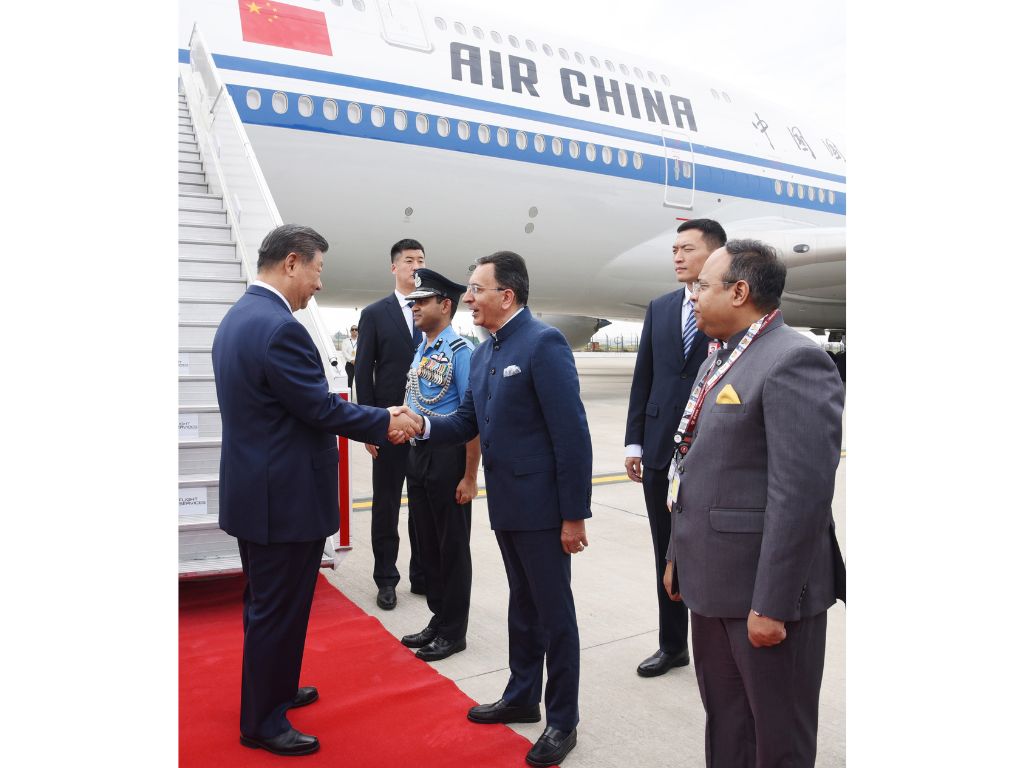
Chinese President Xi Jinping’s return to New Delhi after seven years marked the most visible sign yet that India-China relations have moved beyond the freeze that followed the 2020 border crisis. But the September 12 meeting with Prime Minister Narendra Modi did not produce a grand bargain. Instead, it sought to put the relationship on a more stable footing: keep the border peaceful, deepen economic and people-to-people links, manage differences, and expand cooperation where interests overlap.
The significance of the visit, therefore, lies less in a dramatic breakthrough than in the model of relations it points towards.
The thaw is being consolidated, not completed
Xi’s visit was the latest step in a normalisation process that began after years of military and diplomatic tension. The October 2024 agreement on patrolling arrangements in Depsang and Demchok was followed by disengagement at the two remaining friction points of the 2020 crisis. Modi and Xi subsequently met at the BRICS summit in Kazan in 2024 and again in Tianjin in August 2025.
Both sides now describe the relationship in notably different language from the immediate post-2020 period. Xi said China and India should regard each other as “partners rather than rivals”, while Modi stressed that differences should not become disputes and that the relationship should be guided by mutual respect, mutual sensitivity, and mutual interest.
The shift is significant, but it should not be confused with a restoration of trust. The two countries are attempting to manage a difficult relationship more effectively, rather than pretending that the strategic competition has disappeared.
The border remains the foundation
India’s position remains that peace and tranquillity in the border areas are an essential basis for the continued development of bilateral relations. At the Modi-Xi meeting, India stressed the need to observe existing agreements and understandings and called for a fair, reasonable, and mutually acceptable settlement of the boundary question.
China’s formulation places greater emphasis on making progress on the boundary question and the broader relationship in parallel.
That difference matters. The two sides have succeeded in reducing the immediate risk of another 2020-style confrontation, but they have not settled the boundary dispute.
The process is nevertheless moving. On August 25, India’s National Security Adviser Ajit Doval and Chinese Foreign Minister Wang Yi, acting as Special Representatives on the boundary question, held the 25th round of talks in Beijing and reached an eight-point consensus. They reaffirmed the need to maintain peace and tranquillity and agreed to continue negotiations towards a framework for a fair, reasonable and mutually acceptable settlement. The August talks also expanded the machinery for managing the LAC, including two additional military meeting points and two additional hotline channels in the Eastern and Middle Sectors, while the next round of Special Representatives’ talks is to be held in India in 2027.
The emerging arrangement is therefore one of border management alongside wider engagement, rather than border settlement before engagement.
The economic normalisation is the real test
Trade may be the clearest paradox in the relationship. India and China have remained deeply economically interdependent even while their political and security ties deteriorated.
Bilateral goods trade reached $151.10 billion in FY2025–26, according to Indian government data. But India’s imports from China were $131.63 billion against exports of only $19.47 billion, producing a $112.16 billion trade deficit.
The issue, therefore, is not simply whether trade should grow, but what kind of economic relationship India wants.
Chinese machinery, electronics, telecommunications equipment, computers, integrated circuits, lithium-ion batteries and fertilisers are among the major imports. India, meanwhile, has continued to press China on market access for Indian exports.
At their September meeting, Modi and Xi explicitly identified the structural trade imbalance, supply-chain issues and the need for meaningful and predictable market access as matters requiring attention.
That makes economic normalisation a more complicated proposition than simply reopening the door to Chinese business. India wants access to Chinese inputs and markets while reducing vulnerabilities created by excessive dependence on a single source.
Normalisation is becoming practical
Direct air links have begun returning after their post-2020 suspension. Border trade has resumed, including through the Lipulekh Pass after a six-year interruption. People-to-people exchanges, including the Kailash Mansarovar Yatra, have also resumed.
The two governments have additionally been working on visa facilitation and greater mobility.
These steps matter because they create the infrastructure of a functioning relationship. A relationship cannot be normalised through summit diplomacy alone; airlines, traders, students, businesses, pilgrims and diplomats have to be able to move between the two countries.
The same is true of military communication. The Special Representatives’ talks have continued, while military-to-military channels are being used to manage the border.
The direction is therefore towards institutionalised engagement, even though the underlying strategic distrust remains.
BRICS gives the relationship a wider strategic context
Xi’s visit cannot be understood solely through the India–China bilateral relationship.
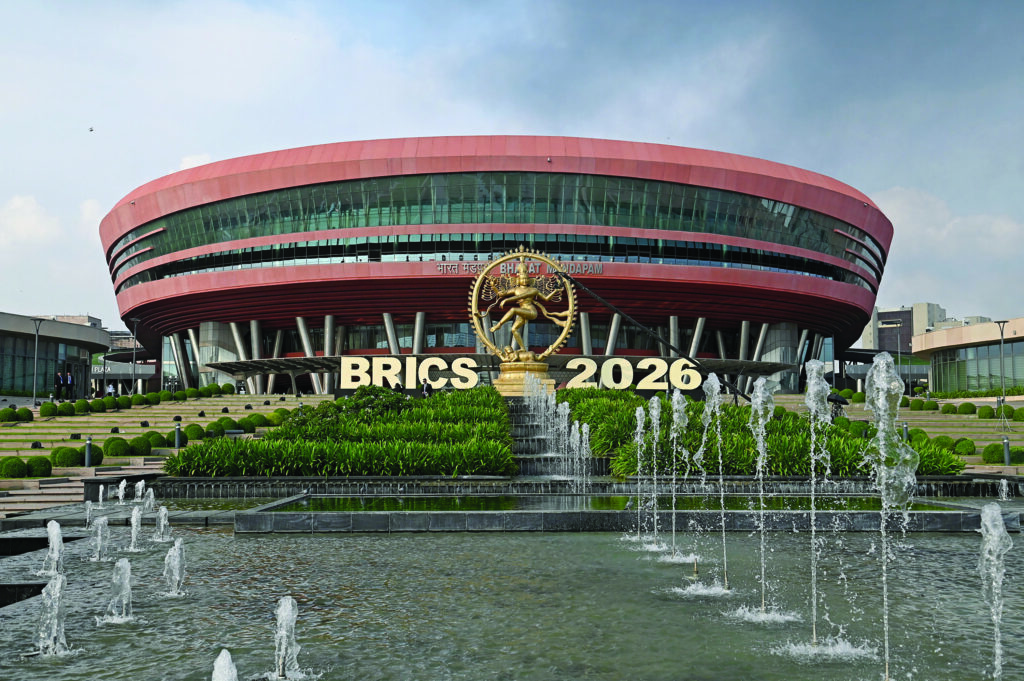
He arrived in New Delhi for the 18th BRICS Summit, which gave China an opportunity to advance a broader agenda concerning the Global South, economic cooperation, and global governance.
At the summit, Xi pushed for deeper BRICS cooperation on artificial intelligence, open-source technology, industrial and supply chains, and AI-enabled industrialisation, while arguing for greater cooperation in technology and development. China also secured the BRICS chairmanship for 2027.
For India, this creates both opportunity and complexity.
New Delhi wants BRICS to strengthen the voice of developing countries and provide practical cooperation on areas such as trade, finance, technology and global governance. But it has resisted turning the grouping into an explicitly anti-Western bloc.
India’s approach is better understood as diversification rather than realignment. Engagement with China through BRICS does not require abandoning India’s partnerships with the United States, Europe, Japan, Australia or the Quad.
Managed re-engagement, not strategic realignment
The most revealing feature of the visit may be the language used by both sides.
Xi called for the two countries to approach their relationship from a “strategic and long-term perspective”. He argued that differences should be addressed through mutual respect and understanding while the boundary question and bilateral relations advance in parallel.
Modi similarly argued that differences should not become disputes.
This points towards a new operating principle: cooperation does not have to wait for complete agreement.
The two countries can disagree over the border, trade, technology, Pakistan, Tibet, Taiwan and their respective relationships with other powers while still maintaining dialogue, restoring transport links, expanding trade where useful and coordinating in multilateral institutions.
That does not eliminate strategic competition. It creates mechanisms to manage it.
The most accurate way to understand Xi’s visit may therefore be neither “reset” nor “reconciliation”. It is a process of managed re-engagement within a relationship that remains strategically competitive.
This is also why the visit should not be read as India moving into China’s strategic orbit. India continues to pursue a policy of strategic autonomy and maintains extensive relationships with the United States and other major powers.
The broader message from New Delhi is that engagement with Beijing and strategic diversification elsewhere are not mutually exclusive.
What the visit changed, and what it did not
Xi’s return to India changed the political atmosphere surrounding the bilateral relationship. It strengthened the leadership channel, reinforced the process of economic and people-to-people normalisation, and created additional space for negotiations over the border.
But it did not settle the boundary dispute. It did not resolve India’s trade deficit. It did not remove strategic mistrust. And it did not erase the structural competition between two major Asian powers.
The real significance of the visit is therefore more modest, but potentially more consequential: India and China are trying to prevent their disagreements from determining the entire relationship.
For New Delhi, the challenge now is to turn the thaw into tangible outcomes—greater market access for Indian exports, more predictable supply chains, stable border management and expanded people-to-people links—without allowing economic engagement to create new strategic vulnerabilities.
For Beijing, the challenge is to demonstrate that its call for partnership can be matched by meaningful progress on the boundary question, respect for existing border agreements, and greater reciprocity in economic relations.
Xi’s visit did not answer whether that balance can be achieved. It showed that both sides now have an interest in trying.