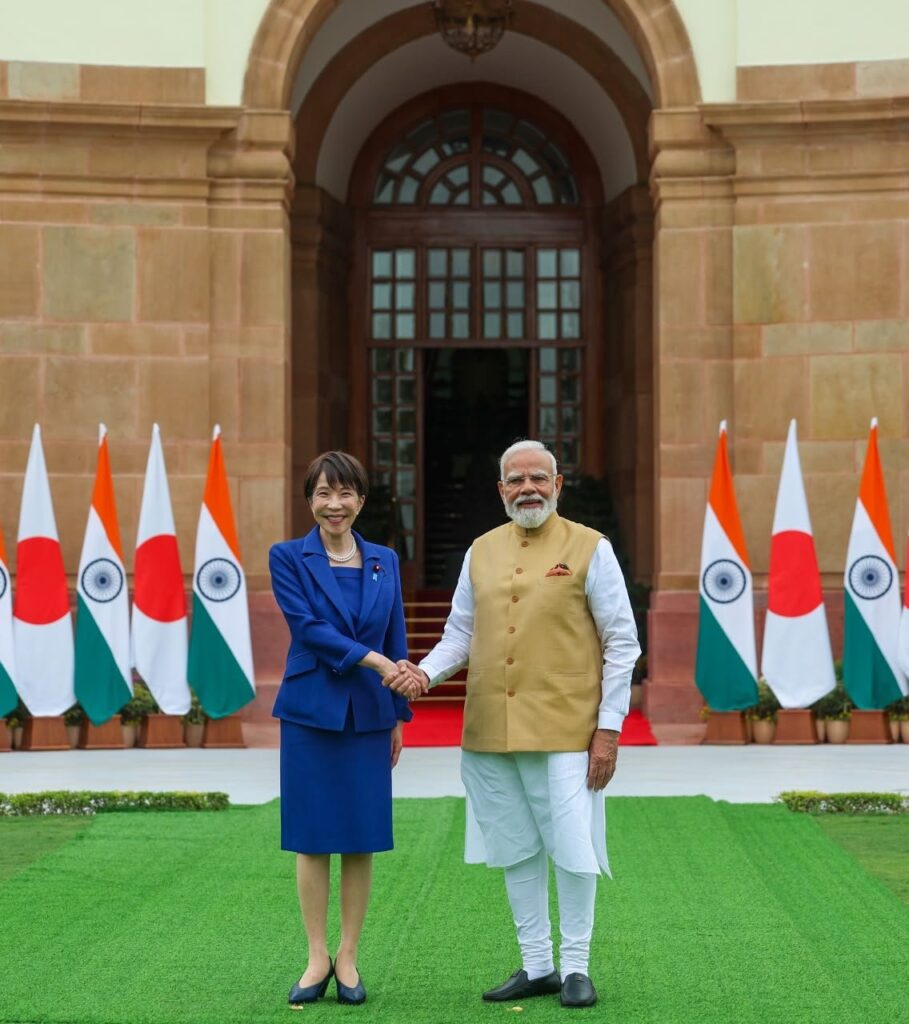
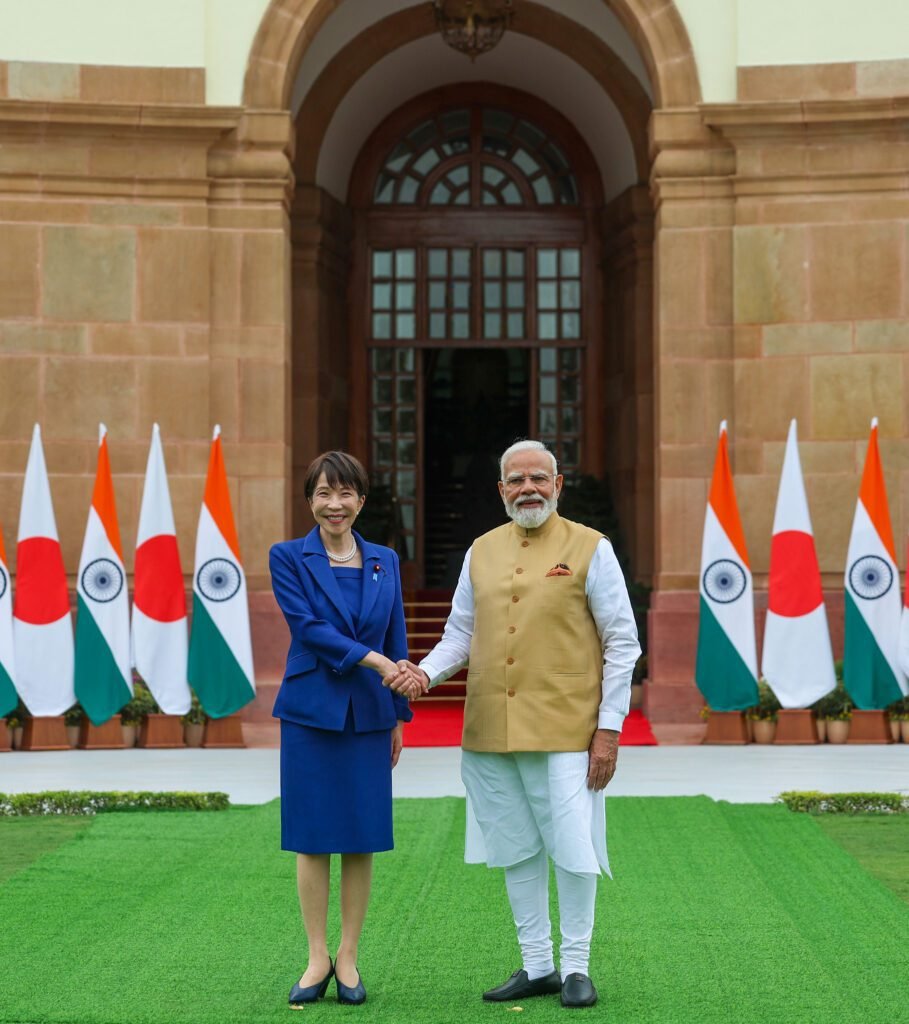
Sanae Takaichi came to Delhi earlier this week for the 16th India-Japan annual summit, her first visit to India as prime minister. The two sides announced a joint declaration on economic security, a statement on artificial intelligence, an energy resilience initiative, and a first defence co-development project. While these initiatives are bilaterally significant, the big question hovering over Hyderabad House, where the summit meeting took place, was perhaps a different one: whose region is the Indo-Pacific, and who will take responsibility for it?
Before I answer that, let’s properly understand Japan as an Indo-Pacific strategic actor. Tokyo is America’s most important partner in the Indo-Pacific and the anchor of the US alliance system in Asia. It is Asia’s most consequential economy after China, and possesses technologies that will shape the coming decades: semiconductors, robotics, precision manufacturing, advanced materials, and so on. Tokyo is also something the United States is not. It is a resident Asian power well rooted in its balance of power dynamics. Washington can pivot away from Asia as it has at will from time to time. Tokyo won’t, because it cannot: its stakes in this region are as permanent as its geography.
The India-Japan Strategic Advantage
Now consider what India and Japan are to each other, which is where the Takaichi visit is important. The two sides have no disagreement of any consequence. I mention that here because it is more unusual than we think. Consider this. Every other major relationship India maintains comes with a structural irritant: trade and tariffs (and other issues) with America, Russia’s worrying China tilt, contest over values with the Europeans, and border and other security challenges from China. With Japan, on the other hand, there is no historical baggage, no territorial dispute, no sanctions “memory” (Tokyo did sanction India after Pokhran-II, but the wound healed within years and left no scar), no sermons on India’s domestic choices. What exists and what we remember instead is trust, accumulated quietly over four decades, from the Suzuki investment of the 1980s to the Shinzo Abe years that gave the region its new strategic vocabulary, Indo-Pacific.
On trust, take the neighbourhood. New Delhi is typically intolerant towards outsiders in its region, with Japan being one of the important exceptions. India has wholeheartedly welcomed the Japanese capital, be it in the country’s Northeast, around the Bay of Bengal, or across much of the subcontinent. India views Japan’s presence in the neighbourhood as reinforcing its primacy in the region rather than undermining it. Let me put it this way: when Delhi gladly suspends its Monroe Doctrine instinct for Tokyo, the trust that drives that instinct is noteworthy.
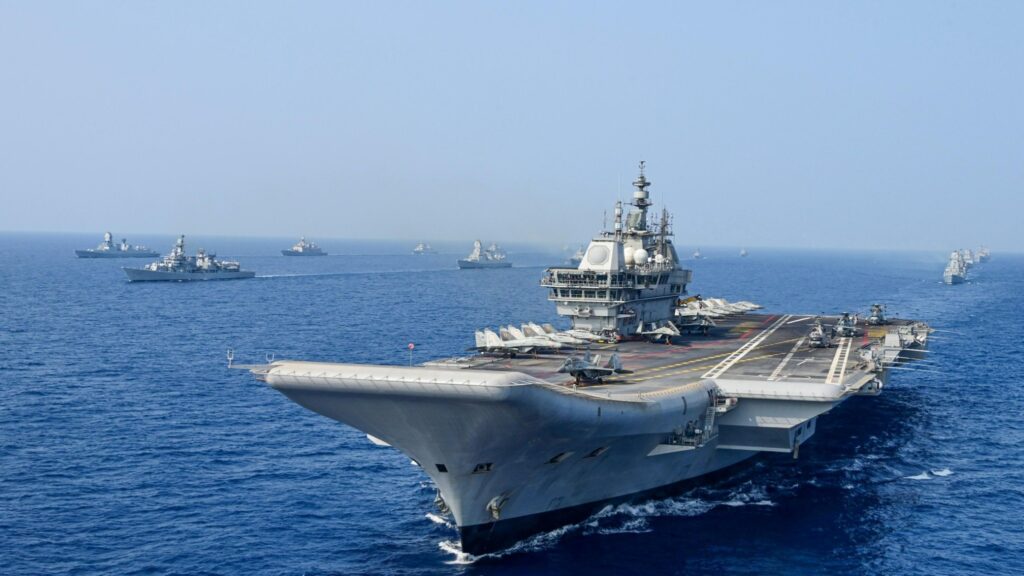
Japan’s problem is capacity, not will. The geopolitical instinct to stand up to China now exists in Tokyo; the military means to act on it lag behind, and the gap will not close soon even if it is beginning to close. Japan’s post-war peace personality is changing visibly: the internal debate is picking up pace, defence budgets are rising, and Takaichi has spoken more plainly about the threats Japan faces than most of her predecessors, including on Taiwan, at real cost to her relations with Beijing.
This doesn’t go unnoticed in Delhi because a militarily resurgent Japan is very much in India’s regional interests, and so it welcomes Japan’s return as a normal military power. If there is one country that would be happy about Tokyo’s remilitarisation, it is India.
Beyond America: Owning the Indo-Pacific
That brings me to America. While it is true that a Quad minus the United States is a far-fetched idea, Delhi and Tokyo should, at least hypothetically, keep Washington out of their imagination of the region. While the regional security construction is built on American power, the conception and ownership of the region’s strategic future should not depend on it. Because American attention is episodic and mood-dependent. The Modi-Takaichi summit took place under the shadow of American tariffs on both countries. Besides, Washington’s strategic bandwidth is currently consumed by West Asia and its own hemisphere, and even where bandwidth exists, the interest may not. Either way, it is ill-advised to outsource the stability of the region to the attention span of a distant superpower whose confusion is only worse than its lack of interest.
As a matter of fact, India and Japan have more stakes in the Indo-Pacific than anyone else, America included. So if Tokyo and Delhi seek to stabilise the region that they are at the heart of, they must begin to do so without outsourcing that responsibility to Washington. That is also the message from the Iran war.
To be sure, I am not proposing a case against cooperation with America; my case is for regional stakeholdership. The reason is a geographical one: the heart of the Indo-Pacific, and the strategic construct that follows it, lies in the vast maritime expanse between India and Japan: from the Strait of Hormuz through Malacca to the East China Sea. India sits at the western frontier of this oceanic expanse, and Japan at its eastern edge.
Now comes the hard task of holding the fort when Washington takes a back seat, as is the case now: sustaining the region’s institutions and habits of cooperation when American enthusiasm fades, resisting Beijing’s charm offensive when Washington goes rogue, and building the material basis of resilience together with like-minded regional powers. That is where the Modi-Takaichi summit, with its economic security roadmap and its first defence co-development project, becomes significant.
For two decades, the key question for Asian powers has been how to keep America, the indispensable power, engaged in the region. That question may be losing its salience. The better question, which this summit at least partly posed, is how the region’s own powers can take charge of their own strategic spaces. So beyond the chemistry and the atmospherics, the Modi-Takaichi summit had a far more serious message for the region: its strategic future is now the business of those who inhabit it.