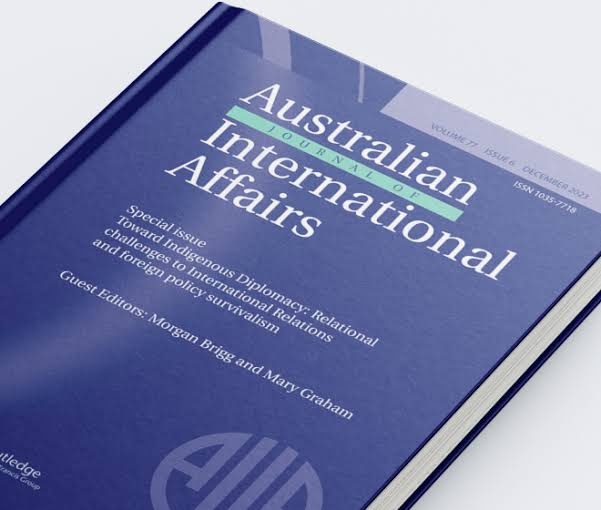
In an article titled India and the BIMSTEC: Regionalism, Multilateral Frameworks and a Changing Global Order, published in the Australian Journal of International Affairs, Shubhrajeet Konwer and Obja Borah Hazarika examine why India continues to invest heavily in the Bay of Bengal Initiative for Multi-Sectoral Technical and Economic Cooperation (BIMSTEC) despite the organisation’s limited achievements and mounting geopolitical constraints.
The article argues that while India remains BIMSTEC’s leading actor, New Delhi’s ability to derive meaningful economic and strategic gains from the grouping is increasingly constrained by the “multi-alignment” and “hedging” strategies pursued by member states, as well as China’s growing influence across the Bay of Bengal region. As Beijing consolidates its position as the “preferred partner” of several BIMSTEC members, India’s capacity to shape regional outcomes through the organisation is likely to remain limited. Nevertheless, the authors contend that India has few alternatives but to maintain a long-term diplomatic commitment to BIMSTEC because the costs of disengagement would be strategically significant.
The article situates its argument within broader debates on regionalism, multilateralism, and international cooperation. Konwer and Hazarika trace India’s historical ambivalence towards regional organisations, noting that New Delhi was initially reluctant to participate in institutionalised regional frameworks due to concerns about preserving foreign policy autonomy and avoiding collective pressure from smaller neighbours. The end of the Cold War, economic liberalisation, and the pursuit of stronger ties with Southeast Asia, however, encouraged India to embrace regional and sub-regional mechanisms as instruments for advancing trade, connectivity, and strategic influence.
A central theme of the article is BIMSTEC’s importance within India’s broader foreign policy. Established in 1997, the organisation was intended to strengthen cooperation between South Asia and Southeast Asia while serving as a platform through which India could advance its “Neighbourhood First” and “Act East” policies. The authors argue that New Delhi views BIMSTEC as a crucial mechanism for promoting connectivity, encouraging economic integration, and extending its strategic presence across the Indo-Pacific, particularly in the absence of an effective SAARC framework.
The article also examines the historical significance of the Bay of Bengal region. Konwer and Hazarika note that the Bay historically functioned as a maritime corridor linking South Asia, Southeast Asia, and East Asia through networks of trade, migration, and cultural exchange. BIMSTEC emerged from efforts to revive these historical linkages and reconnect a region fragmented by colonial borders, post-colonial state formation, and divergent political trajectories. However, despite its ambitious objectives, the organisation remains at a “critical juncture” and has struggled to translate institutional development into substantive regional integration.
A major focus of the article is the range of challenges limiting BIMSTEC’s effectiveness. The authors highlight persistent bilateral disputes between India and fellow member states, including disagreements with Nepal over territorial issues, tensions with Bangladesh over water sharing and migration, complications arising from Myanmar’s internal conflict, and recurring fisheries disputes with Sri Lanka. These unresolved issues, they argue, continue to undermine trust and inhibit deeper regional cooperation.
China’s growing regional influence constitutes another major theme of the article. The authors argue that BIMSTEC increasingly serves as a platform through which member states pursue balancing strategies between competing powers. Through trade, infrastructure investment, development assistance, and defence cooperation, China has established a stronger economic and strategic presence than India in several BIMSTEC countries. The article presents evidence showing that Beijing surpasses New Delhi in foreign investment, development financing, and arms transfers across much of the region, making it difficult for India to compete with China’s “chequebook diplomacy”.
The article further argues that BIMSTEC has produced only “shallow cooperation” despite more than two decades of existence. Although the organisation has expanded its institutional structure, adopted a formal charter, and developed multiple sectors of cooperation, progress on major initiatives such as the BIMSTEC Free Trade Agreement has been slow. The anticipated spillover from cooperation in economic and technical sectors into broader political and security collaboration has yet to materialise.
An important dimension of the article examines why India continues to invest diplomatic capital in BIMSTEC despite these limitations. The authors argue that the organisation remains strategically valuable because it supports connectivity with Southeast Asia, contributes to the development of India’s Northeast and the Andaman and Nicobar Islands, and offers a framework through which New Delhi can counter China’s expanding regional footprint. For India, BIMSTEC represents one of the few available platforms for sustaining influence in a region of growing geopolitical importance.
The article also links BIMSTEC to India’s aspiration to emerge as a leading voice of the Global South. Konwer and Hazarika note that New Delhi has invested considerable diplomatic effort in presenting itself as both a development partner and a global leader through development assistance, capacity-building initiatives, infrastructure projects, and humanitarian outreach. Consequently, the limited success of BIMSTEC has implications not only for India’s regional strategy but also for its wider leadership claims and the credibility of its “Neighbourhood First” policy.
The article concludes that BIMSTEC’s achievements remain modest despite recent institutional reforms and renewed political attention. Intra-regional trade remains low, economic integration is limited, and member states continue to pursue divergent strategic priorities. Yet the authors argue that India cannot afford to allow BIMSTEC to stagnate or become another ineffective regional organisation. Given the Bay of Bengal’s growing geostrategic importance and China’s expanding influence, New Delhi has little choice but to remain diplomatically entrenched in BIMSTEC and hope that, over time, the organisation contributes to its long-term regional and global ambitions.