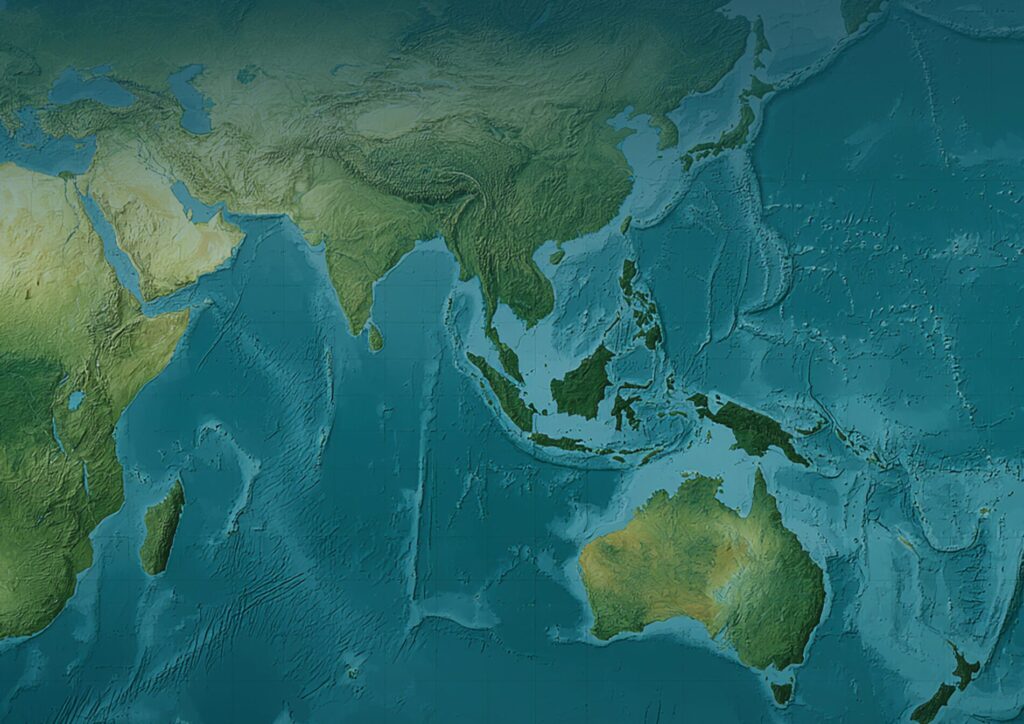
Most of the debate on India’s Indo-Pacific engagement has approached the concept through a predominantly strategic lens. Existing analyses have focused on the implications of China’s rise, the evolution of the Quadrilateral Security Dialogue (Quad), maritime security dynamics, or the balance of power in Asia. While these dimensions are undeniably important, they only partially explain why the Indo-Pacific has acquired such prominence in Indian strategic thinking. They tell us much about what India does in the region, but less about what the region itself means to Indian policymakers and strategic actors.
This article argues that the Indo-Pacific should be understood not merely as a geopolitical theatre but as a social and political space that has contributed to the redefinition of India’s regional identity. Drawing on 65 interviews conducted with Indian diplomats, military officers, experts, and scholars in 2023, it examines how the Indo-Pacific has simultaneously functioned as a space of socialisation, a vehicle for recognition, and a context in which Indian actors have reassessed their place in Asia. It explores, rather than treating the concept as an externally imposed framework or a simple response to material power shifts, how Indian diplomatic, military, and intellectual communities have appropriated and invested meaning in it through interaction with regional partners and evolving perceptions of the regional environment.