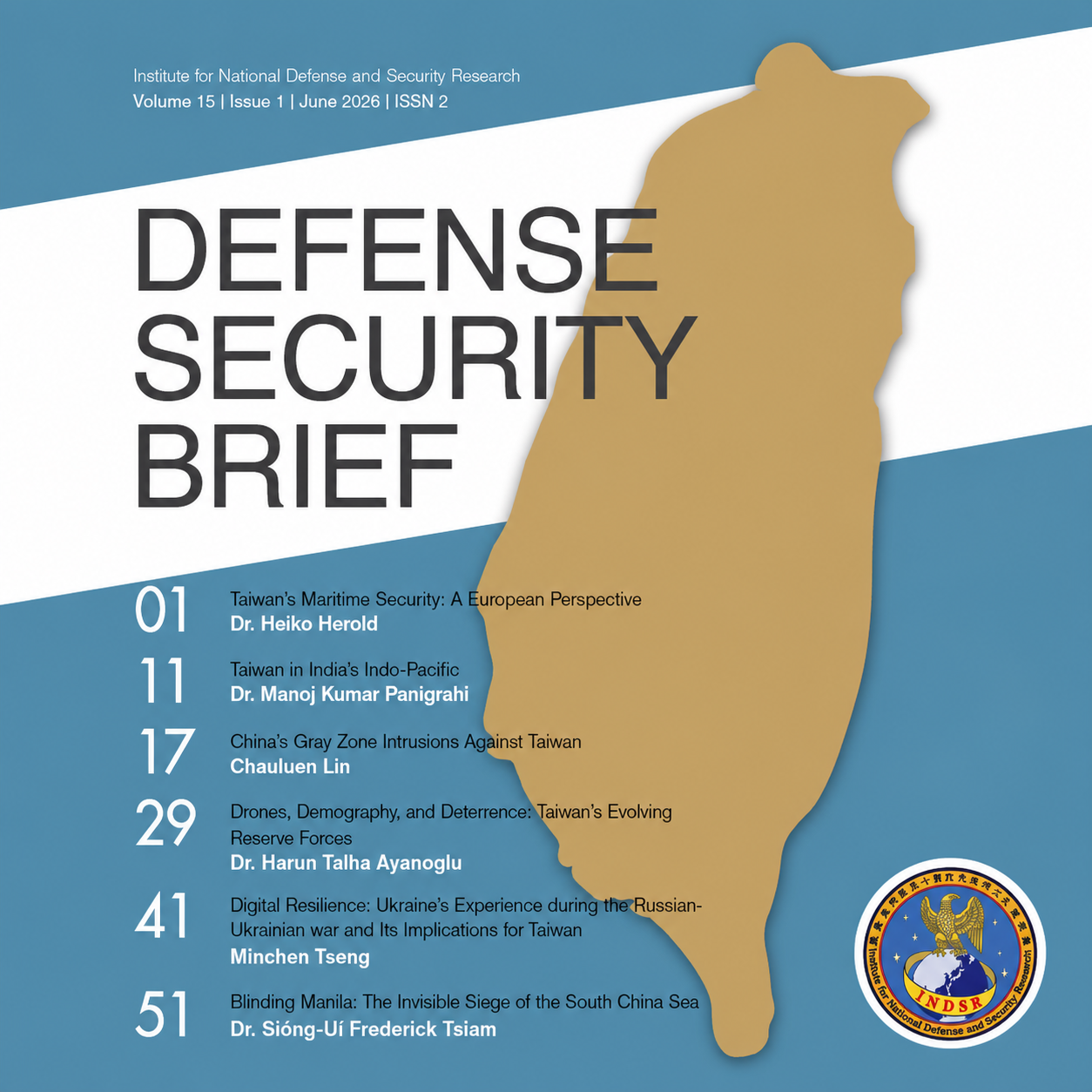
In the article Taiwan in India’s Indo-Pacific, published in the Defense Security Brief (Vol. 15, Issue 1, June 2026), Dr. Manoj Kumar Panigrahi examines Taiwan’s evolving significance in India’s Indo-Pacific strategy. The author argues that although Taiwan has historically remained outside India’s Act East policy because of New Delhi’s recognition of the People’s Republic of China, shifting geopolitical realities and worsening India-China relations have created new opportunities for engagement. He contends that while formal diplomatic recognition remains improbable, India should pursue deeper cooperation with Taiwan through economic, technological, and strategic partnerships.
Panigrahi situates Taiwan within India’s broader Indo-Pacific vision, which extends “from the eastern coast of Africa to the western Pacific Ocean region” and is anchored in a “Free, Open, and inclusive Indo-Pacific (FOIP)”. He argues that this vision prioritises respect for international law, security cooperation, economic engagement, connectivity, and sustainable development. Yet, despite Taiwan’s growing regional importance, it has “been missing from the Act East policy outlook” because India’s recognition of the PRC in 1950 caused the Republic of China to “gradually diminished in policy circles in New Delhi”. The article suggests that this long-standing policy is increasingly under pressure from contemporary strategic developments.
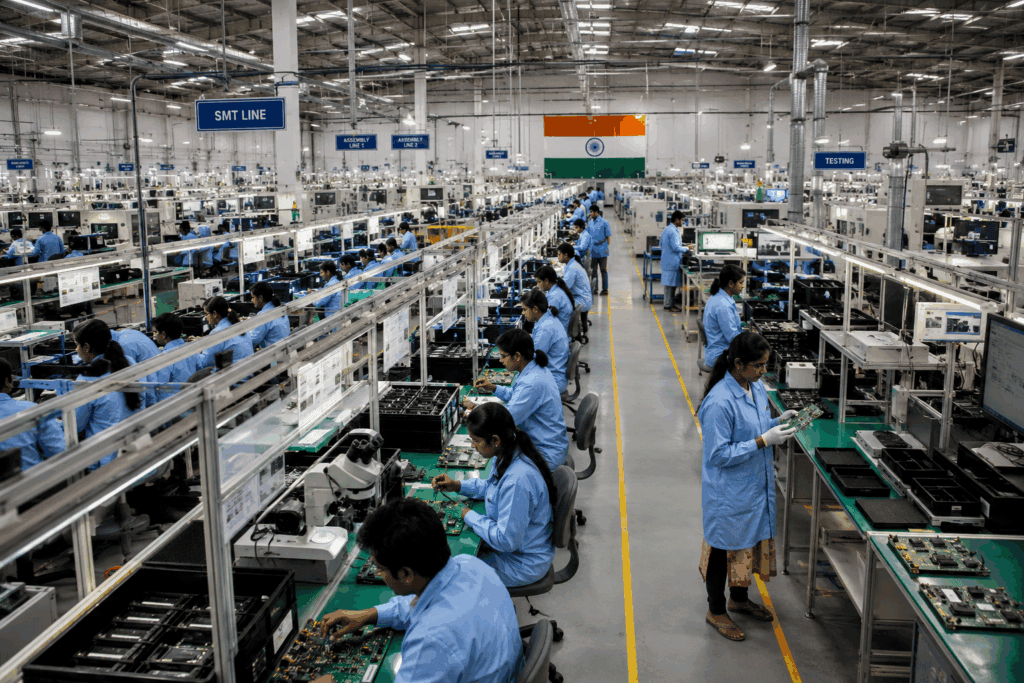
A major focus of the article is the steady expansion of India-Taiwan economic ties. The author traces the development of unofficial relations since the 1990s through the establishment of representative offices, Taiwan’s New Southbound Policy, and growing trade in electronics, semiconductors, machinery, and minerals. Panigrahi notes that India-Taiwan trade is now “almost 10 billion USD, suggesting greater potential for further development”. He further argues that Taiwanese firms such as Foxconn and Powerchip Semiconductor Manufacturing Corporation can play a pivotal role in advancing India’s semiconductor ecosystem, “Digital India”, and “Make in India” initiatives while contributing to talent development and technological innovation.
The article also highlights Taiwan’s growing strategic relevance for India. Panigrahi argues that more than 10% of India’s trade transits through the Taiwan Strait, making stability in the region directly linked to India’s economic security. Following China’s military exercises around Taiwan in 2022, India has consistently called for “avoiding any unilateral actions to change the status quo, de-escalation of tensions and efforts to maintain peace and stability in the region”. According to the author, China’s increasing assertiveness along the India-China border, in the South China Sea, and around Taiwan has generated common security concerns among India, Taiwan, Japan, and the Philippines, creating new avenues for strategic convergence.
The article concludes by arguing that India and Taiwan should continue strengthening cooperation through non-political and functional channels despite the limitations imposed by India’s One China policy. Panigrahi identifies semiconductors, emerging technologies, renewable energy, and economic security as promising areas of collaboration, including under the emerging “Pax Silica” framework. While acknowledging that India-Taiwan relations “will largely be shadowed by India-China relations”, he concludes that expanding partnerships through technology, trade, innovation, and people-to-people exchanges offers the most practical path for advancing bilateral ties within the existing diplomatic framework.