An Explainer on the 20 Outcomes of Prime Minister Modi’s State Visit to Indonesia, 6–8 July 2026
Indonesia sits at the junction of the Indian and Pacific Oceans, controls some of the world’s busiest shipping lanes, holds the largest economy in Southeast Asia, and leads the Association of Southeast Asian Nations (ASEAN). For India, whose Andaman and Nicobar Islands lie barely 150 km from Indonesia’s Aceh province, this makes Jakarta not just a diplomatic partner but a maritime neighbour whose choices directly affect Indian trade, energy security, and naval access to the wider Pacific.
The relationship also carries historical weight. India was among the earliest supporters of Indonesian independence, recognising the republic in 1946 and raising the Indonesian cause in international forums. Jawaharlal Nehru and Sukarno built a partnership around anti-colonialism and strategic autonomy that found expression at the 1955 Bandung Conference and, later, in the founding of the Non-Aligned Movement. Indonesia is the world’s fourth most populous country, a member of the G20 and BRICS, and a consistent advocate of ASEAN centrality. Both countries oppose the reduction of the Indo-Pacific to bloc politics. Both maintain policies of strategic autonomy. And since the relationship was elevated to a Comprehensive Strategic Partnership in 2018, defence and maritime cooperation have expanded steadily, driven by joint naval exercises, high-level military exchanges, and, most recently, Indonesia’s decision to acquire BrahMos supersonic cruise missiles.
The economic case has grown in parallel. Bilateral trade reached US$28.15 billion in 2024–25, placing Indonesia as India’s second-largest trading partner within ASEAN. India imports coal, crude palm oil, rubber, and minerals from the archipelago; Indonesia buys petroleum products, steel, pharmaceuticals, and automobiles. But it is Indonesia’s reserves of nickel and rare earth minerals that have given the relationship a new edge, as global competition over inputs for electric vehicles, semiconductors, and renewable energy technologies intensifies.
The Visit
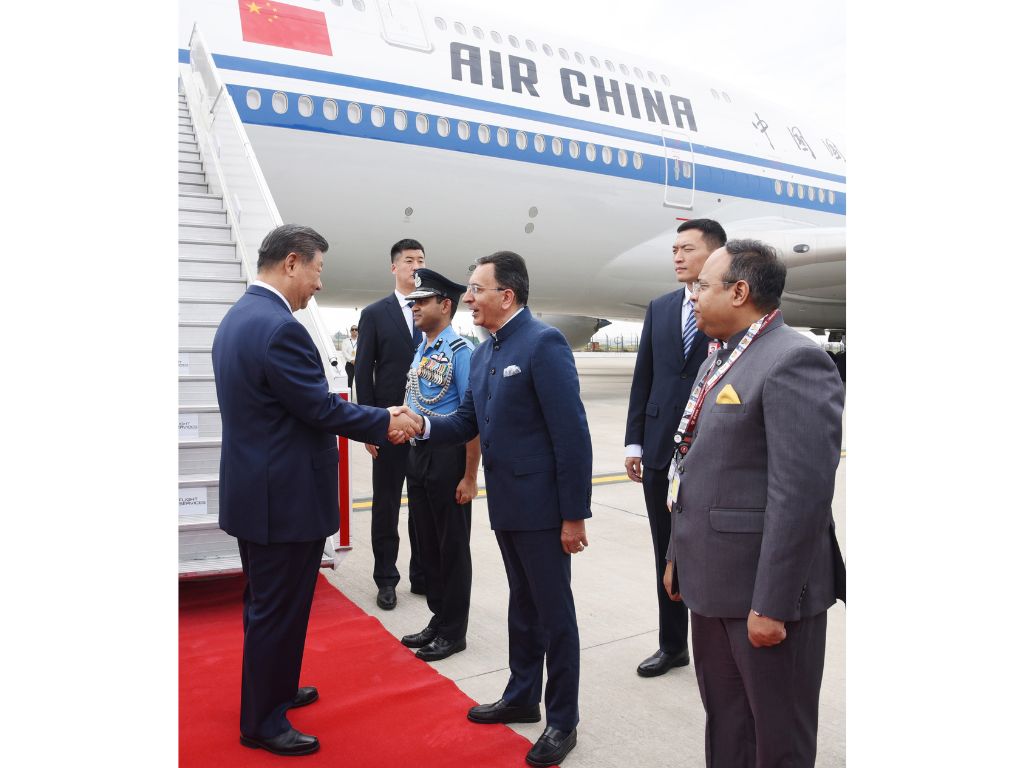
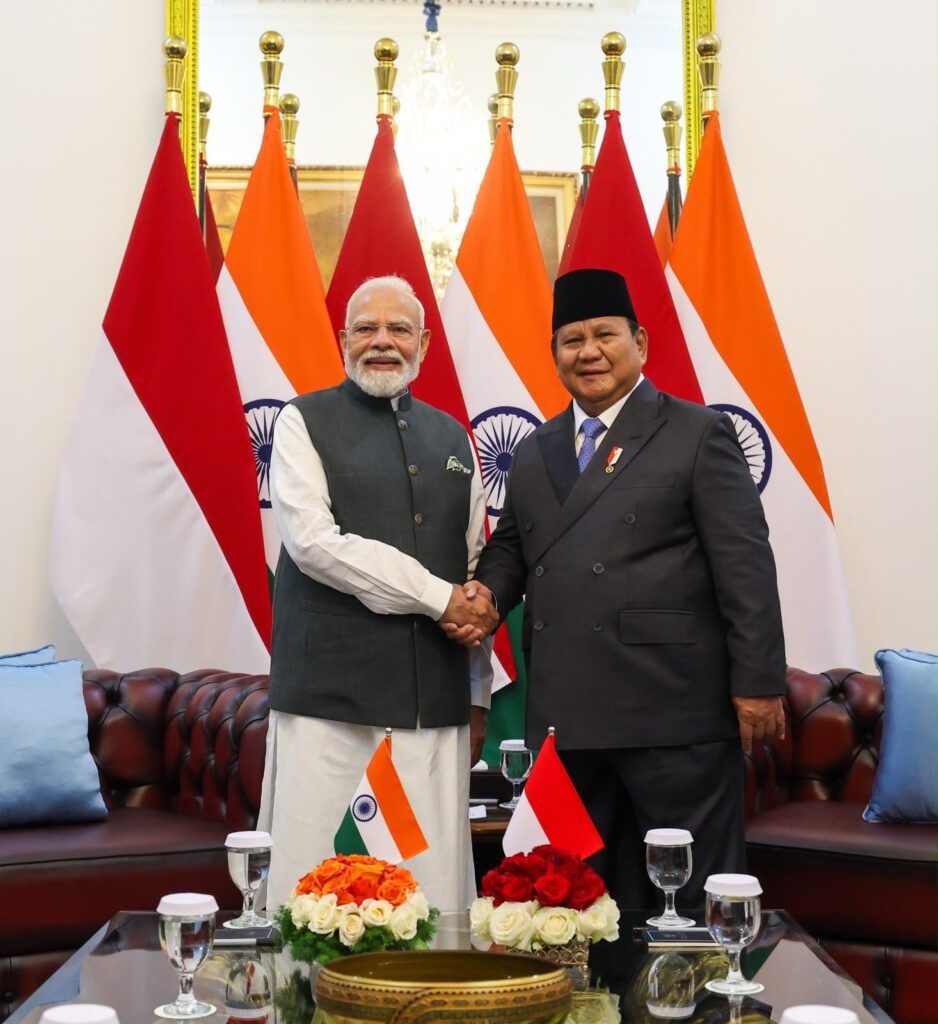
Against this backdrop, Prime Minister Narendra Modi arrived in Jakarta on 6 July 2026 for a two-day state visit at the personal invitation of President Prabowo Subianto. This was Prime Minister Modi’s fourth trip to Indonesia, but it carried particular weight: it was the first bilateral summit between the two leaders, the first state visit by an Indian prime minister since President Prabowo took office, and the first bilateral visit since the two countries elevated their relationship to a Comprehensive Strategic Partnership in 2018. The visit also followed President Prabowo’s appearance as the Chief Guest at India’s Republic Day celebrations in January 2025, a sequence of reciprocal gestures that both sides used to signal the relationship’s rising priority.
Prime Minister Modi received a ceremonial welcome at the Istana Merdeka (Presidential Palace), and President Prabowo conferred upon him Indonesia’s highest civilian and military honour, the Bintang Adipurna. The visit produced 20 agreements and initiatives spanning defence, maritime security, critical minerals, digital cooperation, healthcare, agriculture, higher education, disaster management, and cultural diplomacy. Jakarta formed the first leg of Prime Minister Modi’s three-nation tour (Indonesia, Australia, and New Zealand), reinforcing the visit’s place within India’s broader Act East policy framework.
Key Outcomes
Defence and Missiles
The centrepiece was defence. “The growing trust between our two countries is strengthening our cooperation in defence, security, and the maritime domain”, Prime Minister Modi said at the joint press conference. India and Indonesia signed an agreement for the supply of BrahMos supersonic cruise missiles, with Reuters reporting the deal to be worth about US$630 million. Indonesia had signed an initial contract for one BrahMos battery earlier in 2026; the new agreement envisages a phased acquisition of additional systems, with the package covering missile systems, supporting infrastructure, operator training, and maintenance services. Indonesia becomes the third country, after the Philippines and Vietnam, to sign up for BrahMos, whose profile rose sharply after India deployed it in combat during Operation Sindoor against Pakistan in 2025. India has since received interest from more than half a dozen other countries, including the United Arab Emirates.
Alongside BrahMos, the two countries finalised an agreement on Astra Mk-1 beyond-visual-range air-to-air missiles for Indonesia’s fleet of 16 Su-30 fighters. The Astra decision, too, was shaped by the missile’s performance during Operation Sindoor. State-run Bharat Dynamics Limited (BDL) will integrate the weapon with the Indonesian aircraft. These are overarching framework agreements; formal procurement contracts will follow. But the direction is unmistakable: India is positioning itself as a credible defence supplier to Southeast Asia, and Indonesia is choosing to diversify its sources of advanced weaponry.
Maritime and Sabang Port
The two sides extended their memorandum of understanding (MoU) on maritime safety and security cooperation, covering coast guard coordination, maritime domain awareness, navigation safety, and search and rescue. An Indonesian liaison officer will be deployed at the Information Fusion Centre–Indian Ocean Region (IFC-IOR), India’s Gurugram-based maritime information-sharing hub, deepening real-time operational links.
The most geographically consequential outcome was the agreement to partner on the integrated development of Sabang Port, situated at the northern tip of Sumatra, overlooking the entrance to the Strait of Malacca and about 160 km from India’s upcoming Great Nicobar trans-shipment port project. President Prabowo welcomed India’s interest in the partnership, which covers cruise and marine tourism facilities, ship repair and shipbuilding, and shore-based services supporting offshore energy activities in the Andaman Sea. The two sides said the partnership would enhance connectivity between the Andaman and Nicobar Islands and Indonesia’s Sumatra region, with authorities to work out the scope, financing, and modalities in a time-bound manner. A joint task force for Sabang has existed since 2018, but the cooperation had moved slowly; the new agreement gives it a sharper commercial and strategic focus.
Critical Minerals and Steel
Prime Minister Modi framed this in terms of resilience. “We have also concluded an important agreement to strengthen supply-chain resilience in the areas of critical minerals and steel”, he told the press conference, adding that Indian and Indonesian companies were “embarking on a new phase of partnership in stainless steel and rare earth magnets”. India will invest in manufacturing steel, nickel, and rare earth permanent magnets in Indonesia, a sector where China has established a dominant presence. A National Critical Mineral Research and Development Centre (NFTDC) will be established for collaboration on exploration, processing, and supply-chain diversification. Separately, PT Jakarta Industrial Estate Pulogadung (JIEP) and the Steel Authority of India Limited (SAIL) signed a partnership to set up a steel manufacturing facility. Indonesia holds the world’s largest nickel reserves, but Chinese firms currently dominate the processing side. New Delhi’s pitch is straightforward: offer Indonesia an alternative industrial partner while securing the inputs India’s own green transition demands.
Technology, Digital, and Education
Several outcomes reflected India’s expanding use of governance models and digital platforms as instruments of diplomacy. India’s Open Network for Digital Commerce (ONDC) will cooperate with Indonesia’s Open Network (ION) to develop interoperable digital commerce infrastructure. India’s Unified Payments Interface (UPI) will be integrated with Indonesia’s payment system, a step Prime Minister Modi highlighted as enhancing both business ties and ease of travel. MoUs on telecommunications, broadband infrastructure, and spectrum management were also signed, along with a broader research, technology, and innovation agreement covering startups, joint research, and technology transfer.
On the institutional side, an overseas campus of the Indian Institute of Management (IIM) Bangalore will be established in Indonesia’s Singhasari Special Economic Zone, designed to serve management education demand across the ASEAN region. India will also support the development of Indonesia-specific electronic voting machines (EVMs), an endorsement of India’s election management model that resulted in an MoU between the two countries’ election commissions.
Healthcare, Agriculture, and Culture
The remaining agreements covered healthcare regulation (an MoU between the Central Drugs Standard Control Organisation (CDSCO) and Indonesia’s BPOM on medical products), disaster management cooperation, health workforce capacity building, cooperation in sustainable agriculture, and India’s supply of 100 tonnes of HDW-162 wheat seeds. On the cultural front, India will assist in conserving the Prambanan Temple Complex in Yogyakarta, and both countries will mark the centenary of Rabindranath Tagore’s visit to Indonesia through a “Tagore–Dewantara Year of Cultural and Educational Diplomacy”.
What to Watch
The sheer breadth of these 20 outcomes invites a familiar question: how many will translate into functioning partnerships? India and Indonesia have signed multiple MoUs over the past decade; implementation has not always matched ambition. The BrahMos and Astra agreements, for instance, are framework arrangements, not final procurement contracts. The critical mineral investments must contend with China’s entrenched position in Indonesian nickel processing. And the Sabang Port project, on the table since 2018, has moved slowly.
Yet the visit reflects something that cannot be easily dismissed. The convergence between India and Indonesia is no longer driven primarily by historical sentiment or civilisational rhetoric. It rests on concrete, intersecting interests: Indonesia’s desire to diversify its defence suppliers beyond its traditional reliance on Western and Russian platforms, India’s need to secure critical mineral supply chains outside China’s orbit, and a shared concern about freedom of navigation in waters both countries depend on. The fact that Indonesia chose Indian missile systems after watching them perform in combat during Operation Sindoor demonstrates a shift from diplomatic goodwill to operational confidence.
The visit also fits within a larger pattern. Writing in The Indian Express, C. Raja Mohan described Prime Minister Modi’s three-nation tour as part of a “G Minus Two” approach: India’s effort to deepen partnerships with Asia’s industrial, technological, and maritime powers to widen the strategic space available between Washington and Beijing. Indonesia, sitting at the confluence of the Indian and Pacific Oceans, is the geographical heart of that endeavour. Greater economic integration and deeper security cooperation between Delhi and Jakarta, Mohan argued, have long been missing links in the regional search for stability. The 20 agreements signed in Jakarta suggest both capitals now recognise the gap and are moving, however incrementally, to close it.
There is also a softer dimension worth watching. India’s offers on digital public infrastructure, EVMs, UPI integration, and higher education represent an expanding toolkit of governance exports that New Delhi is deploying across the Global South. These are not traditional aid packages; they are institutional partnerships that create long-term dependencies and goodwill of a durable kind. Whether the broader package of agreements acquires substance or remains a well-drafted wish list will depend on the quality of follow-through in the months ahead. But the trajectory is moving in a direction both capitals have reason to sustain.
Note: This explainer has been researched, edited, and fact-checked by India’s World staff and prepared with AI assistance.