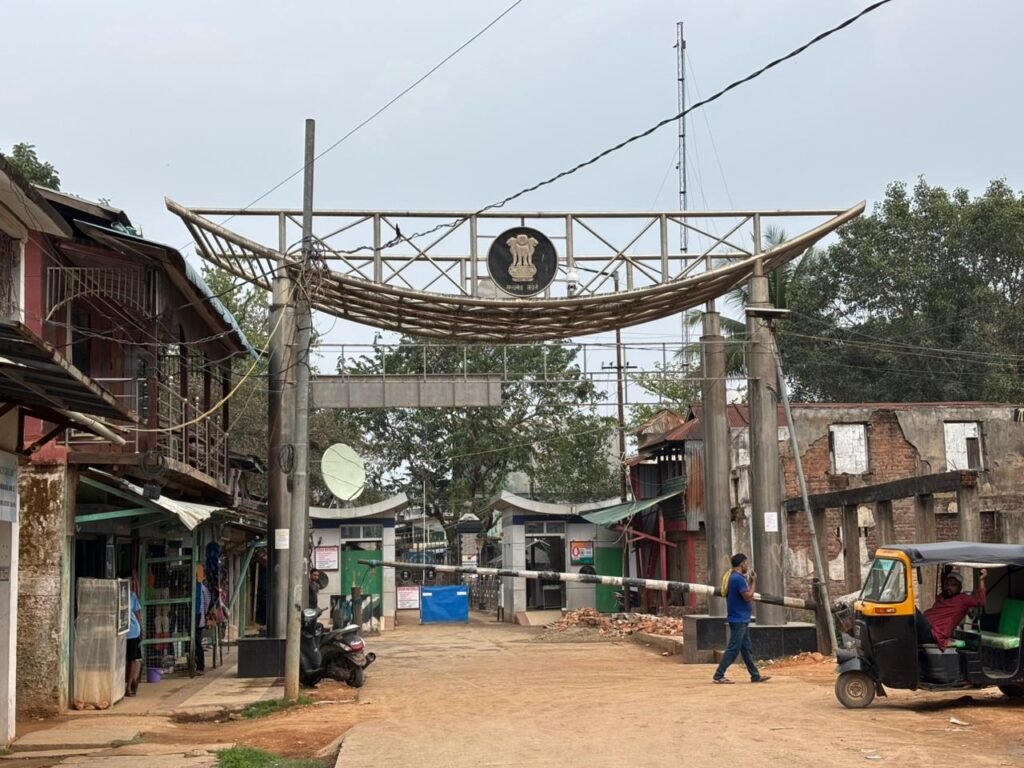
India’s Act East Policy promises connectivity and opportunity, but along the Indo-Myanmar border, its impact remains uneven. In Moreh, Manipur’s key frontier town, global ambitions collide with local realities of conflict, informal trade, and fragile governance. The story of Moreh reveals a deeper truth: strategy on paper means little without stability on the ground.
At the sixth edition of Kizuna, the annual India-Japan Intellectual Conclave, held in February 2026 in Shillong, a delegate from Kachin State in northern Myanmar made a telling remark: “In Myitkyina, we live and breathe the Belt and Road Initiative in our daily lives. It pervades everyday life in the upper Myanmar state bordering China.” In contrast, the Act East Policy of India, aimed at deepening the country’s relationship with ASEAN, has not pervaded the lives of people living in the border states sharing an international boundary with Myanmar, India’s land gateway to Southeast Asia.
For India’s Act East ambitions on land, the town of Moreh in Manipur is pivotal. For Moreh to thrive and advance India’s geo-strategic interests in the region, Manipur must find a durable political solution to its internal complexities. Much has been said about the ‘potential’, ‘opportunities’ and ‘possibilities’ that the Act East Policy offers. However, India’s ability to execute will largely depend on how Moreh’s full potential is realised and on ensuring that the political climate in Manipur remains favourable.