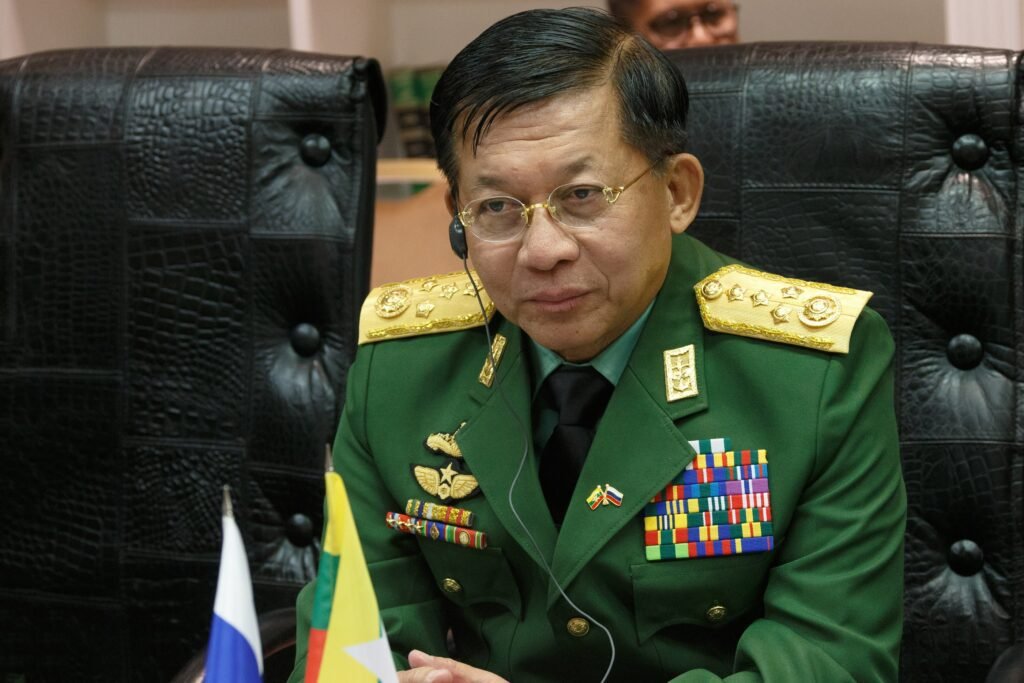
In the last couple of months, a political transition has been underway in Myanmar. It has been carefully crafted to increase the legitimacy of the junta led by Min Aung Hlaing (MAH), this time as the ‘elected’ President. The last time such a transition occurred—into a so-called democratic set-up—was in 2011, when Myanmar showed signs of opening up and political liberalisation.
So how should the current transition be viewed? Should New Delhi change the way it deals with Myanmar? Revealingly, the answers are simple: the transition is nothing but a change of garb for MAH—from military to civilian.
MAH’s four steps for transition
In the last two years, MAH has worked towards Myanmar’s political transition through four crucial steps: ending the state of emergency; consolidating territorial hold; facilitating elections; and restructuring political institutions.
A one-year emergency was imposed after the February 2021 coup and extended every six months since then, a total of seven times. It was finally withdrawn on 31 July 2025. What transpired in between was a series of unprecedented and unexpected developments against the backdrop of a bloody civil war. Unprecedented, because among those opposing the Tatmadaw this time included sections of the Bamars, the very majority group ittruly represents and rules. Unexpected, because many groups— including disassociated ethnic armed organizations (EAOs), the parallel government in-exile National Unity Government (NUG), and its armed wing, the People’s Defence Force (PDF)—combined efforts at many stages.