Heads of Missions Conference
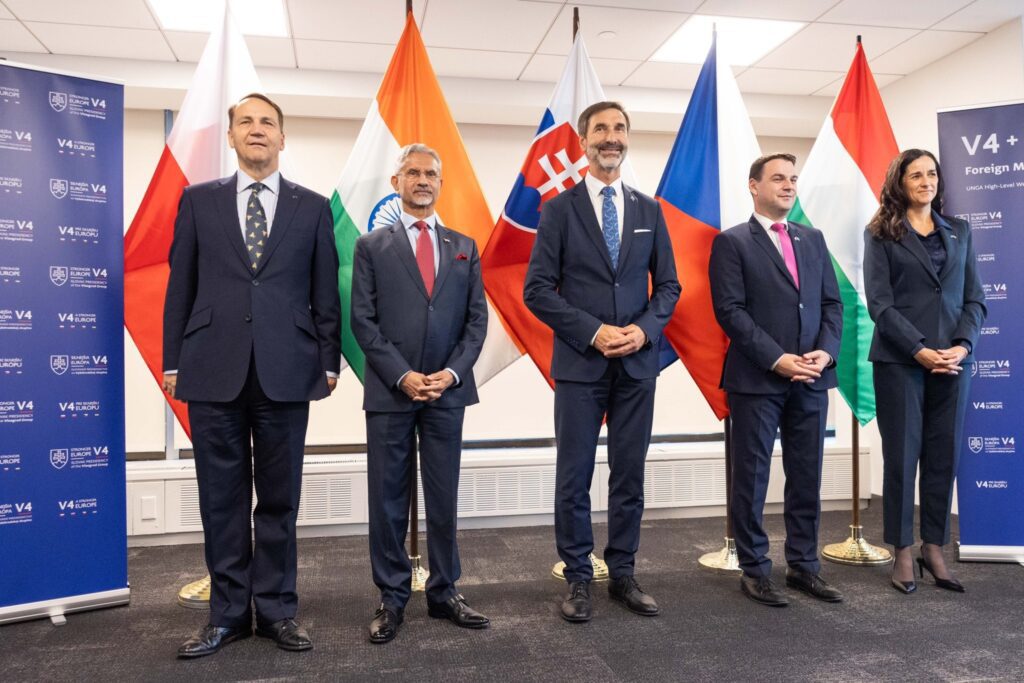
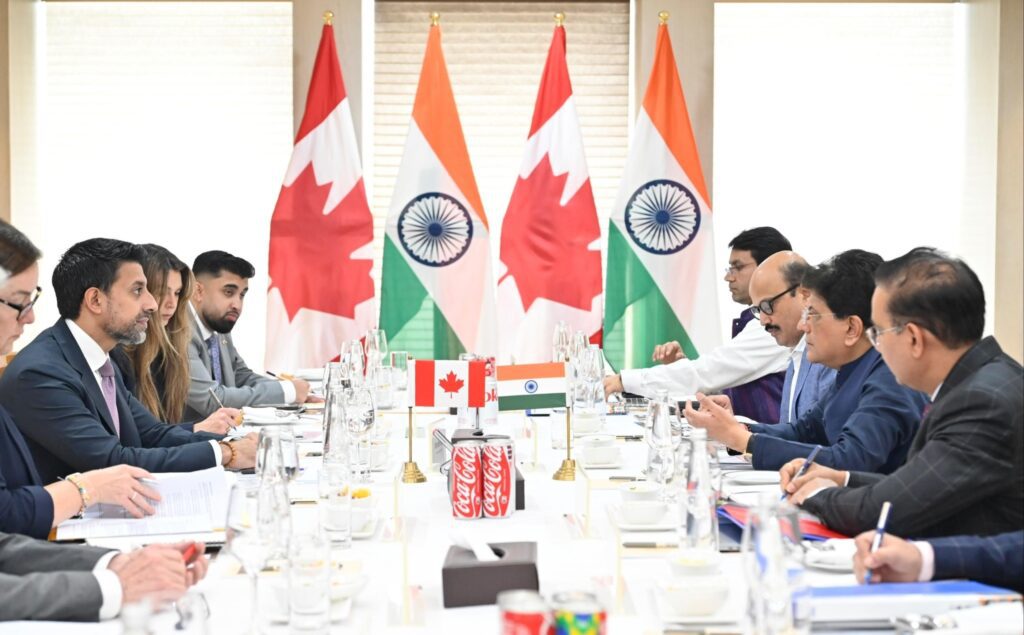
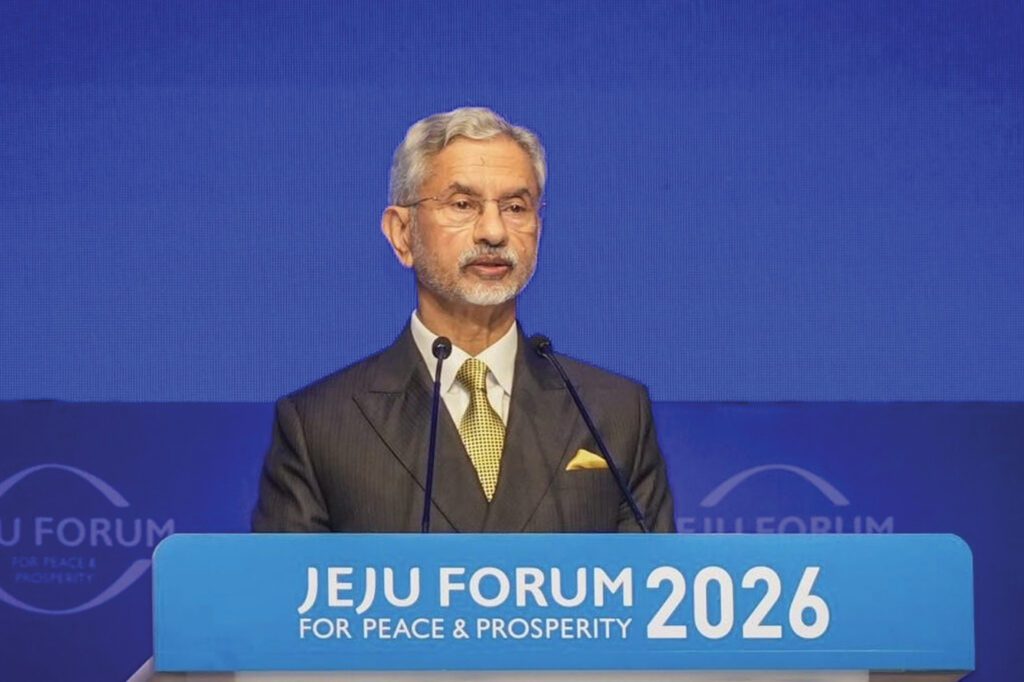
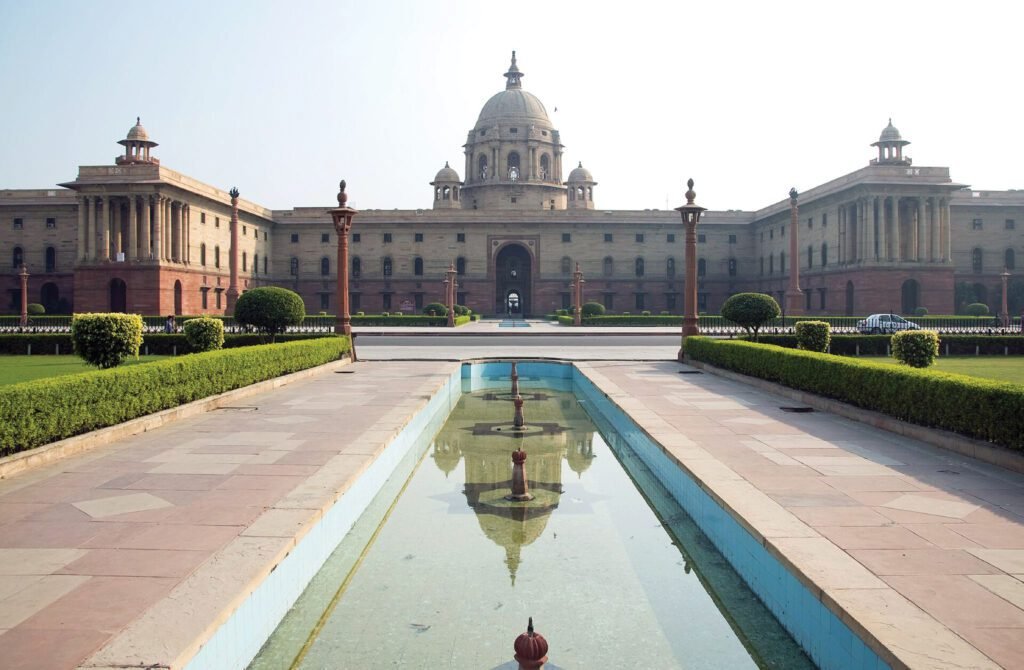
From 28 to 30 April 2026, the Ministry of External Affairs convened the 11th Heads of Missions Conference in New Delhi, the first such gathering in nearly four years. Prime Minister Narendra Modi, External Affairs Minister S. Jaishankar, National Security Advisor Ajit Doval and CDS General Anil Chauhan addressed envoys on the theme Reforming Indian Diplomacy for 2047. The discussions covered the neighbourhood, China, West Asia, the 3Ts of trade, technology and tourism, and economic diplomacy aimed at reviving foreign direct investment, which has fallen sharply from its FY22 peak. The conference comes at a difficult moment for Indian diplomacy, with the US tariff regime unsettled, immigration pressures on Indian workers in America, and the West Asia war reshaping energy and security calculations.
CDS Submits Theatre Command Recommendations
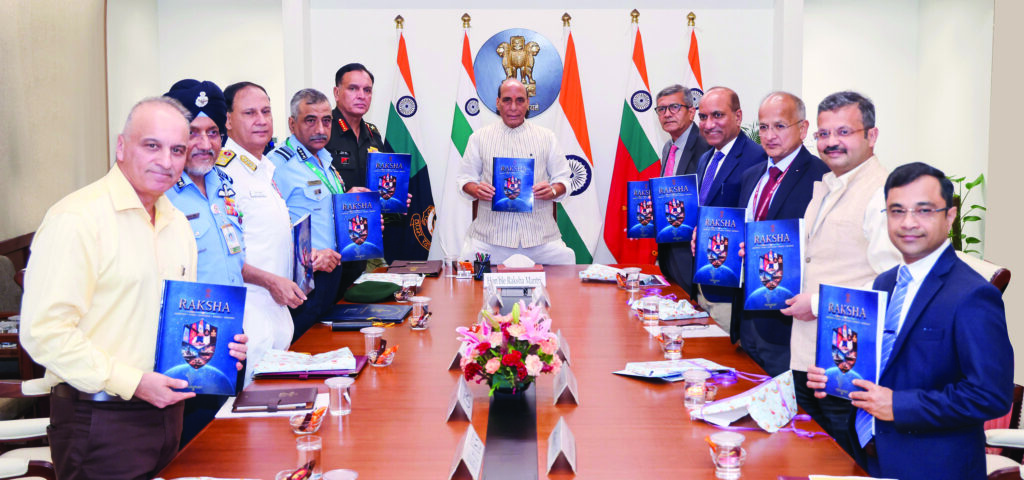
On 4 May 2026, CDS General Anil Chauhan confirmed that three sets of recommendations on integrated theatre commands had been placed before Defence Minister Rajnath Singh, and that a Joint Operations Centre to coordinate the three services would be operational by the end of May. Speaking at the Major General Samir Sinha Memorial Lecture in New Delhi, the CDS also flagged work on a Defence Geospatial Agency, a Defence Communication Agency and a cognitive warfare organisation, the last with financial clearance secured. Theatre commands have been discussed in Indian defence circles for two decades. With Chauhan demitting office on 30 May, the file is now likely to be carried forward under his successor, Lieutenant General N. S. Raja Subramani.
India’s Drone Industry Eyes Export Surge
Indian military drone manufacturers are reporting a sharp rise in export interest on the back of operational use during the May 2025 conflict with Pakistan. The Drone Federation of India estimates military contracts at up to ₹30 billion in FY26, with the figure projected to grow four to five times by 2028. Flying Wedge Defence and Aerospace, after a $30 million order last year, is targeting a $100 million export book within 18 months. Solar Industries reported export orders of over ₹28 billion between November and January, and ideaForge has won a contract to supply surveillance drones to US law enforcement agencies. Buyers in Africa and Southeast Asia, priced out of American platforms and wary of Chinese ones, now have a third option with combat references attached.
GalaxEye Places World’s First OptoSAR Satellite in Orbit
On 3 May 2026, Bengaluru-based startup GalaxEye launched Mission Drishti, the world’s first OptoSAR satellite, aboard a SpaceX Falcon 9 from Vandenberg. The 190-kg spacecraft is the largest satellite built by an Indian private company and the first to carry optical and synthetic aperture radar sensors on a single platform, allowing day-night and all-weather imaging. ISRO provided access to its testing facilities. GalaxEye plans a ten-satellite constellation by 2029. For a country whose imaging needs are constantly defeated by monsoon cloud cover, the implications for border surveillance, flood response, and crop monitoring are immediate.
India and Vietnam Elevate Ties
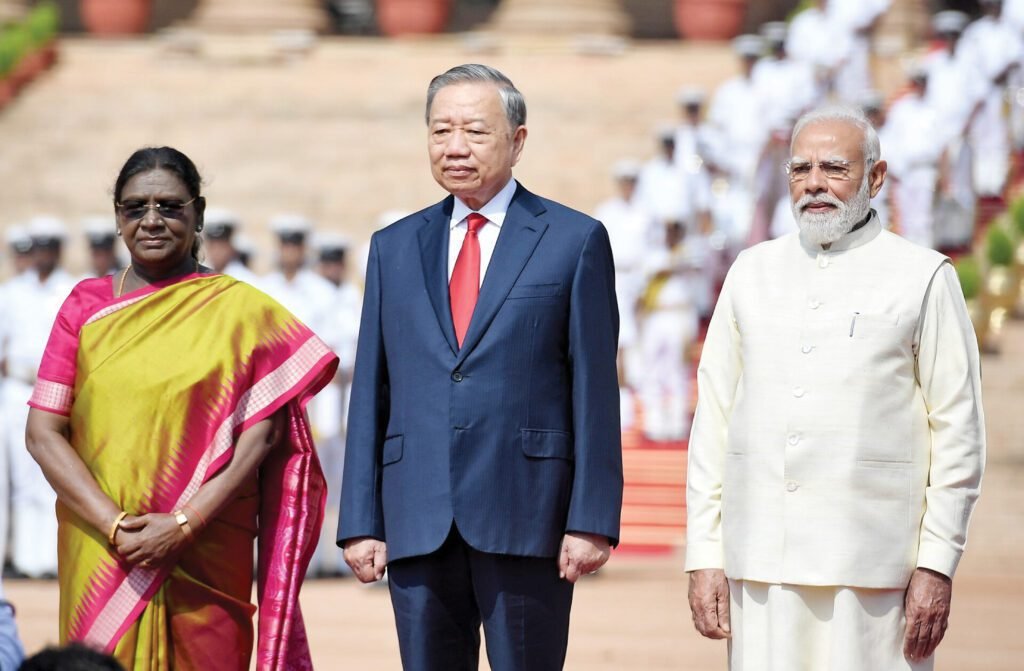
Vietnamese President To Lam’s state visit to India from 5 to 7 May 2026 saw the two countries elevate their relationship to an Enhanced Comprehensive Strategic Partnership, with a $25 billion bilateral trade target for 2030. Thirteen agreements were signed across digital payments, rare earth minerals, pharmaceuticals, banking, education and culture, including an MoU between Nalanda University and the Ho Chi Minh National Academy of Politics. The MEA confirmed that discussions on the BrahMos sale are ongoing, with the deal estimated at $625 to $700 million. Defence Minister Rajnath Singh travelled to Hanoi the following week to take the conversation forward. A confirmed BrahMos sale would be India’s first major missile export—and to a country with active maritime disputes with China.
DRDO Crosses 1,200-Second Scramjet Combustor Test
On 9 May 2026, the Defence Research and Development Laboratory in Hyderabad ran an actively-cooled full-scale scramjet combustor for over 1,200 seconds at its Scramjet Connect Pipe Test facility, against 700 seconds in January. The combustor uses an indigenously developed liquid hydrocarbon endothermic fuel and a high-temperature thermal barrier coating built to handle temperatures above the melting point of steel. Run-time is the metric that matters for an operational hypersonic cruise missile, and 1,200 seconds is one of the longest sustained ground trials reported anywhere. With BrahMos-II still delayed, this programme is the most credible Indian route to a hypersonic strike weapon.
India Tests Advanced Agni Missile with MIRV Capability
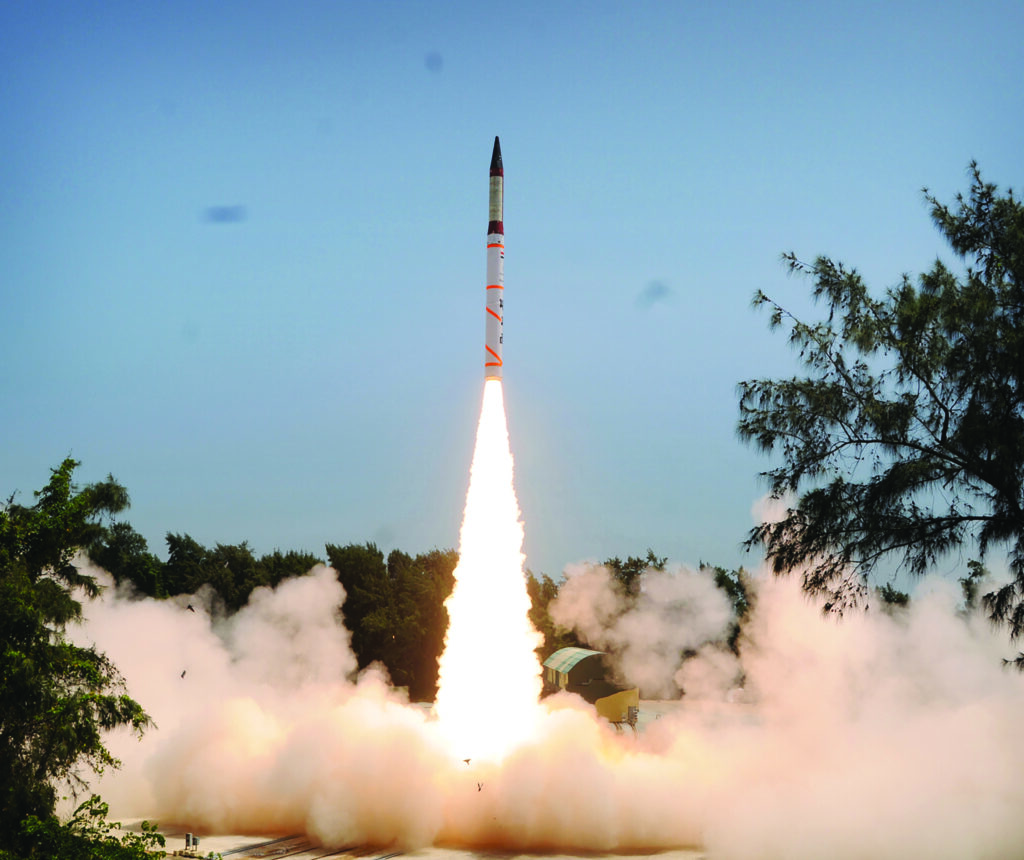
On 8 May 2026, India flight-tested an Advanced Agni missile fitted with Multiple Independently Targeted Re-Entry Vehicle technology from Dr APJ Abdul Kalam Island, Odisha. Multiple payloads were aimed at separated impact points in the Indian Ocean Region, with telemetry and tracking handled by ground stations and ship-based platforms. This was the second publicly acknowledged MIRV test after Mission Divyastra in March 2024, and the first since Defence Minister Rajnath Singh tied the test to India’s “growing threat perceptions”, widely read as a reference to China’s nuclear modernisation rather than to Pakistan. The Agni variant tested was not officially identified.
Next CDS and New Navy Chief
On 9 May 2026, the government appointed Lieutenant General N. S. Raja Subramani as the next Chief of Defence Staff, succeeding General Anil Chauhan on 30 May, and Vice Admiral Krishna Swaminathan as the next Chief of the Naval Staff, succeeding Admiral Dinesh Kumar Tripathi on 31 May. Subramani has commanded 16 Garhwal Rifles in counter-insurgency in Assam, 168 Infantry Brigade in Jammu and Kashmir, the 17 Mountain Division in Sikkim, and 2 Corps, the Army’s premier strike formation on the Western Front. He retired as Vice Chief of Army Staff in July 2025 and has been Military Adviser at the NSC Secretariat since. Swaminathan, currently head of the Western Naval Command in Mumbai, takes charge as the Navy absorbs Operation Sindoor lessons and as the Great Nicobar build-out raises the tempo of the eastern Indian Ocean push.
First Made-in-India Airbus C-295
In mid-May 2026, Tata Advanced Systems Limited rolled out the first locally assembled Airbus C-295 transport aircraft from its Final Assembly Line in Vadodara, several months ahead of the original September 2026 target. It is the first time a private Indian company has assembled a complete military aircraft at this scale, ending the long monopoly of state-run Hindustan Aeronautics Limited in military aviation production. Under the ₹21,935 crore contract signed in 2021, sixteen aircraft have been delivered directly from Airbus’ Seville line, with the final batch handed over in August 2025; the remaining forty are being built in India by August 2031 to replace the IAF’s ageing Avro HS-748 fleet. Component manufacturing also runs through Hyderabad, with 37 Indian suppliers onboarded.
Defence Secretary Lays Out 2047 Power Projection Vision
At the CII Annual Business Summit in New Delhi on 12 May 2026, Defence Secretary Rajesh Kumar Singh said India aims to become a fully integrated, self-reliant, all-domain military force capable of projecting power across the Indo-Pacific and beyond by the 2040s, under the armed forces’ 2047 vision. Domestic defence production is targeted to rise six-fold to ₹8.8 trillion by 2047, with arms exports growing nine-fold to ₹2.8 trillion. FY26 arms exports already hit a record ₹38,424 crore, a 62% jump. Singh flagged Mission Sudarshan Chakra, the layered missile defence system announced by PM Modi last Independence Day, as expected to mature between 2030 and 2040, and said the draft Defence Acquisition Procedure 2026 would compress timelines and raise indigenous content mandates.