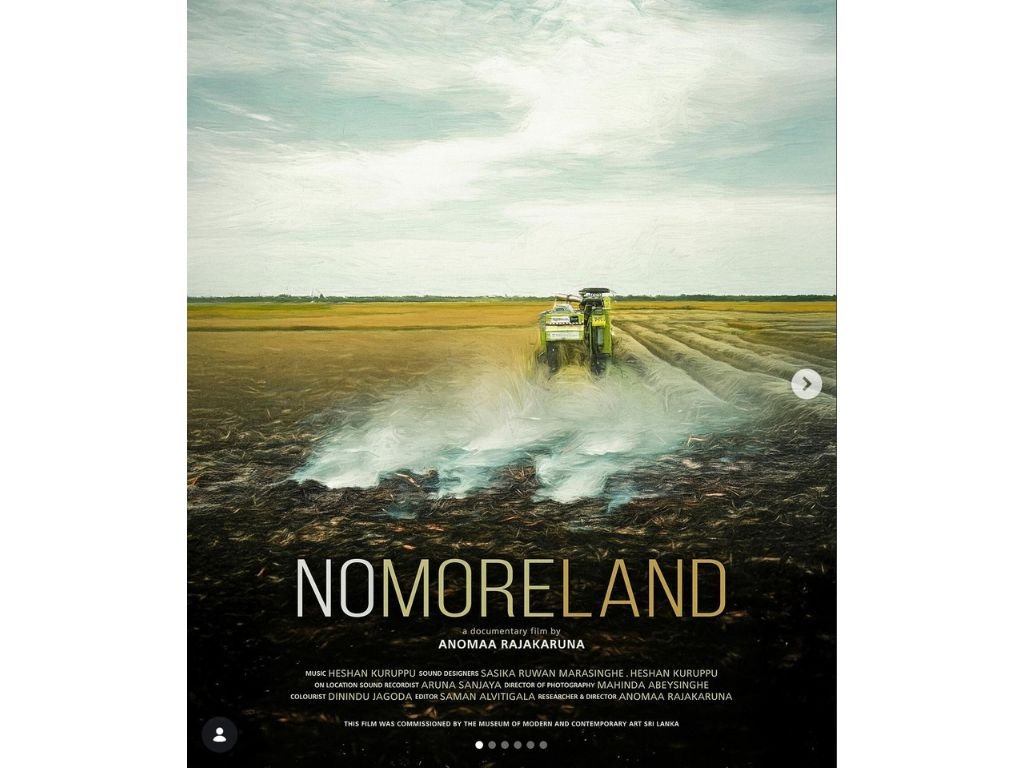
Land ownership disputes in Sri Lanka’s Eastern Province can be traced back to early post-independence development policies such as the Gal Oya settlement project, launched in 1949. Framed as an irrigation and resettlement initiative to cultivate dry zones, it also became one of the country’s first large-scale demographic reorganisations. Land redistribution under this scheme often sharpened ethnic divisions between Sinhala, Tamil, and Indigenous communities, leaving behind a legacy of displacement, contested ownership, and long-standing tensions that continue to shape the region’s socio-political landscape.
Directed by Anomaa Rajakaruna, No More Land is a 40-minute documentary that revisits these histories through a deeply personal lens. The film brings together testimonies from eleven women across different ethnic communities in the Ampara district, using their lived experiences to explore the enduring consequences of land policies. Without a narrator, the documentary unfolds as an oral-history tapestry, where each voice contributes to a collective memory of displacement, survival, and contested belonging. Its all-female perspective stands out, while its poetic editing and immersive jungle soundscapes create an atmosphere that is both intimate and evocative. The film subtly critiques the uneven and often exclusionary outcomes of post-independence nation-building.
The film has been praised for its distinctive narrative approach and emotional depth. It received the Satyajit Ray Bronze Award for Documentary at the South Asian Short Film Festival in 2025 and has been screened at academic and human rights venues internationally. Critics have highlighted its ability to balance aesthetic restraint with political urgency, making it a thoughtful and affecting viewing experience. It stands out for its nuanced storytelling, its rare centring of women’s voices in discussions of land and conflict, and its capacity to illuminate a complex historical issue through deeply human stories.