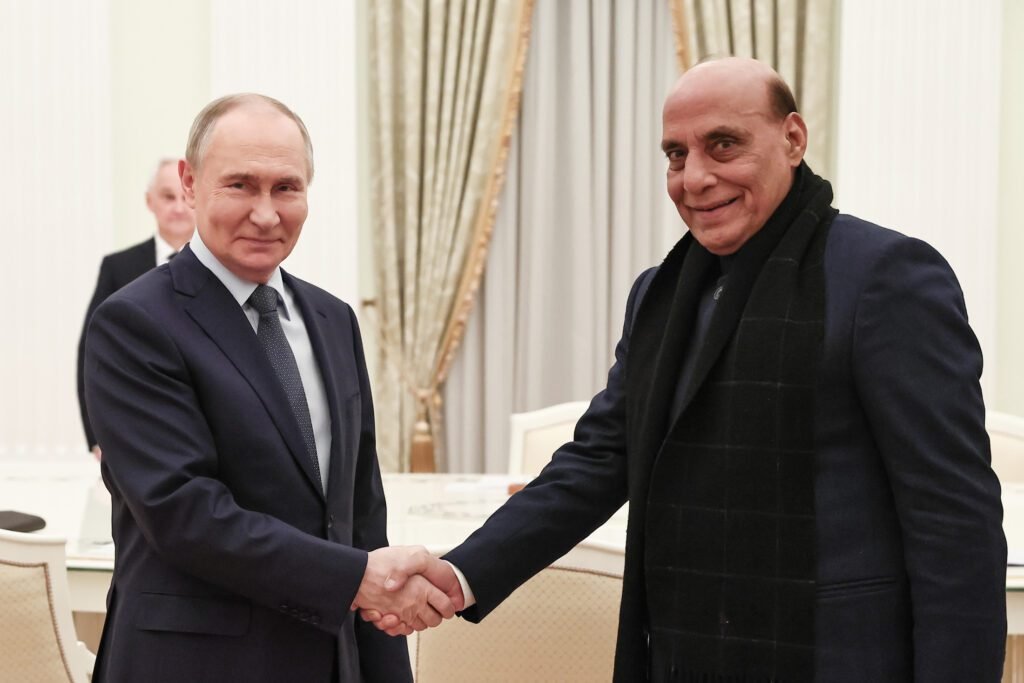
India and Russia’s Reciprocal Exchange of Logistics Support (RELOS) agreement has entered its operational phase, bringing renewed attention to a framework that expands military access and logistics cooperation between the two countries.
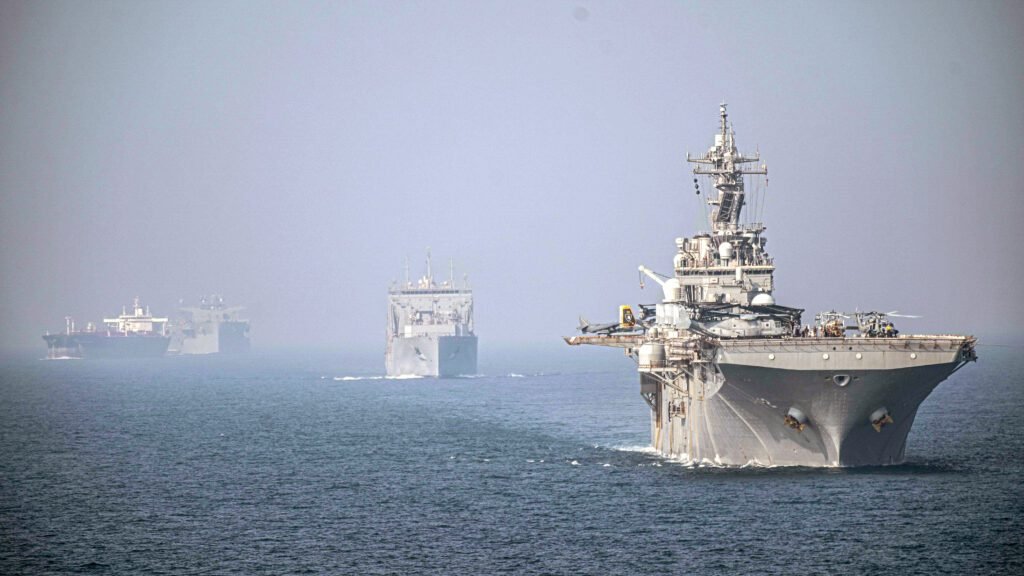
Signed in Moscow on 18 February 2025, ratified by Russia under Federal Law No. 458-FZ on 15 December 2025, and in force since 12 January 2026, the agreement allows both sides to station up to 3,000 troops, five warships, and ten aircraft in each other’s territory at any given time.
What is RELOS
RELOS is a bilateral logistics support agreement that enables India and Russia to use each other’s military infrastructure for operational support. It governs access to ports, airbases, and related facilities, and provides logistical services for deployed personnel and equipment.
Vyacheslav Nikonov, First Deputy Chair of the State Duma’s International Affairs Committee, confirmed during the ratification process that the agreement allows “five warships, ten aircraft and three thousand troops to be simultaneously stationed in the territory of the partner country for a period of five years,” with provisions for extension through mutual consent.
The agreement covers a wide range of logistics services. For naval vessels, this includes port access, repairs, and supply of food, water, and technical resources. For aircraft, it includes air traffic control, navigation support, processing of flight requests, and aircraft parking and security. Fuel, lubricants, and maintenance services are provided on a reimbursable basis.
Why was RELOS Signed?
India and Russia have maintained a long-standing defence relationship, and RELOS introduces a structured framework to support it. Discussions on the agreement began as early as 2018, and its conclusion in February 2025 reflected the defence cooperation that both sides view as mutually beneficial. The agreement strengthens cooperation in joint exercises, training, and humanitarian assistance and disaster relief operations, while enabling longer deployments and coordinated operations.
The pact carries particular relevance for India’s Russian-origin military platforms. Access to Russian facilities supports maintenance, servicing, and operational continuity, strengthening long-term military cooperation.
The agreement also reflects a broader shift in military strategy. Modern operations depend on logistics networks that enable sustained presence across regions. India already has the Logistics Exchange Memorandum of Agreement (LEMOA) with the United States, signed in 2016, which facilitates mutual access to supplies and services. RELOS covers similar ground but goes further in certain operational respects, particularly in formally permitting the temporary stationing of troops and assets. Together, these agreements reflect India’s consistent approach of expanding logistics capability across geopolitical partnerships.
What RELOS Means for India?
On geographic access, India gains entry to Russian naval and air facilities spanning the Arctic and the Pacific, including ports such as Murmansk and Vladivostok. The Arctic is a region of growing strategic importance as new maritime routes open and major powers deepen their presence. RELOS gives Indian naval vessels access to Russian Arctic ports, including Murmansk and Severomorsk, for refuelling and repairs. Analysts have noted that the agreement reportedly provides access to more than 40 Russian naval and air bases in total, significantly extending India’s operational reach from the Arctic to the Pacific.
On logistical depth, access to fuel, maintenance, spare parts, and supplies allows Indian forces to sustain deployments over longer durations and greater distances, improving overall operational readiness and supporting the Indian Navy’s blue-water ambitions.
The agreement also supports interoperability, facilitating coordination between Indian and Russian armed forces during joint exercises, disaster relief, and other approved missions. For India’s large inventory of Russian-origin platforms, including the Su-30MKI, T-90 tanks, and S-400 air defence systems, access to Russian facilities supports maintenance, servicing, and operational continuity.
More broadly, RELOS reinforces India’s strategic autonomy. By building defence logistics partnerships across geopolitical blocs, from LEMOA with the United States to RELOS with Russia, India maintains the independent decision-making that defines its multi-alignment approach.
How Should RELOS be Understood?
The operationalisation of RELOS has prompted two parallel interpretations.
One view highlights the scale of its deployment provisions and its potential to support extended military presence across regions such as the Indo-Pacific and the Arctic. The agreement’s reference to the “deployment of military formations” places it within a category of frameworks that support sustained operational engagement.
A second view situates RELOS within continuity. Analysis by the Observer Research Foundation notes that the agreement reflects “enduring defence cooperation and mutual interest” while formalising existing practices rather than creating a new strategic shift.
The Takeaway
In a global environment where mobility and access define military effectiveness, agreements such as RELOS bring structure to an established defence relationship while expanding India’s ability to operate across regions. It combines logistics access, limited deployment provisions, and long-term coordination in a single framework.
This article has been researched, edited, and fact-checked by India’s World staff and prepared with AI assistance.