The General’s Remark
A decade ago, when I was doing research on the Line of Control (LOC), a retired senior Pakistani general told me something I have thought about often since. The army, he said, does not run the Pakistani state with guns. It runs the state with well-researched files and well-reasoned arguments. And custom-tailored suits.
I had expected him to talk about the many coups and counter-coups that the Pakistan Army carries out in the country’s civilian spaces, but he told me about the quieter competence of an institution that had, over decades, outproduced every civilian agency in the country: better research, better paperwork, better logistics, and better representation of the Pakistani people across social strata. The army had become the state’s memory and its most legitimate institution. The General told me that this was achieved with competence and efficiency, not through the barrel of the gun.
The institution sees itself as the last functional organ of the Pakistani state and organises its behaviour around that self-perception. In a country like Pakistan, where social indicators are poor and corruption is high (according to the Transparency International Corruption Perceptions Index, Pakistan ranked 136th out of 180 countries), it is unwise to dismiss the role of the army, which sees itself as a praetorian army, for Pakistan and those outside it.
I recalled this remark this month while watching Field Marshal Asim Munir move between Washington, Tehran, Riyadh, and Beijing. The general was not wrong about what the Pakistan Army is capable of doing, even if his description was incomplete.
Consider how the Pakistan Army operates today: domestic political management at home by keeping Imran Khan in jail and overseeing the country’s constitutional amendment process, creating leverage in Washington, reviving contracts in Riyadh, carrying out airstrikes in Kandahar, and carrying messages from Trump to Iran, which it had targeted just two years ago with missiles killing nine Iranians. The Pakistan Army’s distinction is not that it can work with files, but that it knows which mode to operate in, and when to switch, and when to switch back. Its tactical flexibility is simply mindboggling.
The Iran mediation is its current mode. Let’s be clear: the Pakistan Army’s peacemaker role is not a change of its core identity, but a clear demonstration of the institution’s operating range. To understand what Pakistan has done over the last six weeks, and what it means for a world that has accepted Pakistan’s offer, we have to read the Pakistan Army’s mediation mode in a longer arc than the current news cycle would let us.
That is what this essay attempts to do.
The Credit Due
Let me start with what the mediation has achieved, because the more difficult argument I will make later on will be harder to make if it begins with cynicism expected of an Indian writer based in Delhi writing on the Pakistan Army.
The US-Israel war on Iran that began on February 28 killed thousands of people, destroyed the Iranian government, civilian and military infrastructure, closed the Strait of Hormuz, shaking global oil markets. The war killed the Iranian Supreme Leader, drew in American bases across the Gulf to the dislike of the Gulf monarchies, and was looking like a regional war with no obvious exit.
That’s when the Pakistan Army stepped in. Just in time.
On April 8, a ceasefire was announced. Munir spoke directly with President Trump, Pakistani diplomats, at Munir’s instructions, carried American proposals to Tehran and Iranian counter-proposals back to DC, and kept Beijing informed, which I assume kept Moscow, Tehran’s partner, briefed. The first face-to-face talks between high-ranking American and Iranian delegations since the Islamic revolution of 1979 took place in Islamabad. And when those talks failed, Munir flew to Tehran himself to keep the process alive. And it is alive.
Brokering peace one day does not mean believing in peace on any day
This is skilled diplomatic work carried out by the Pakistan Army. Peace is a public good, and the ceasefire, if it holds, saves lives that would otherwise be lost, and the war may not resume if all goes well. The Pakistan Army has demonstrated that it is able to do things others have not been able to do.
Let me be clear: Indian commentators who are unwilling to acknowledge this are missing the point. But the question in front of us is not whether the mediation is good; it is. The question we must ask is whether there is more to the Pakistan Army story than just mediation. And there is.
The Sequence. And the Sleight of Hand
Let’s take a look at the chronology, which tells a story that is not usually told together.
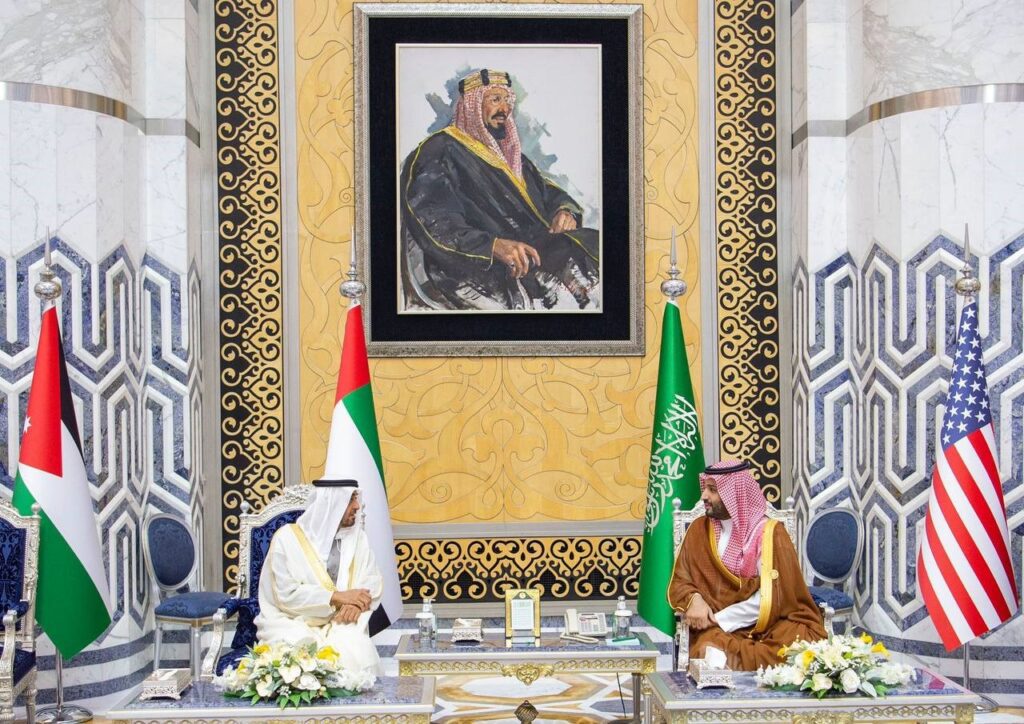
September 17, 2025: Pakistan signs the Strategic Mutual Defence Agreement with Saudi Arabia, committing both states to treat aggression against one as aggression against both. Indian social media is livid.
November 13, 2025: the 27th Amendment to the Pakistani constitution passes in seven days, with no public debate, while PTI boycotts and President Zardari signs. Munir’s army manages to create the post of Chief of Defence Forces, which will always be held by the army chief and thereby subordinates the air and naval chiefs. It places nuclear command under the CDF, and grants lifetime immunity to five-star officers—Munir is the only five-star officer and is slated to serve till 2030. The Amendment also creates a Federal Constitutional Court to pre-empt any judicial challenge.
There has never been a more powerful Pakistani. Not since Jinnah. Read my piece in the Hindustan Times for more.
October 2025 and February 2026: Pakistan fights two rounds of open war with Afghanistan, including airstrikes on Kabul and Kandahar. The conflict has not ended, but appears to have been moved to the back burner.
February 28, 2026: the Iran war begins.
April 2026: Pakistan hosts the first direct US-Iran talks in Islamabad.
Now: Munir is the toast of the international community. Even those who hate Trump have good things to say about Munir.
You can read this sequence as a mere coincidence or as a progression. If you prefer the latter, here’s how to read it. The army under Munir consolidated its domestic constitutional position first, signed a Gulf defence pact second, prosecuted a war on its western frontier third, and then stepped onto the world stage as a peacemaker just when the opportunity presented itself. By the time the international community discovered that Pakistan had become indispensable to Iran-war diplomacy, the constitutional capture of the Pakistani state was a fact.
You can hire the Pakistan Army, but you cannot change it
Nobody abroad raised a finger, not because they didn’t notice, but because they chose not to. Because in the grander scheme of things, the Pakistan Army was doing something noble. As Shah Rukh Khan would put it: Bade bade deshon mein aisi chhoti chhoti baatein hoti rehti hain.
The West needed a willing mediator with access to Tehran and a clean chain of command unbothered by the noise of democracy, the heckling of the streets, and the constraints of due process. Saudi Arabia needed a reliable contractor, China needed a predictable partner, and Tehran wanted a mediator. The Pakistan Army offered all four at once.
This is the smart sleight of hand. While the world watched the peacemaker at work, the constitutional rearrangement was completed in full public view with the country’s most popular leaders languishing in jail, and the applause drowned out the objection. It’s almost as if the world didn’t expect any better from Pakistan. Or that the new praetorian system in Pakistan is useful to everyone.
The Pakistan Army has a long habit of landing on the right side of events. There is simply no taking away from that essential fact.
But there is more to the story.
Four Faces of One Institution
Four explanations of the Pakistan Army compete in the literature. Let’s quickly analyse them one by one, and then together.
The first is the rentier lens. The army has cashed in on its geography, its nuclear status, and its frontline location on every major American strategic project in the region since the 1950s. Ayesha Siddiqa’s work on Milbus captures the institutional dimension. The army is not just a military institution but a commercial and bureaucratic enterprise in uniform. Rewind the past few weeks. Pakistani intermediaries with army links pitched cryptocurrency deals to the Trump family’s orbit, a critical minerals partnership was negotiated with Munir, showing Trump a box of rare earth minerals from Pakistan, and he lunched at the White House in June without his prime minister present. Saudi security money continues to flow into Pakistan’s forever weak economy.
Pakistan offers services and gets paid in return. The most consequential example of the Pakistan Army’s services to the US remains the 1980s, when Washington hired the Pakistan Army to drive the Soviets out of Afghanistan. The country has not yet recovered from that contract.
The second is the praetorian lens. Munir’s mediation is also a legitimacy-laundering exercise at home. Munir was promoted to field marshal ten days after the four-day war with India in May 2025. The 27th Amendment gave him tenure until 2030 and lifetime immunity. He warned Shia clerics against protesting the killing of Khamenei. The army that jailed Imran Khan and ran a captured election is now the peacemaker of West Asia. The streets that once protested Munir are now in awe of him. The Pakistani youth idolise him today. The praetorian state’s praetorian general is firmly in charge. But instead of protesting, the country is celebrating.
The Pakistan Army’s distinction is not that it can work with files, but that it knows which mode to operate in, and when to switch, and when to switch back
The third is the pragmatic lens. The army is genuinely agile. It is simultaneously mediating between the United States and Iran, holding a defence pact with Saudi Arabia that could in principle be invoked against Iran, prosecuting an undeclared war with Afghanistan, coordinating with China on a five-point regional plan, and managing a relationship with India that came within hours of nuclear escalation a year ago. No other state in the region has this many balls in the air at once. Whether this reflects strategic depth or tactical scramble is the question I will come to shortly.
The fourth is the revisionist lens in moderate disguise. C. Christine Fair’s Fighting to the End argued that the Pakistan Army’s institutional DNA is ideologically committed to strategic revisionism against India. The Iran mediation does not undo that well-researched argument. The Pakistan Army’s Kashmir posture has not changed, the doctrine against India is intact, and the proxy infrastructure is very much in place. What has changed is the army’s willingness to perform moderation on stages where moderation is rewarded. Just because revisionism can wear a diplomatic suit does not mean there is no revisionism underneath. It’s a smart sleight of hand, so keep your focus on the hand.
The temptation is to rank the four and pick the flattering one. The peacemaker. The pragmatist. Resist it. The analytical payoff of the current moment is that the Pakistan Army is all four at once. Rentier, praetorian, pragmatic, and revisionist in moderate disguise, simultaneously, without contradiction from the institution’s own point of view. The army’s core self-conception is that it is the guardian of the Pakistani state. That self-conception requires all four roles. Rent services fund the guardian, domestic primacy protects it, agility creates manoeuvrability, and revisionism gives it its reason for being.
It is this ability to play many roles as and when required is what makes the institution so durable. It is also what makes it so resistant to the reform its admirers keep hoping for. You can hire the Pakistan Army, but you cannot change it because it has a role conception that is consistent.
The Fifth Face: The Army as Pakistan’s Foreign Ministry
There is a fifth face.
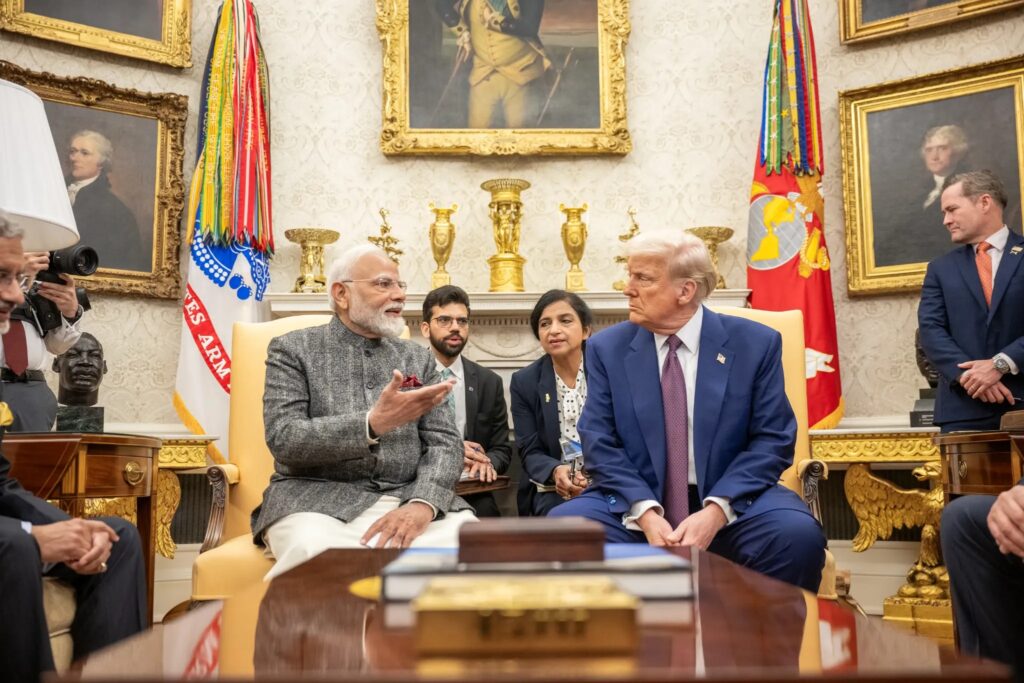
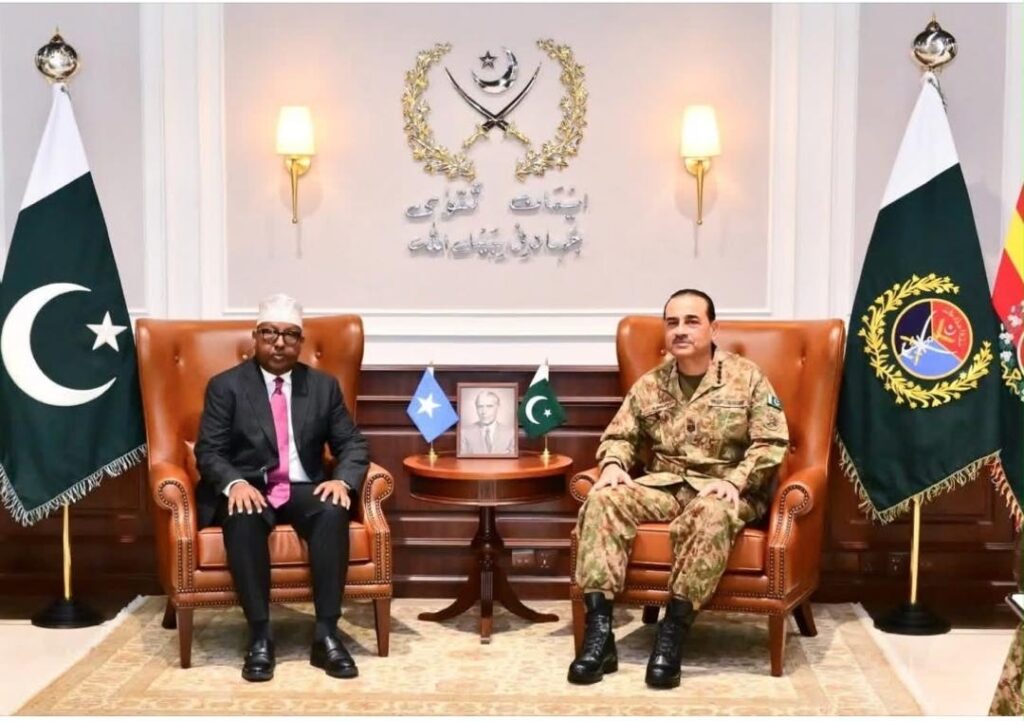
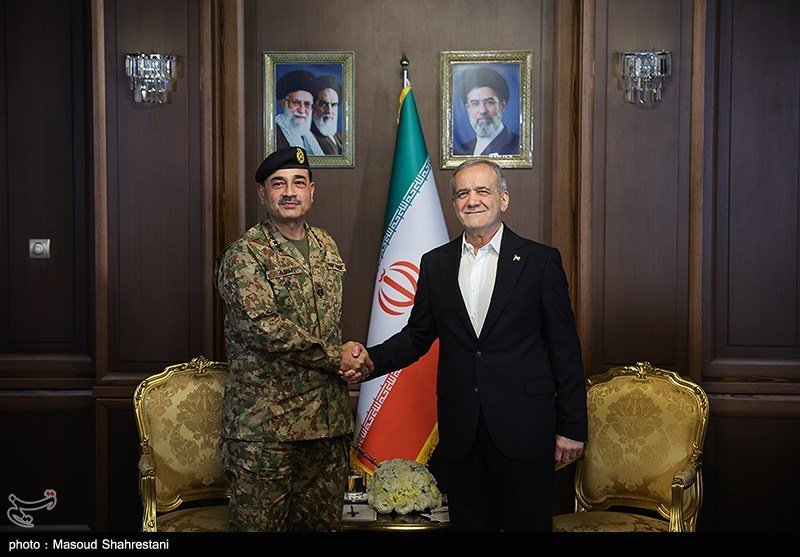
The 27th Amendment did more than to protect or elevate the army. Consider this. Pakistan’s Deputy Prime Minister, also the foreign minister, Ishaq Dar, is ceremonial, and the country’s Prime Minister Shehbaz Sharif is decorative—even diehard Pakistanis will admit that. Trump’s favourite Field Marshal Munir is the actual interlocutor for every state that matters to Pakistan, speaking directly with President Trump, hosting Trump’s deputy Vance in Islamabad, flying to Tehran to meet President Pezeshkian carrying an American message in Pakistan Army fatigues.
This is not the Pakistan Army ensuring that the country’s core foreign policy objectives reflect the army’s preferences. It is the army’s primacy in Pakistan’s foreign policy. The civilian apparatus has not just been sidelined in the diplomatic process, but has been replaced by it. Pakistan today no longer has a foreign ministry whose positions are shaped by the army with well-reasoned files; it has an army whose positions are announced by a foreign ministry, if the Field Marshal is too busy to do it himself.
This is the qualitative shift that this ongoing mediation by the Pakistan Army reveals. It has now completed a journey that began with Ayub Khan in 1958. The Pakistan Army is no longer the most powerful institution in the state of Pakistan; it is the state. This is no state within a state. There is only the praetorian state. And Pakistan is celebrating.
If that is what Pakistan wants, that is what they have.
Right Side of Events, Wrong Side of History
Now, let us take up the central question. Is this a strategy or a collection of tactics?
My own honest answer to this question is that the Pakistan Army has made tactical virtuosity a substitute for strategic depth, and has made this work because the world keeps finding the institution useful. Who would not want to work with a unified, professional, and able institution in a country that is anything but?
Consider the historical pattern. Ayub Khan aligned Pakistan with the United States at the height of the Cold War and with China at its coldest moment. He charmed, outsmarted and extracted assistance from both, landing on the right side of every event from 1954 through 1965. And yet, Pakistan lost its Eastern Wing in 1971 under the watch of his successor, General Yahya Khan.
Take Yahya’s successor Zia ul-Haq, who, in a coup in July 1977, ousted Zulfikar Ali Bhutto. Zia turned the Soviet invasion of Afghanistan into a decade of American rents, a covert nuclear programme, and a jihad infrastructure that made Pakistan the indispensable partner of the United States through the 1980s. He was on the right side of every event of that decade. The jihad infrastructure Zia built went on to become the Tehrik-i-Taliban Pakistan, which is one of the key reasons why Munir is currently bombing Kabul. Some of the jihadi infrastructure is still fighting the Pakistani state.
Pervez Musharraf started out on the wrong side but switched to the right side of 9/11 within seventy-two hours. Of course, the Bush administration’s stern warning—“Be prepared to go back to the Stone Age” threat was a big encouragement in the switch. But he did well thereafter, extracting Coalition Support Funds, rebuilding American dependence on Pakistan, and keeping the Taliban in his pocket. Pakistan was on the right side of every event from 2001 through 2021. By 2021, the United States had left Afghanistan, and Pakistan today has a national security challenge on its Western frontier. For a moment, it seemed Pakistan had wrested Kabul from Washington. Remember the image of Lt. Gen. Faiz Hameed, then head of the ISI, calmly sipping tea with a triumphant smirk on his face in Kabul after the Taliban takeover? Everything went downhill from there to where it is today. It now has adversaries on both sides and is in the midst of a nutcracker situation.
But if you thought all this would put the Pakistan Army in its place and encourage it to do some introspection, you would be mistaken. Look where the country is today—negotiating peace between Iran and the United States. It appears to have landed on the right side of history, once again.
But has it? Or is it playing a tactical game like in the past, only to lose the larger strategic game? We will have to wait and see.
There is no doubt that the mediation is a tactical triumph. Trump’s “favourite Field Marshal” is at the centre of global attention with his constitutional position secured until 2030, and the rents are flowing. The ceasefire, if it holds, will earn Pakistan credit, gratitude and hard cash. These are real gains.
But they could also be temporary, as was the case in the past. The ceasefire can collapse, and Pakistan could be blamed. The Saudi defence pact can activate against Iran, and mediator credibility will evaporate quickly, as would the defence partnership. The Afghan war can expand and consume the army’s institutional bandwidth. Trump can lose interest in Munir, and the personal equation may not survive. Israel could be the wild card. The structural conditions that made Pakistan indispensable this season may not repeat in the next. They never remain constant.
But whether or not the season of good news and cheers ends, the Pakistan Army’s core identity will not end. The “jugular” Kashmir posture, the jihadi snakes in the backyard, and its revisionist DNA. They are not going anywhere.
Munir’s Trump Card
To be sure, Pakistan’s moment is not Pakistan’s doing alone. It is primarily a function of the Trump phenomenon, with other actors playing along.
For the United States under Donald Trump, a militarised Pakistan has always been more useful than a democratic one. The personal equation with Munir is cleaner than the political churn of a Pakistani coalition government. For Saudi Arabia, a disciplined Pakistani army is easier to work with than a distracted Pakistani civilian leadership. For China, a consolidated chain of command is more predictable than Pakistan’s electoral mess. For Iran, an army-to-IRGC channel is useful. In fact, during his April visit, Asim Munir was invited to the Khatam al-Anbiya Central Headquarters of Iran’s Islamic Revolutionary Guard Corps (IRGC).
There was a time when the civil-military imbalance in Pakistan used to be a diplomatic embarrassment. Every Western ambassador issued the ritual statement about democratic consolidation. That language has completely disappeared. It has been replaced by praise for Pakistani mediation, in particular, the army chief of Pakistan, who has also incidentally disempowered every other institution in Pakistan. No one seems to care.
Bade bade deshon mein aisi chhoti chhoti baatein hoti rehti hain.
The Reckoning Will Come
Peace is good, and in this case, it is a global public good. The ceasefire should hold because it helps all of us. The Pakistan Army deserves credit because it grabbed an opportunity and has done a good job with it. All of this is true, and an honest account must say so even if I am sitting in Delhi and writing this essay.
But the fundamental identity of the Pakistan Army does not change just because the world has found a new use for it. The army that mediated in Tehran last week is the same army that used proxies to fight the NATO forces to ensure the return of the Taliban into Afghanistan, that runs the proxy infrastructure against India, and that bombed Kandahar while preparing talks in Islamabad. It wears a suit one day, the olive-green uniform the following day; carries a gun one day, and a file on another day; talks to Trump one day, and trains a group of terrorists on the next day. Brokering peace one day does not mean believing in peace on any day.
India will have to read this army as it is, not as the current moment makes it appear. So will everyone else, eventually. History has a way of repeating itself. It has repeated itself in the past; it will again.
The General was right about the files. He was also, without knowing it, describing the problem when an army takes over the civilian files.