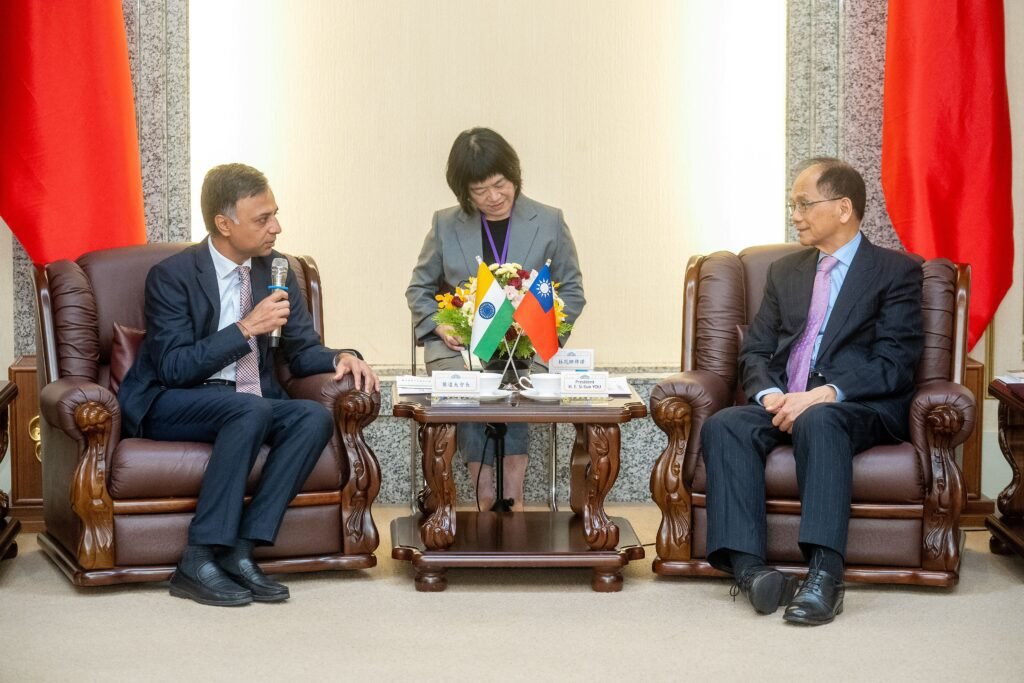
The recent announcement of an India–Taiwan industrial park in Sanand-Dholera, along with the possibility that the first group of Indian workers heading to Taiwan as early as the end of this year, signal an important shift in India–Taiwan ties—from a cautious and calibrated engagement towards a “network society” built around technology, labour mobility, industrial corridors, identity, sub-national diplomacy, and educational exchanges. This has culminated in a relationship that may not be diplomatically visible but clearly operates in plain sight—a contradiction that could be described as “officially unofficial, unofficially official.”
India has followed the “One China” policy over the years; however, it has used informal diplomacy to cultivate a strong economic and trade relationship with Taiwan, especially in the last two decades. Informal diplomacy refers to flexible, non-official, non-structured diplomatic engagement between two sides outside formal state-to-state channels. It indicates that formal government channels are not the sole determinants of relations between different sides. Informal or invisible diplomacy has quietly shaped India–Taiwan bilateral relations, away from the surface of state-centric formal diplomacy.