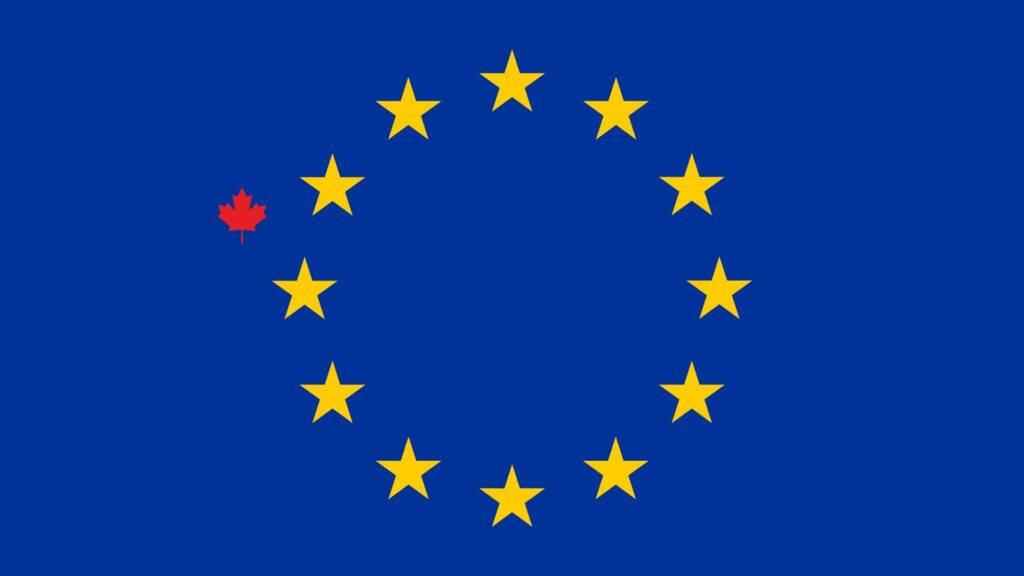
On the morning of June 24, 2016, when Britain woke to the news that Leave had won the referendum by 51.9% to 48.1%, the promise was straightforward: sovereignty reclaimed, borders controlled, a ‘Global Britain’ free to forge its own path. A decade later, Prime Minister Keir Starmer has offered a different verdict. Brexit, he said, had done ‘deep damage’ to the British economy. His April 2026 speech marks the clearest shift in post-Brexit strategy yet.
What the Data Now Show?
The economics of Brexit are no longer a matter of contested projection. They are a matter of accumulated evidence.
The most comprehensive recent assessment comes from a November 2025 working paper published by the National Bureau of Economic Research (NBER), authored by economists Bloom, Bunn, Mizen, Smietanka, and Thwaites. Drawing on nearly a decade of post-referendum data, both macroeconomic and firm-level, they conclude that UK GDP per capita is 6–8% below the level it would have reached had Britain remained in the EU. Business investment has been 12–18% lower than the counterfactual. Employment and productivity are each 4% below comparable economies.
The Office for Budget Responsibility (OBR), the UK’s official fiscal watchdog, had itself projected a 4% long-run productivity loss from Brexit. The realised figure—roughly double—reflects what the NBER paper describes as the compounding effects of prolonged uncertainty: firms deferred investment, diverted managerial attention to compliance, and reduced hiring rather than expanding.
Trade data corroborate the macro picture. CER researchers estimated that by late 2021, UK goods trade with the EU was approximately 11.2% below pre-referendum forecasts—a gap of £8.5 billion annually. For households, Bloomberg Economics estimates the drag at £100 billion per year in lost output. Cambridge Econometrics and the London Mayor’s Office put a more granular number to it: the average British citizen is approximately £2,000 poorer each year compared to the trajectory under continued EU membership. In London, where exposure to EU financial and professional services was highest, the figure rises to around £3,400. Nationwide, they estimate approximately two million fewer jobs exist than would have otherwise.
The Limits of the Reset
Labour came to power in July 2024, constrained by its own manifesto. The party had explicitly ruled out rejoining the EU, the Single Market, or the Customs Union. What it promised instead was a reset—a warmer, more cooperative relationship designed to reduce practical friction without reversing the fundamental constitutional settlement.
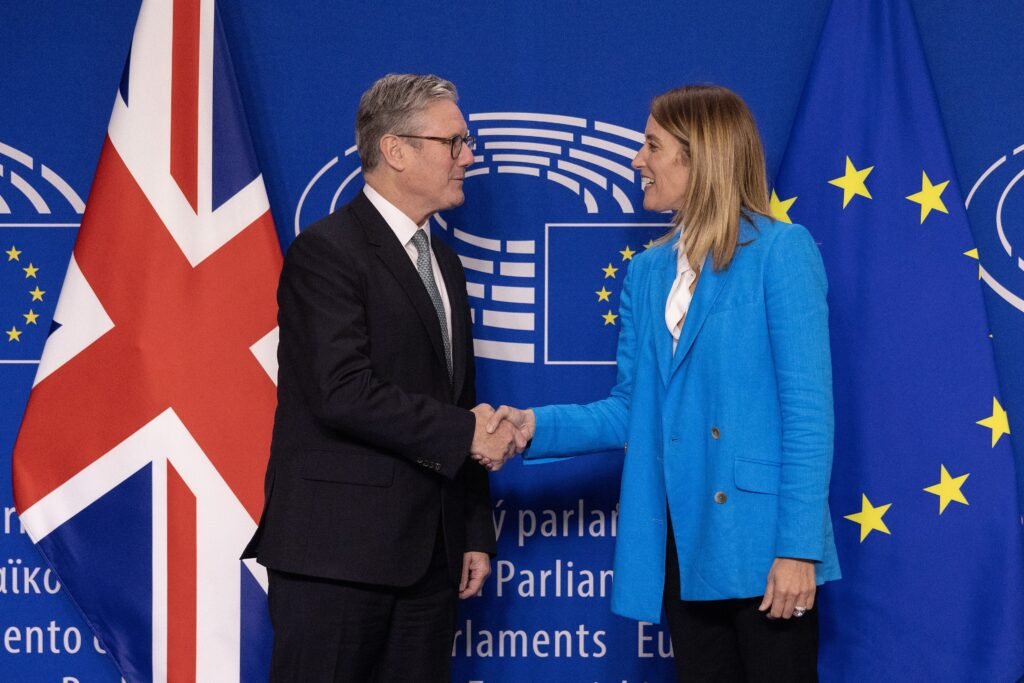
The Lancaster House summit of May 2025 was the centrepiece of that reset. The UK and EU signed a new Security and Defence Partnership and agreed a “Common Understanding” covering ten areas of cooperation: trade, energy, climate, fisheries, research, youth mobility, and more. Concrete agreements included a 12-year extension of EU fishing rights in British waters, the lifting of some EU steel tariffs on UK exports, a commitment to negotiate a veterinary (SPS) agreement to ease food border checks, and a framework for electricity trading.
Despite this “new chapter”, progress was slow and partial. For example, talks on a UK–EU youth mobility visa are stalemated: the UK insisted that EU participants would not get subsidised UK tuition fees (they would be full-fee students), and the UK wanted a cap on visa numbers, whereas Brussels offered only an “emergency brake” rather than fixed quotas. On defence procurement, an EU demand for a large upfront “subscription” to the €150 billion European armaments fund (SAFE) stalled UK participation. In short, Lancaster House yielded agreements in principle on several fronts, but many key issues (student visas, budget contributions, regulatory alignment) remain unsettled.
A Fractured Transatlantic Alliance
Into this stalled reset arrived two geopolitical shocks that have fundamentally altered the calculation. The first is the war in Iran. The conflict, which escalated through late 2025 and into 2026, has effectively blockaded the Strait of Hormuz, the narrow waterway through which approximately 20% of the world’s traded oil passes. The resulting energy price spike has renewed inflationary pressures across Europe and the UK, at a moment when British households were already dealing with years of subdued real wage growth.
Britain’s response has been to position itself as a diplomatic coordinator. Foreign Secretary Yvette Cooper hosted a 41-nation summit to press for safe passage through the Strait; UK military planners have been tasked with assessing how allies could marshal naval capabilities once the fighting subsides. Starmer has explicitly linked this energy emergency to the case for deeper EU cooperation on electricity grid integration, gas storage, and carbon market alignment.
The second shock is the condition of the US alliance. President Trump’s second term has been characterised by an increasingly personal disdain for Britain’s government. He called Starmer “not Winston Churchill.” He described Britain’s aircraft carriers as “toys.” He implied that the King would have been more supportive of US strikes on Iran than the elected Prime Minister. He has repeatedly threatened to withdraw from NATO, calling it a “paper tiger.” And when Washington pressed London to allow US forces to launch pre-emptive strikes on Iran from British bases—including RAF Fairford and the facility on the Chagos Islands—Starmer refused, citing international law. Only after Iranian attacks on British-linked targets did he permit what he termed “defensive missions.”
The cumulative effect of these pressures has been to expose the central assumption of the Brexit project: that Britain could leave the EU and deepen its relationship with Washington simultaneously. That assumption has not merely been tested; it has been falsified by events. A US president who imposes tariffs, issues personal insults, and threatens to abandon NATO is not a substitute for the economic and security architecture that EU membership once provided.
Starmer’s Proposal—and Its Limits
Starmer’s April 1st speech was carefully calibrated to navigate the political constraints. He did not propose rejoining the EU. He explicitly reaffirmed that Labour’s manifesto commitments—no Single Market, no Customs Union, no freedom of movement remained in place. What he did propose was the “most ambitious partnership possible” within those constraints, to be negotiated at a new UK-EU leaders’ summit scheduled for the summer of 2026. The signal on the Single Market was nonetheless significant. Starmer said he was “ambitious that we could do more in relation to the single market, because I think that’s hugely in our economic interests.” This stops short of formal re-entry but acknowledges that deeper regulatory alignment, in specific sectors, may be necessary for meaningful growth.
The speech also announced closer security cooperation, with deeper ties on defence procurement and an explicit ambition to go beyond the ‘stocktake’ of Lancaster House commitments. The EU, for its part, has indicated through official channels that it is ‘open to something ambitious’ on the economic side, particularly in light of the shared energy crisis.
The Liberal Democrats have pushed harder, calling for a new customs union with the EU—a step that would eliminate goods tariffs and align external trade policy, at the cost of independent UK trade agreements with third countries. But Labour has held firm on that line.
The Road Ahead
The obstacles to Starmer’s ambitions are structural, not merely political. The EU’s foundational principle—that the benefits of the Single Market cannot be disaggregated from its obligations has not changed. Any meaningful move toward single market alignment in specific sectors would typically require the UK to accept EU standards without having a vote in setting them: a sovereignty concession that critics on the right will exploit vigorously.
Budget contributions are a related pressure point. Early discussions on electricity market integration reportedly foundered because Brussels linked access to payments into EU cohesion funds. Any broader economic deal will face the same logic: the EU does not give away access for free.
On the UK right, the reaction to Starmer’s speech was predictable. Conservatives accused him of “reopening the old wounds of the Brexit years.” The hard‑right Reform UK party and Brexit activists accuse him of betraying “Global Britain,” though their objections have focused more on immediate cost-of-living relief than grand strategy.
Yet the political arithmetic may be moving in Starmer’s favour. Polling consistently shows that a majority of British voters now believe Brexit was the wrong decision. A June 2025 YouGov survey found 56% of respondents saying leaving the EU had been a mistake; 65% favoured closer ties with the bloc. The political cost of pragmatic rapprochement is lower today than at any point since 2016.
Britain’s position reflects a reckoning with economic and geopolitical realities that have steadily eroded the assumptions underpinning Brexit. The promised gains have fallen short, while external pressures have strengthened the case for cooperation with Europe. Starmer’s approach signals not a reversal of Brexit, but an attempt to mitigate its costs within political constraints. The question is no longer whether Brexit is delivered, but whether Britain can adapt in time to restore stability and competitiveness.