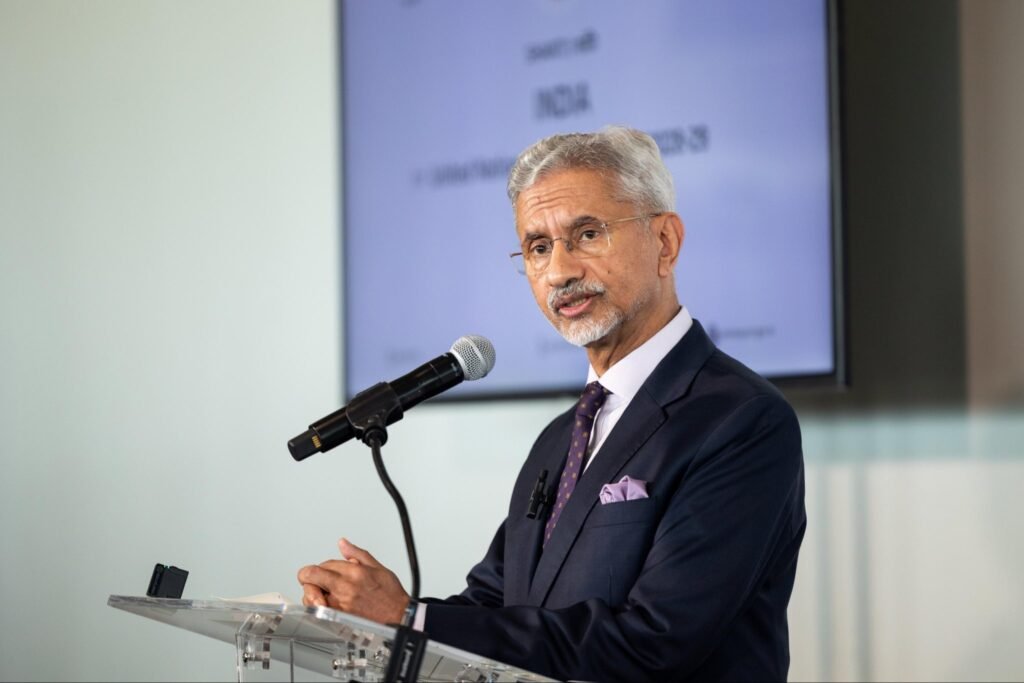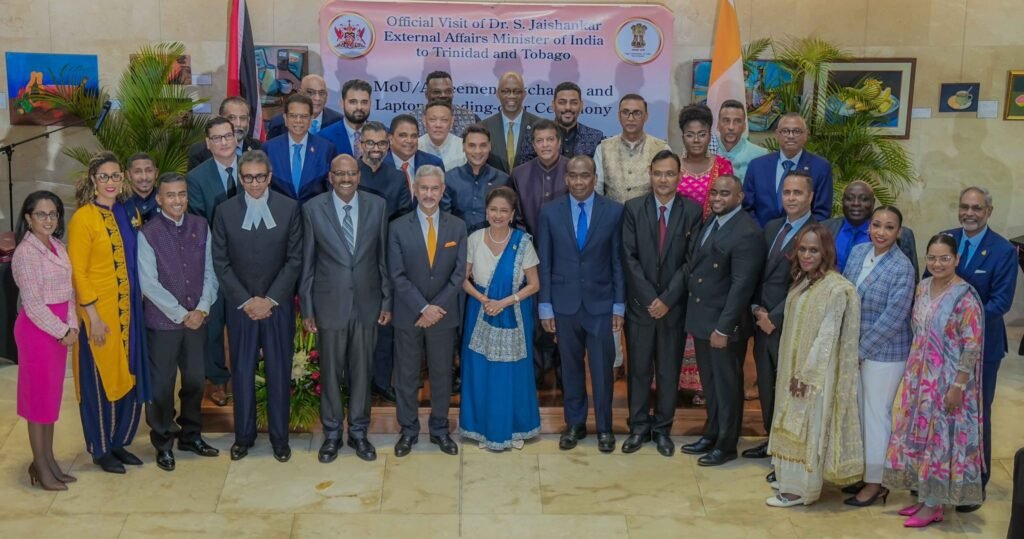
External Affairs Minister (EAM) S. Jaishankar recently concluded a three-nation visit to Jamaica, Suriname, and Trinidad and Tobago, held from 2 to 10 May 2026. The tour marked the first bilateral visit by an Indian External Affairs Minister to Jamaica and followed the 11th Heads of Mission Conference held in New Delhi from 28 to 30 April 2026, which outlined India’s ‘3Ts’ framework: trade, technology, and tourism. This explainer examines the significance of Jaishankar’s Caribbean tour, why the region is gaining importance in Indian foreign policy, and what it means amid growing Chinese engagement in the region.
Key Highlights of the Visit
Jamaica (2 to 4 May 2026)
EAM Jaishankar held delegation-level talks with Prime Minister Andrew Holness and Foreign Minister Kamina Johnson Smith. India and Jamaica signed three MoUs covering health cooperation, solarisation, and broadcasting. India delivered 10 BHISHM emergency medical units and pledged 30 dialysis units, 40 motorised fishing boats, 200 GPS devices, and associated equipment to support Jamaica’s recovery from Hurricane Melissa, the Category 5 storm that struck the island in October 2025. Both sides reviewed ongoing cooperation in digitalisation, culture, and defence, with India increasing ITEC training slots from 6 to 34. Jamaica reiterated its support for India’s candidature for a non-permanent seat on the UN Security Council for 2028 to 2029. Both countries condemned terrorism in all its forms. Jaishankar also inaugurated an India-gifted electronic scoreboard, announced funding for Indian Arrival Day celebrations, and engaged with the Indian diaspora.
Suriname (6 to 7 May 2026)
During his first visit to first visit to Suriname, EAM co-chaired the 9th Joint Commission Meeting with Foreign Minister Melvin Bouva and met President Jennifer Geerlings-Simons and National Assembly Chairman Ashwin Adhin. India handed over a passion fruit processing facility completed under Indian grant assistance and offered soft loans for infrastructure and strategic sectors. The two sides agreed to strengthen cooperation in defence, health, energy, trade, agriculture, culture, education, sports, infrastructure, and traditional medicine. Jaishankar paid tributes at the Mahatma Gandhi statue, the Baba and Mai monument, and the Marieburg Fallen Heroes Monument, visited the Lallarookh Museum, inaugurated a National Archives exhibition on Indian migration, and delivered an address titled “Partnership for Progress”. India and Suriname are marking 50 years of formal diplomatic relations, established in 1976. The visit also highlighted the Girmitiya heritage, referring to the descendants of Indian indentured labourers who arrived in Suriname from 1873 and today constitute more than 27 per cent of the country’s population.
Trinidad and Tobago (8 to 9 May 2026)
Jaishankar met Prime Minister Kamla Persad-Bissessar and other senior officials. Eight MoUs were signed covering tourism, solarisation, Ayurveda, and other areas. Bilateral trade has nearly doubled over the past five years, reaching US$350 million, and Trinidad and Tobago became the first Caribbean nation to adopt India’s Unified Payments Interface (UPI). Both sides reviewed progress made since Prime Minister Modi’s visit in July 2025, including a laptop distribution programme, an agro-processing facility, and a Jaipur Foot camp, and jointly inaugurated a permanent prosthetics centre. Jaishankar also visited Nelson Island, a historic site linked to the arrival of Indian indentured labourers 180 years ago, and announced an archival cooperation agreement to help members of the diaspora trace their ancestral roots.
Why Does the Caribbean Matter for India?
The visit reflected several converging strands in Indian foreign policy. The most immediate was the 3Ts framework outlined at the Heads of Mission Conference, which identifies trade, technology, and tourism as the operational pillars of diplomatic outreach. Each leg of the tour produced concrete outcomes within these areas, including the rollout of UPI in Trinidad and Tobago, an MoU on tourism cooperation, and efforts to expand bilateral trade.
A second strand was diaspora engagement. The Caribbean is home to large communities descended from Indian indentured labourers transported to the region by the British during the 19th and early 20th centuries, commonly known as Girmitiyas. In Suriname, people of Indian origin constitute more than 27 per cent of the population, while in Trinidad and Tobago the figure is around 35 per cent. During Prime Minister Modi’s visit to Trinidad and Tobago in July 2025, India extended Overseas Citizenship of India eligibility to the sixth generation of the diaspora. Jaishankar’s tour built on this outreach through heritage exhibitions, visits to memorial sites, and an archival cooperation agreement aimed at helping members of the diaspora trace their ancestral roots. This people-to-people dimension gives India a degree of political goodwill in the Caribbean that few other non-Western powers possess.
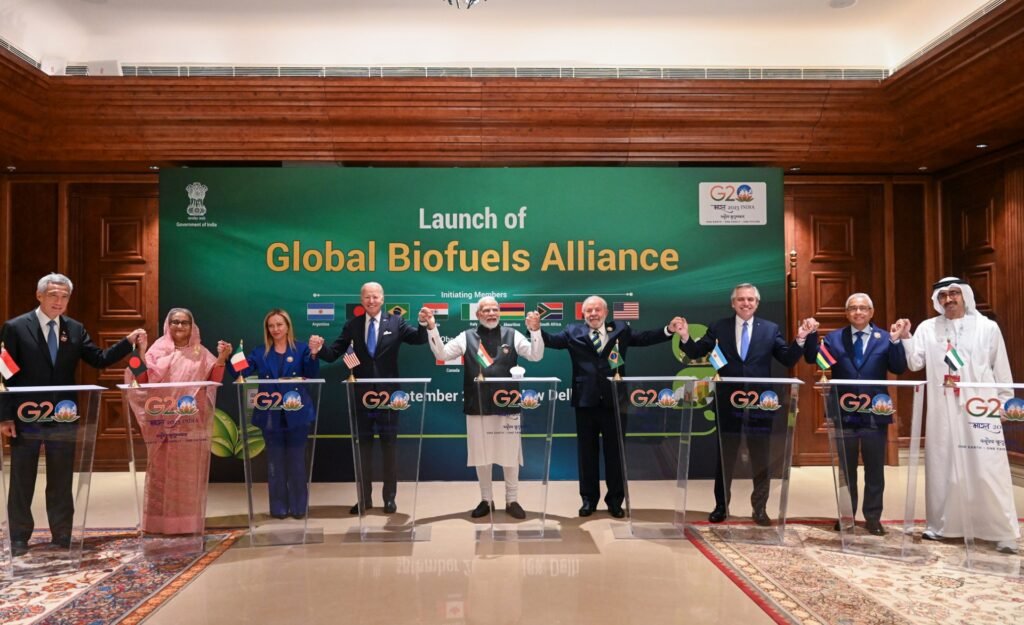
A third strand was development assistance and South-South cooperation. India’s disaster relief support to Jamaica following Hurricane Melissa, the handover of a passion fruit processing facility in Suriname, the completion of the ‘Improving Rural Livelihoods’ project in Jamaica under the India–UN Development Partnership Fund, and the inauguration of a prosthetics centre in Trinidad and Tobago all reflected this approach in practice. India’s promotion of Digital Public Infrastructure as both a diplomatic and developmental tool also featured prominently, particularly through the rollout of UPI in Trinidad and Tobago. These initiatives align with the broader vision articulated during India’s 2023 G20 Presidency under the theme Vasudhaiva Kutumbakam (One Earth, One Family, One Future) which placed the concerns of the Global South at the centre of India’s multilateral agenda.
The China Factor
The tour should also be viewed against the backdrop of China’s expanding presence in the Caribbean and the wider Latin American region. In December 2025, China released its third policy paper on Latin America and the Caribbean, following earlier editions published in 2008 and 2016. The document outlined five broad cooperation programmes centred on solidarity, development, civilisation, peace, and people-to-people connectivity. It also reaffirmed the One-China principle as the political foundation of Beijing’s relations with the region and called for deeper strategic cooperation on issues related to sovereignty, security, and territorial integrity.
According to the Indian Council of World Affairs, China has expanded its soft power footprint in the Caribbean through educational scholarships, cultural outreach, and the establishment of Confucius Institute centres. At the same time, Beijing’s growing economic role has generated concerns over debt dependency, labour practices, and market distortions. In Suriname, Chinese lenders held a significant share of the country’s external debt during a severe economic crisis. According to the International Monetary Fund, China EXIM was owed approximately US$545 million, and its delayed participation in debt restructuring negotiations held up IMF disbursements for more than a year. A restructuring agreement with China EXIM was eventually signed in March 2024. In Jamaica, Chinese firms have faced criticism over wage disparities, unsafe working conditions, and the use of imported Chinese labour in infrastructure projects. Caribbean trade unions have also accused some Chinese companies of benefiting from customs duty exemptions while neglecting local labour and safety standards.
India has sought to position itself differently in the Caribbean. Its development assistance has largely taken the form of grants, humanitarian aid, capacity-building initiatives, and community-level projects rather than large-scale infrastructure lending. India also restructured its bilateral debt with Suriname, estimated at around US$38 million, in early 2023, well before China finalised its own restructuring agreement. In addition, India’s longstanding diaspora connections provide it with a cultural and political presence in the Caribbean that China cannot easily replicate.
Going Forward
Jaishankar’s tour represented India’s most sustained diplomatic outreach to the Caribbean in recent years. It built on Prime Minister Modi’s July 2025 visit to Trinidad and Tobago and signalled that the region is becoming a more regular feature of Indian foreign policy rather than an occasional area of engagement. The outcomes were largely practical in nature, including the delivery of medical equipment, the rollout of digital payment infrastructure, agricultural processing facilities, training programmes, and heritage preservation initiatives.
Whether this translates into lasting influence will depend on sustained follow-through. India’s record in implementing Lines of Credit and development projects in the Caribbean has been uneven, while the region’s small economies continue to engage multiple external partners. China’s economic footprint remains significantly larger, and its 2025 policy paper indicates that Beijing intends to deepen its regional engagement further. The Caribbean is also an active geopolitical space for the United States, the United Kingdom, and the European Union. For India, the strategic logic is clear. The Caribbean offers diplomatic support in multilateral forums, a politically receptive diaspora, and an arena where relatively small but visible development projects can generate goodwill and political capital. The challenge will be sustaining the level of engagement demonstrated during this tour.
Several developments in the coming months are likely to test this momentum. India’s campaign for a non-permanent seat on the UN Security Council for 2028 to 2029, for which Jamaica has already expressed support, will require continued diplomatic outreach across the Caribbean and the wider Global South. The implementation of UPI in Trinidad and Tobago will serve as a concrete indicator of whether India’s technology-sharing agenda can move beyond announcements into effective adoption. Meanwhile, Suriname’s anticipated offshore oil boom, with first production expected around 2028, could create new opportunities for Indian companies in the energy and infrastructure sectors, areas where both China and Western actors are already active.
Note: This article has been researched, edited, and fact-checked by India’s World staff and prepared with AI assistance.