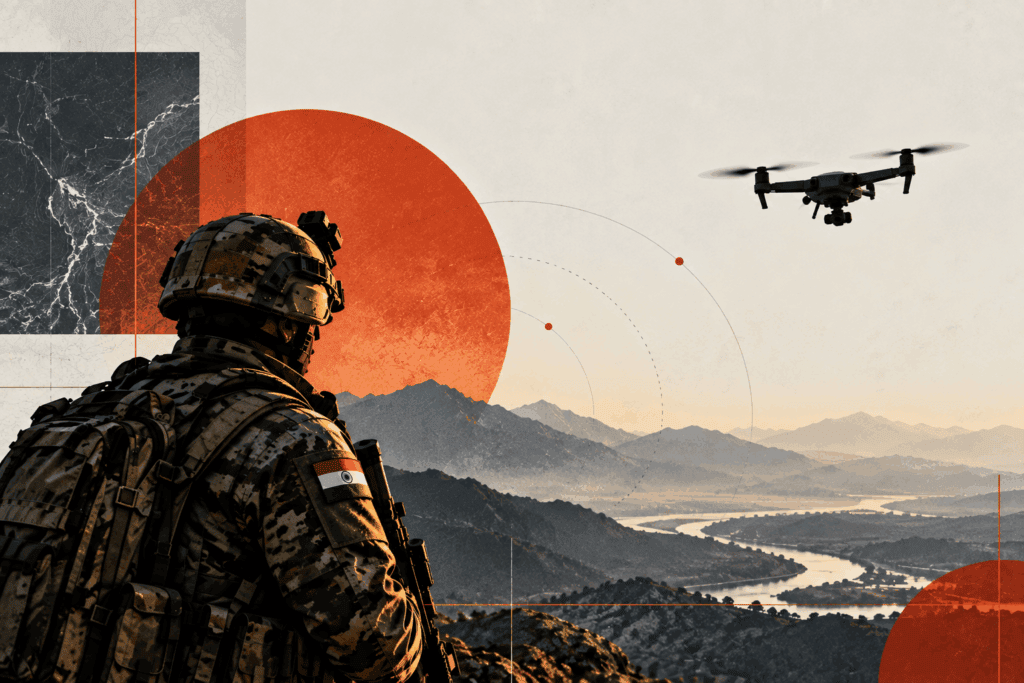
Nepal objected on 3 May to India and China’s plan to conduct the 2026 Kailash Mansarovar Yatra via the Lipulekh Pass, asserting that the route traverses territory claimed by Kathmandu. The objection has revived a long-standing territorial dispute between India and Nepal.
What triggered the latest dispute
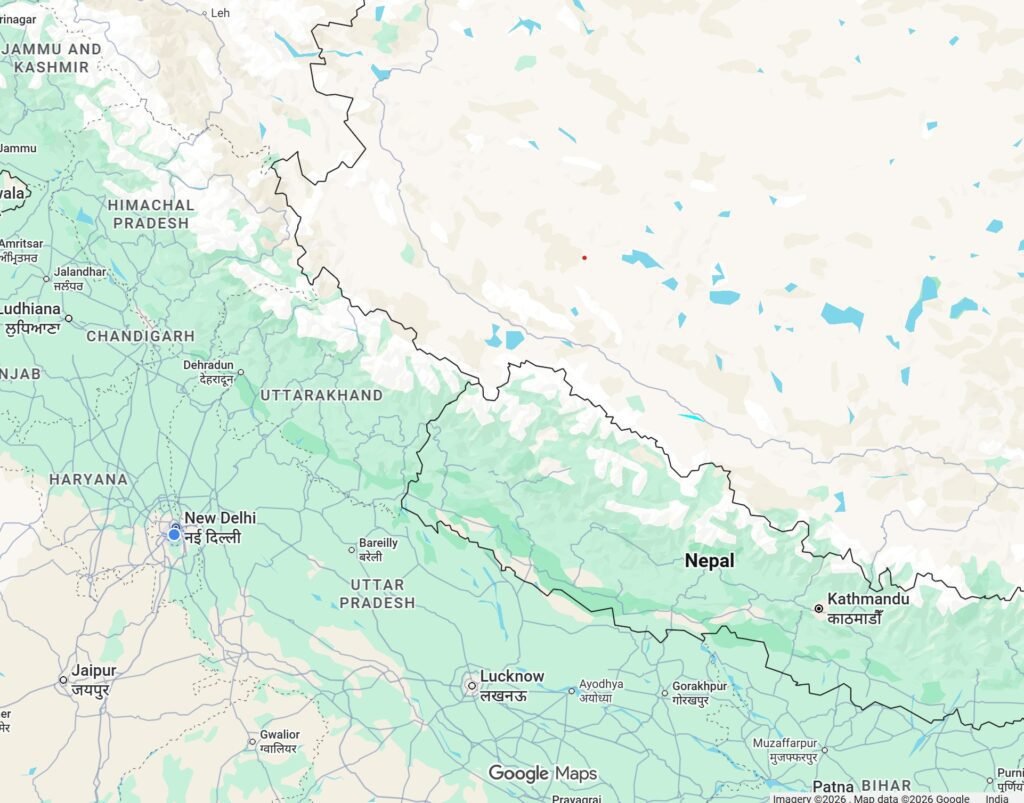
On 30 April, India’s Ministry of External Affairs announced that the 2026 Kailash Mansarovar Yatra, a pilgrimage to Mount Kailash and Lake Mansarovar in Tibet, will take place between June and August in coordination with China. The plan allows 1,000 pilgrims, travelling in batches of 50, to use two routes: one via the Nathu La Pass in Sikkim and the other through the Lipulekh Pass in Uttarakhand. Online registrations are open, with 19 May set as the deadline.
Nepal stated that it was neither consulted nor informed, and has expressed strong dissatisfaction.
In a statement, Nepal’s Ministry of Foreign Affairs said it has conveyed its concerns to both India and China through diplomatic channels. It reiterated that the Lipulekh region is an integral part of Nepali territory and urged both countries to avoid undertaking any activities there, including infrastructure development, border trade, or religious travel. The ministry also noted that China, despite being described as a ‘friendly country,’ has been formally informed of Nepal’s claim over Lipulekh.
Responding to the statement, India’s Ministry of External Affairs said its position on Lipulekh remains ‘consistent and clear.’ A spokesperson pointed out that the Kailash Mansarovar Yatra has been conducted via the Lipulekh Pass since 1954, adding that the current plan does not represent any new development. New Delhi also rejected Nepal’s territorial claims as ‘unjustified’ and lacking historical basis, stating that any unilateral attempt to alter boundaries is ‘untenable.’
MEA spokesperson Randhir Jaiswal further said that India remains open to constructive engagement with Nepal on all bilateral matters, including resolving pending boundary disputes through diplomatic dialogue.
Background to the dispute
The dispute stems from long-standing ambiguities in historical maps. The 1816 Treaty of Sugauli defined the Kali River as Nepal’s western boundary, but disagreement persists over where the river actually begins. India argues that Kalapani, Lipulekh, and Limpiyadhura are part of Uttarakhand, whereas Nepal maintains that these areas lie to the east of the river and therefore fall within its territory.
The Boundary Working Group, set up by Nepal and India in 2014 to oversee boundary maintenance and technical matters, has continued to function in areas where the border is not disputed. However, on more sensitive issues such as Kalapani and Susta, progress has stalled. During Prime Minister Narendra Modi’s 2014 visit to Nepal, both sides had agreed that their foreign secretaries would lead negotiations to resolve these disputes. In practice, no such high-level meetings have taken place since.
Nepal has also raised concerns over the inclusion of the Lipu-Lekh Pass in the joint statement issued during Modi’s 2015 visit to China. Kathmandu maintained that Lipu-Lekh is a disputed tri-junction where Nepal has an equal claim. The statement had referred to expanding border trade through several points, including Nathu La, Lipu-Lekh Pass, and Shipki La. This reference triggered concern across Nepal.
Tensions came to a head in May 2020, when India inaugurated an 80-kilometre road constructed by the Border Roads Organisation, linking Dharchula in Uttarakhand to the Lipulekh Pass. The government of Prime Minister KP Sharma Oli responded by issuing a revised administrative map incorporating the same territories. Parliament endorsed the map, and in June 2020 Nepal amended its constitution to include it in the national emblem.
India responded firmly to these developments. According to former Foreign Minister Pradeep Gyawali, New Delhi had earlier advised Kathmandu against constitutionalising the dispute, suggesting instead that it be resolved through political dialogue.
Why the territory matters
Strategic Importance: It lies at the tri-junction of India, Nepal, and China (Tibet), making it crucial for border security, especially after the 1962 Sino-Indian War, after which India stationed troops in Kalapani.
Religious Significance: It is a key route for pilgrims travelling to Mount Kailash, one of Hinduism’s holiest sites.
Connectivity & Trade: India and China have used Lipulekh for border trade and infrastructure development, which Nepal sees as undermining its sovereignty.
China’s position
Though quieter, China’s actions have often unsettled Nepal. In 2015, India and China agreed to use Lipulekh for trade and pilgrimage without consulting Nepal, prompting protests from Kathmandu. The issue resurfaced in August 2025 when, during Chinese Foreign Minister Wang Yi’s visit to New Delhi, both countries agreed to reopen the pass for border trade. Nepal objected, and Prime Minister KP Sharma Oli raised the matter with Xi Jinping at the SCO summit in Tianjin. Xi reportedly acknowledged Nepal’s concerns but described the Lipulekh dispute as a bilateral issue to be resolved between Nepal and India
Nepal’s objection is not new. It is part of a decades-long territorial dispute rooted in colonial-era boundaries, now reignited by modern infrastructure and shifting geopolitics. Until India and Nepal reach a consensus on the origin of the Kali River, the status of Lipulekh will remain contested regardless of how many pilgrims pass through it. With a new government in place, diplomatic engagement appears to be gaining momentum. India’s Foreign Secretary Vikram Misri is scheduled to visit Kathmandu on 11–12 May. Nepal’s Foreign Minister Khanal is expected to travel to New Delhi later this month for the first Global Big Cats Summit. Interlocutors close to Prime Minister Balendra Shah have signalled his interest in resolving the boundary issue with India.
Note: This article has been researched, edited, and fact-checked by India’s World staff and prepared with AI assistance.