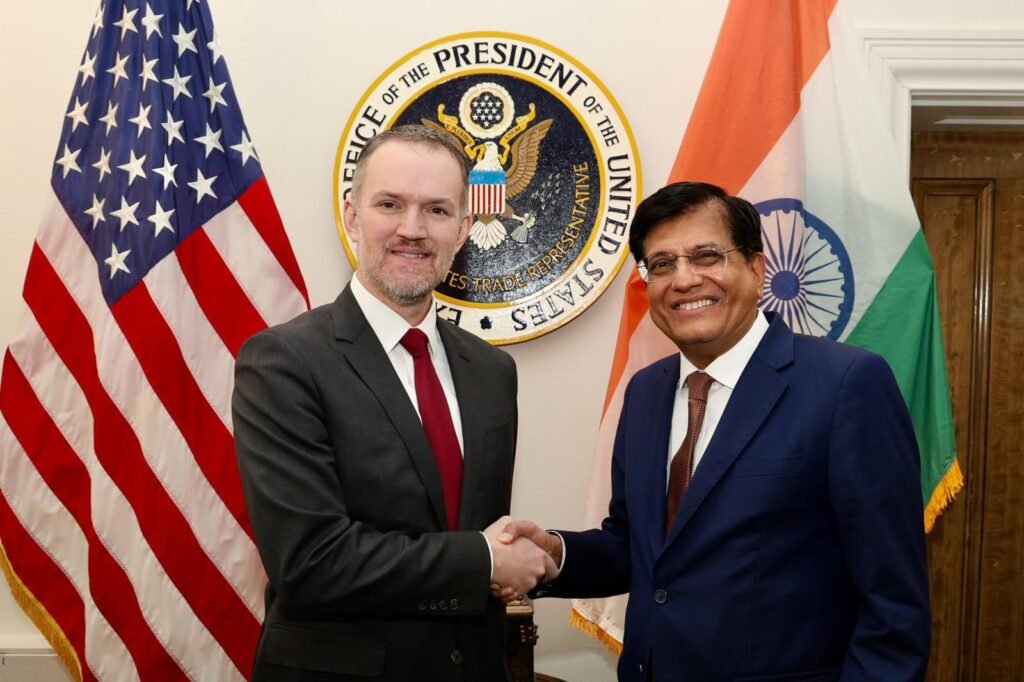
In mid-April 2026, India formally rejected U.S. allegations under Section 301 of the Trade Act, demanding that the investigations be terminated. This came after the U.S. Trade Representative announced in March 2026 two new Section 301 probes—one targeting excess manufacturing capacity and one focused on forced-labour imports—covering dozens of countries, including India. India’s Commerce Ministry said the charges are baseless and urged that the investigations be dropped.
The row comes as New Delhi and Washington negotiate a bilateral trade agreement, making resolution urgent. How this dispute is resolved will affect future U.S.-India trade ties and the direction of the economic partnership.
What is Section 301?
Section 301 is part of the U.S. Trade Act of 1974 that lets the United States address foreign trade practices it considers unfair. In practice, the USTR can launch investigations when a trading partner’s policies are deemed “unreasonable or discriminatory” and harm American businesses. If such practices are found to burden U.S. commerce, Washington may impose tariffs or other remedies.
In March 2026, the USTR initiated two such probes: one into alleged “structural excess capacity” in manufacturing, and another into whether countries enforce bans on goods made with forced labour. These are fact-finding reviews—the USTR gathers evidence and public comments before deciding whether to take action.
Background & context
Section 301 has a long history in U.S. trade policy. Under President Trump, it was famously used against China’s technology practices, and in January 2021, it was applied to India’s digital services tax (the “Equalisation Levy”)—the USTR then ruled India’s tax was discriminatory.
In early 2026, the dynamics shifted: on February 20, the U.S. Supreme Court struck down many of Trump’s global tariffs, prompting the administration to seek new tools. The new USTR, Jamieson Greer, thus launched broad probes on March 11-12, 2026, covering 16 economies for “excess capacity” and 60 economies for forced-labour issues.
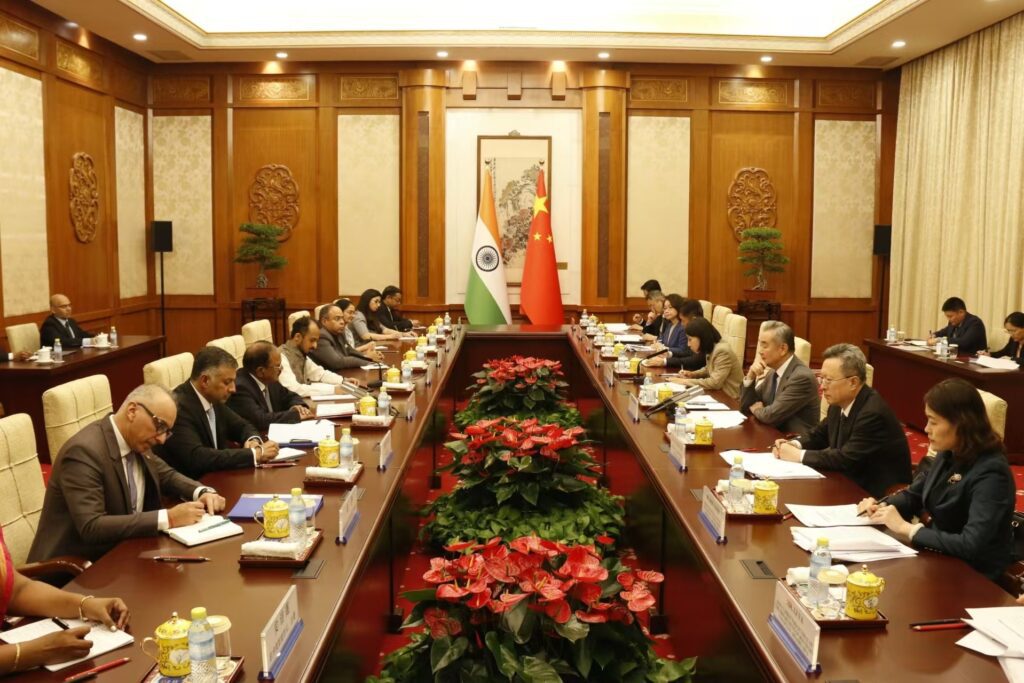
Faced with these probes, India’s Commerce Ministry immediately began compiling industry data and has asserted that any trade disputes should be resolved through ongoing talks, noting that a bilateral U.S.-India trade pact is under negotiation.
How do Section 301 investigations work?
Once a Section 301 investigation is initiated, the U.S. Trade Representative solicits comments and holds hearings. In this case, USTR Greer requested consultations with India and scheduled a public hearing for April 28, 2026, with written comments due by April 15.
After reviewing the evidence, the USTR must decide if India’s policies are “actionable” under the Trade Act. If so, USTR will determine what remedies (such as tariffs or WTO cases) to propose.
In its Federal Register notice, the USTR already laid out the U.S. case: it noted India ran a US$58 billion trade surplus with the U.S. in 2025 and cited industries like solar panels, petrochemicals, and steel as having “significant excess capacity”.
The forced-labour probe, by contrast, examines whether India effectively enforces existing bans on goods produced with forced labour (India points out that it has ratified international conventions banning forced labour).
On India’s side, the Commerce Ministry—which filed the government’s submission—argues that these claims ignore India’s market realities. The government says India’s production growth is largely driven by domestic demand and insists the USTR identified no specific unfair policy. India has formally asked the USTR to make a “negative determination” and end the investigation.
Why does it matter?
The outcome affects both economies and the wider trading system. For U.S. workers and firms, supporters say the probes could protect key industries by curbing unfair competition. USTR Greer argues the U.S. has already lost “substantial domestic production capacity” to foreign overproduction.
Critics counter that India’s role is limited: its exports make up only about 3.1% of total U.S. imports, and its sectors cited by the probe are mostly serving local demand.
If the U.S. were to impose tariffs on Indian goods, Indian exporters (in textiles, pharmaceuticals, auto components, etc.) would lose access or face higher costs, potentially slowing India’s manufacturing growth. Conversely, U.S. industries targeted by imports might gain some relief.
The forced-labour probe has social dimensions: human-rights advocates welcome pressure against abuses, but India notes it has long-since banned forced labour in law.
Globally, many allies argue that this unilateral approach undermines trade rules. China and the EU, also named in the probes, have criticised the U.S. move; Beijing called the overcapacity claim a “false proposition” and warned against unilateral tariffs.
In short, a negative U.S. finding could escalate trade tensions and affect bilateral relations, while dropping the case would preserve the status quo.
Debate & controversies
Supporters of the probes (led by U.S. industry lobbyists and some policymakers) say this is a justified use of trade law. They argue that foreign governments have subsidised excess production and failed to enforce labour standards, harming American businesses. Ambassador Greer has said the U.S. will no longer “sacrifice its industrial base” to partners exporting their excess capacity.
Critics (including India’s government and many economists) say the U.S. case is weak. India points out that the investigations cite only broad trade data and not any specific Indian law or policy that harms the U.S. The Indian industry notes that India’s output expansions are market-driven, not driven by subsidies.
Others warn the U.S. is bypassing the World Trade Organization’s rules: for example, China has already called the U.S. claims unfounded. Some question whether targeting allied countries is even effective, and whether it could provoke retaliation or undercut cooperation on global trade issues.
What next?
Both sides face key decisions. India has formally asked the U.S. to terminate the probes and has said it “remains willing to constructively engage” in consultations. The USTR will review all submissions and hold the scheduled hearing, then decide later in 2026.
It could either make a “negative determination” (ending the investigation) or move forward with finding violations. If USTR decides against India, it would propose remedies (likely tariffs) to take effect after a notice period.
Observers should watch the U.S. public hearing (April 28) and any official USTR announcements. A key question is whether the issue is resolved through diplomatic talks—for example, as part of the broader trade deal discussions—or whether it escalates into formal trade sanctions.
The coming months will show if India succeeds in getting the probe dropped or if U.S. tariffs become a reality.
Note: This article has been researched, edited, and fact-checked by India’s World staff and prepared with AI assistance.