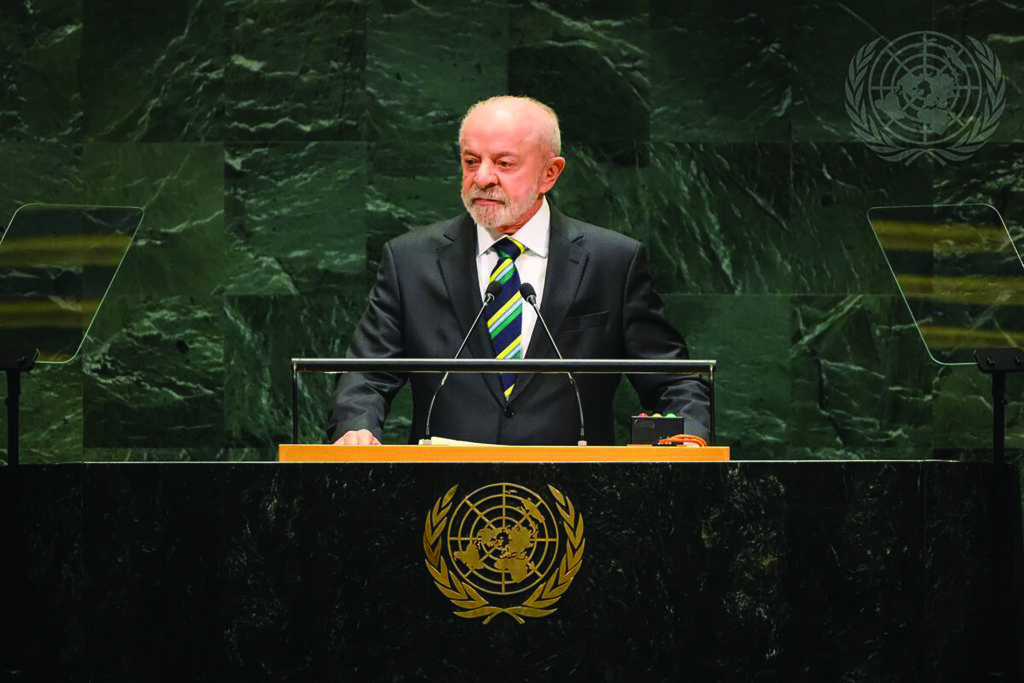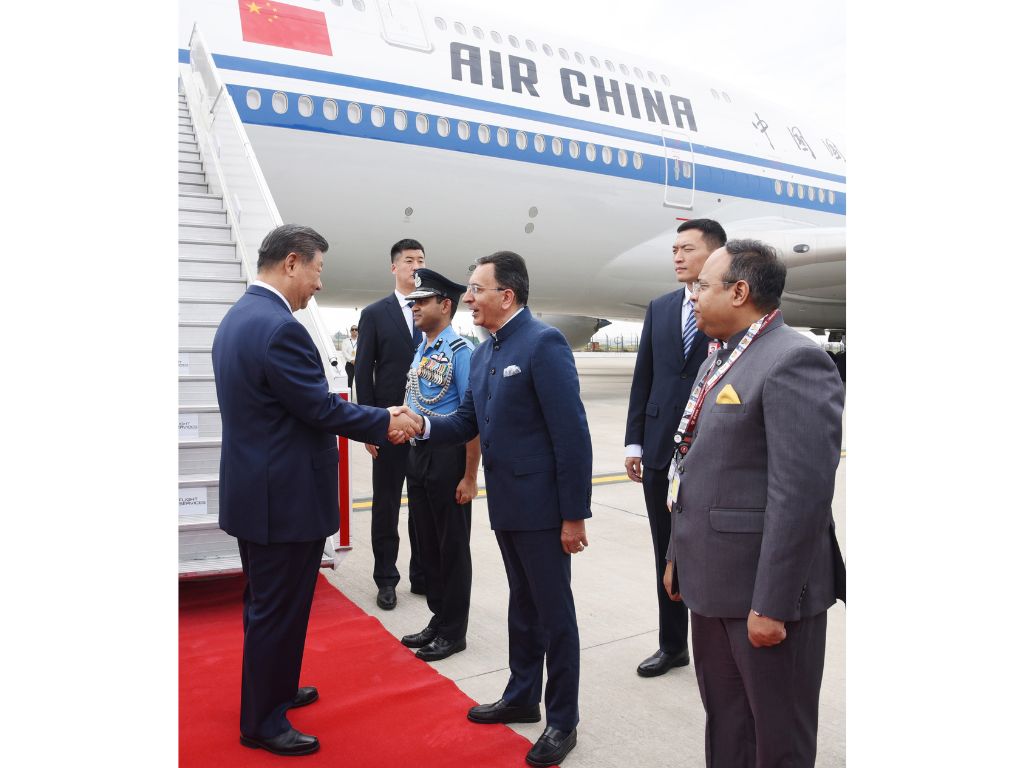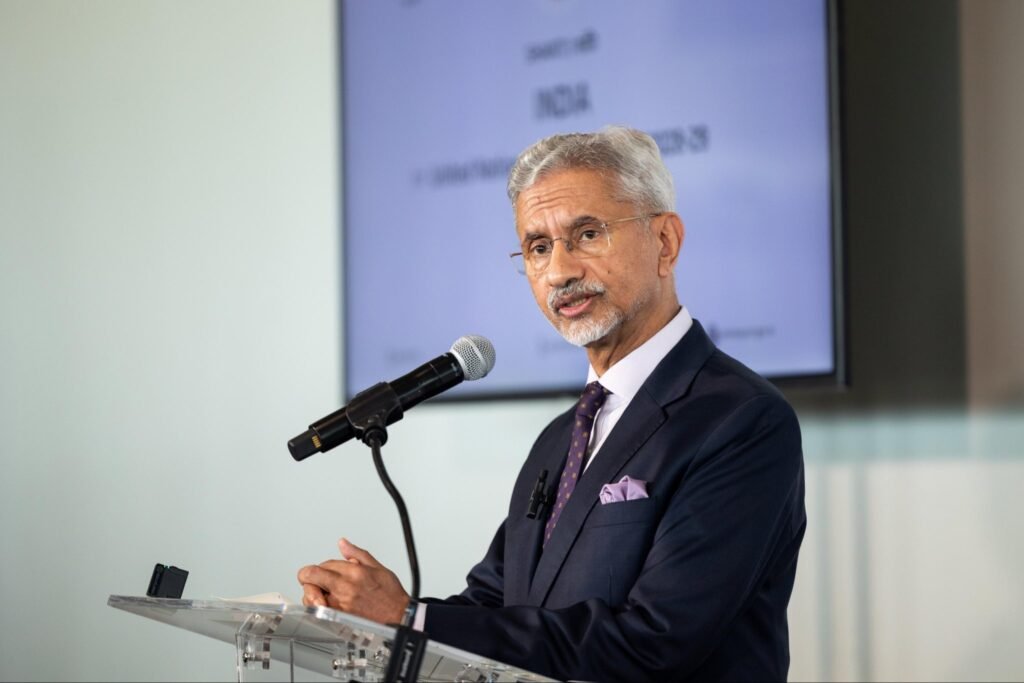
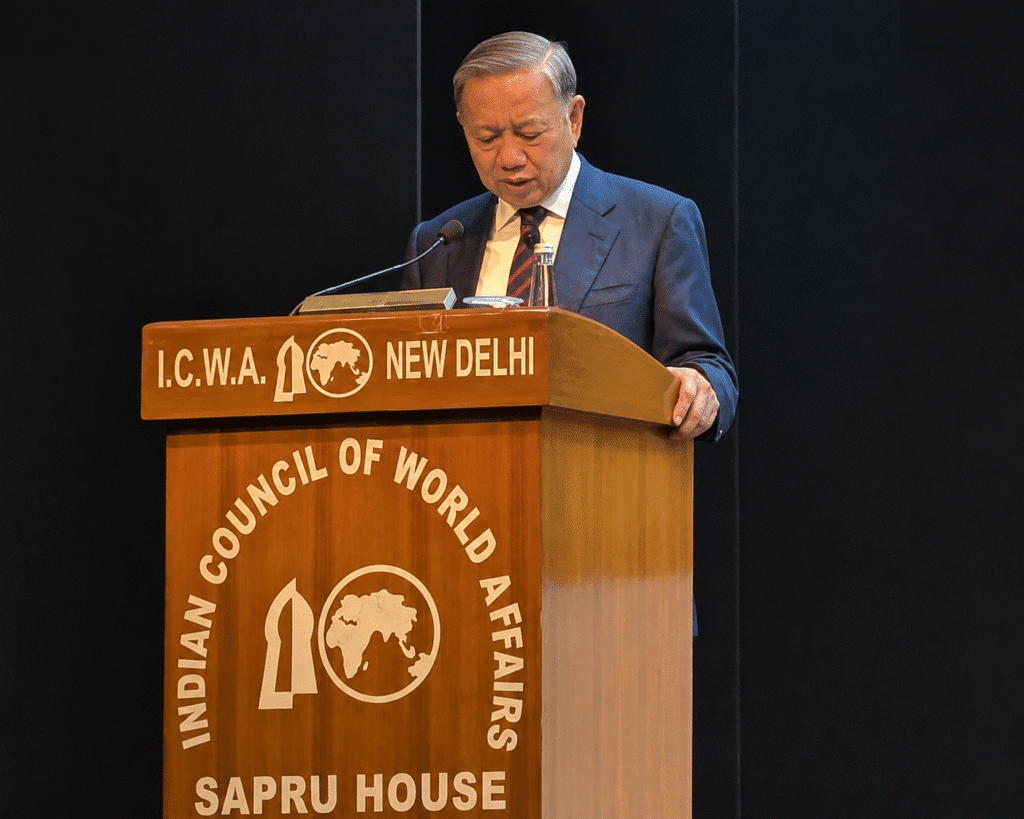
This explainer draws on President To Lam’s address at the Indian Council of World Affairs (Sapru House), New Delhi, 6 May 2026, and the outcomes of his state visit to India (5 to 7 May 2026).
Why Does This Visit Matter?
When President To Lam, General Secretary and head of state of the Socialist Republic of Vietnam, chose New Delhi for his first foreign visit in his new capacity, the symbolism was deliberate. The visit’s headline outcome was the elevation of ties to an Enhanced Comprehensive Strategic Partnership, the third upgrade in less than two decades, following a Strategic Partnership in 2007 and a Comprehensive Strategic Partnership in 2016. Thirteen Memoranda of Understanding were signed, a bilateral trade target of US$25 billion by 2030 was formalised, and Vietnam joined India’s Indo-Pacific Oceans Initiative. Yet the significance of the visit exceeds any single deliverable.
What Civilisational Threads Connect India and Vietnam?
President To Lam’s Sapru House address opened not with trade statistics but with millennia. History and culture, he said, have become the enduring threads connecting India and Vietnam. The claim is more than rhetorical. The Cham towers of My Son, the Po Nagar shrine, and dozens of Hindu-inflected sanctuaries scattered across central Vietnam are material evidence of Indian civilisational reach via maritime trade routes that flourished centuries before either nation-state existed. The Ramayana, To Lam noted, is familiar to many generations of Vietnamese.
Buddhism, originating in the Gangetic plains, wove the two peoples together through shared doctrine, pilgrimage, and monastic exchange. To Lam cited tens of thousands of Vietnamese Buddhists who travel annually to Bodh Gaya in Bihar. PM Modi noted at the joint press conference that approximately 15 million Vietnamese had visited Buddhist relics sent from India, a number equivalent to roughly 15 percent of the country’s population. Even yoga has taken root: Vietnam now counts over 4,000 yoga clubs and roughly 500,000 regular practitioners.
These are not merely decorative invocations. Cultural density matters in diplomacy because it generates constituencies, people, institutions, and businesses, with a stake in the relationship beyond the calculations of any particular government. The MoUs on Cham manuscript digitisation, ICCR academic chairs, and restoration of My Son are therefore not soft add-ons to the hard security agenda. They are investments in the social infrastructure of a partnership intended to last.
How Did Shared Colonial History Shape the Partnership?
Both India and Vietnam emerged, To Lam reminded his Sapru House audience, from colonial economies that were extremely difficult and, in his word, even devastated. That shared postcolonial predicament created what scholars call solidarity capital, a reservoir of mutual empathy that survived ideological differences between the two states during the Cold War.
The personal friendship between Jawaharlal Nehru and Ho Chi Minh was its founding expression. Nehru visited Hanoi in 1954, just one week after the capital’s liberation, becoming the first foreign head of government to do so. To Lam also recalled the slogan Mera Naam Tera Naam, Vietnam Vietnam, chanted across Indian cities during the Vietnam War, a spontaneous popular solidarity that no government could have manufactured. India was among the first countries to recognise the unified Socialist Republic of Vietnam in 1975 and continued to supply food aid during post-war reconstruction.
This history now pays strategic dividends.
What Is the Strategic Logic Behind the Upgraded Partnership?
For India, Vietnam is the pivot of its Act East Policy and Vision SAGAR. PM Modi described Vietnam as a key pillar of India’s Act East policy and hailed the relationship in those terms at the joint press conference. Vietnam sits astride the South China Sea, through which India’s critical trade arteries run. A deeper partnership with Hanoi serves India’s interests in freedom of navigation, maritime domain awareness, and the broader goal of a rules-based Indo-Pacific order. Vietnam’s accession to the Indo-Pacific Oceans Initiative formalises this alignment.
For Vietnam, India offers strategic diversification. Hanoi has long practised bamboo diplomacy, bending with the wind while keeping its roots firm, and India, as a large non-threatening democracy with no territorial claims in the region, fits naturally into a hedging portfolio that also includes the United States, Japan, and the European Union. To Lam’s enumeration of shared principles at Sapru House, including strategic autonomy, respect for international law, support for the UN, and peaceful resolution of disputes, maps directly onto Vietnam’s foreign policy constitution.
The South China Sea, though mentioned without naming names, casts a long shadow over the visit. The joint statement’s language on freedom and security of navigation and aviation and peaceful resolution of disputes is diplomatically careful but strategically unmistakable. Both India and Vietnam have contested waters and an interest in avoiding regional maritime hegemony. The defence cooperation pillar, including expanded military exchanges, logistics support agreements, hydrography surveys, and joint exercises, is the operational expression of this alignment.
The 2023 gifting of the INS Kirpan corvette illustrated how the relationship has moved from rhetoric to hardware. Lines of credit for patrol vessels are currently being operationalised. The 2026 visit reaffirmed this trajectory without adding a new defence MoU, suggesting that existing frameworks are working and need consolidation rather than redesign.
How Does the Economic Relationship Stand, and Where Is It Headed?
The economic story is one of rapid growth from a low base. Bilateral trade stood at approximately US$2.5 billion in 2010, rose to roughly US$5.4 billion at the time of the 2016 CSP upgrade, and reached a record US$16.5 billion in 2025, more than tripling in a decade. The US$25 billion by 2030 target requires continued growth at roughly 8 to 10 percent per year, ambitious but not implausible given recent momentum.
The structure of trade reflects complementarity. India exports pharmaceuticals, engineering products, cotton, and machinery; Vietnam exports electronics components, rubber, seafood, and agricultural goods. The new MoUs target bottlenecks in this flow: the CDSCO and Drug Administration of Vietnam agreement on medical product regulation should ease Indian pharmaceutical access; the MeitY-MOST digital technology MoU opens collaboration in AI and quantum computing; and the NPCI-NAPAS cross-border QR payments agreement will reduce friction in commercial transactions.
Two economic-security linkages deserve particular attention. The IREL-ITRRE rare-earths MoU addresses a critical vulnerability: India and Vietnam both possess rare earth deposits and both have an interest in developing supply chains independent of Chinese processing dominance. Vietnam’s electric vehicle company has also planned a US$2 billion investment in India over five years, representing a two-way investment relationship that is still modest but growing. These are precisely the kinds of economic entanglements, sticky, strategic, and mutually dependent, that convert diplomatic goodwill into durable interest.
The UPI-FAST payment system linkage, once operational, could be the most consequential fintech development in the bilateral relationship. Modi confirmed plans to link UPI with Vietnam’s fast-payments system, building on India’s successful cross-border UPI deployments with Singapore, the UAE, and France. A Vietnam connection would facilitate remittances, tourism payments, and small-business trade across what is increasingly a single South and Southeast Asian economic zone.
The ASEAN-India Trade in Goods Agreement update, which both sides agreed to accelerate, has broader regional implications. Both leaders agreed the existing agreement needs updating to reflect current global trading practices. Revision would benefit Vietnam as a transit hub for ASEAN goods into India, and Indian exporters seeking better access to a 700-million-person market.
What Does To Lam’s Sapru House Speech Reveal About Vietnam’s Self-Image?
First, Vietnam’s pride in its developmental achievement was palpable. To Lam cited a poverty rate reduced from over 70 percent in the mid-1980s to 2.95 percent in 2025, an economy that has grown nearly 100-fold since Doi Moi to reach US$514 billion, the 32nd largest in the world and fourth in ASEAN. He ranked Vietnam 44th globally on the Innovation Index and 55th in startup ecosystems. These are not the numbers of a country seeking aid; they are the figures of a nation announcing its arrival as a serious partner.
Second, To Lam articulated a vision of technology-led growth that closely mirrors India’s own aspirations. His declaration that science, technology, and digital transformation must become the primary drivers of development, not merely tools supporting it, echoes the Viksit Bharat 2047 framework he praised in the same breath. Vietnam’s targets of upper-middle income by 2040 and high-income developed status by 2045, alongside India’s target of developed nation status by 2047, create a decadal synchrony of ambition that makes bilateral technology cooperation structurally logical.
Third, To Lam’s invocation of India’s Vasudhaiva Kutumbakam, the world as one family, as a philosophy that resonates with Vietnamese values was diplomatically adroit. It signalled cultural appreciation without ideological alignment and positioned Vietnam as a partner in the Global South’s re-articulation of multilateral norms. His call to strengthen coordination in the UN, G20, BRICS, and ASEAN is consistent with a country that has successfully served on the UN Security Council and as ASEAN Chair, and which sees multilateral engagement as protective cover against great-power coercion.
What Are the Thirteen MoUs, and What Do They Actually Deliver?
The thirteen MoUs signed on 6 May 2026 at Hyderabad House span nine sectors and reflect the breadth of the enhanced partnership. Their significance varies.
High strategic value. The IREL-ITRRE rare-earths MoU is the most geopolitically consequential. It operationalises cooperation in rare earth extraction and processing, materials essential for clean energy, defence electronics, and advanced manufacturing, in a domain currently dominated by China. The RBI-State Bank of Vietnam agreement and the NPCI-NAPAS payment MoU together create the financial plumbing for deeper trade integration, with the cross-border QR-code payment system potentially the most visible citizen-facing outcome.
Medium-term economic value. The CDSCO and Drug Administration of Vietnam agreement on pharmaceutical regulation and the MeitY-MOST digital technology MoU are framework agreements whose value will depend on implementation. India’s pharmaceutical sector has long sought easier regulatory pathways into ASEAN markets, and Vietnam, as a mid-sized market with a rapidly ageing population and growing healthcare spending, is a logical priority. The Mumbai and Ho Chi Minh City sister-city MoU is the first formal sub-national pact and could catalyse city-level investment and urban governance cooperation.
Soft but durable value. The two ICCR academic chairs at Da Nang University and VNU Ho Chi Minh City, the Nalanda University and Ho Chi Minh National Academy of Politics MoU, the Cultural Exchange Programme 2026 to 2030, and the Cham manuscript digitisation agreement will not move trade numbers in 2027. But they build the intellectual and cultural infrastructure, trained scholars, digitised heritage, personal relationships, that sustains partnerships across changes of government and shifts of strategy.
Conclusion
The India-Vietnam Enhanced Comprehensive Strategic Partnership, reinforced during the May 2026 visit, is the most ambitious bilateral framework the two countries have pursued. Rooted in civilisational ties, shared geopolitical interests, and expanding institutional cooperation, it reflects a clear understanding of the stakes in an increasingly competitive and distrustful world. As To Lam noted at Sapru House, the partnership offers a model of two postcolonial, non-aligned democracies building interdependence on their own terms — no small achievement.