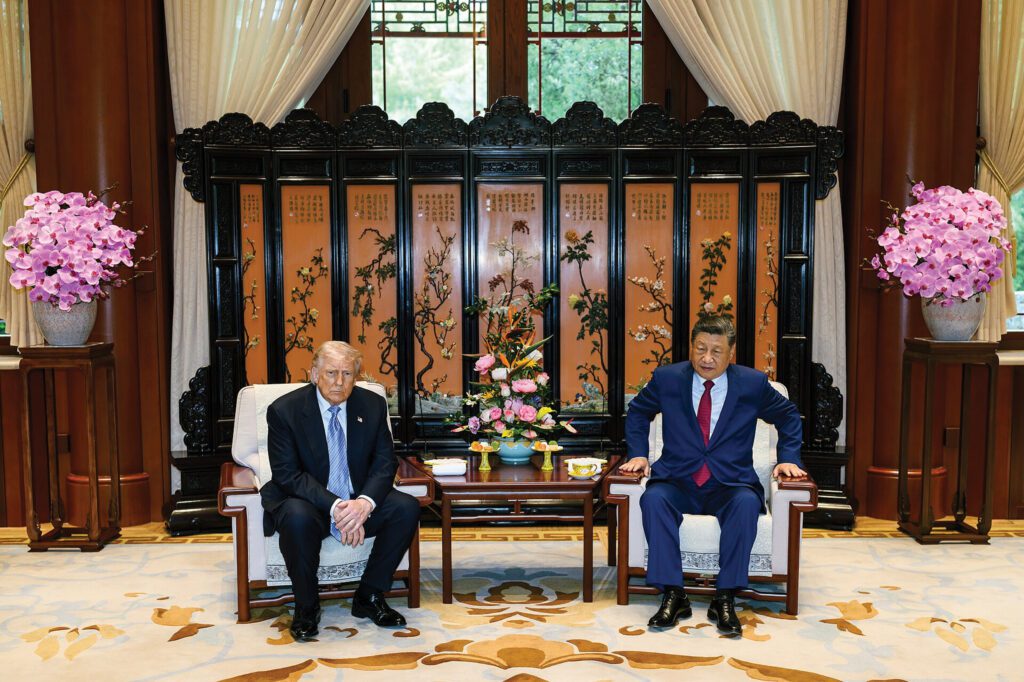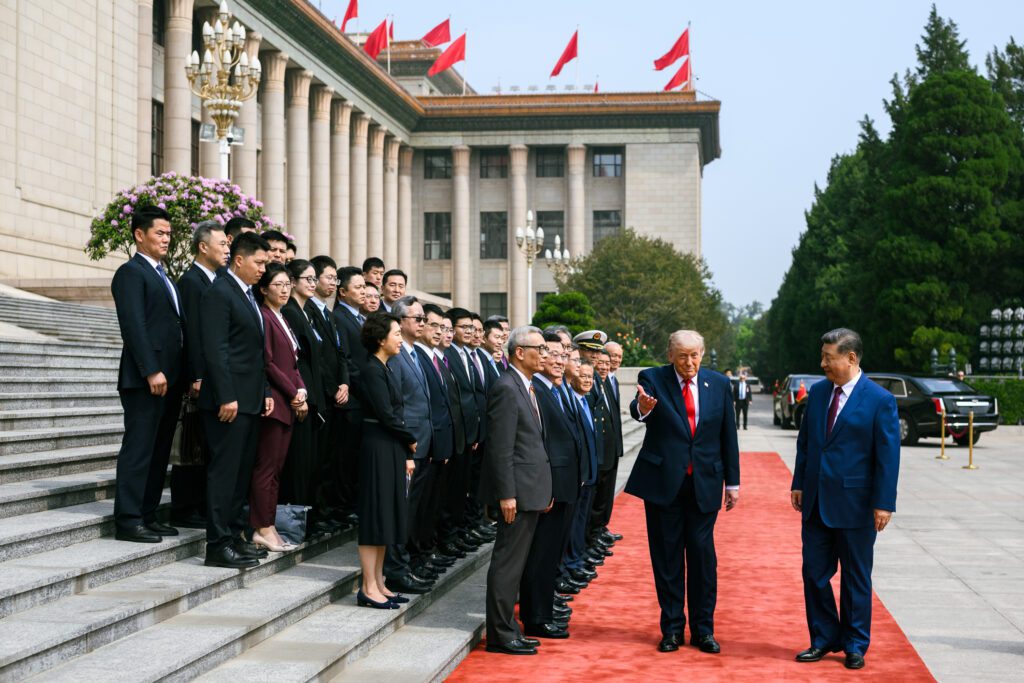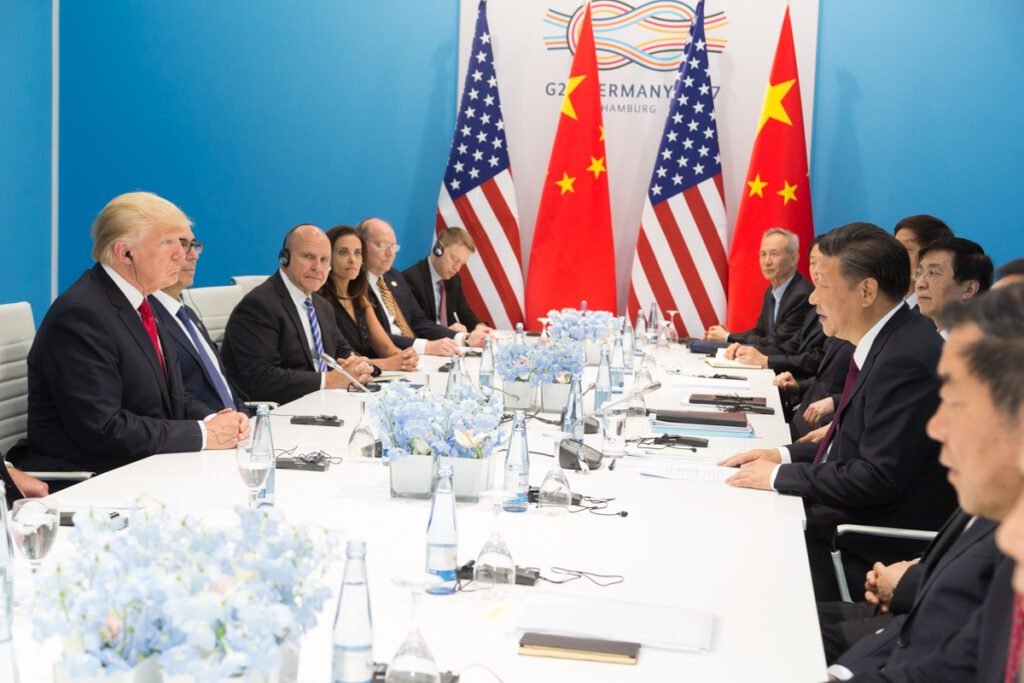
When President Donald Trump lands in Beijing on May 13, he will become the first sitting American president to visit China in nearly a decade. The last such trip was his own, back in November 2017. The two-day summit, scheduled for May 14 and 15 at the invitation of President Xi Jinping, comes loaded with expectation and encumbered by complexity. Trade tensions, an active war in the Middle East, a deepening technological rivalry, and the perennial fault line of Taiwan all crowd the agenda. Analysts widely agree the meeting is likely to produce incremental rather than transformational outcomes, but even incremental progress between the world’s two largest economies carries enormous global consequence.
Why Is This Summit Happening Now, and Why Was It Delayed?
The summit was originally pencilled in for late March or early April 2026 but had to be postponed. The White House delayed it because Trump needed more time to focus on the war in Iran, which erupted following U.S. and Israeli strikes on Iran. The conflict scrambled diplomatic calendars and injected fresh tension into the U.S.-China relationship almost immediately, given that China is one of Iran’s largest diplomatic backers and its single biggest oil buyer.
The war has also produced a global energy crisis, with the Strait of Hormuz, through which a fifth of global oil and gas once flowed, remaining effectively closed. Both Washington and Beijing have strong economic reasons to want the strait reopened, which provides the diplomatic glue to bring the two leaders together despite the friction. China’s state news agency Xinhua confirmed the dates of the visit on May 10, citing the Foreign Ministry, formally green-lighting the first U.S. presidential trip to China in nearly a decade.
The summit will also be the first face-to-face meeting between Trump and Xi since their brief encounter in Busan, South Korea in October 2025, where the two agreed to a one-year trade truce that brought U.S. tariffs on Chinese goods down from 57 percent to 47 percent. Trump subsequently rated that meeting, which he called a success, a 12 out of 10.
What Does Each Side Want on Trade?
Trade remains the centrepiece of any Trump-Xi encounter. On the American side, the headline proposal is the so-called “Board of Trade,” openly discussed by U.S. Trade Representative Jamieson Greer. The mechanism would formalise and manage bilateral trade flows by identifying which products both nations are willing to exchange even when relations are strained, while delineating goods, such as the most advanced American semiconductors, that remain entirely off-limits. Under one model being tracked by sources close to the talks, the two sides would identify roughly 30 to 40 billion dollars each worth of imports subject to a co-managed tariff structure, sometimes referred to as the “30 for 30” approach. The goal, according to both U.S. and Chinese officials, is “stability” following a period of escalating clashes over export controls and retaliatory rare earth restrictions.
Washington is also expected to press for an extension of Chinese access to critical and rare earth minerals, a concession China wielded to devastating effect in 2025 when it restricted rare earth exports in retaliation against American technology controls. On the commercial side, Beijing is expected to announce large-scale purchasing commitments for American goods. A potential Chinese purchase of 500 Boeing aircraft and sustained imports of U.S. agricultural products have been widely reported, though the timing of such announcements remains uncertain given how much summit space the Iran war is expected to consume.
For Beijing, the top economic priority is greater predictability on tariffs. Chinese exports to the United States have continued to fall, dropping 11 percent year-on-year in early 2026, even as China’s overall exports grew 21.8 percent year-on-year in the first two months of 2026, reflecting a broader reorientation of Chinese trade toward non-U.S. markets. Beijing also wants protection for its firms from expanded U.S. regulatory and investment restrictions, particularly in artificial intelligence, and improved access for Chinese automakers to the American market. A parallel “Board of Investment” to manage investment disputes is also under discussion, though it is on a slower track than the Board of Trade.
How Large Does the Iran War Loom Over the Talks?
Substantially. U.S. Treasury Secretary Scott Bessent has already confirmed that Iran will be a summit topic, and many analysts expect it to crowd out parts of the economic agenda. The Trump administration wants China to use its leverage over Tehran, derived from the depth of bilateral energy ties, to pressure Iran to abandon its nuclear programme and agree to a ceasefire or at least a reopening of the Strait of Hormuz.
China’s posture is ambiguous. A week before Trump was set to arrive, Beijing hosted Iranian Foreign Minister Abbas Araghchi, a move read as China positioning itself as a potential mediator while simultaneously signalling continued solidarity with Tehran. The U.S. also has broader grievances: Trump administration officials have expressed concern that Chinese companies are still selling Iran dual-use goods and buying discounted Iranian oil, and reports have surfaced that China may have shipped shoulder-fired missiles to Iran in recent weeks. U.S. Trade Representative Greer has stated publicly that “anyone who is buying oil from Iran is contributing to terrorism,” but has also made clear Washington does not want the Iranian oil dispute to “derail the broader relationship.”
The U.S. Treasury has recently sanctioned five Chinese private oil refiners for processing Iranian crude. Beijing responded publicly by ordering companies to ignore the sanctions, though its financial regulator privately advised large state-owned banks to suspend new lending to blacklisted refiners. The episode illustrates the layered and often contradictory nature of Beijing’s Iran policy, and the risk that further sanctions escalation could overshadow progress on trade or technology.
Taiwan and the Perils of Great Power Bargaining
Taiwan will be watching the summit with acute anxiety. Beijing is expected to push hard on the Taiwan question, with Xi Jinping having told cadres the issue must reach a final resolution and cannot be passed down from generation to generation. During a phone call in February 2026, Xi urged Trump to “handle the issue of arms sales to Taiwan with prudence.”
Taipei’s specific fear is that Beijing will succeed in shifting U.S. declaratory policy. Washington currently says it “does not support” Taiwan independence; Beijing may push Trump to say the United States “opposes” independence, or to express support for “peaceful reunification.” Either formulation would be read as a significant concession and could undermine Ronald Reagan’s Six Assurances, the longstanding informal framework governing U.S.-Taiwan relations. Xi could also press Trump to limit arms sales to the island and curtail security cooperation with Taipei.
More broadly, as CFR analysts have noted, a tacit or explicit bargain in which Washington appears to concede a sphere of influence to Beijing over Taiwan in exchange for concessions elsewhere could embolden China to take more assertive steps to erode Taiwan’s autonomy. The degree to which Trump’s personal confidence in his relationship with Xi insulates him from, or exposes him to, such pressure remains the central uncertainty for Taipei.
Will Artificial Intelligence and Nuclear Arms Control Feature?
Both issues are on the agenda, though the degree of tangible progress expected is limited. On nuclear arms, China is building an advanced arsenal of roughly 1,500 warheads by 2035, the most rapid nuclear buildup since the early Cold War, at the precise moment that New START, the last remaining U.S.-Russia nuclear treaty, expired in February 2026. Trump has repeatedly called for a new arms control framework that includes China, arguing that any arrangement that excludes Beijing is effectively meaningless. Whether substantive negotiations emerge from Beijing, or merely an agreement to keep talking, remains unclear.
On artificial intelligence, the Trump administration sent mixed signals in the days before the summit about whether it would seek to restart formal AI consultations with Beijing. Both sides have expressed interest in a framework for AI risk and safety. Washington has simultaneously accused Beijing of running “industrial-scale” campaigns to steal American AI technology, however, which complicates the prospect of near-term cooperation. What most analysts anticipate is an agreement to develop a framework for further bilateral AI discussions rather than any concrete accord. A parallel race is playing out with frontier AI models, where, as the Council on Foreign Relations has noted, “we have neither arms control nor crisis communications.”
Who Else Has a Stake in What Happens in Beijing?
Virtually every major economy. China’s suspension of rare earth exports and its ban on semiconductors from Nexperia China have already disrupted supply chains for automakers across Europe, Japan and South Korea. Southeast Asian nations, heavily reliant on Gulf oil, have borne the brunt of the energy shock from the Strait of Hormuz closure. Singapore has repeatedly warned of the economic toll and called for free passage through the Strait.
Any U.S.-China agreement on managed trade could also squeeze Europe. If Beijing redirects its industrial export machine toward the European Union to compensate for reduced American market access, Brussels would face pressure to erect its own barriers. As Chad Bown, a senior fellow at the Peterson Institute for International Economics, told CNBC: “Virtually everyone has a stake in the outcome of this meeting.” Eswar Prasad, professor of economics at Cornell University, warned that a contentious summit that deepens tensions could “cripple global trade and growth” and undermine “the very survival of the rules-based order.”
What Is the Realistic Best-Case Outcome?
Analysts across the board counsel against expecting a grand bargain. The most likely outcomes are modest but not inconsequential: a formal extension of the critical minerals truce that has kept rare earth supplies flowing to the United States; the launch of a Board of Trade and possibly a Board of Investment; large-scale Chinese purchasing commitments in aviation and agriculture; and some signal of Chinese willingness to engage on Iran. U.S. and Chinese officials are expected to create forums to facilitate mutual trade and investment, with the exact operational details of those bodies left for subsequent working-level talks.
A joint statement would represent a diplomatic victory: at the Busan summit in October 2025 the two sides issued only separate statements on the outcomes and did not produce a joint communique. The more enduring signal from Beijing may be symbolic rather than substantive. By staging Trump’s visit at all, China is portraying the trip as recognition of its enhanced global stature and of its success in standing firm against U.S. tariff pressure. Trump wielded tariffs above 140 percent during peak escalation in 2025, and Xi’s use of rare earth restrictions as leverage ultimately brought Washington to the table.
The deeper structural reality, however, has not changed. The United States still depends on Chinese rare earth exports; China still depends on American chips and advanced technology. Both sides are, as Brookings Institution fellow Patricia Kim put it, “constrained by deep mutual vulnerabilities”. Until those dependencies are meaningfully reduced, managed competition rather than resolution is the most realistic trajectory for the world’s most consequential bilateral relationship.
Note: This article has been researched, edited, and fact-checked by India’s World staff and prepared with AI assistance.