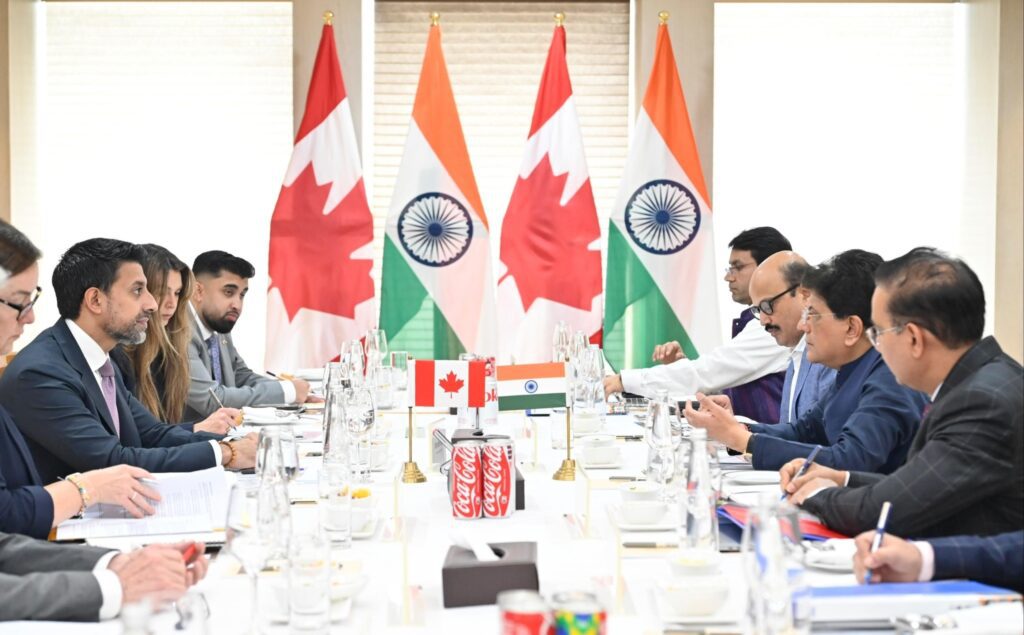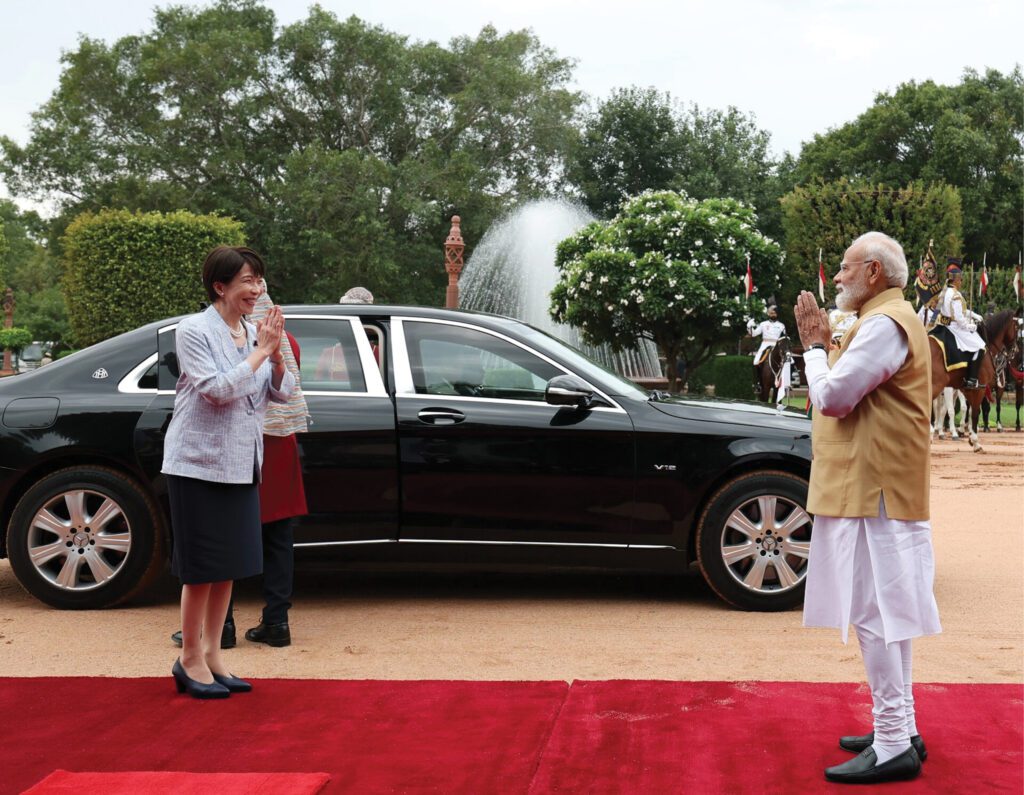

In their Asia Pacific Foundation of Canada policy brief, Operationalizing the Australia-Canada-India Technology and Innovation Partnership, Tanya Dawar and Zoraver Cheema examine how the newly announced Australia-Canada-India Technology and Innovation Partnership (ACITI) can be transformed from a political declaration into a practical framework for trilateral cooperation. The authors argue that ACITI should move beyond high-level strategic alignment and become an “implementation-oriented platform” focused on critical and emerging technologies, resilient supply chains, clean energy systems, and artificial intelligence (AI). They contend that the partnership brings together three countries with complementary strengths, namely Canada’s expertise in AI and clean technologies, Australia’s resource base and commercialisation capacity, and India’s manufacturing scale and digital public infrastructure, thereby enhancing economic resilience and trusted technology ecosystems.
The brief situates ACITI within the broader geopolitical and technological shifts reshaping the Indo-Pacific. According to the authors, intensifying strategic competition and vulnerabilities arising from concentrated supply chains have made closer technology cooperation among trusted partners increasingly important. Rather than creating entirely new avenues of engagement, ACITI is presented as a mechanism to consolidate existing bilateral partnerships among Canada, Australia, and India into a more coherent trilateral framework. The authors review the evolution of bilateral cooperation across trade, critical minerals, clean energy, advanced technologies, and strategic dialogue, arguing that these relationships already provide a solid foundation for expanded trilateral collaboration.
A central theme of the brief is cooperation in AI governance and digital infrastructure. The authors observe that while all three countries are expanding AI adoption through distinct domestic approaches, they increasingly converge around principles of responsible, secure, and trustworthy AI development. They argue that ACITI can facilitate joint AI safety testing, standards coordination, and greater interoperability across digital systems while promoting collaboration on cybersecurity, digital public infrastructure, and cross-border data governance. Although full regulatory harmonisation may be unrealistic, they describe targeted alignment on standards and governance principles as “a pragmatic pathway to strengthen trust, improve interoperability, and support responsible AI adoption across all three countries”.
The brief also devotes considerable attention to green energy technologies and resilient supply chains. It identifies battery storage, green hydrogen, carbon capture, utilisation and storage (CCUS), and critical minerals as priority sectors where the three countries possess complementary capabilities. In discussing minerals such as gallium, germanium, lithium, and rare earth elements, the authors argue that “the core constraint across critical minerals is increasingly not extraction, but processing, refining, and industrial scale”. Consequently, they advocate coordinated investment, long-term commercial partnerships, and strengthened processing capacity to reduce dependence on concentrated global supply chains and support resilient semiconductor and clean technology industries.
The final section outlines practical pathways for operationalising ACITI. The authors recommend prioritising cooperation in AI governance, semiconductor and critical mineral supply chains, clean energy innovation, and digital infrastructure through biannual implementation-focused dialogues, joint research initiatives, innovation working groups, and regulatory coordination mechanisms. They conclude that the partnership’s success will depend on “move from intent to delivery” by aligning political commitment, commercial investment, and institutional cooperation. In doing so, ACITI has the potential to strengthen trilateral economic resilience while contributing to a more secure and trusted Indo-Pacific technology architecture.