In the annual analytical report, Regional Security Monitor, Mihajlo Botić tracks the Regional Security Complexes in South Asia 2024–2025. Published by the Centre for International Security, author applies Barry Buzan and Ole Wæver’s Regional Security Complex Theory (RSCT) to analyse evolving security dynamics in South Asia. The report conceptualises South Asia, consisting of India, Pakistan, Bangladesh, Nepal, Sri Lanka, the Maldives and Afghanistan, as one of the most structurally entrenched and conflict-prone regional security complexes, characterised by deep historical antagonisms, geographical proximity and intense security interdependence.
The analysis begins by focusing on the India–Pakistan rivalry, which continues to remain the central axis of the regional security complex, rooted in the Partition of 1947 and sustained through repeated wars, territorial disputes related to Kashmir, and enduring militarisation. The nuclearisation of both states has further created a stable but highly volatile deterrence structure in which crises are contained, yet persistently recur. Afghanistan continues to function as a critical arena, generating regional spillovers through terrorism, continued political instability, as well as humanitarian crises, while also acting as a conduit for external penetration by major powers.
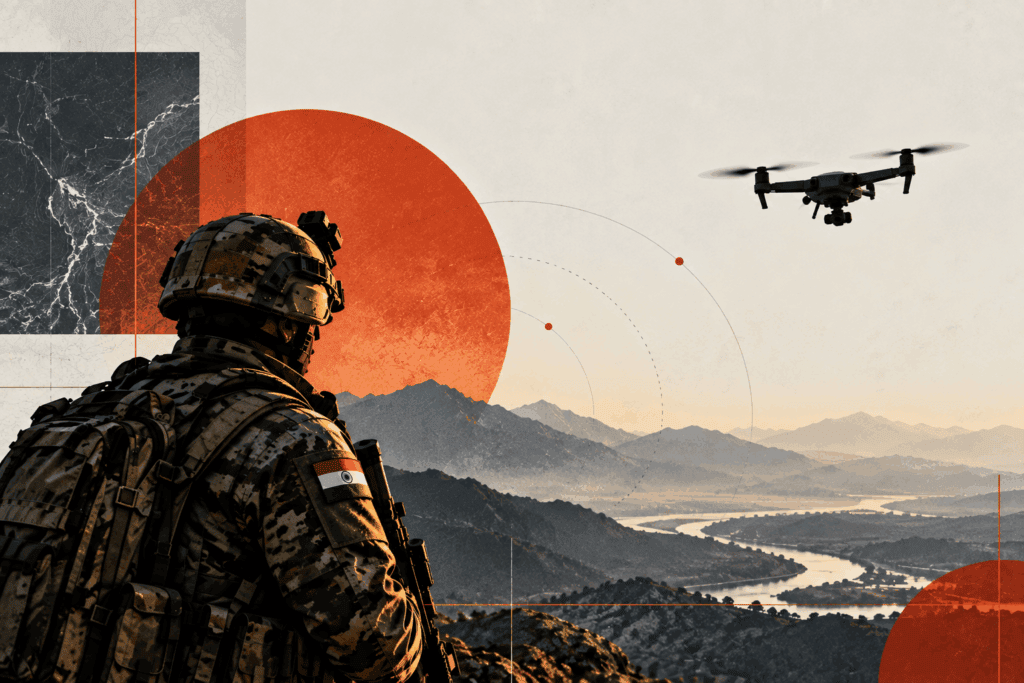
In the 2024–2025 period, the report identifies both continuity and gradual transformation within the regional security architecture. The Pahalgam terrorist attack in 2025 and India’s subsequent Operation Sindoor demonstrated continued interstate volatility and escalation. Simultaneously, the emergence of drone warfare introduces a new technological dimension that has lowered escalation thresholds while increasing the frequency and complexity of cross-border engagements. Domestic insurgencies in Pakistan and recurring climate-related disruptions, including monsoon flooding and water stress, have further broadened the scope of securitisation beyond military concerns.
Externally, the report highlights intensified volatility driven by global power dynamics, particularly through China’s expanding strategic and economic presence via CPEC and military cooperation with Pakistan, alongside U.S. mediation efforts in the region. India’s Indo-Pacific alignment reflects a deeper interregional influence over South Asian security dynamics. Russia maintains a secondary balancing role through defence ties with India.
The study concludes that South Asia remains a “standard” RSCT security complex. While its core structure, India–Pakistan hostility, nuclear deterrence and Afghan instability, continues to remain intact, incremental changes in technology, climate insecurity and external involvement are gradually reshaping regional threat perceptions and strategic behaviour without fundamentally altering the underlying system.