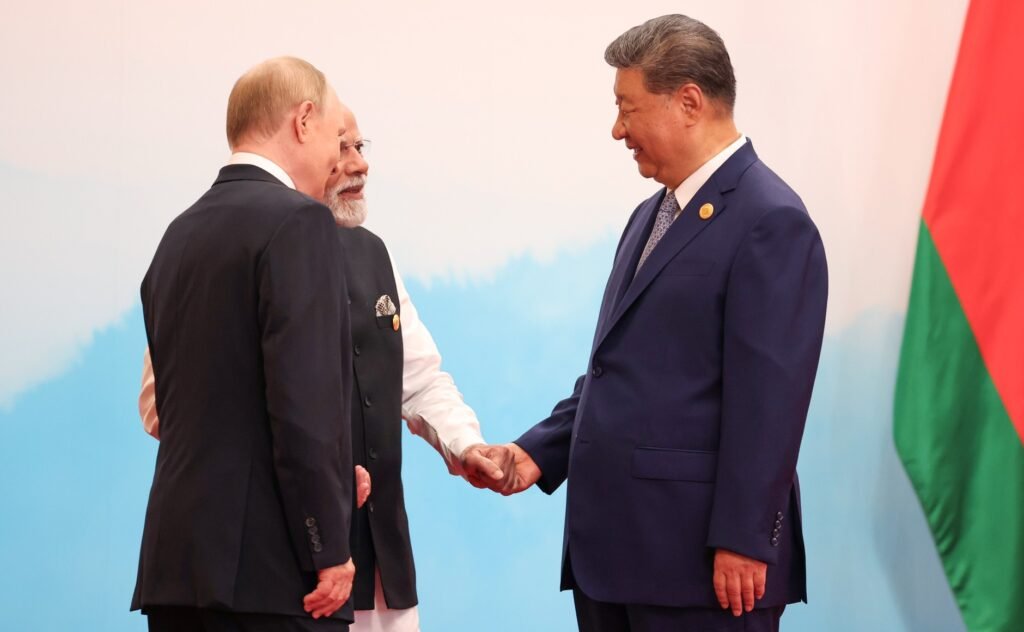
The key assumption that the India–US relationship remains special and will be protected from the great power rivalry between the United States, Russia, and China has been increasingly called into question, revealing the limits of Indian exceptionalism. While multiple factors, including Operation Sindoor and perceived trade imbalances, contribute to the current rift between India and the U.S., it ultimately centres on India’s strategic autonomy, exposing structural issues likely to persist.
In the post-COVID era, despite the Russian war in Ukraine, New Delhi deepened its relations with the United States based on strategic convergence against an assertive China. For India, the deepening of the relationship was also underpinned by the challenge of having a hostile neighbour threatening its sovereignty, resulting in an external balancing against a rising great power. However, the pivot is limited by the objective of extracting benefits from great power rivalry.
Despite questions over this logic, New Delhi predominantly prefers internal balancing, which rests on building its own economic, technological and military power while building external partnerships to this end. This rules out any possibility of pursuing an alliance with the United States. Thus, the relationship can be defined as a collaboration helping to realise mutual gains rather than delivering any special favours.
At the same time, China remains a crucial economic partner, given its dominance over critical supply chains. This vulnerability is as important a factor in its current rapprochement with Beijing as hedging against an unpredictable U.S. administration. With its aspirations of being an independent pole in Asia, New Delhi’s hedging practice is also a result of its reluctance to make any compromises on decision-making autonomy.
Within this framework, New Delhi seeks to have moderate competition with Beijing and prefers to cooperate wherever possible, while pursuing international partnerships for security as well as economic diversification. Therefore, domestic aspirations and strategic autonomy remain the guiding pillars in determining its cooperation with either great power. New Delhi’s relations with Moscow have endured and remained steady, rooted in Cold War history and sustained by strategic cooperation in energy and defence. Overall, New Delhi’s status quoist strategic calculus reaffirms the notion that its alignment and cooperation with the United States has limits and is not inevitable, and that its ties with Beijing will not witness a rapid decline.
The Sino-Russian ‘No-Limits’ Partnership
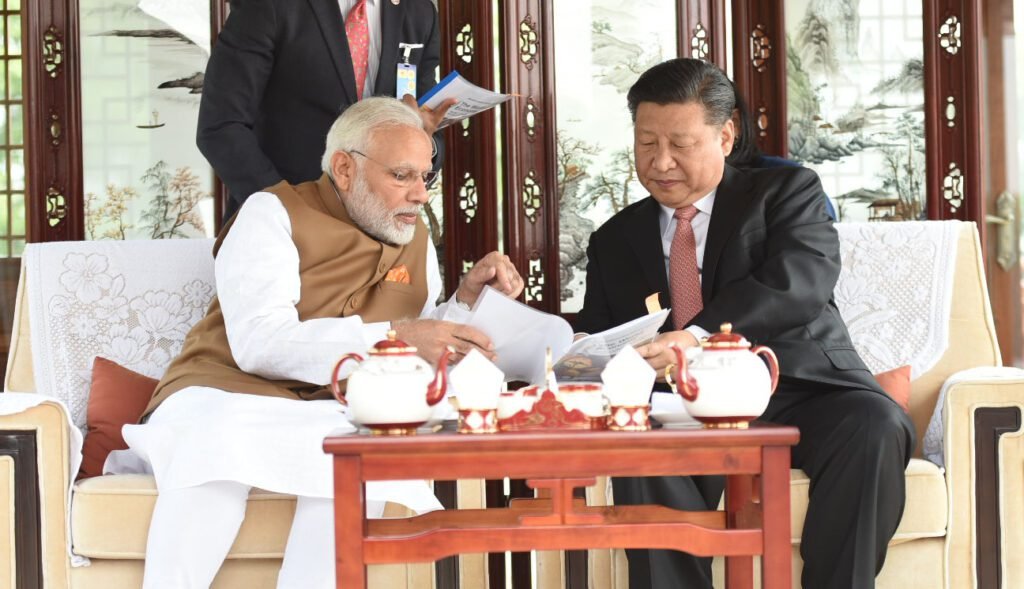
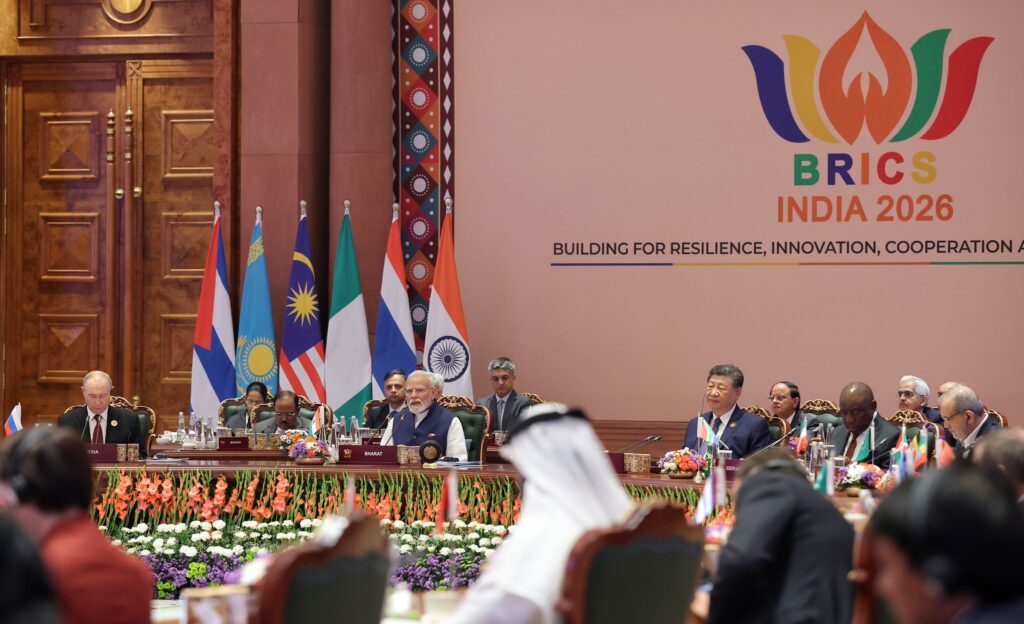
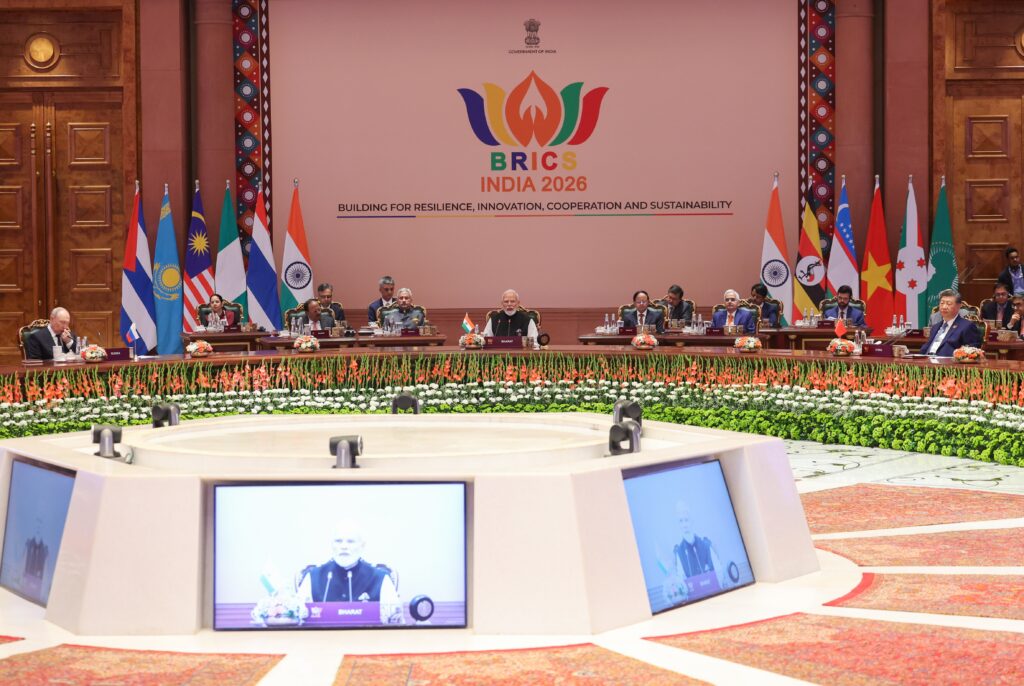
The Russia-India-China (RIC) trilateral was founded on the shared objective of balancing against the Western hegemony led by the United States. This convergence aided cooperation in BRICS and later in the Shanghai Cooperation Organisation (SCO) grouping, with the RIC functioning as the platform to endorse the overarching agendas of the two multilaterals on global governance and Eurasian security.
However, the deterioration of India-China ties post the Galwan crisis in 2020, followed by the Russian invasion of Ukraine, made the trilateral redundant for India. A key argument against reviving the trilateral arrangement is the growing Sino-Russian alliance built on their anti-Western strategic view and their rejection of the geopolitics of the Indo-Pacific. The relations between Moscow and Beijing have been deepening as a result of the Russian isolation from the West and have affected India’s defence ties with Russia.
With the waning influence of Russia and a strategic view divergent from India, the trilateral undermines New Delhi’s relations and aspirations with the West. However, this view overlooks the dominance of the Sino-Russian alliance, neglecting Moscow’s need for autonomy and its importance in a China-centric world. Within the triangular relationship, while there is growing asymmetry and dependency in the relations between Russia and China in favour of the latter, Beijing recognises it cannot dictate Moscow’s ties with New Delhi, given its historical ties and geopolitical relevance. Backed by the sustained trade in energy since 2022, with favourable views of its people, and a strong interpersonal relationship between the leaders, the India-Russia relationship stands on its own.
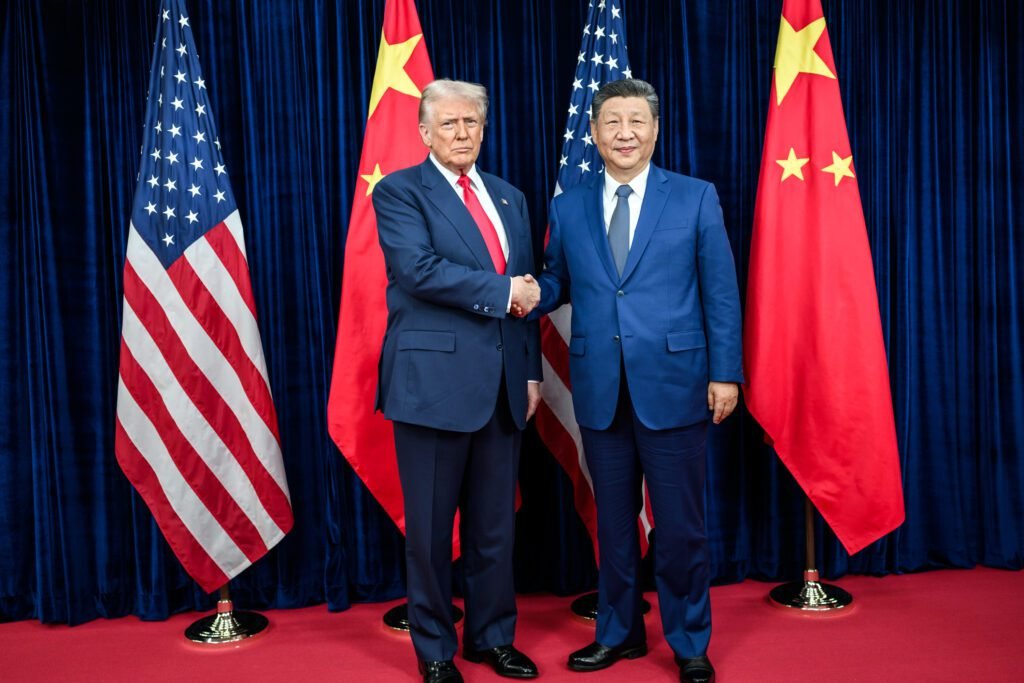
However, Russia’s limited vision of its role in the Indo-Pacific constrains its role as a balancer in the wider regional competition, and New Delhi would hope that the current diversification efforts in its bilateral ties and Moscow’s search for buyers of its energy in the East would rekindle its Indo-Pacific policy. Beijing is also aware of how New Delhi’s relations with Moscow remain a thorn in the former’s relations with Washington and may prefer the disruption to continue. Outside the trilateral, given the sustained engagement of Moscow by Washington, the ceasefire being negotiated directly between President Trump and President Putin, and the bilateral trade war between Washington and Beijing, it is realistic to assume that both will prioritise bilateral engagement with the U.S. Hence, the space for India and Russia to influence within the trilateral remains, and the newfound synergy between India and China on the back of American tariffs works in favour of the trilateral.
India’s Pivot to Europe and the Sino-Russian Challenge
The broader weakening of the trans-Atlantic alliance has long been viewed favourably by the RIC trio, due to their shared belief that the erosion of Western primacy creates space for a more distributed power and equitable global structure.
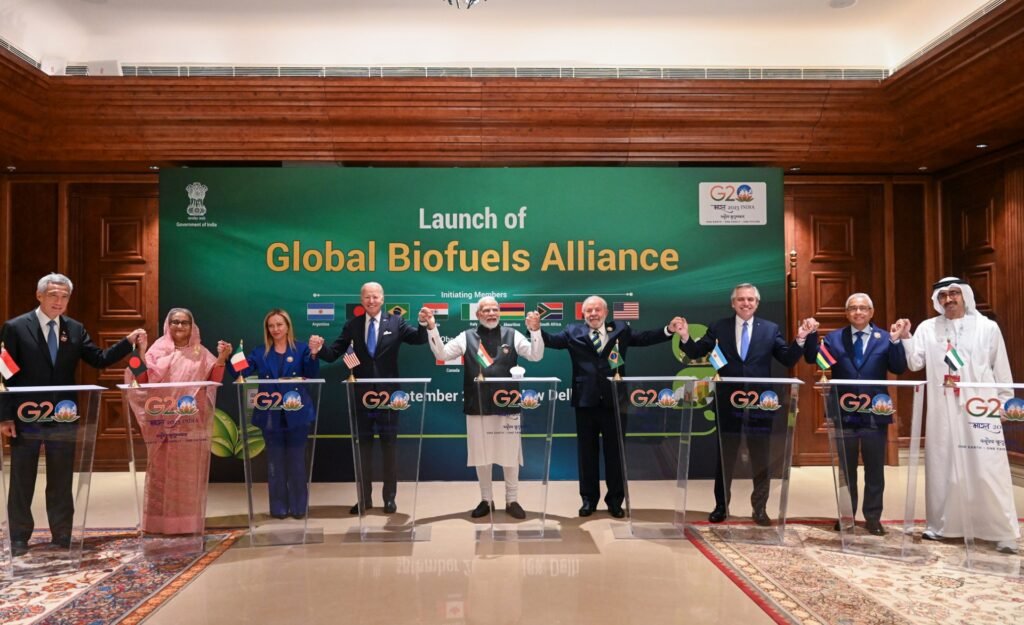
However, India’s vision for multipolarity differs in that it still includes European powers underpinned by the centrality of the United States. India also envisions a wider role for European powers in the security of the Indo-Pacific. For Europe, the stalemate in the war in Ukraine and the Sino-Russian challenge to security have been important factors in looking beyond India’s relations with Russia. The present Washington administration’s liking to deal with Moscow directly, accommodating its interests, together with its view that there is more to gain by pursuing a direct trade deal with Beijing to manage its own trade imbalances, isolates Europe and exposes it to the Sino-Russian threat like never before. As a result, India’s role as a trusted economic, technological and security partner across Europe will grow in prominence. The current geopolitical context runs contrary to the claim that the present approach of the United States towards its allies in Europe and Asia shrinks India’s geopolitical profile.
In the present context, where U.S. security guarantees exist in some form, Europe is likely to accept a ceasefire without a full Russian retreat, acknowledging that the threat of a long-drawn-out war with Russia is the future. Therefore, it is no longer the case that India’s relations with Russia or its participation in the trilateral undermines its future with Europe. For India, unless the events in Europe dramatically challenge its existing relations with the West and Russia, the present status quo provides it greater leverage to deepen its strategic relationship in Europe while also providing it the space to reassess its strategic priorities with Russia. In the long run, however, regardless of the outcome of the present stalemate, India’s influence and growth will be challenged by the Sino-Russian strategic view, and the duo will play an important part in determining the contributions of India and Europe towards each other’s security. Given the unpredictability in the American centrality and India’s aspirations in Europe, the trilateral can very well function as a platform for diplomatic efforts.
Strategic Altruism Unravelled: Recalibrating India–U.S. Relations
While India’s relations with all the major powers have come under the scanner, it is the first time it has had strained relations with both the great powers of this era. While New Delhi’s economic pragmatism prompted it to re-engage Beijing, its long-term bet on Washington based on joint interests and mutual gains is at risk of falling apart. In the case of the U.S., the policy of ‘strategic altruism’ that underpinned its policy towards India for the last two decades has been upended. Consequently, New Delhi can no longer escape the great power rivalry while seeking to gain the benefits out of it. It has to hedge to de-risk not only its relationship with its rival but also with its strategic partner. While multi-alignment expands partnerships, as reflected in New Delhi’s expanding relations in the West and the East, this would not help resolve the current issues in its relationship with the U.S., as the rift is driven by differing expectations and a transactional personality-driven foreign policy in Washington. Given that Washington speaks the language of coercive power and understands only the language and optics of power, India’s bargaining chip remains its engagement with Russia and China.
In this context, the RIC in its current non-institutionalised form has proven to deliver India diplomatic leverage against the personality-driven foreign policy in Washington. However, the fundamental expectations of the United States from India have turned purely bilateral and short-term, neglecting the duo’s long-term shared interests in the wider Indo-Pacific against China. With its domestic political constraints and slower economic growth, which have direct implications on its technological and military capabilities, New Delhi can only afford to view the relationship based on what India can offer to the U.S. in the long term, as a market and Indo-Pacific partner. Even then, the cooperation will be limited to not compromising on its autonomy and interests. This emphasis is often misinterpreted as New Delhi wanting to undermine American interests and its primacy, when it actually intends distributed power and more representation in the emerging order. In such circumstances, any quid-pro-quo arrangements based on transactional deals on energy or defence have financial and strategic implications and, politically, are seen as a surrender to American unilateralism.
The strategic divergence in the relationship plays out predominantly in India’s neighbourhood, mainly with the return of Pakistan in Washington’s calculus, adding to the political tensions that have now snowballed. In this scenario, the overall imperative for New Delhi requires it to prioritise and disentangle issue by issue to prevent broader deterioration. The RIC trilateral, with respect to India’s broader ties with the West in the present context, does not play the disruptor and can co-exist. In the future, given the unstable geopolitics of Europe, New Delhi might discover more value in it as a platform for diplomacy. Overall, with the improvement in ties between India and China and their common need to preserve ties with Russia, the trilateral remains an effective tool at its disposal for New Delhi in its broader strategic goals in the age of great power rivalry.