In late 2025, Chinese scientists completed a manned deep dive beneath the Arctic ice. A nation made the case that it belonged in a region where geography had long set limits. The message was simple. China is not waiting to be invited to the High North.
For India, the Arctic matters for different reasons. Melting ice can alter the monsoon. Shifts in polar circulation directly affect weather systems in the subcontinent, with adverse consequences for food security and livelihoods. The Arctic is also a test of how responsible powers behave when new routes and resources tempt short-term thinking. India’s record so far has been cautious and science-led. China’s approach has been fast, multi-domain, and often transactional. The Nordic states sit between these approaches as the practical gatekeepers of the European Arctic. This essay argues that India should deepen structured partnerships with the Nordics to move from presence to influence. It should do so without abandoning its core principles of sovereignty, multilateralism, and respect for indigenous rights, and while translating policy into visible capability.
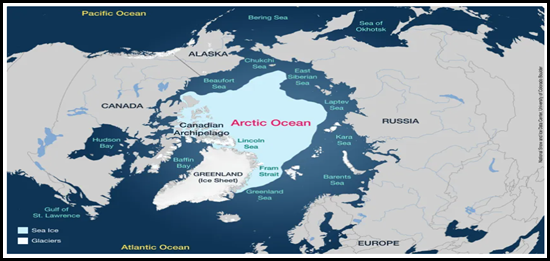
Why the Arctic matters
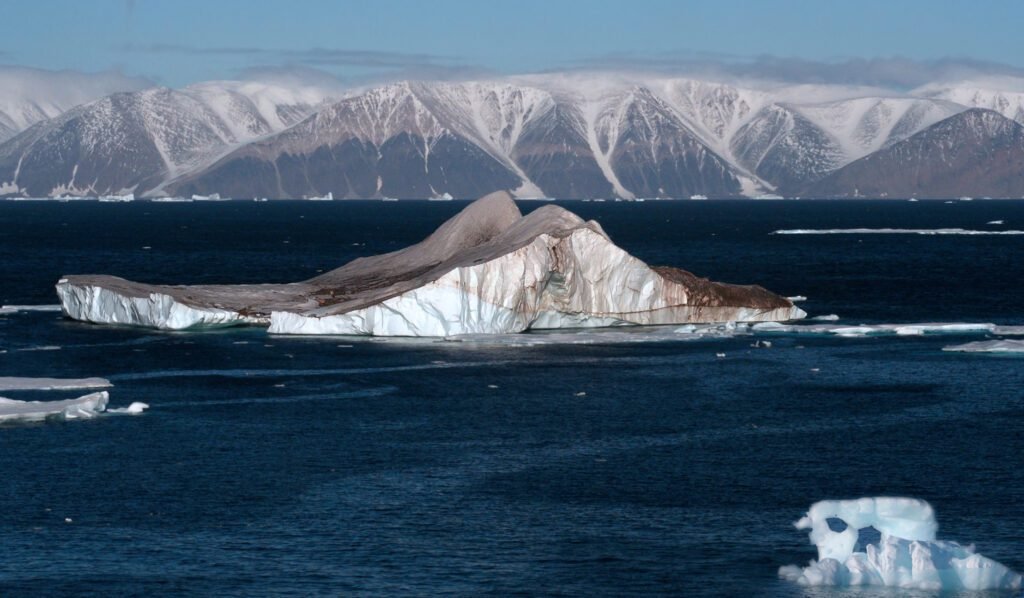
The High North is warming at roughly four times the global average. Retreating sea ice opens seasonal access to the Northern Sea Route and, in time, to a transpolar corridor. Reports cite significant undiscovered oil and gas, and critical minerals. Ice-class shipping, satellite remote sensing, autonomous systems, and climate modelling all advance faster when the Arctic becomes a laboratory. Better data on Arctic teleconnections improves Indian monsoon forecasting and resilience planning for agriculture and water.
Institutions still anchor the Arctic conversation. The Arctic Council and its working groups on monitoring, marine safety, and sustainable development, along with forums like the Arctic Circle, have kept cooperation alive even in difficult times. The war in Ukraine and the arrival of new, energetic actors have tested that balance, but the space remains governable. Partners that add value, earn trust, and respect local leadership find a readier welcome.
China’s Pathway to Arctic Influence
Beijing’s approach is coherent. It declared itself as a “near-Arctic state” in 2018, linked polar routes to the Belt and Road through a “Polar Silk Road,” and set about combining science, infrastructure, and diplomacy. China’s research icebreakers and stations grant scientific legitimacy. State-backed companies pursue minerals in Greenland, telecoms in the Nordics, LNG with Russia, and logistics that align with longer shipping seasons. The deep-dive functioned as science and statecraft.
China is building a steady presence in the Arctic through research, shipping links, and selected investments. Nordic governments have responded by looking more closely at proposals that touch sensitive areas, such as critical minerals, data networks, or facilities near defence sites. Reviews are now more structured and place weight on long-term safeguards and local benefit. Cooperation has not stopped. It continues where projects meet transparency and community standards. China’s energy work with Russia has added a further layer for officials to consider when they assess risks and timelines.
India’s pathway: Science first, Strategy next
India’s Arctic story begins with research. Himadri station at Ny-Ålesund has anchored Indian fieldwork since 2008. The IndARC observatory extended that into subsea monitoring. India earned Arctic Council observer status in 2013 and released its first Arctic Policy in 2022. The policy pillars are clear: science and research, climate and environmental protection, economic and human development, transportation and connectivity, governance and international cooperation, and national capacity building. It stresses respect for sovereignty, adherence to international law, and partnership.
This posture has credibility with Nordic partners. It sits well with values of transparency, indigenous participation, and sustainability. It also has limits. Analysts note that India’s presence remains modest in logistics, ice-class platforms, and commercial initiatives. Years of underinvestment in polar capability risk marginalising India in a crowded field where visibility often flows from ships, stations, and sustained project funding. Indian scholarship has started to argue for a shift from purely scientific legitimacy to strategic relevance that still aligns with Indian norms. It means doing more of what India is good at, and doing it with partners who value that approach.
The Nordic gateway
Denmark, Finland, Iceland, Norway, and Sweden hold the keys to much of the European Arctic. Their policies shape access. Their regulators vet projects. Their universities and institutes run major research programs. For an extra-regional power, earning Nordic trust is the most reliable route to long-term influence in the High North. China understood this early and invested in links across the region. Many of those bids faced political resistance. The strategic lesson is straightforward. Speed and scale win headlines. Trust wins staying power.
India’s engagements with the Nordics have grown through the 2018 and 2022 India–Nordic Summits. Conversations on green shipping corridors, hydrogen, offshore wind, Arctic data sharing, and maritime safety show a sensible agenda. Norway remains a natural anchor for polar science cooperation. Sweden contributes to space-based observation. Denmark and Greenland matter for minerals, fisheries, and community-centred development. Finland brings icebreaking know-how and critical technology standards. Iceland connects India to convening spaces like the Arctic Circle Assembly. They do not require India to posture as a near-Arctic state. They require India to be a reliable partner that helps solve real problems.
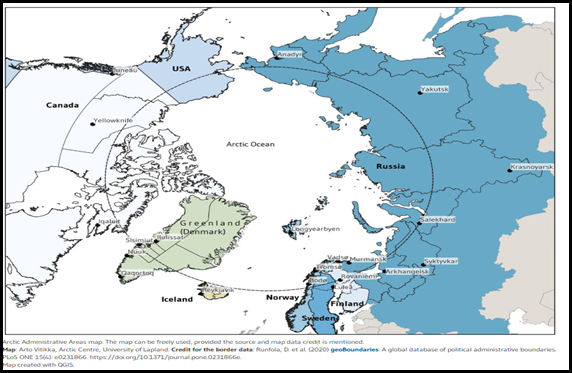
Selective lessons for India
China’s strategy yields three lessons that India can adapt to its own strengths.
Narrative matters. China’s deep dive and icebreakers create a sense of inevitability. India does not need a theatre, but it does need visible, regular signals; annual expeditions, shared datasets, student exchanges, and an announced roadmap for a polar research vessel.
Institutions reward contribution. Where China faces screening, India can offer open science and capacity building. Joint Arctic-Himalayan climate modelling, fisheries management pilots, and community health collaborations align with Nordic priorities.
Economic presence must be selective and standards-led. Rather than scattershot bids, India can back a few projects that meet Nordic transparency and environmental norms. That lowers political risk and builds credibility faster than volume.
From Symbolism to Strategy: A Roadmap for India
As the Arctic transforms into a theatre of intense international focus, India finds itself at a crossroads. Will it remain a largely symbolic player content with scientific observation and moral support, or can it craft a more pragmatic, values-aligned strategy that elevates its Arctic presence? India does not seek to outcompete China in a resource grab or an icebreaker race that is neither realistic, given China’s economic heft, nor consistent with India’s principled approach. Instead, India’s opportunity lies in differentiating itself: doubling down on its strengths in sustainability and partnership, while shedding the reluctance that has sometimes made its Arctic engagement appear passive. A first step is to close the gap between policy and implementation. The 2022 Arctic Policy provided a comprehensive blueprint; now India must invest the resources to realise it. This means funding new polar research expeditions, but also acquiring capabilities like a dedicated polar research vessel and strengthening logistical ties to the region. It means empowering Indian institutions from the Navy to the National Centre for Polar and Ocean Research to contribute to Arctic domains such as search and rescue, communications, and climate modelling, alongside Nordic partners.
Secondly, India should institutionalise its partnerships with Nordic countries through regular dialogues and joint projects. An annual India–Nordic Arctic roundtable, for example, could keep focus on concrete collaboration in renewable energy in Arctic communities or development of safe tourism and fisheries areas where India’s experience in sustainable development could be applied. Quiet diplomacy may also allow India to support Nordic efforts to keep the Arctic governance system open and rules-based, for instance, by backing their positions in the Arctic Council or working together in UN bodies on polar climate action. Its recent partnership with the United Arab Emirates on polar research shows New Delhi’s capacity to act as a bridge, bringing new stakeholders into Arctic cooperation in a benign way. By championing inclusive initiatives such as the “Third Pole” process linking Himalayan and Arctic climate research, India amplifies a narrative of shared global stakes in the Arctic.
Finally, a values-driven Arctic strategy for India must underscore what India stands for in the Arctic. This includes a commitment to environmental stewardship, to scientific transparency, and to the rights of indigenous peoples who are the Arctic’s most vulnerable residents. These are not just moral positions but strategic ones: they enhance India’s soft power and build trust, setting it apart from players perceived as mercantile or opportunistic. As Lackenbauer observed, India’s discourse has long “straddled science and strategy,” and the time has come to infuse its strategy with its scientific ethos. In doing so, India can assure Nordic partners that an Indian footprint in the Arctic would strengthen, not strain, the existing order.
Addressing real constraints
India faces real constraints. Polar work is expensive. Bureaucratic coordination between science, diplomacy, shipping, and defence can be slow. Private investment will remain cautious in unfamiliar geographies. The policy fix is to prioritise a few visible, high-return items. A vessel commitment, an Arctic plus Himalaya twin project, and a data compact would together change perceptions of India’s role without straining the exchequer. Appoint a cross-ministerial Arctic coordinator with responsibility to report results quarterly. The diplomatic fix is to keep expectations modest and timelines firm.
There is also a strategic balance to keep with Russia. India’s historical ties and energy links will continue. Nordic partners understand that reality. What they look for is clarity that India’s Arctic choices are transparent, standards-compliant, and not a back door for sanctioned actors. That clarity is within India’s control.
The Arctic rewards steady partners, not loud claims. India does not need to mirror China’s pace to matter. Lead with science, align with Nordic values, and show steady capability growth. Prioritise projects that help communities and improve safety. Build a reputation that outlasts a news cycle. The Arctic does not need another great-power race. It needs dependable partners. India can be one of them by working with the Nordic states and sticking to its principles. Although it may not crash headlines very often, it will secure India a legitimate seat at the table in a region that is shaping the climate and commerce of the century.