
Food security is increasingly shaped by forces far beyond the farm. Wars can disrupt grain and fertiliser supplies, while extreme weather damages harvests and trade disruptions raise the cost of moving food and buying inputs. Climate change is making these shocks harder to predict. The UN Food and Agriculture Organization’s Food Price Index rose 1.9% in August 2026, its highest level since late 2022, with FAO pointing to adverse weather, geopolitical tensions and trade disruptions. So food security is about more than producing enough. It is also about how well food systems cope when conflict, climate shocks, economic disruption or environmental damage hit.
That was the setting for the first Global Conscious Food Systems Summit, held in Paro, Bhutan, from 31 August to 4 September 2026. Convened by the Royal Government of Bhutan, the Conscious Food Systems Alliance (CoFSA) and the United Nations Development Programme (UNDP), it brought nearly 400 participants from about 65 countries, including political leaders, farmers, Indigenous representatives, scientists, businesses and development practitioners. The theme was “Activating the Heart of Food Systems Transformation”.
Much of the problem was familiar; Bhutan was trying to shift the terms of the discussion. The organisers argued that the obstacle is not a lack of agricultural knowledge alone. It is also the values, relationships and incentives that determine how that knowledge is used. Food systems depend on human choices: what governments subsidise, what investors finance, what farmers grow and what consumers buy.
What Does “Conscious Food” Actually Mean?
The phrase can sound like mindful eating, but the summit uses it in a wider sense. Consciousness refers to the values, mindsets, relationships, awareness and habits of decision-making that shape collective behaviour. The idea is to add these considerations to familiar food-policy tools such as science, technology, finance, regulation and investment. Prime Minister Tshering Tobgay described this as a question of inner and outer change. The outer side includes farming, markets, finance, public policy and consumption. The inner side concerns the attitudes and values that shape how those systems are built and used.
That distinction matters because people do not make choices in a vacuum. A farmer may want to protect soil but lack credit or a dependable market. A government may support regenerative agriculture in principle while backing policies that reward short-term production. A consumer may care about healthy, sustainable food but still have to choose on price. Bhutan is therefore asking a harder question: whether changing food systems also means changing the assumptions behind them.
Why Food Security Is Becoming a Global Concern
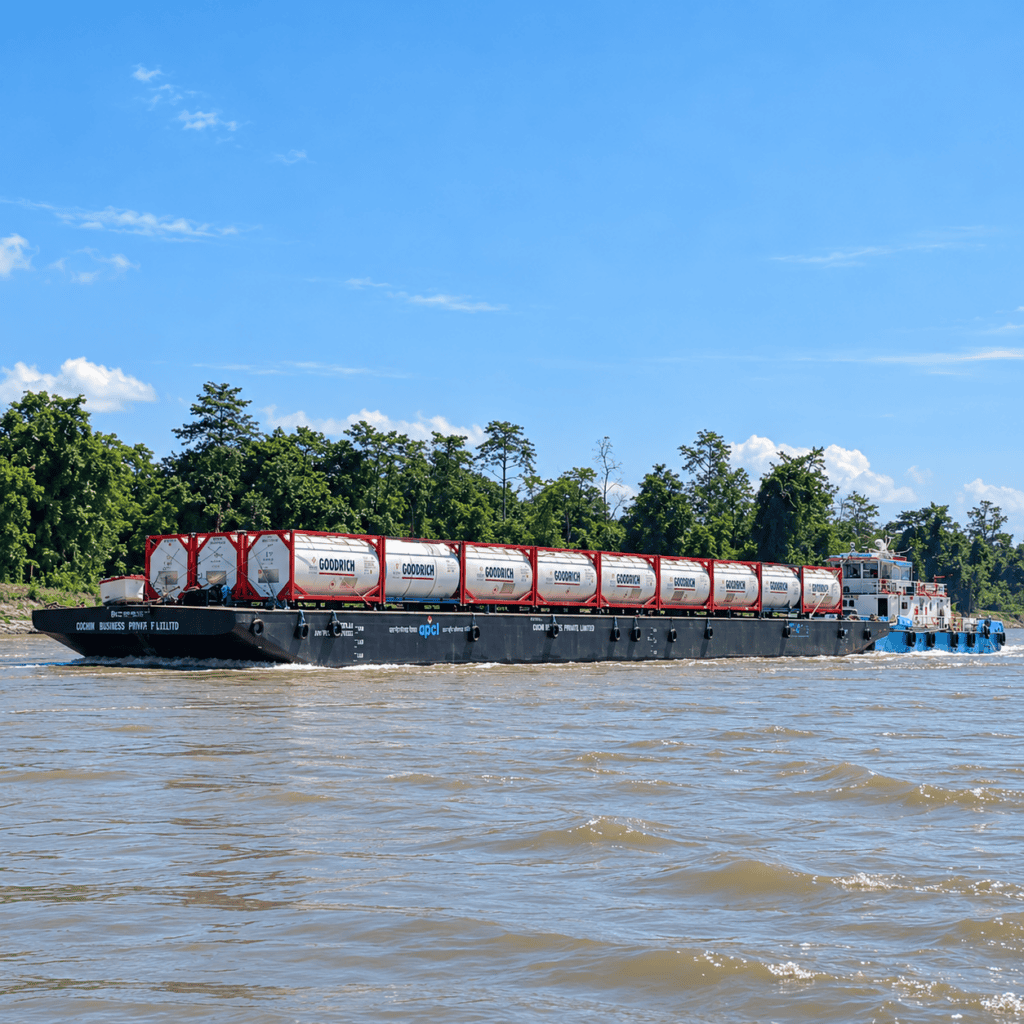
Food markets are exposed to events elsewhere. The war in Ukraine has disrupted grain and agricultural supply chains, while conflicts in the Middle East have put pressure on commodity markets and transport routes. Extreme weather can add another shock just as geopolitical tensions make food more expensive to move. FAO’s latest assessment describes climate shocks, geopolitical tensions and disrupted trade logistics as threats to food-market stability. For governments, food resilience now has a clear geopolitical dimension. They have to consider foreign suppliers, shipping routes, energy costs, fertiliser markets and trade restrictions alongside domestic production.
Bhutan is not proposing that these conventional measures be abandoned. Its question is what kind of resilience they are meant to produce. A food system may be highly productive and still be fragile if it exhausts soil, leaves farmers with weak incomes, damages biodiversity or relies heavily on imported inputs. More output does not automatically mean greater resilience.
Why Bhutan Chose to Host the Summit
The choice of Bhutan as host was closely tied to its development philosophy. For decades, the country has promoted Gross National Happiness (GNH), which places wellbeing, environmental conservation, culture and good governance alongside economic development. At the summit, Bhutan applied that way of thinking to food. The logic is fairly simple. If development is meant to improve people’s lives and protect the natural environment, food policy cannot be judged only by production and economic output. The summit’s material presents Bhutan as having predominantly organic and nature-friendly food systems and points to the role of culture and spirituality in its approach to sustainability.
There is also a diplomatic calculation. Bhutan has less economic and strategic weight than larger states, so ideas and the ability to bring people together matter. The conscious-food agenda extends the international identity it has built around GNH and environmental stewardship into another policy field. Bhutan is not claiming to have solved food insecurity; it is putting its own experience into a wider argument about development. Sri Lankan Prime Minister Harini Amarasuriya’s visit gave the summit a small regional dimension. She joined the opening plenary and held talks with Bhutanese leaders on education, culture, people-to-people ties and sustainable development, in the first visit by a Sri Lankan head of government to Bhutan in 16 years. The summit was not a conventional geopolitical meeting. Its relevance comes from a broader shift: food security is becoming more closely tied to the instability of the international system, while small states such as Bhutan can still influence the debate by advancing ideas.
Bhutan Faces Its Own Food Challenge
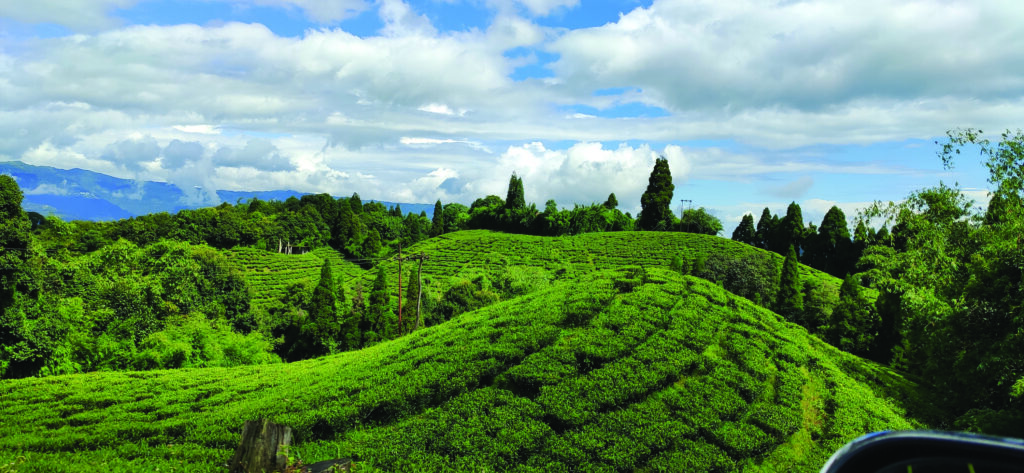
Bhutan is promoting a new way of thinking about food while facing serious problems in its own agricultural sector. Nearly 98% of Bhutan’s farms are smallholder-owned. The agricultural workforce has declined sharply, and more than 28% of arable land is reported to be fallow. Farmers face wildlife conflict, pests and disease, while several agricultural programmes remain only partially funded. The government has also acknowledged how difficult it is to persuade younger people to stay in agriculture when the work is not economically attractive. Bhutan is therefore not offering a ready-made model for other countries. It is wrestling with the same trade-offs it wants the global food debate to take seriously: how to protect the environment while improving farm incomes, food security and rural employment. The summit will be judged partly by how that philosophy works in practice.
Who Gets to Shape Food Systems?
The most interesting part of the argument may be less about mindful consumption than about who gets to decide. The summit gave considerable attention to farmers, Indigenous peoples and local communities, reflecting a longstanding criticism of agricultural policy: decisions are often made in distant institutions, while the people who must live with them have little say. Tobgay argued that policies are too often designed for farmers rather than with them.
That raises some basic questions. Who decides what counts as productive agriculture? Who gets public support? Whose knowledge is treated as legitimate? Who pays the environmental costs? And who captures the value created along the supply chain? The emphasis on Indigenous knowledge and traditional practices therefore reaches beyond cultural recognition; it questions whether food systems should be designed mainly through the institutions and measures of modern agricultural policy. Bhutan has this problem at home too. Women make up a substantial share of agricultural labour but remain underrepresented in decision-making. Any serious definition of a conscious food system would have to deal with that gap in power.
Can Consciousness Become Policy?
The summit launched the Conscious Food Systems Framework, the result of more than five years of consultation and movement-building. It sets out a shared vision, guiding principles, approaches for individuals and institutions, and more than 50 examples from different countries. The next stage is to develop practical guidance and test the approach at national and local levels. That is where the idea gets difficult. It is easy to call for more empathy towards farmers or a closer relationship with nature. It is much harder to show how those ideas change a government budget, a lending decision, a subsidy or a company’s supply chain.
Six interventions have already been tested in India, Mexico, Colombia, Wales, Cameroon and the Philippines to examine whether values, relationships and human capacities can be built into food-system reforms. The question now is whether these experiments produce measurable changes in farmer wellbeing, regenerative practices, investment, biodiversity or institutional decision-making. Without that evidence, “conscious food” could remain a useful phrase rather than a useful policy tool.
What Does Bhutan’s Approach Add?
The summit did not discover that farmers matter, that ecosystems need protection or that food systems are interconnected. Those ideas are already central to work on agroecology, sustainable agriculture, Indigenous knowledge and food sovereignty. The distinctive move is to put questions of inner change into the same policy conversation as structural change. That speaks to a real weakness in technocratic policy: governments can know what should be done and still fail to act because incentives, political priorities and institutional habits pull in another direction. But values have limits. A farmer cannot solve an irrigation shortage through greater awareness. A consumer cannot escape high food prices through mindfulness. Governments still have to deal with money, infrastructure and political constraints. The stronger case for the summit is therefore a narrower one: consciousness will not solve food insecurity on its own, but it may influence how societies choose and apply the tools they already have.
Will the Idea Work in Practice?
The summit ended on 4 September. UNDP’s closing message stressed that reconnecting people with food and nature still requires good policy, strong institutions, finance and technology. The real question is whether anything changes once the delegates return home. Food systems link climate, economics, public health, rural livelihoods and geopolitics. A climate shock can damage a harvest, cut farm incomes and push up food insecurity. Conflict can disrupt trade and raise prices. Healthier ecosystems can make farms more resilient, while stronger rural livelihoods can help communities absorb shocks.
Bhutan is making a political and cultural argument about these links: the way a society treats food is shaped by its ideas about land, work, nature and wellbeing, as well as by markets and technology. The question it has put forward is therefore simple: what kind of food system does the world want, and who gets to decide what that system values? The summit has given Bhutan a place in that conversation. Turning the idea into workable policy will be the real test.
Note: This explainer has been researched, edited, and fact-checked by India’s World staff and prepared with AI assistance.