The future of Indian tea may not depend on producing more tea, but on making the world want more of what India already produces.
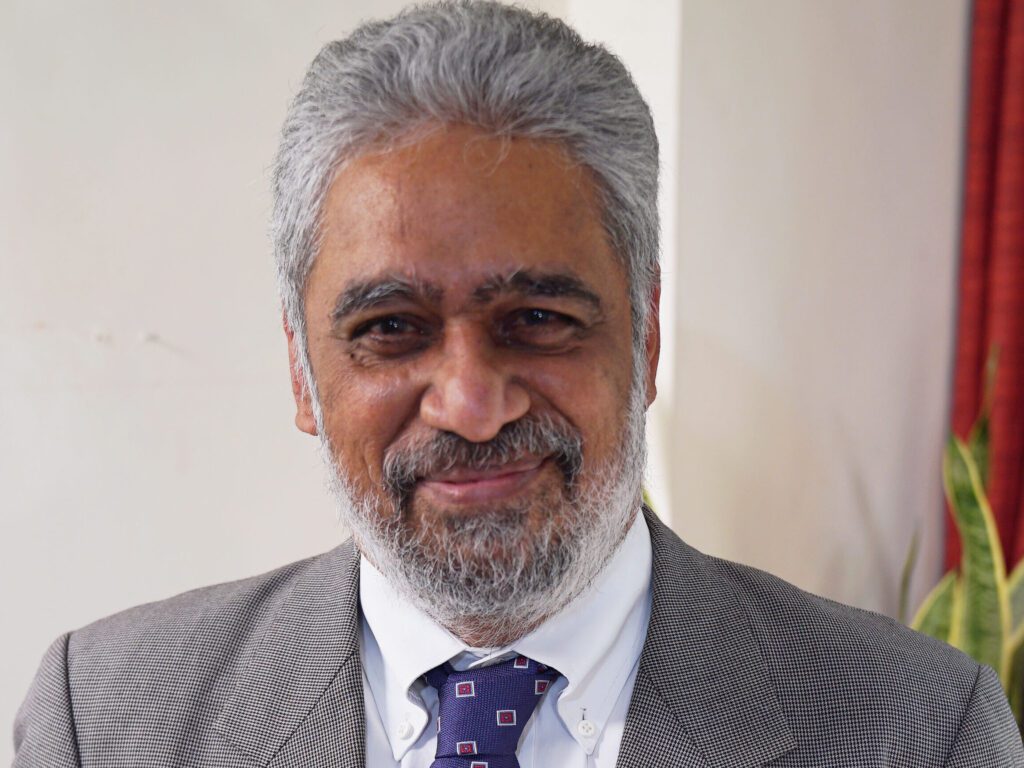
K. Mathew Abraham, Chairman and Managing Director of Kanan Devan Hills Plantations Company (KDHP), brings more than three decades of experience in the tea plantation industry, including over a decade at the helm of one of South India’s largest tea plantation companies. A former President of the United Planters’ Association of Southern India (UPASI), he also serves as Vice Chairman on the boards of Tata Coffee and Amalgamated Plantations Private Limited (APPL).
Having previously led KDHP’s sales and marketing functions, he has been closely involved in taking single-origin plantation teas to the consumer, including through the Ripple Tea brand and Chai Bazaar retail stores. Under his leadership, KDHP has also emerged as a pioneer in climate action, becoming the first large plantation company in India to achieve Carbon Neutral and Climate Positive certification.
In this conversation, Abraham reflects on a changing tea industry, the future of Indian tea, and what it will take to strengthen India’s position in global markets.
You have spent a significant part of your life around tea. What is it about tea that still excites you?
After many years in the tea industry, what continues to engage me is the remarkable complexity of the tea plantation business and the fact that it is an interplay of agriculture, people, craftsmanship, and an extraordinary natural environment.
At KDHP, our tea plantations support a large community of more than 10,000 employees, and that brings with it a deep responsibility to ensure that the enterprise remains economically viable, socially responsible, and environmentally sustainable.
For me, that is the enduring challenge: to build a stronger and more resilient tea business while creating value for our people and protecting the natural heritage with which we have been entrusted.
When you look at Indian tea today, what feels most different from the industry you first knew?
The tea industry has become much more complex. Earlier, the primary focus was largely on producing tea efficiently and taking it to market. Today, there is greater emphasis on productivity, quality, climate resilience, employee availability, technology, changing consumer preferences, branding and sustainability, all at the same time.
The consumer has also changed. Consumers increasingly want to know where their tea comes from and are willing to explore distinctive, premium and speciality teas, rather than viewing tea purely as a commodity.
For the industry, this represents an important shift, from focusing primarily on producing tea to creating greater value through quality, differentiation and a deeper understanding of the consumer.
What is the biggest challenge facing tea producers today that people outside the industry rarely see?
The biggest challenge is the economics of producing tea sustainably.
Tea is highly employee-intensive and carries substantial year-round responsibilities. Costs continue to rise, while productivity has to improve through mechanisation and technology interventions. At the same time, we are dealing with increasingly frequent climate events arising from global warming. The plantation also has continuing responsibilities towards its workforce, their families, and the environment.
What is often not understood is that producing a kilogram of good quality tea is only one part of the equation. We have to ensure that the entire system, from the field to the factory, is productive, efficient, and economically viable.
The complexity of maintaining this balance, particularly when global tea production is higher than demand, amid volatile markets and increasingly unpredictable weather, is not always visible outside the industry.
Climate change, rising costs and changing consumer tastes are reshaping the industry. Which of these concerns you the most?
While they are all interconnected, climate change is perhaps the most fundamental concern, as weather incidents can trigger natural calamities and, moreover, it also directly affects yield, quality, pest incidence, and the predictability of cropping patterns.
Rising costs will affect competitiveness, and the changing consumer demands determine where value will ultimately be created.
However, climate resilience demands long-term planning, responsible agricultural practices and sustained investment across the plantation ecosystem.
If Indian tea were to make a bigger mark globally over the next decade, what would need to change?
We need to become much more competitive in terms of cost and much more consumer-oriented. Consistent quality, innovation, traceability, and sustainability should define our global proposition.
We also need to tell the Indian tea story much better with greater emphasis on speciality and premium segments. We need to move decisively from volume to value. Producers, exporters, and institutions must work together to understand evolving markets and communicate more effectively what makes Indian tea distinctive and worthy of a premium.
After all your years in the industry, what gives you optimism about the future of Indian tea?
The fundamental strength of Indian tea, its diversity, heritage, skilled people, and extraordinary growing regions, gives me optimism. If we combine these strengths with a deeper understanding of the modern consumer, Indian tea has every opportunity to build a stronger and more valuable future.
The increasing use of technology through mechanisation and automation is opening new possibilities in plantations and manufacturing. At the same time, consumers are becoming more interested in the health benefits of tea, as well as premiumisation and quality.
We must also look at consumption. India’s per capita tea consumption averages around 840 grams, which is well below that of many major tea-consuming nations. Even a 100-gram increase in per capita consumption would make a significant difference to the Indian tea industry.
The way forward, in my view, is through continuous and well-funded domestic generic promotion of tea, along the lines of the very successful campaigns run earlier by NECC for eggs in the 1980s and by NDDB for milk. We need to position tea as an aspirational beverage for the youth and reinforce its association with health and wellness. If we can stimulate consumption while continuing to improve quality, productivity, and consumer engagement, I believe the future of Indian tea can be much brighter.
What is your own perfect cup of tea—and how do you like to drink it?
A simple one—I like to start my day with a good cup of tea. It has become a small ritual that I simply cannot give up.
Having spent many years in Munnar, home to some of the highest-grown teas in the world, my perfect cup would be a brisk, well-rounded, cold-weather manufactured orthodox tea with a high flavour index.
I prefer a well-made, freshly brewed tea that allows the natural character of the tea to come through.
Is there a particular tea, estate or place in India that you always return to—and what makes it special to you?
While all estates in Munnar are special to me, Madupatty Estate and Factory is particularly closer to my heart. Perched above the dam and surrounded by the breathtaking High Range landscape, it was my first factory posting after my stint in estate field operations. It was there that I learnt the fundamentals of tea manufacture as an Assistant Manager, and it is also where I got married.
What makes it even more meaningful today is that I can return to the same place and still meet some of the workers and staff with whom I worked closely in those early years. The factory has also evolved with the times. We have modernised and automated the factory and opened it to tea tourism, with our Chai Bazaar retail outlets allowing visitors to experience both the tea and the landscape.
For me, Madupatty represents much more than where I began my career. It is a reminder of how deeply a plantation is connected to its people, its heritage and its natural environment. It also reflects what I believe about the future of tea plantations, preserving what is valuable from our past while continuously modernising and finding new ways to connect people with our tea and our landscape.
If you had to introduce someone who has never tasted Indian tea to just one cup, what would you give them?
I would offer them a well-made, high-grown Munnar orthodox tea, manufactured during the cold-weather season.
Cold-weather teas from Munnar are delicate, aromatic and have a distinctive character that reflects the altitude and the season in which they are grown and manufactured.
If I had just one cup to introduce someone to Indian tea, I would want it to demonstrate that Indian tea can be as much about elegance, character and terroir as it is about strength. A fine high-grown orthodox tea can do exactly that.
How are consumer preferences changing in India and overseas?
Consumer preferences are changing quite rapidly, particularly among younger consumers. They are looking beyond tea as a traditional beverage and increasingly seeking quality, provenance, authenticity, wellness, and new experiences.
We need to respond to this shift by appealing to the senses and curiosity of younger consumers. Emerging formats such as matcha and bubble tea demonstrate that there is considerable scope to reimagine how tea is consumed. The opportunity is to innovate around the beverage while retaining the character and authenticity of tea.
We see this change very clearly at KDHP through our Ripple Tea–Chai Bazaar outlets in Munnar. The response to speciality and super-speciality teas has been particularly encouraging. For instance, our premium white teas, which retail at around ₹25,000–₹28,000 per kg, have seen demand that regularly exceeds our ability to produce them.
For me, this is a very telling indication of how consumer behaviour is evolving. There is a growing willingness to explore distinctive teas, pay for quality and seek new experiences.
The opportunity for the industry is to understand this consumer better and move beyond simply selling tea to creating experiences and value around tea.
India competes with major tea-producing countries such as Kenya, Sri Lanka, China and others. Where does Indian tea have a genuine competitive advantage, and where is India losing ground?
India’s genuine competitive advantage lies in the extraordinary diversity of its teas, our deep expertise across both CTC and orthodox manufacture and the strength of our large domestic market.
Where we need to improve is competitiveness, particularly productivity, cost efficiency, consistency, and our ability to respond quickly to changing global market opportunities.
I also see a significant opportunity in orthodox tea. Sri Lanka’s orthodox production has declined substantially, from around 360 million kg about five years ago to approximately 260 million kg today. This creates an opportunity for India to regain some of the traditional orthodox markets where we have lost ground.
At the same time, Kenya, traditionally a predominantly CTC producer, is expanding rapidly into orthodox tea production. Indian tea industry therefore needs to respond by substantially increasing our own orthodox production, which is currently around 130 million kg. We have a deep understanding and long experience in orthodox manufacture, and that capability gives us a strong foundation.
The opportunity is not simply to produce more tea, but to produce the right teas, at the right quality and cost for the markets that value them.
If we combine India’s manufacturing expertise and diversity with greater productivity, consistency and market orientation, I believe we can strengthen India’s position in global tea.