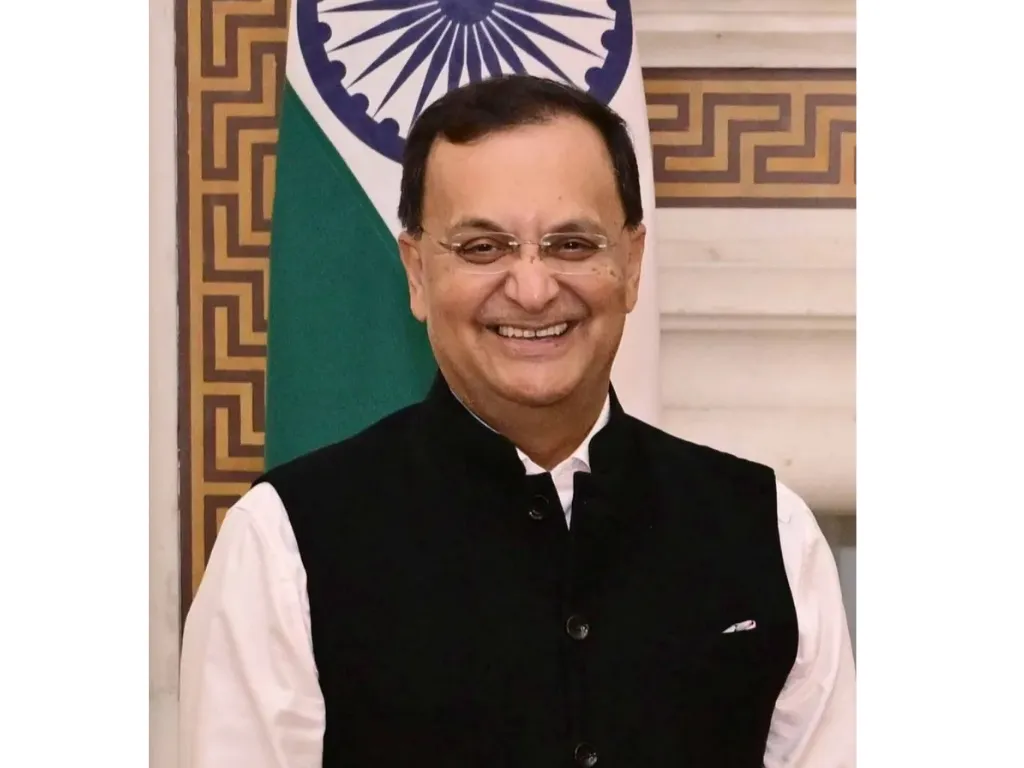
In conversation with C. Murugan, Deputy Chairperson, Tea Board India
Indian tea has never been short of variety. Now, as the industry changes, the question is whether India can turn that diversity into lasting global value.
India’s tea story is one of heritage, diversity, and constant evolution. From thoughtful branding around the distinctive teas of Assam and Darjeeling to the growing importance of small tea growers, the sector is adapting to changing markets, consumer preferences, and global trade requirements.
In this conversation, Shri C. Murugan, Deputy Chairperson, Tea Board India, discusses the opportunities and challenges shaping the future of Indian tea. He talks about improving the quality and consistency of Indian tea, meeting the food-safety and technical requirements of international markets, and expanding India’s presence in both established and emerging markets. He stresses the importance of supporting small tea growers, strengthening the identity of Indian tea, and using technology and research to make the sector more productive and climate resilient. He also discusses how branded and value-added teas, along with e-commerce, can help Indian tea producers reach new consumers and capture greater value.
How has India’s tea industry evolved, and what makes Indian tea distinctive globally?
India’s tea story combines a long cultivation tradition and heritage with remarkable diversity. We produce teas for everyday consumption as well as distinctive origin teas sought by discerning buyers. Assam, Darjeeling, Nilgiri, Dooars–Terai, Kangra, and Sikkim are just some of the regions known for their distinctive teas. The tea-growing regions of the North-East also offer different growing conditions, flavours, and traditions.
The industry has changed considerably over time. Small tea growers now play an important role alongside established estates, while consumers are showing greater interest in origin, quality, and new ways of enjoying tea. Our strength lies in being a one-stop shop for many varieties and types of tea. India can serve large markets reliably while offering teas with a strong sense of origin and identity.
Which international markets offer the greatest opportunities, and how can India build a stronger global tea brand?
We look at opportunities market by market, rather than seek one approach for every country. In established markets, there is scope to deepen our presence through quality, distinctive origins, and value-added products. In emerging markets, we need to understand local tastes, distribution channels, and price points and strategise the means to make entry into those markets through a multi-pronged approach.
A stronger global brand begins with a clear promise: Indian tea offers diversity, authenticity, and dependable quality. Tea Board’s role is to bring the industry, exporters, and other stakeholders, including Indian Missions abroad, together for market research, buyer engagement, tasting programmes, and focused Indian tea promotions. The umbrella identity of India Tea can create recognition, while individual origins and companies tell their own stories within it.
Export competitiveness depends on much more than production volume. Buyers expect consistent quality, compliance with their food-safety requirements, reliable delivery, and products suited to their consumers. Differences in compliance requirements across markets can be particularly demanding for producers and exporters. Freight costs, changing trade conditions, and strong competition also affect our position.
The response must be coordinated. We need to strengthen compliance from cultivation through processing, improve market intelligence, address access barriers through the appropriate channels and help exporters build lasting buyer relationships. Increasing export value is as important as increasing volume.
How can Indian tea improve its quality, consistency and international positioning?
Quality begins in the field. Good planting material, GAP, GMP, sound cultivation practices, careful leaf handling and effective processing all influence the final cup. Testing and adherence to the requirements and compliance of each destination market are equally important.
We must also present our teas more effectively. Buyers should be able to understand what distinguishes a tea, where it comes from and how to use it. Consistency builds trust; origin identity and thoughtful branding help earn a better value for that quality. These efforts have to reach growers, factories, packers, exporters, and other stakeholders alike.
How should the industry respond to changing trade policies, tariffs and supply chains?
The tea trade is becoming more complex, so adaptability is essential. We must monitor tariffs and trade agreements, but also pay close attention to food-safety rules, labelling, logistics, and changing consumer preferences. Improved tariff access has limited value if exporters cannot meet the destination market’s technical requirements.
India should diversify its markets and products, maintain dependable supply relationships, and use trade negotiations to address practical market-access concerns.
How important are branded, packaged and value-added teas to India’s export future?
They are an important opportunity. Bulk tea will continue to serve substantial demand, and it remains a valuable part of our export basket. At the same time, packaged and branded products allow Indian businesses to build a direct connection with consumers and retain more of the value created by their tea.
The opportunity extends across speciality teas, convenient formats and products tailored to local preferences. Success requires investment in product development, packaging, distribution, and sustained promotion.
What would most improve the livelihoods and market access of small tea growers?
Small growers need practical support that improves both the quality of their leaf and the returns they receive. Access to training, suitable planting material, soil and plant-health advice, and timely information can make a real difference. Collective arrangements can help growers share facilities, improve their bargaining position, and reach buyers more effectively.
It is equally important that growers understand market requirements, particularly those concerning quality and compliance. The objective should be to connect better cultivation practices with better commercial outcomes, so that improvements in the tea sector benefit growers at the farm level.
The Tea Board has introduced the Tea Mark logo and e-commerce platform http://teamarketplace.in with a special emphasis on helping small tea growers reach a wider audience.
How can tea cultivation become more climate resilient and environmentally sustainable?
Tea is closely tied to its growing environment. Changes in rainfall, temperature, and the frequency of extreme weather create risks for productivity, quality, and livelihoods. The response has to be suited to each region rather than treated as a single measure.
Research, improved planting material, soil and water management, appropriate shade, and responsible use of agricultural inputs are all part of the solution. We also need to make practical advice accessible to small growers and support its adoption. Environmental sustainability will be durable when it goes hand in hand with economic viability for growers and estates.
Our own DTR&DC, as well as TRA and UPASI, are continuously engaged in R&D for better and climate-resilient cultivars.
What role can technology and research play in the sector?
Technology is most useful when it solves a clear problem for the people working in tea. Better weather and crop advice can help growers make timely decisions. Improved testing and processing can support quality and compliance. Digital tools can make market information more accessible and help businesses reach buyers.
Research must remain closely connected to field conditions. When researchers, growers, factories, and exporters work together, useful findings can move more quickly into practice. Our aim should be to make the sector more productive, responsive, and resilient while preserving the craftsmanship that gives many Indian teas their character.
How can the industry balance growth with worker welfare and social development?
The people who cultivate, pluck, process, and bring tea to market are central to its future. A competitive industry must be able to sustain livelihoods and invest in the communities on which it depends. Worker welfare, skills, health, education, and opportunities for women all deserve sustained attention.
This requires engagement among industry, workers, governments, and other stakeholders. The present scenario reinforces the need to improve productivity and value realisation so that the sector can support both enterprise viability and social progress.
How can the next generation be encouraged to build careers in tea?
Young people should see tea as a sector with room for enterprise, science, and creativity. Careers now extend beyond cultivation and traditional trading to food technology, sustainable agriculture, design, digital commerce, hospitality, research, and international marketing.
We can encourage their participation through training, exposure to modern businesses, and stronger links between research institutions and the industry. Young entrepreneurs also bring fresh ideas about how tea is presented and consumed. Their involvement can help us respect the sector’s heritage while reaching new audiences.
Courses on tea tasting and tea sommelier training have been introduced, and they have received an overwhelming response.
What priorities should shape Indian tea over the next decade?
I would place these as priorities: consistent quality and market compliance; stronger origin recognition and a broader international market presence.
These priorities reinforce one another. We cannot build a premium reputation without quality, or sustain quality without a healthy production base. Tea Board will need to work closely with industry, research institutions, State Governments, the Central Government, Indian Missions abroad, and other stakeholders. Progress should be judged by the value created across the sector, not solely by the quantity of tea produced or exported.
How does Tea Board plan to use e-commerce to bring Indian tea closer to consumers?
E-commerce gives tea producers, particularly smaller brands, a way to reach consumers beyond their immediate markets. It also gives consumers an opportunity to discover teas by origin, type and producer, and to make more informed choices.
Tea Board’s approach is to support the visibility of authentic Indian teas (with Tea Mark) online and help producers become ready for digital trade. This includes attention to product information, packaging, quality assurance, and the skills needed to sell effectively online. Our Tea Marketplace initiative (http://teamarketplace.in) is intended to provide a platform for Tea Mark certified teas. Alongside domestic sales, we see scope to help exporters use digital channels to connect with overseas buyers, subject to the requirements of each market.
What message would you leave with readers about the future of Indian tea?
I would invite readers to discover the full range of Indian tea. Behind each cup is a growing region, a community and considerable skill. Our future lies in bringing that richness to consumers around the world while meeting their expectations for quality and trust. Indian tea has a proud history and heritage, but its story is still being written. With innovation, responsible production and a stronger connection between growers and consumers, I am confident that it can reach a wider world and create greater value for the people who make it possible.