Last week, as Iran began elaborate preparations for the long funeral of its slain leader, Ayatollah Ali Khamenei, and sections of the Indian commentariat argued about the level of Delhi’s delegation and the size of its empathy for Khamenei, I posted on X: “Ali Khamenei was Iran’s Supreme Leader. Not ours.”
The replies were fast and furious; some might not have been allowed into polite company. But X is hardly polite company. Since I would not accept Khamenei as my supreme leader, some “X-perts” told me who I really was. My father, I was told, is Netanyahu, with some even suggesting it was Trump. The Pope made occasional appearances too. Israel was declared my fatherland so many times, and with such conviction and force, that I briefly wondered whether I should try applying for citizenship and settle the matter. But I also knew that such an application would have been unsuccessful, given the number of times I have spoken of Netanyahu’s war crimes. But that, of course, is too much research for X-pert warriors.
It would be easy to shrug it off as social media being social media, and move on, as I usually do, and laugh about it in friendlier company. But this time I will try something different, perhaps befitting my original calling in life: being a teacher. I teach a course on the epistemology of seeing the other—how we come to know, fail to know, and imagine we know people and nations across lines of conflict. For a day, the reactions to my tweet looked straight out of my syllabus. Beneath the abuse and its reasons, the replies can be categorised into a handful of recurring arguments. Each, examined honestly, tells us something about how our country—a democracy of a billion relentless arguers—forms its judgments about the world. And perhaps more revealingly, about itself.
This essay is the long answer that would not fit in an X post, and I write it with a sense of measured empathy for the people who were angry with me, because their anger, in most cases, comes from genuine concerns. The problem begins when such anger takes the form of preconceived partisan judgment, deciding for us whom we are permitted to mourn, what to forget, and which cruelties deserve outrage and which can be quietly overlooked.
That impulse, and the larger question of how a democracy can argue without becoming abusively judgmental, is the subject of this essay. Outrage is easy, but outrage with wise judgment needs way more work.
‘X-Perts’ and Their Responses
The replies to my post broadly fell into five categories.
The first was the analogy basket. Gandhi was never our Prime Minister, one reply pointed out, and yet a hundred countries have his statue; Britain, the empire he fought and defeated, displays him at Parliament Square. Another offered Jesus as a comparison. A third asked whether the Pope leads only the Catholics of Italy (a subtle jab at my Catholic roots). This argument essentially compares Gandhi or others who command respect beyond national borders to Khamenei.
The trouble begins when we grieve where we should calculate, and calculate where we should grieve
The problem with this analogy is that it seeks to bury Khamenei and his regime’s inglorious record, and that omission is where the analogy loses its force. Gandhi is honoured by the descendants of the empire he resisted because of how he resisted. His methods left even his adversaries to reflect on their moral choices. The analogy, therefore, asks one man’s widely acknowledged moral stature to stand in for another man with a deeply contested political legacy. One need not regard Gandhi as a Mahatma (not everyone does) to recognise that, but the comparison simply pales on historical record.
The second was Khamenei’s constituency argument. He was not just Iran’s leader, several replies said; he was a Marja, a source of religious emulation and veneration, for Shia Muslims in India and across the world. For them, the “not ours” part of my X post is simply unsustainable.
This argument is serious, and partially right. Transnational religious authority is a real institution, predates the nation-state and does not answer to it. A believer in Lucknow who followed Khamenei’s religious guidance and grieves him is doing something a republic neither has nor should have any control over. My post was never aimed at that person, and if it read that way, the fault is mine.
Two clarifications, however, are necessary. First, my post referred to a “supreme leader,” not “spiritual leader”; the former has a territorially bounded meaning. Second, the believer’s grief is not the same as the commentariat’s demands. One is private mourning. The other demands the Indian Republic’s protocol to express a moral verdict in favour of Khamenei. The first needs no defence, as your religion is your private business. The second is what this essay examines.
The third was the loyalty test. These replies did not contest my claim. They assigned me to a camp, and once assigned, no engagement was necessary because I became what they needed me to be. This act has a mirror image, because the counter-outrage camp showed up in the same thread doing the same thing in the other direction: why was a Kashmiri politician crying at the funeral, whose supreme leader was he really, and so on.
What struck me the most was that neither camp was discussing Iran. A slain Iranian leader was being used, by both sides, as ammunition in a live Indian online battle. Moral psychologists call it judgment as tribal signalling, where the content of a claim matters less than what endorsing or rejecting it says about your membership of the tribe.
The fourth was the martyr argument. Khamenei, they maintained, never compromised with the Zionists, built a strong nation under sanctions, and willingly faced death for his country. As a freedom fighter, he led the resistance against imperialism, and anyone who opposes the hegemon must necessarily stand with him.
The claims arrive with a halo, which does the reasoning before the facts are established. Hagiography has little need for accountability or reasoning. That, I guess, is the whole point of hagiography.
The fifth was the ‘whatabout’ argument. The Israeli Knesset is not our legislature, a reply noted, yet the Prime Minister addressed it and accepted its honours days before the war began. If effusion toward foreign leaders is the sin, Delhi has sinned in more than one direction.
I concede the force of this argument and will return to it, because the honest answer to it requires the framework this essay is building. For now, I will leave only with this thought: a head of government engaging a powerful state in pursuit of national interests is one thing, and the citizens demanding that engagement as a moral endorsement is another. The confusion between the two is the mirror image of the same confusion that produced the mourning I am challenging. In the language of international relations scholarship, this is a levels-of-analysis issue, one which we will return to.
The Funeral and the Invitation List
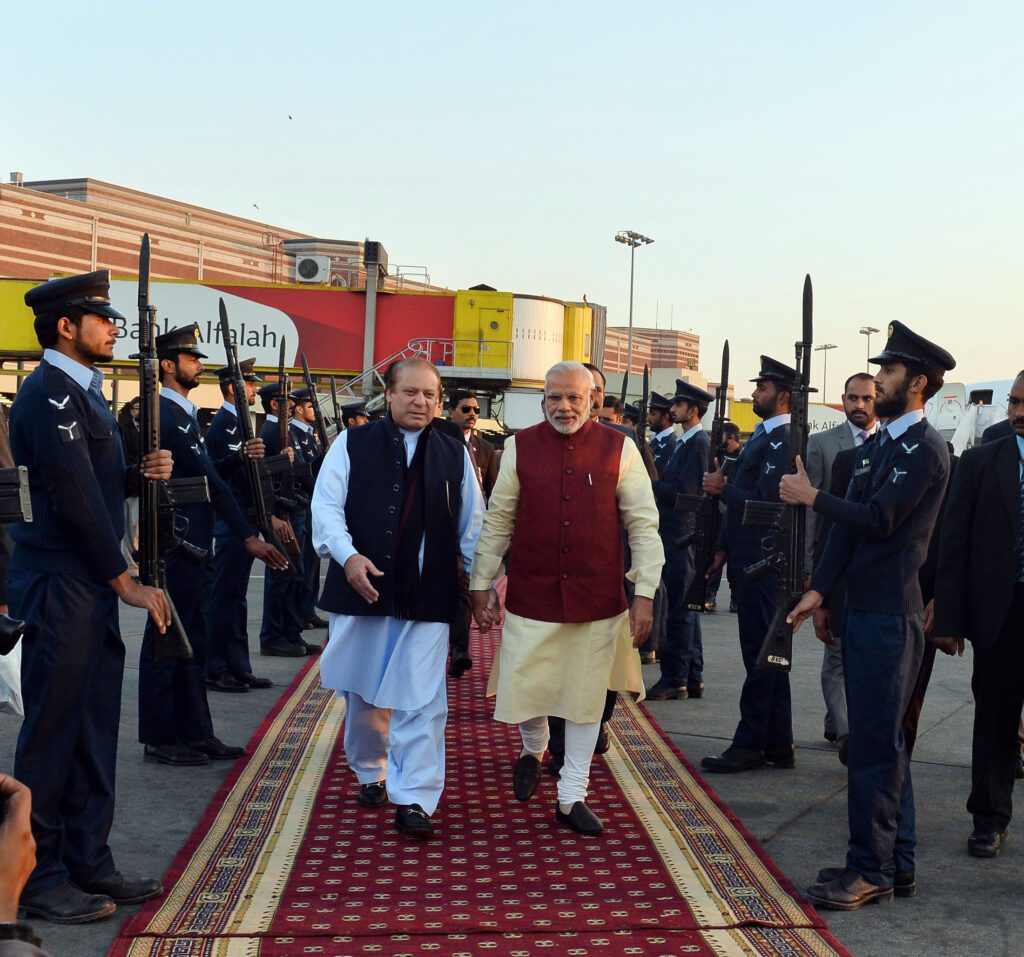
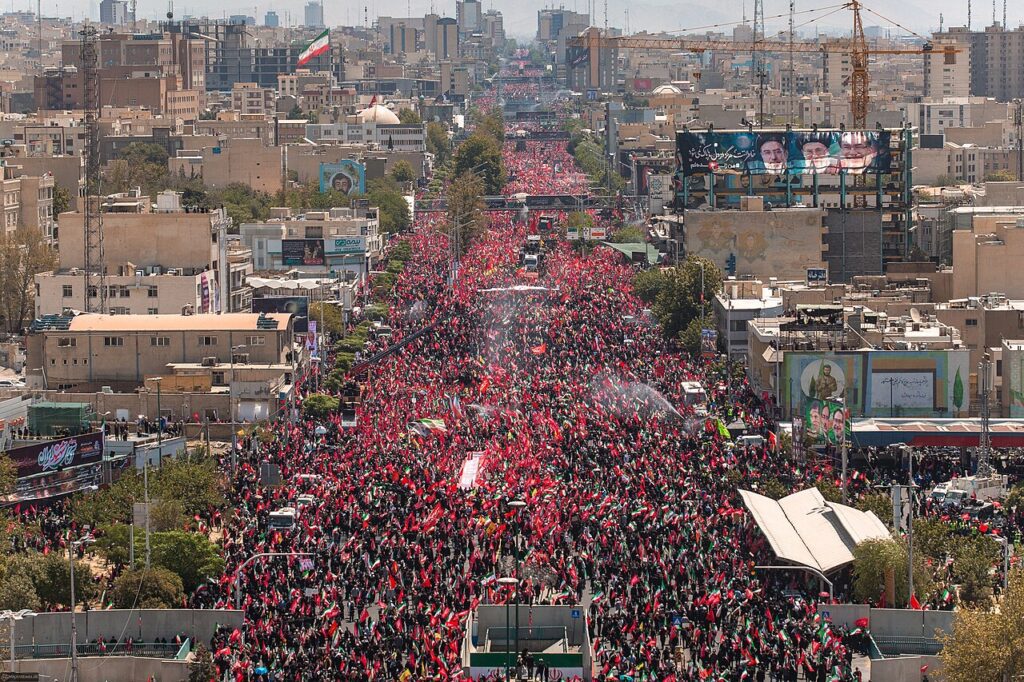
Look closely at how Tehran choreographed this whole week. The funeral runs across Tehran, Qom, and Mashhad, with delegations from nearly a hundred countries. Pakistan sent its Prime Minister with a senior-level civil-military contingent. India is represented by the Minister of State for External Affairs and the Governor of Bihar, a retired Shia general with long Kashmir experience, a detail the Iranians will not have missed. The Prime Minister was invited but chose not to attend.
A moral sentiment that gives out a price tag is not a principle; it is a preference masquerading as a principle
The invitations extended beyond the Government of India. Tehran invited the presidents of the Indian National Congress and Bharatiya Janata Party, a former external affairs minister, a Congress spokesperson, and a former Kashmir chief minister. A state emerging from a painful war, with new leaders, took the time to sort Indian politics by party and region, and crafted its invitations accordingly.
I do not say this as criticism of Iran. States recovering from war use what political instrument is available to them, with funerals being hugely symbolic. Tehran is converting martyrdom into geopolitical standing and a military defeat into a diplomatic harvest. At home, the grief consolidated a shaken regime now passed to the late leader’s son. Abroad, the presence of nearly a hundred foreign delegations projected the recognition the war had tried to strip away.
A hundred international delegations! This is brilliant statecraft, something Iranians are famous for, and it is working nowhere better than in India, where the invitation list and the delegation question set off precisely the quarrel it was designed to set off. Every prime-time debate about betrayal of a friend is a return on Tehran’s political investment in India. The replies under my tweet and the mourning in our editorial pages belong to one smart strategy: the meticulous political planning in Tehran.
That is the context. Now, let me take the critics’ case at its strongest, and offer my response.
The Outrage Due
On February 28, Khamenei was assassinated by US forces on Iranian territory in precision strikes that began an illegal war that killed thousands. Whatever one thinks of Khamenei, the targeted killing of a sitting head of state by external military action challenges the most basic norm of the international system. The UN Secretary-General said that US and Israeli airstrikes violated international law, including the UN Charter. Many Indians felt instinctively uneasy that day. I did too. The illegal attacks set a dangerous precedent.
India’s relationship with Iran is not a trivial one. Bilateral ties are rooted in a shared civilisational depth that predates both republics, one secular and the other Islamic. Persian served as a language of Indian courts far longer than English has been. Chabahar, connectivity through the International North–South Transport Corridor (INSTC), the energy relationship, and coordination against the Taliban (the ones we didn’t want to engage) in the 1990s: this makes a robust partnership.
Selective outrage is worse than silence, because it masquerades as principle, thereby setting bad examples
Then, there are optics that sting no matter how you spin it. Days before the US–Israel attack on Iran, the Indian Prime Minister had addressed the Knesset. And now, at Khamenei’s funeral, Pakistan’s Prime Minister stood in the front row in Tehran while the Indian Minister of State stood somewhere behind at a distance. For a country that takes pride in strategic autonomy and civilisational ties, there is no doubt that the location and size of its delegation reflect the changing nature of the relationship between the two.
All of this is true, and I readily concede it. The critics of the government are not imagining these facts. The question is what else are they saying, or not willing to say. Let’s dig deeper.
What Grief Ignores
Here is what has largely gone missing from the Indian debate since the funeral dates were announced.
Khamenei, being mourned as a martyr, presided for more than three and a half decades over an authoritarian regime. There is no other way to put it. When Iranian women removed their headscarves after Mahsa Amini died in the custody of the morality police in 2022, his regime answered with bullets, not spiritual guidance. Human rights organisations documented hundreds of protesters killed, with commonly cited figures running above five hundred. Protesters were hanged either in public or on hidden gallows. The internet was switched off so the crackdown could proceed without witnesses. None of these are spiritual acts; this is what strongmen and the regimes they preside over do as instruments of political control to stay in power. Period.
These events were not ancient history by the time of his death. Reports indicate that another popular uprising in the winter of 2025–2026, only weeks before the war, was put down with massive force and mass casualties. Therefore, the forgetting required by today’s mourning is not the forgetting of a distant past. It is a forgetting of the previous news cycle.
And that is convenience. Some readers might reject this account as American propaganda. If that is your position, you can stop reading this essay right here. Nothing you will read below will convince you.
Beyond Iran’s borders, Khamenei’s regime also built and financed the proxy architecture that helped set the region alight (no, I am not forgetting or ignoring what Israel did), from Hezbollah to the militias of Iraq and Syria to the Houthis in Yemen who closed the Red Sea shipping lanes. Indians, who rightly condemn the Pakistan Army’s proxy infrastructure aimed at us, should have no conceptual confusion or moral difficulty recognising the same instrument used elsewhere. And doing so will not exonerate Washington’s excesses in the Middle East.
Yet, none of this appears in the eulogies. What comes up again and again instead is a single argument, repeated as if it were an absolution for everything else: he stood up to the hegemon, and the hegemon killed him. Anti-imperialism has become a solvent that dissolves everything else a regime has done, including what it did to its own people. Has our (rightful) dislike for imperialism made us excuse Iran’s actions within the country or outside? If so, that is selective outrage, and selective outrage is worse than silence, because it masquerades as principle, thereby setting bad examples.
Anti-imperialism has become a solvent that dissolves everything else a regime has done, including what it did to its own people
The same criticism applies to the other camp. Many of those now registering/cataloguing Khamenei’s crimes with sudden fluency were silent, or even jubilant, while the bombs fell on Tehran, and have never found comparable moral urgency for the victims of wars waged by states they admire. Their outrage at the mourners is as selective as the mourning.
In that sense, the two camps deserve each other, and our public discourse deserves better than selective morality.
I, for one, don’t find it hard at all to internalise the argument that we can condemn the empire without canonising its victim.
The Control Case
If you now demand of me proof that principle is not what drives our outrage, I will give you two.
On January 3, the United States launched a covert military operation in Caracas, captured a sitting head of state, Nicolás Maduro, and flew him in handcuffs to New York to stand trial. Legal scholars widely judged the operation a violation of the UN Charter. It was, by any definition the mourners of Khamenei in India would accept, an imperial abduction of a leader of the global South. [And yes, Maduro too was accused of gross rights violations.]
What was the nature of our outrage?
A few legalistic editorials, some “wow, the way the American military did it!” murmurs, and then, radio silence. Five months since Maduro’s illegal abduction, Venezuela’s acting president visited India, met Prime Minister Modi, travelled to several parts of the country, and ended her trip at the Prasanthi Nilayam ashram, posting warmly about Sri Sathya Sai Baba’s teaching. She was received cordially. Venezuela has since become one of India’s largest crude suppliers, approximately the third largest by recent monthly figures, and all this with Washington’s open encouragement. While we loved the fact that she went to an ashram, we have ignored her silence about the illegal abduction of her president. Whatever she knew before the operation that removed her predecessor, and it appears she knew a lot, the accommodation that followed is on the record.
So consider this. Two sitting leaders removed by the same hegemonic overreach within eight weeks. One produces a national quarrel in India about the moral meaning of a delegation, the size of representation and the nature of condemnation. The other produces oil deals and a spiritual visit. In the latter, we clapped; no mourning about international law.
If national sovereignty were the unwavering principle, Caracas and Tehran should generate the same moral response. If we believed America’s action against a country unwilling to toe Washington’s line was illegal, consistency demanded that we say so loudly, and that we take no share of the spoils of Maduro’s illegal capture. And by “we” I mean both the government and the public at large.
The forgetting required by today’s mourning is not the forgetting of a distant past. It is a forgetting of the previous news cycle
Both were dictators, and both were hardly examples of gentleness towards their respective people. But they were treated very differently by our public discourse, and the reasons are not mysterious. Khamenei has constituencies in Indian domestic politics; Maduro does not. Khamenei died and became an icon; Maduro sits in a Brooklyn jail, humbled and humiliated. Martyrs inspire symbolism, prisoners rarely do, unless, of course, you are Nelson Mandela fighting apartheid at the height of the Cold War. Perhaps more importantly, Venezuelan oil is cheap, plentiful, and already here, so outrage there would carry a price. Whereas the outrage over Tehran costs nothing at all. We can pretend that our outrage is about a hegemon violating the principle of sovereignty, but are we? Really? It’s domestic politics, not the rarified realms of international law, that is firing us up.
Our outrage is loudest exactly where it is cheapest. A moral sentiment that gives out a price tag is not a principle; it is a preference masquerading as a principle.
The Taliban Question
A fair-minded critic will now ask if my own moral position has been consistent.
For years, I have argued that India should engage the Taliban regime in Kabul, an oppressive theocracy by any measure with a bloody past and present. So why the double standard when Iranians mourn their oppressive theocrat (by any reasonable definition)? In other words, if I can argue for close engagement of the Taliban, what exactly is my objection to closely engaging the regime in Tehran?
My answer, as an Indian of course, is that diplomatic engagement and honour are different things, and this difference is the hinge of my entire argument in this essay.
Engaging a regime is a state-level act governed by interests: you deal with whoever holds power, because power is a political fact, and pretending otherwise costs your citizens security, or even economic benefits. So engage the Taliban, the Ayatollahs, the Kims, or whoever that you must. In fact, you must. But nothing about that argument ever required anyone to praise a Taliban leader, mourn the death of one, or demand that India’s diplomatic protocol express deep admiration for one. I haven’t seen any unrest in South Delhi about the nature and seniority of the Indian official delegation to meet the Taliban. Deal with the regime, and deplore the regime. Do both, simultaneously—and trust me, it is not impossible. I have never found this difficult, morally or intellectually. You might ask, “What if they do that to us for our faults?” Don’t they already do that?
Now apply the distinction to the funeral in Tehran. India did engage. New Delhi received the invitation with courtesy, and its foreign ministry reaffirmed long-standing ties and sent a delegation. But the demand of the critics was never for engagement. The demand was for honour, for the Indian Prime Minister seated in the front row honouring the Ayatollah, for the Indian state to perform a positive moral verdict on the leader. And that is a demand of a different kind. The charge of double standards, examined carefully, points back at those who make it: they accept interest-based engagement with Kabul’s rulers and demand values-based honour for Tehran’s rulers, and the only consistent thread between those two positions is the (domestic) political view of the person holding them.
A hundred international delegations! This is brilliant statecraft, something Iranians are famous for
Let me flip the argument further: why is it that those Indians who vehemently resisted the Indian state’s outreach to the Taliban are now demanding that the same government must send the highest functionary to Tehran? What exactly is the difference? These are two theocracies, two regimes who have oppressed their own people (sure, in varying degrees), both came to power by toppling the existing governments. And, if it helps, both have stood up to the hegemon—the Taliban as fiercely as the Iranian regime. Both claim to be Islamic republics, and their leaders are spiritual. You might say one has sponsored terror and the other hasn’t—are you absolutely sure?
Some would invoke a civilisational connection. Sure, there is a long-standing civilisational connection with Iran, as is the case with Afghanistan, Pakistan, and China. So what? By the way, we have more civilisational connections with Pakistan than Iran.
One might say, forget all that, it’s about interests—that Iran helps us with more of our interests than the Taliban. Now we are talking. But hold that thought—I want us to get to interests in a slightly roundabout manner.
There was an argument that PM Modi went to Israel just days before the war, but in Iran’s case, we are not sending our PM to attend the funeral. Let’s unpack that argument. I have no doubt in my mind that the Israeli PM has committed war crimes, as have the US president and the late Iranian supreme leader. Is it then the argument that if we are friendly with one regime that engages in war crimes, we must also engage another regime that brutalises its own people? Or is it that if you make a wrong policy once, you must always make the wrong policy? Or is it that we have more interests vis-à-vis Iran than the US and Israel combined? This is where interests become important.
In international relations, a government makes its moral choices to suit its interests, and not the other way round. You can choose your interests to suit your moral choices, but that is normally a mistake. But let’s discuss that a bit more.
Let me give you a half-case to illustrate a slightly different point: Why we readily condemn certain leaders accused of mass violence and not others. Sheikh Hasina was accused of ordering police action that killed hundreds of Bangladeshis before she flad to India. Our civil society condemned the police action and the killings, and rightly so. Yet many of the same voices have gone quiet on the Iranian Supreme Leader, whose regime shot protesters in the streets and hanged them in prisons. Why? Does a spiritual leader have an immunity that a prime minister’s office does not?
Three Levels of Judgment
Almost every bad argument in this controversy comes from answering one question in the guise of another—posing the question at one level and seeking answers from another level. The questions are not wrong—they are posed in the wrong place. So let me separate the three levels of analysis that have been fused together or flip-flopped as per convenience.
The first level is human. The killing of innocent civilians is wrong when America and Israel do it in Iran or elsewhere. The killing of protesters is equally wrong when the Islamic Republic does it in Tehran and Zahedan. The assassination of a head of state is a dangerous precedent. The killing of a young woman in custody for what she wore, and the public hanging of young protesters in Qom, are abominations. These condemnations do not compete. Moral clarity is not finite. Condemning Washington does not require excusing Tehran. A morally serious observer should condemn all of it, or at least not attempt to condemn one and justify the other. That so many of us find this simple necessity of moral simultaneity impossible tells us how thoroughly domestic politics or other factors have monopolised our consciences.
The second level is a country’s national interest. Iran is India’s friend. But it is a friendship of interests, built on Chabahar, connectivity, energy, and a shared discomfort with Pakistan’s regional adventures. It was never a friendship of moral choices or spiritual union, even if Khamenei had a significant spiritual following in India. Even the civilisational argument is a throat-clearing conversation opener. The same leader now being mourned in Delhi’s drawing rooms repeatedly raised Kashmir in his public statements over the years, placing it alongside Palestine in his claims of Muslim suffering, including after August 2019. Iran votes its interests and its theology. This is foreign policy. We should be willing to see it. What is not alright is when we are unwilling to see it.
Outrage is easy, but outrage with wise judgment needs way more work
On national interest, the harder question is: if India faced a major crisis tomorrow, such as another conflict with Pakistan, say, who shows up with real, material help? During the last two crises, Iran lectured both sides and Israel showed up with material help. States show up when interests align, and interests do change. That is exactly the point here. The honest answer is that the capabilities India would need in a crisis, the technology, the intelligence, the interoperability, substantially come from the US and Israel, irrespective of what we feel about either capitals. Tehran, for all its civilisational warmth and Chabahar talk, would likely not be at the door at all. It lacks the capacity, and on Kashmir it has never had the inclination. And in an India vs. Pakistan situation, I am even less hopeful. No level of Indian delegation going to Tehran would change that. And certainly not the mourning in Delhi for the Ayatollah. India needs a partnership with Iran, and should invest in one. The question worth asking is what each partnership can actually deliver when it matters.
Let me pose another question. There is a great deal of comparison between the US and Iran these days, between the hegemon and the Global South underdog that pushed back the hegemon. That makes a great Bollywood script. But would any of those critics actually choose to live in Iran than in the United States if they were to hypothetically make a choice? You might push back, saying we aren’t discussing residence choices but the issue of right and wrong. Yes, you are right, but an answer to my question will tell us the larger domestic context of these two countries which those comparing the two countries seem to be casting aside, conveniently.
Against that context, New Delhi’s decision to send a Minister of State and a soldier-governor who knows Kashmir may be exactly what a friendship of interests is worth. It is possible to argue the delegation should have been one rung higher; that is a conversation about diplomatic calibration, which should happen strictly in the world of interests, not of sentiments or convergence of values. It stops being reasonable when it becomes a referendum on anti-imperialist virtue, because at that point the arguer has wandered into the wrong level.
The third level is the international system, where clarity is hardest. The order most of us grew up analysing is eroding thanks to the United States, the state that built the order. Not just that, the guardian of the dying order has indeed gone rogue. Within a single year, Washington abducted one head of state and killed another. The international order is unequal and undemocratic, where power and interests rule the roost. The US is at the top of that system.
But the system’s injustice or the rogue-ness of the hegemon does not confer moral innocence to those who become its victims. Because Khamenei can be a victim of an unjust structure and a rogue superpower, and himself a creator of grave injustice at the same time, any serious analyst must be able to hold these thoughts without intellectual confusion or moral slippage.
Tehran is converting martyrdom into geopolitical standing and a military defeat into a diplomatic harvest
If states run on interests and not morals, on what basis do I condemn the assassination at all? Because norms are also interests, the deepest kind of them. For a country of India’s position—a rising middle power without a big military—a rule against killing sovereigns is not sentiment; it is a structural condition that serves its interests.
The state, too, has its own morality. But that morality is different from our individual morality, and must operate through order, over long horizons, which is why Reinhold Niebuhr warned a century ago that collectives cannot be judged, or run, by the ethics of human persons. A state’s ultimate moral job is to take care of the interests of its citizens.
Much of our online argumentation doesn’t get anywhere because it runs these three levels simultaneously. Grieve at the first level as a human being if you must, calculate at the second at the level of the state, and worry at the third. The trouble begins when we grieve where we should calculate, and calculate where we should grieve.
The Contradictions Of Outrage
For a moment, let us step back from the funeral and look at the larger moral dilemma here. Moral outrage, as our public sphere practises it, carries contradictions it cannot resolve, and naming them, by us here or elsewhere, is necessary for a healthier public discourse.
The first contradiction is that moral outrage claims universality but is necessarily selective. Because while our moral attention is ‘finite,’ the immorality out there in the world is not. Every act of moral outrage is, therefore, also an act of selection, and the selection is political even when the sentiment is sincere. The mourner of Khamenei who never mourned Maduro’s fate has not failed morally. They have revealed their selection principle, which was never sovereignty. Moral outrage, in other words, is contingent on a number of factors, only one of which is principle.
The second contradiction is that moral outrage presents itself as reasoning, while often functioning as mere tribal loyalty. The loyalty tests to my X responses were not attempts to persuade me; they were announcements of their membership, at my expense, to the tribe of the like-minded. Morality is tribal in nature. Such popular morality is also crowd-sourced, people tend to agree with whoever makes the loudest noise, go with the ‘moral trend’.
The third one is that morality is mediated by interests. What is more important for us is to ask whose interests. There is a certain interest of a certain group in the moral posturing on Iran; a different group would consider that it is in their interest not to overdo the Iran show. What is even more important to note is that the different levels of interests are in clash here: the Indian state’s balance of interests vis-à-vis Iran, USA and Israel tells it not to overplay the funeral attendance; the liberal and left political thought in India, as well the opposition, think it is in their interest to speak truth to power by blaming the government for going soft on the US and Israel. In that process of the mediation of morality by interests, every actor seeks to highlight the side of the argument it wants others to focus on. Morality is a spotlight; moral positions seek to highlight something, and we get to see what they highlight.
Our outrage is loudest exactly where it is cheapest
The fourth contradiction is that our outrage about the whole thing is consumed almost entirely at home. The funeral is in Tehran, but the argument is about Delhi, about who we are, who governs us, and who among us belongs. Our domestic debate has no global consequences whatsoever, and it is therefore a domestic spectacle aimed at each other. Not that it makes outrage less of an outrage, but we should know where it belongs.
The fifth contradiction is that outrage commits a double misapplication of levels. It demands that the state take into account individual moral feelings, sending prime ministers to perform grief as a moral verdict. And it also exhorts individual citizens to reason like states, absolving one man’s cruelties because of his position in a larger geopolitical struggle. The critics ask the government to feel and permit themselves to recommend the measure of that feeling. It should be exactly the other way around. But that is not how it usually works.
The other misapplication of levels happens between the individual level and the international level—more of a confusion, actually. The critics disapprove American imperialistic overreach, but not so much the American domestic space, and they urge the Indian state to view it likewise. Exactly opposite is true in the Iranian case—critics forgive the regime’s actions, but would not be content to personally embrace what the regime has done within the state.
Finally, there is always the lesser immorality in the company of bigger immorality, or more starkly put, we are ready to forgive, justify “lesser” forms of immorality to find common cause with it to fight the bigger form of immorality. It so appears that the best way to forgive someone is to bring in a bigger sinner. Morality then becomes not just relative, but also relational.
An Argumentative Democracy
Amartya Sen would like us to see the argumentative Indian as a civilisational trait. I have found the idea persuasive. The noise of our public sphere is not a defect to be shut away; it is how a billion people who disagree about everything manage to build a nation and share a state and keep that state accountable. I would not trade our quarrelsome funeral debate for the silence of Pakistan’s front row presence, where a Prime Minister files to Tehran because an army chief has decided he should. No, I won’t wish that upon us.
We can condemn the empire without canonising its victim
But an argumentative democracy makes a specific demand of its arguers, and the demand is the reasoning process that this essay has tried to describe: identify, for yourself and others, the level you are arguing at—individual, state or international for mixing them up is analytically useless. The analysis as well as the prescription.
I think much of the mourning in India this month is displaced grief for something deeper: for a hegemon’s restraint, for the idea that the weak must have some protection against the strong, and for a world with some rules in it. That grief is legitimate, and I readily partake in it. My only submission is that we must choose the object of our grief more carefully.
The believer in Lucknow or Kashmir who mourns her marja needs no one’s permission and owes no one a justification for her grief—you or me; her grief lives at a level where the state has no business. The columnist who demands the Prime Minister’s presence in Tehran is making a claim at a different level, and owes us the level and logic. We must condemn injustice at the human level without exception, and do so without the state’s filter. At the national level, however, calculate interests without the sentiment filter. Critique at the unjust system level without canonising the lesser crimes. That is why I am able to call out Netanyahu’s war crimes at the personal level, see the logic in Delhi’s close relations with Israel and won’t wash away Tehran’s sins at the altar of American excesses.
In an argumentative democracy, the debate must go on.