In a recent research paper titled Avoiding a New Nuclear Arms Race: How Policymakers and Experts Can Revitalize Arms Control for a New Era, published by Chatham House, Marion Messmer (programme director for International Security at Chatham House) examines the deterioration of the global arms control architecture and the growing risks posed by renewed nuclear competition. The paper argues that while traditional treaty-based arms control is under severe strain, a broader approach encompassing confidence-building measures, strategic stability dialogues, technical exchanges, and behavioural agreements can help reduce escalation risks and prevent a new multi-party nuclear arms race.
The study notes that the expiry of the New Strategic Arms Reduction Treaty (New START) in February 2026 has left the United States and Russia without agreed limits on strategic nuclear weapons for the first time in more than 50 years. At the same time, China is rapidly expanding and modernising its nuclear arsenal, which is estimated to have doubled between 2020 and 2025. Messmer argues that these developments, combined with rising geopolitical tensions and technological change, have weakened the foundations of strategic stability and increased the risk of miscalculation among nuclear-armed states.
The paper focuses on four key nuclear relationships: the US-Russia relationship, the US-China relationship, the N5 grouping of recognised nuclear-weapon states under the Nuclear Non-Proliferation Treaty (NPT), and India-Pakistan. According to Messmer, these relationships represent the most significant sources of potential nuclear escalation while also offering opportunities for risk-reduction measures and renewed diplomatic engagement.
On the US-Russia relationship, Messmer argues that the collapse of bilateral arms control agreements has created a period of heightened uncertainty. While a temporary moratorium on strategic nuclear deployments could provide a useful confidence-building measure, she emphasises the importance of preserving verification expertise, sustaining technical exchanges, and maintaining expert-level strategic dialogue. The paper contends that without continued engagement, decades of institutional knowledge and practical experience in arms control could gradually be lost.
The paper also examines the intensifying strategic competition between the US and China. It notes that China’s expanding arsenal, coupled with uncertainty surrounding its future nuclear posture, has intensified concerns in Washington. At the same time, Beijing remains reluctant to participate in formal arms control negotiations, citing the disparity between Chinese and American nuclear stockpiles. Messmer identifies several promising areas for engagement, including artificial intelligence in nuclear decision-making, space security, and missile-launch notification mechanisms. Such discussions, she argues, could improve mutual understanding and reduce the risk of future escalation.
A further focus of the paper is the N5 process involving China, France, Russia, the United Kingdom, and the United States. Messmer argues that preserving the credibility of the NPT should be the group’s foremost priority. The paper warns that if the five recognised nuclear-weapon states fail to agree even on a basic statement of support for the treaty, confidence in the broader non-proliferation regime could be undermined. Rather than pursuing ambitious disarmament agreements in the near term, the author suggests concentrating on risk-reduction measures, transparency initiatives, behavioural norms, and discussions on emerging technologies.
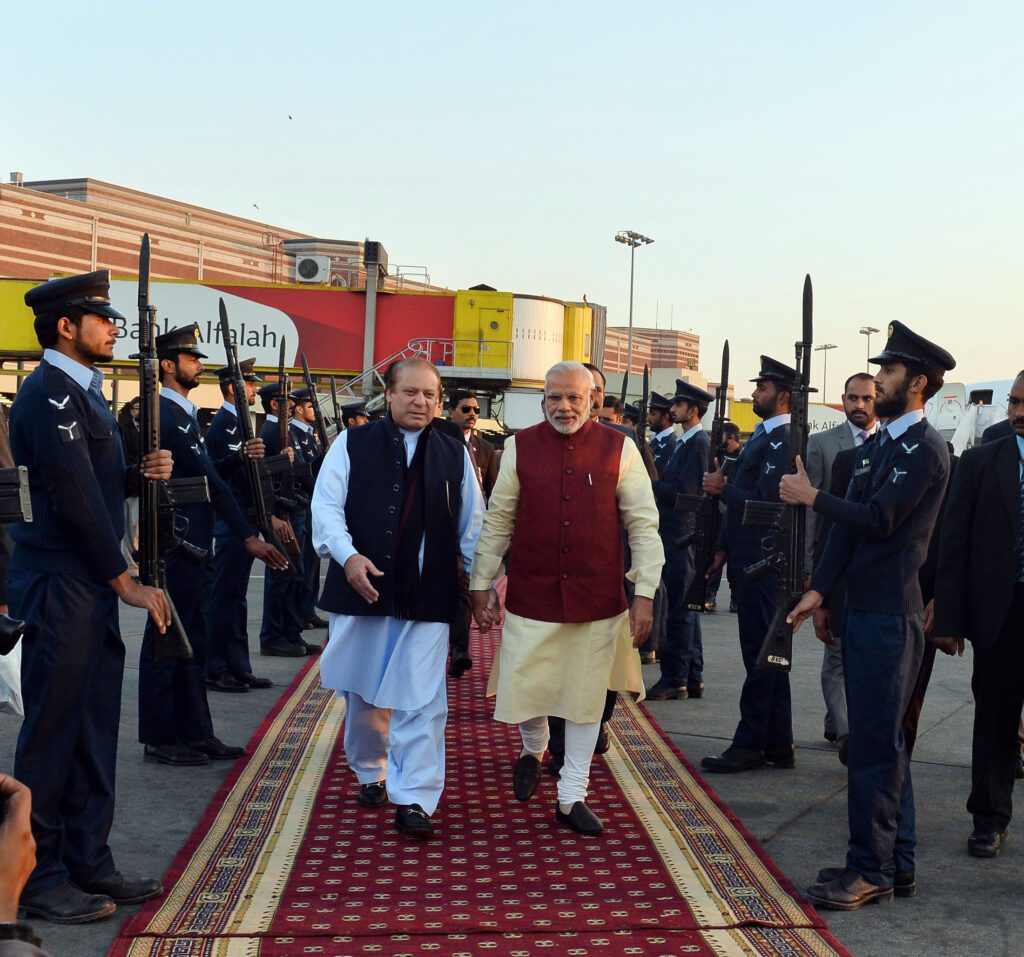
The paper also assesses the India-Pakistan nuclear relationship, highlighting the dangers posed by recurring crises and increasingly risky thresholds for military action. While several confidence-building measures already exist, including agreements on missile-test notifications, military exercises, and nuclear accidents, Messmer argues that limited trust and weak communication mechanisms continue to hamper meaningful progress. The paper therefore emphasises the importance of strengthening both official and unofficial channels of dialogue to improve crisis management and reduce escalation risks.
The paper concludes that future arms control efforts are unlikely to resemble the bilateral treaty frameworks that characterised the Cold War. Instead, Messmer argues that progress will depend on incremental and flexible arrangements that emphasise transparency, responsible behaviour, risk reduction, and cooperation on emerging technologies. The paper recommends strengthening the NPT, re-establishing strategic stability dialogues among nuclear-weapon states, expanding notification and confidence-building mechanisms, and investing in the next generation of arms control expertise. According to Messmer, such measures are essential to reducing nuclear dangers and preserving global strategic stability.