Amid a rapidly changing world order, India is a rising power navigating one of the world’s most challenging regional security environments. On one end, it shares contested borders with China, a neighbour that is objectively superior in military and economic strength. On the other end, it confronts Pakistan, a historical rival which, although conventionally weaker, does not shy away from using terrorism and nuclear sabre-rattling as a means of altering the strategic balance. And, to top it off, it finds these adversaries allied against its favour at a time when the world is witnessing the return of conventional warfare.
Despite its complex security landscape, India finds itself alone when it comes to safeguarding its national interests. For long, India has relied on Russia as a trusted partner, bound by deep, historic ties. However, Russia today is a declining power, and it is increasingly uncertain whether it would come to India’s support in any conflict with Pakistan, let alone with China. Similarly, given the fundamental disconnect in the US-India relationship that has festered over the past year, the resurgence of US-Pakistan ties, Washington’s reassessment of its existing security partnerships, and the ambiguity surrounding the US’ approach towards Beijing, India can no longer rely on America to effectively hedge against China. Finally, India’s preference for multi-alignment means it does not enjoy the full spectrum of benefits those allied with a much stronger partner do, even if it faces a far more challenging security environment.
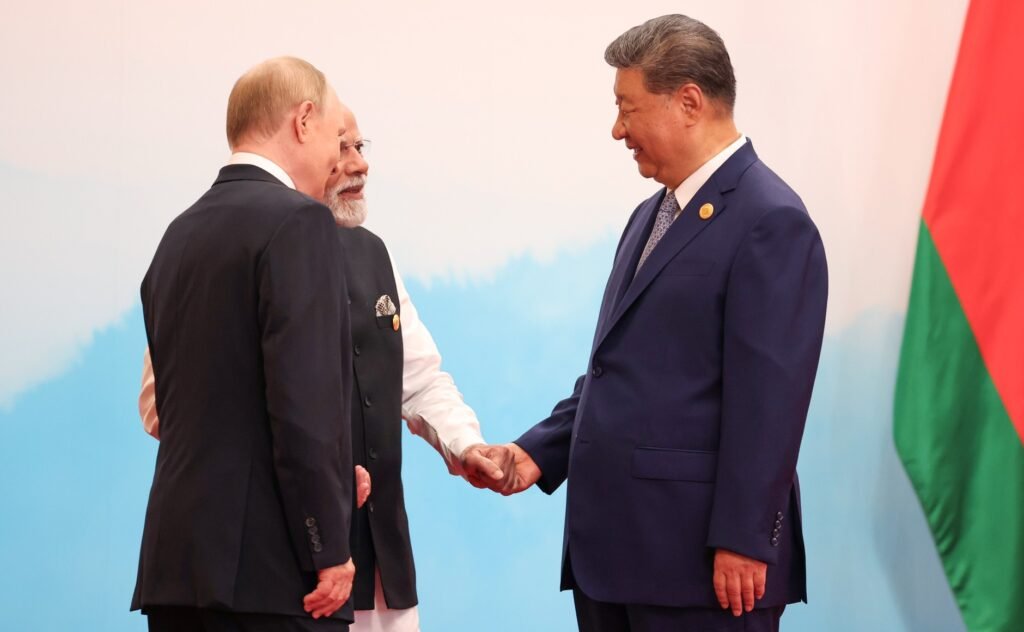
Therefore, as the world order shifts, India’s pursuit of strategic autonomy to advance its national interests must ultimately be rooted in internal capacity building—strengthening economic resilience and advancing rapid military modernisation. This recalibration is particularly important as recent friction in US-India ties may tempt India to double down on multi-alignment and move closer to Russia and China. Yet, it must resist this impulse, for it will not find a reliable partner in either Moscow or Beijing.
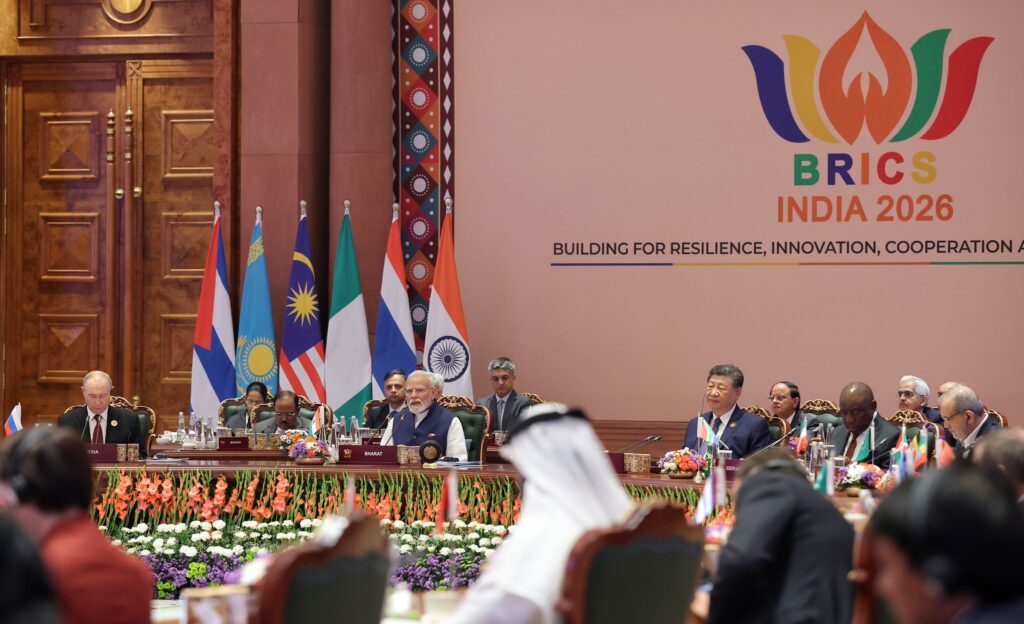
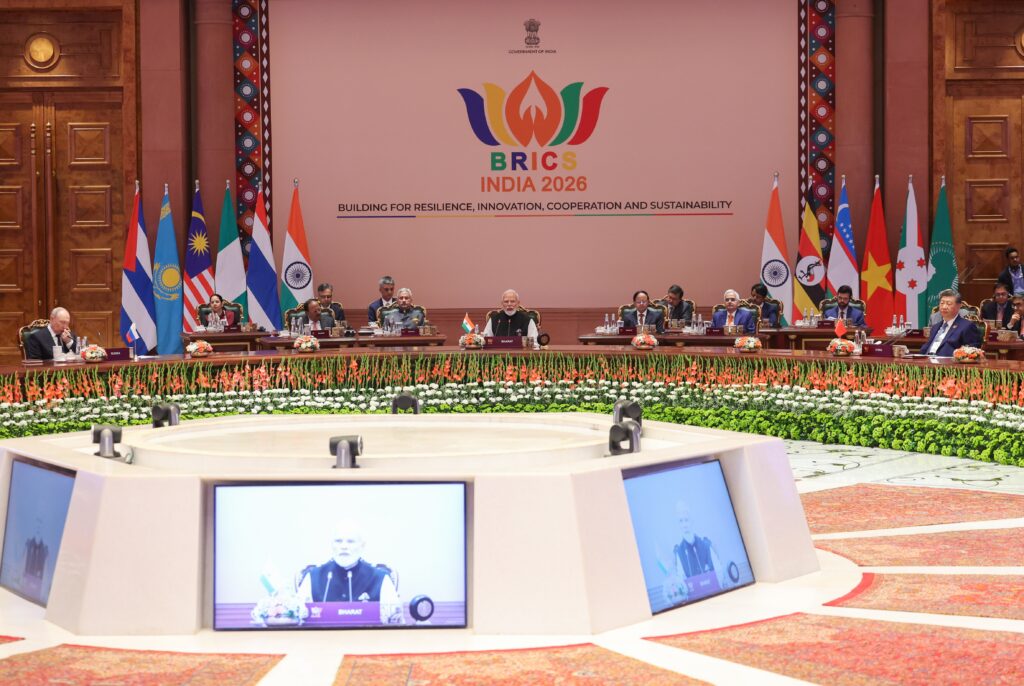
To preface, this argument does not call for an isolated India. Nor does it call for an India that does not proactively engage in multilateral platforms like BRICS and the Quad. There is real value in India’s leadership in such groupings, especially its role in facilitating South-South cooperation at a time when traditional powers are retreating from the international stage. However, they will not serve as India’s primary security guarantees, particularly when it remains wary of formalised alliance structures and a securitised Quad. Therefore, India must carefully recalibrate its path amid changing global realities, prioritising internal balancing. In doing so, it will also have a unique opportunity to lead by example, contributing to global economic growth and regional stability while preserving its strategic autonomy.
Dual Imperatives of Internal Balancing
India is on track to become the world’s third-largest economy by 2030, with a projected gross domestic product (GDP) of $7.3 trillion. However, despite making significant economic progress, it still lacks a sufficiently resilient economy capable of withstanding economic coercion. For one, India’s imports from China have grown 2.3 times faster than its total imports from all other countries over the past 15 years, and its trade deficit has ballooned to a staggering $99.2 billion—India’s single largest with any country. It also remains dangerously dependent on Chinese exports of active pharmaceutical ingredients, critical minerals, and electronics, among other essential inputs critical for sustaining its industrial base.
This is concerning because China has repeatedly shown that it does not shy away from using its economic leverage to its advantage. China was quicker to escalate than most analysts had expected in response to the US’ reciprocal tariffs, threatening to cut off precious rare earth supplies and eventually imposing sweeping export controls. China also restricted exports of key inputs and personnel flow to companies seeking to manufacture in India last year. Relatedly, those advocating for increasing Chinese foreign direct investment (FDI), even if it is only for non-sensitive sectors, must remember that China could still exploit its leverage as an investor in seemingly benign sectors to exert pressure.
India’s trade imbalance with China is not purely driven by the logic of comparative advantage and is, in part, a function of deliberate barriers to market entry for competitive Indian exports. China has actively invested in reducing its economic dependence on India—from 2003 to 2005, India ran a sizeable trade surplus with China. Some estimates suggest India’s untapped export potential to China is valued at $161 billion.
While any easing of bilateral tensions is welcome, India should remain wary of China. Given the latest US tariffs on Chinese exports, India is at an even higher risk of being flooded with Chinese goods. As India seeks to position itself as a viable “China+1” destination, it cannot afford greater dependency on Beijing. Nor can it afford to fall into any false sense of security when it comes to a neighbour that has historically proven to be unreliable. Consequently, if strategic competition necessitates restricting Chinese FDI, India should concentrate its efforts on increasing FDI from alternative sources, as opposed to finding ways to accommodate Chinese investment.
Another often understudied aspect of the India-China economic equation is the potential for China to close its markets to Indian goods as a pressure tactic. India’s exports to China constituted a sizeable $14.25 billion in value in 2024-25, with China being India’s fifth-largest export destination. Were China to utilise such a form of economic coercion, it could inflict high costs on India.
Building a resilient economy entails not just reducing dependence on China but also exercising caution more broadly. India’s top ten trading partners alone account for 51% of its total merchandise export value, leaving it significantly exposed to external shocks. With the US as India’s largest export destination and accounting for nearly 20% of India’s total exports, Washington’s decision to impose 50% tariffs on Indian exports last year underscored the serious risks of not having a sufficiently diversified export base.
India needs to intensify efforts to address these challenges. Measures such as the National Critical MineralsMission, introduced early last year to build alternative rare earth supply chains by investing in local exploration and diversifying supply chains, are a step in the right direction but will require robust implementation to achieve desired results. Efforts to impose anti-dumping duties remain critical and should not be relaxed under any false sense of security. India should also continue to build out its trade partnerships through formal free trade agreements and bilateral investment treaties, expanding market access and creating incentives for attracting greater FDI. And finally, the government should consider reforming domestic manufacturing schemes to ensure they deliver on intended production targets.
India also needs to invest more—and do so strategically—in its military modernisation efforts. Over the past 15 years, China’s defence spending has increased by roughly five times. In comparison, India’s defence budget has grown only about 2.5 times. Moreover, in 2024-25, India’s defence expenditure stood at just under 2% of its GDP, highlighting a clear mismatch between its economic growth and defence investment, with a disproportionate share going to personnel and maintenance as opposed to procurement and R&D.
While it is true that a country that is yet to achieve developed country status cannot spend as much on defence as its more advanced peers, estimates indicate that India still has the fiscal bandwidth to increase its defence spending to reach at least 2.5% of its GDP in the next five years. India also needs to reform the very nature of its defence spending to account for its security realities. This means prioritising spending on innovation and procurement; balancing the acquisition of high-value, technologically advanced platforms with cheaper, expendable equipment like drones to adapt to the realities of modern warfare; further liberalising FDI in the defence sector; and redistributing budget allocations across the armed services to address critical vulnerabilities and improve operational readiness.
India’s new, post-Pahalgam, military doctrine—one of kinetic responses to any acts of terrorism—also necessitates a rapid build-up of its military capabilities to credibly deter adversaries. This is especially true, perhaps now more than ever, given the inherent risks associated with drawing red lines and the likelihood that Pakistan will have China’s backing in any future Indo-Pak confrontation. China’s support for Pakistan during Operation Sindhoor has been well-documented, with the conflict essentially having served as a testing ground for some of China’s most advanced military equipment.
To that end, while it is important for India to invest in indigenous defence platforms, it has real capacity gaps that require urgent attention. Domestic capability development is inherently time-consuming, further complicated by bureaucratic inefficiencies in India. Given its volatile security environment, India cannot afford prolonged delays. The latest military confrontation with Pakistan, despite its successes, highlighted serious deficiencies in India’s Air Force. Although India’s decision to approve an indigenous stealth fighter jet program following the conflict is a welcome development, it should supplement this effort with fighter jet purchases. Western defence purchases should not be seen as a hindrance to self-reliance, particularly if they build confidence and enable the kind of high-end technology transfer needed to develop indigenous platforms in the long-run.
Operation Sindoor gave India a unique opportunity to test its military capabilities in a real-world conflict and identify exactly where it needs to increase investment. Analysts have noted the shortcomings in India’s intelligence, surveillance, and reconnaissance capabilities, especially given China’s real-time intelligence support to Pakistan. In light of reported aircraft losses, India must assess its operational readiness to execute complex military operations—including suppression of enemy air defences—especially as Pakistan wields advanced Chinese surface-to-air missile systems such as the HQ-9 and fighter jets like the J-10C.
Additionally, India needs to continue reducing its dependence on Russian military equipment—not because of US pressure—but because of the growing partnership between Russia and China. Should India choose to increase its defence imports to close the capability gaps it currently faces, it also needs to be able to credibly reassure its partners that their defence systems would not be vulnerable to Chinese and Russian exploitation.
Shaping the Emerging Global Order
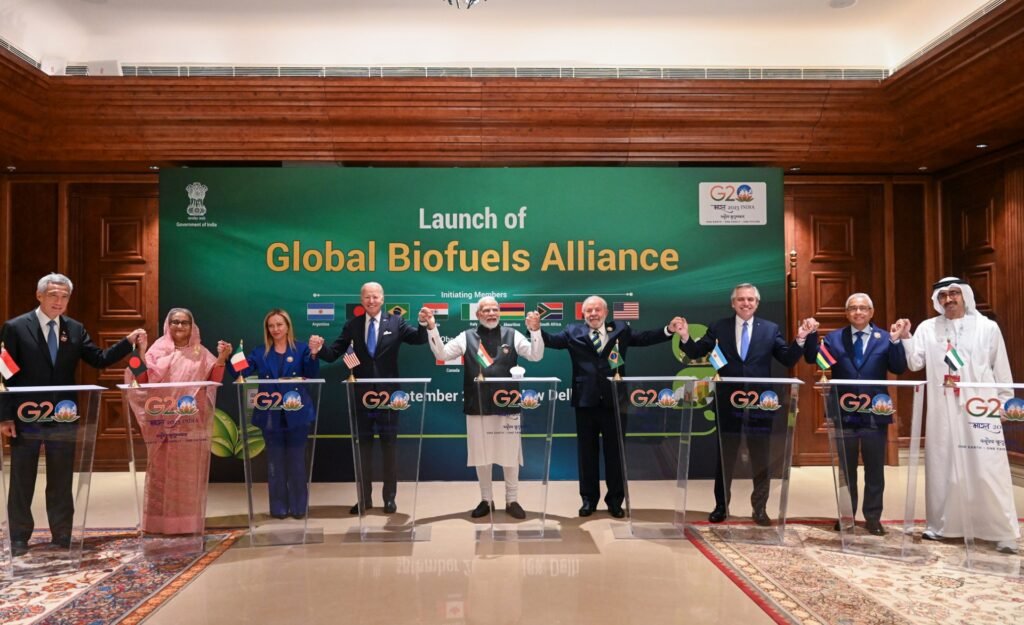
Given rapidly changing global realities, a foreign policy grounded in internal balancing would allow India to lead by example as it addresses its security challenges. A strong economy would not just insulate India from economic coercion but would also prove to be a positive externality for the rest of the world. It would enable India to demonstrate true leadership in the Global South, for example, through robust development assistance and technology sharing. Building up its military strength would allow India to deter and, if necessary, effectively counter security threats and enhance regional security while demonstrating its reliability as a responsible international actor capable of greater burden sharing.
As a new global system emerges, those who have the ability to lead are the ones with real cards to play. For India, this moment underscores the need to build its own strength and secure a strong hand. Given the contours of its foreign policy choices, India’s only reliable security guarantee today lies in its own internal capacity-building efforts.