The latest SIPRI Trends in International Arms Transfers report places India as the world’s second-largest importer of major arms from 2021 to 2025, accounting for 8.2% of total global arms imports. Only Ukraine, whose imports surged from near-zero to 9.7% of the global share following Russia’s full-scale invasion in 2022, ranked above it.
India’s overall imports fell by 4% compared to the previous five-year period. SIPRI attributes this “partly to India’s growing ability to design and produce its own weapons,” while noting that domestic production still faces “substantial delays.” The decline is real but modest, and it does not tell the whole story. What has changed more significantly is the structure of those imports, not their scale.
The Decline of Russia’s Dominance
Moscow has, for decades, anchored India’s defence procurement, which is now eroding. Russia’s share of India’s arms imports dropped from 70% in 2011 to 2015, to 51% in 2016 to 2020, and further to 40% in 2021 to 2025. SIPRI notes that India has “shifted its arms relations away from Russia towards Western suppliers, especially France, Israel and the USA, over the past decade.” France now accounts for 29% of India’s imports and Israel for 15%, figures that would have been negligible a decade ago.
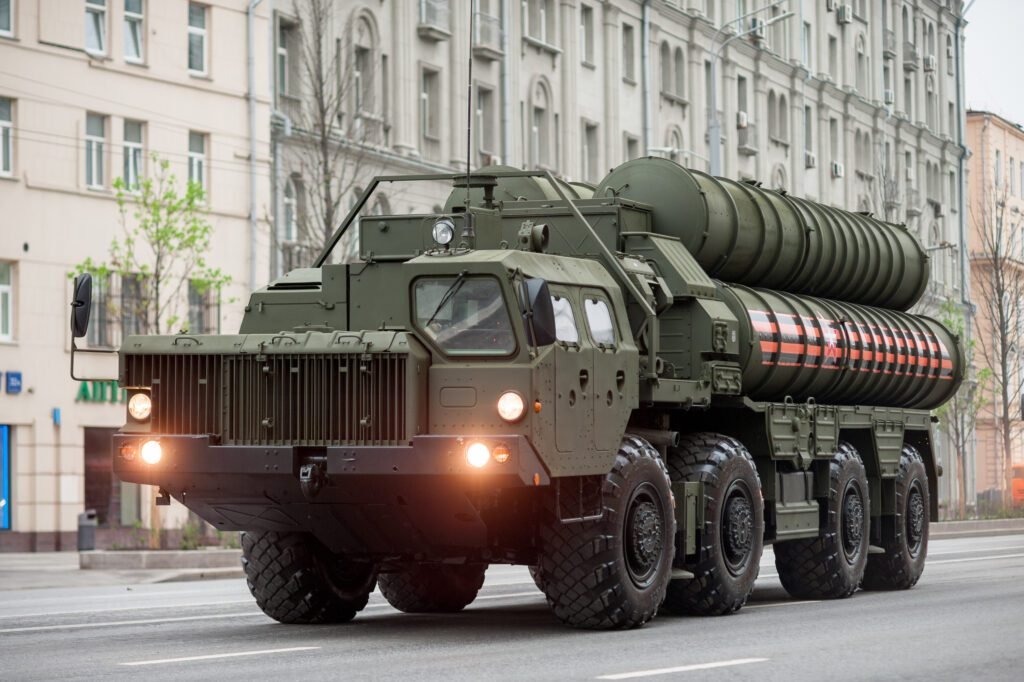
Both strategic and practical pressures drive this shift. The war in Ukraine raised questions about the reliability of Russian deliveries, which disrupted Russian supply chains. India had signed a deal for five S-400 systems in 2018; three have been delivered, while the conflict delayed the fourth and fifth. Western suppliers, meanwhile, offer access to more advanced platforms that India has increasingly sought to upgrade its capabilities.
The Persistence of Import Dependence
Despite this diversification, India has not meaningfully reduced its reliance on foreign suppliers for critical systems. SIPRI is direct on this point: India’s “recent orders or planned orders, including up to 140 combat aircraft from France and 6 submarines from Germany, indicate its continued and probably increasing reliance on foreign suppliers.”
The domestic production base is expanding, but unevenly. Delays in indigenous programmes mean that import pipelines must remain open to fill operational gaps.
India is not moving away from imports. It is reshaping them.
The S-400 Decision and What it Reveals
The scale of India’s recent procurement activity makes the point plainly. The Defence Acquisition Council, in late March 2026, has cleared proposals worth $25 billion covering transport aircraft, remotely piloted strike aircraft, gun systems, aerial surveillance systems, and five additional S-400 Triumf air defence systems from Russia. This followed a separate approval the previous month worth $40 billion for more French Rafale fighter jets and Boeing P-8I reconnaissance aircraft for the navy. In a single financial year, India approved 55 proposals worth $71 billion, the highest in any financial year on record.
The S-400 expansion, estimated at $6.1 billion, was the headline item. Sources in the defence establishment said the system “performed exceptionally well” during Operation Sindoor, India’s military exchange with Pakistan in May 2025, keeping Pakistani aircraft, including J-10 fighters, at bay. The S-400 recorded its longest hit in the engagement, as it operationally validated its shoot-and-scoot capability. Two systems had been deployed along the western theatre; a coverage gap was identified. The new procurement is partly intended to close it.
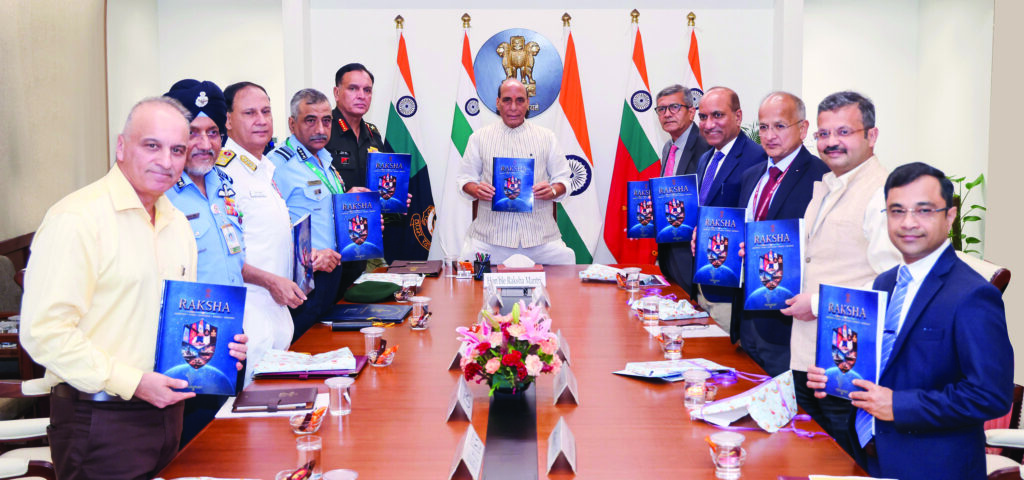
The decision also comes with a sanctions dimension. Officials noted that the follow-on order would not attract US penalties under the Countering America’s Adversaries Through Sanctions Act (CAATSA) because it is structured as a continuation of the original 2018 contract, which had already received a waiver. Once all ten systems are in place alongside India’s planned Project Kusha domestic air defence programme, sources said, “the airspace around the country will become almost impregnable by drones, 4.5 Gen plus fighters, and missiles.”
None of this contradicts India’s diversification toward Western suppliers. It illustrates its limits. The S-400 is already embedded in India’s integrated air defence network. Alternatives would require years of procurement, testing and integration. India’s threat environment is shaped by the 2025 military exchange with Pakistan and a four-year Himalayan standoff with China that ended only with a partial pullback in late 2024, emphasises that operational need, rather than supplier preference, is the decision driver.
A Layered Procurement Strategy
The SIPRI data and the latest procurement decisions point to a deliberate layering of sources rather than a clean transition between them.
Russia continues to supply high-end legacy systems deeply embedded in India’s military structure; the March approvals also included a separate contract with JSC Rosoboronexport for Tunguska air defence missile systems for the army. France, Israel, and, increasingly, the United States are central to new acquisitions of advanced platforms. Despite growth in domestic production, India is not replacing one supplier with another but managing continuity and diversification in parallel.
The Export Side of the Equation
The import story has a counterpart that is easy to overlook. India’s defence exports reached a record Rs 38,424 crore in the financial year ending March 2026, which was a 62.66% increase over the previous year. Defence Minister Rajnath Singh described it as “a new all-time high.” State-owned defence firms drove much of the growth, with their exports surging 151% to Rs 21,071 crore, while private sector exports rose 14% to Rs 17,353 crore. India now exports to over 80 countries.
This does not resolve the import dependence that SIPRI documents. But it complicates the picture. India is simultaneously one of the world’s largest arms buyers and a rapidly growing arms seller, a combination that reflects a defence industrial base expanding outward even as it remains dependent inward.
Security Pressures Shape Procurement
SIPRI is explicit about the underlying driver: India’s arms imports display “its tensions with both China and Pakistan,” tensions that “have regularly led to armed conflict, as they did briefly between India and Pakistan in May 2025, with both sides using imported major arms.” In that context, imported weapons are not simply inventory. They are part of active deterrence, integrated into operational planning and deployed in live engagements.
That reality constrains how quickly India can reduce foreign dependence, regardless of policy intent.
An Evolution
The SIPRI data and the latest procurement decisions suggest that India is restructuring its imports rather than reducing them. Rising imports from France and Israel, a simultaneous decline in imports from Russia, record export figures, and the expansion of the S-400 fleet all demonstrate a procurement strategy shaped by operational pragmatism. India’s defence acquisition reflects a balance between domestic ambition and the immediate demands of a contested security environment.