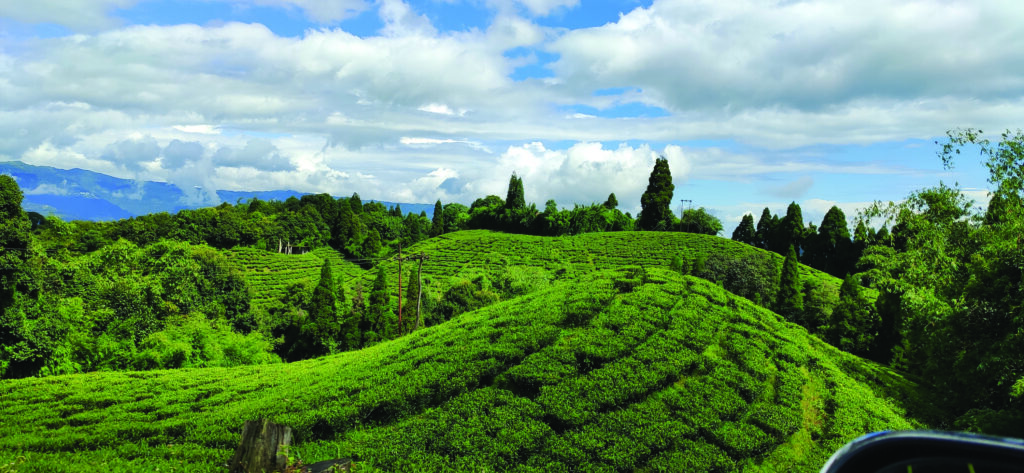
A tea leaf can carry more than flavour. It can carry the name of a mountain range, a valley, a climate and generations of cultivation practices. For Indian tea, that connection between product and place has become both a cultural identity and an economic asset. A Geographical Indication (GI) does more than identify where a product comes from: it protects a name when the product’s quality, reputation or other characteristics are essentially linked to that place.
India’s tea landscape offers some of the clearest examples of this principle. Darjeeling, Kangra, Assam Orthodox, and Nilgiri Orthodox teas are not interchangeable expressions of the same commodity. Their growing environments, cultivars, production methods and flavour profiles give them distinct identities. India currently has four registered tea GIs: Darjeeling Tea, Kangra Tea, Assam (Orthodox) and Nilgiri (Orthodox).
What Exactly Is a GI?
Under the World Trade Organization’s Agreement on Trade-Related Aspects of Intellectual Property Rights (TRIPS), a geographical indication is an indication that identifies a good as originating in a particular territory, region or locality where a given quality, reputation or other characteristic of the good is essentially attributable to its geographical origin.
A GI therefore establishes a legal connection between three things: a product, a place and a quality, characteristic or reputation. For tea, this connection can involve climate, altitude, soil, plant material, cultivation and processing practices, as well as the reputation accumulated over generations.
The modern international history of protecting geographical identity goes back well before the WTO. The Paris Convention of 1883 established an international framework for industrial property and included protection against unfair competition and false indications of source. The Madrid Agreement of 1891 specifically addressed the repression of false or deceptive indications of source. The Lisbon Agreement of 1958 subsequently created an international system for the registration and protection of appellations of origin.
The decisive modern step came with the TRIPS Agreement in 1994, which brought geographical indications firmly into international intellectual-property law. Articles 22 to 24 establish the WTO framework for GI protection.
Article 22 provides the basic protection for GIs covering all products. Members must provide legal means to prevent the use of geographical indications that mislead consumers about the origin of goods or constitute unfair competition. TRIPS also requires protection against certain misleading trademark registrations.
Article 23 provides a stronger level of protection specifically for wines and spirits. This distinction is important: tea does not automatically receive the enhanced Article 23 protection simply because it is a GI product. India and several other countries have argued for extending this higher level of protection to GIs covering products beyond wines and spirits, an issue that remains part of the WTO’s TRIPS discussions.
The international system has another important limitation: GI protection is territorial. Registration in India does not automatically create an enforceable right in every other country. Protection abroad depends on the law of the country concerned, bilateral or regional agreements, or international systems such as the Lisbon System.
India’s GI Law
India developed its dedicated GI framework through the Geographical Indications of Goods (Registration and Protection) Act, 1999, enacted in the context of India’s obligations under the WTO’s TRIPS Agreement. The Geographical Indications of Goods Rules followed in 2002, and the Act came into force on 15 September 2003.
The system is administered through the Geographical Indications Registry under the Office of the Controller General of Patents, Designs and Trade Marks.
A GI application is not simply a request to put a government label on a product. The applicant has to establish the geographical area and demonstrate the connection between the product and that territory. Applications can be made by an association of persons or producers, an organisation or an authority representing the interests of producers.
Once registered, a GI provides legal protection for the registered geographical indication and allows eligible producers to register as authorised users. An authorised user has the exclusive right to use the registered GI for the goods for which it is registered, subject to the conditions of the registration. The law also provides remedies against infringement, including civil remedies and criminal penalties for specified forms of false application or misuse.
India’s first registered GI was Darjeeling Tea. The Tea Board filed the application on 27 October 2003, and the GI was registered on 29 October 2004.
The legal protection is supported by systems of certification and traceability. In the case of Darjeeling, for example, Tea Board’s certification scheme covers the production and marketing chain and restricts the use of the Darjeeling identity to tea meeting defined requirements. Tea Board states that genuine Darjeeling tea must come from one of 87 registered tea gardens, be processed in a factory within the defined geographical area and display the distinctive taste, aroma and mouthfeel associated with the region.
Four Teas, Four Protected Origins
India’s four registered tea GIs illustrate why geographical origin matters. Each represents a different combination of landscape, climate, cultivation and processing.
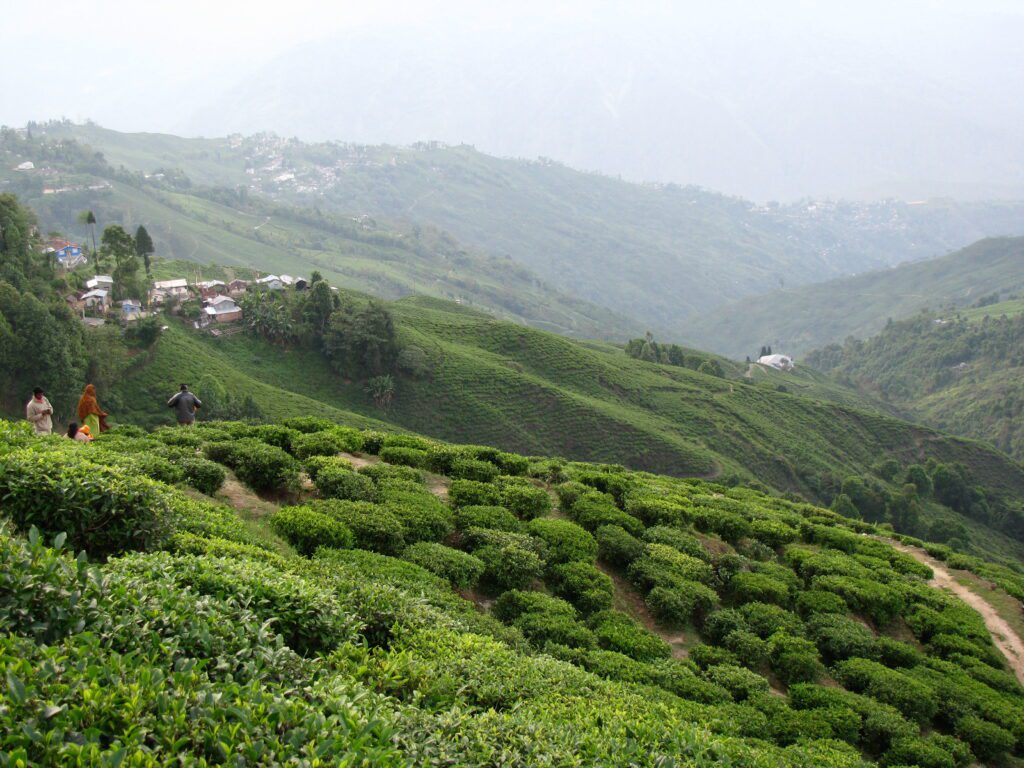
Darjeeling Tea (GI registered in 2004)
Darjeeling is India’s first and perhaps most internationally recognised tea GI. Its distinctiveness is closely associated with the high-altitude environment of the Darjeeling hills.
The EU’s official GI specification notes that Darjeeling tea gardens are located at elevations ranging from approximately 600 to 2,250 metres, on steep slopes with good natural drainage. Intermittent cloud, sunshine, rainfall, low temperatures and Himalayan conditions contribute to the tea’s distinctive character. The region’s relatively low productivity also contributes to its scarcity and cost.
That reputation makes Darjeeling particularly vulnerable to imitation. If tea grown elsewhere can be sold as Darjeeling, the economic value of the name is diluted. The GI therefore protects not merely a geographical label but a premium identity built over more than a century.
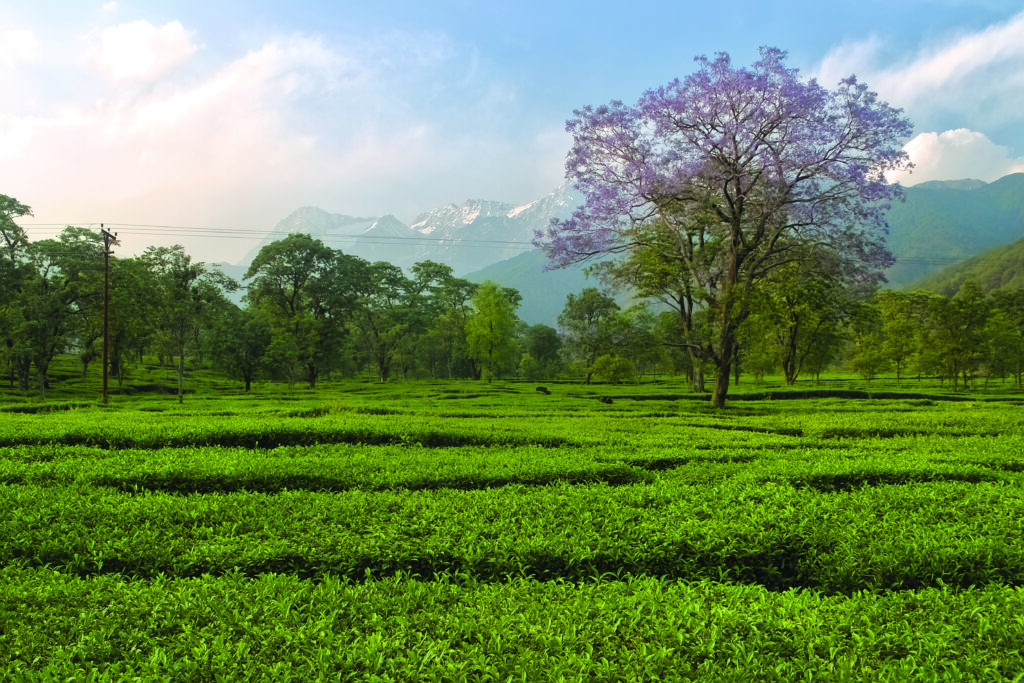
Kangra Tea (GI registered in 2005)
Kangra tea comes from the foothills of the Dhauladhar Himalayas in Himachal Pradesh. Tea is grown at approximately 900–1,400 metres, with annual rainfall of around 270–350 cm. Tea Board describes the first flush as having a distinctive aroma and a fruity character, while black Kangra tea is known for a sweet lingering aftertaste.
Kangra’s acidic soils, altitude, rainfall and other geo-climatic conditions contribute to its distinctive flavour. The tea has been described as having nutty, wintergreen and woody-floral aromas, a sweet aftertaste and a relatively light-coloured liquor with good body.
Kangra is also a relatively small tea-producing region. That limited scale, combined with its distinctive Himalayan character, strengthens the case for protecting the geographical identity attached to Kangra tea.
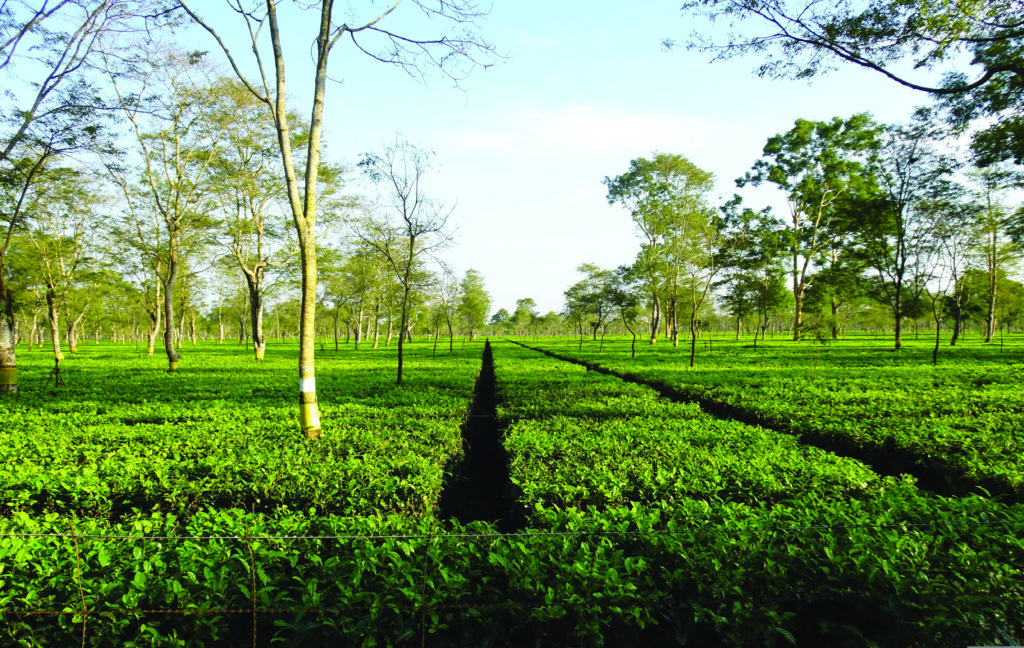
Assam Orthodox (GI registered in 2008)
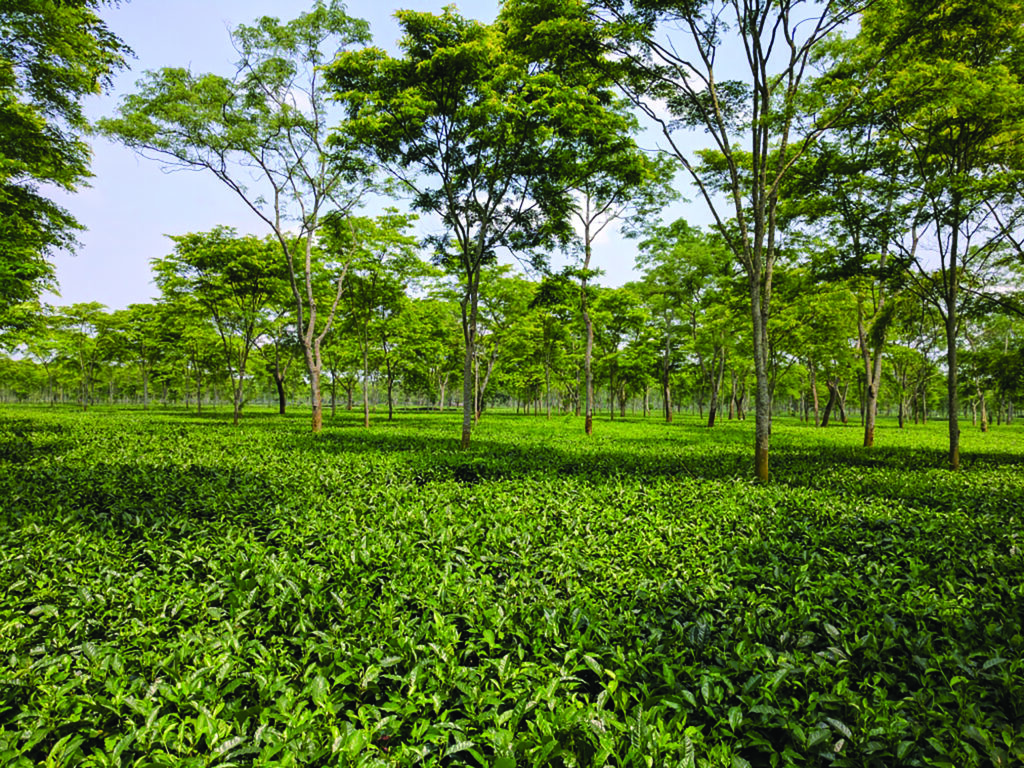
Assam Orthodox tea is associated with the distinctive environment of the Brahmaputra Valley. Tea Board describes it as a fully fermented black tea whose characteristics arise from a combination of geographical factors—including the fertile alluvial soils of the Brahmaputra Valley and Assam’s climate—and human skills involved in selective plucking and orthodox manufacture. The production process includes withering, rolling, fermentation, drying, sorting and grading.
Assam Orthodox tea is famous for its strong, full-bodied character and malty flavour. Tea Board describes orthodox Assam’s distinctive second flush teas as having rich taste and bright liquor and as being among the world’s valued orthodox teas.
Nilgiri Orthodox (GI registered in 2008)
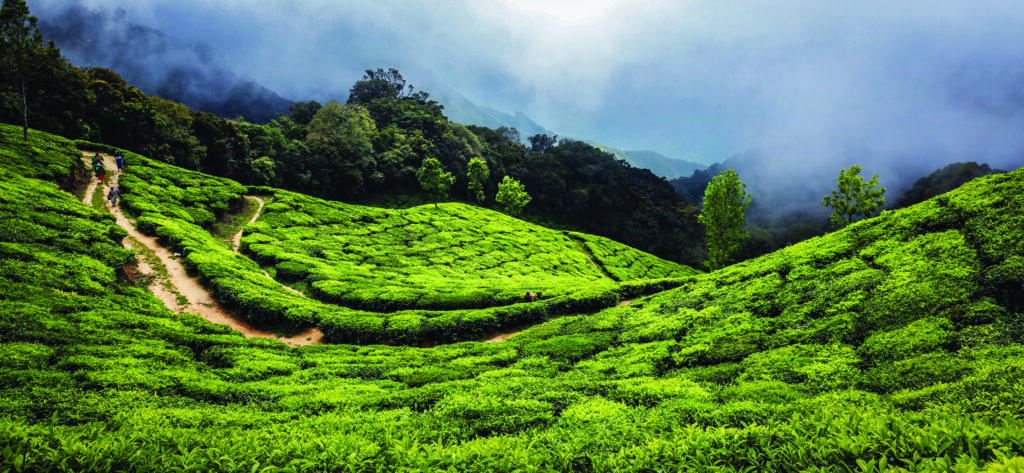
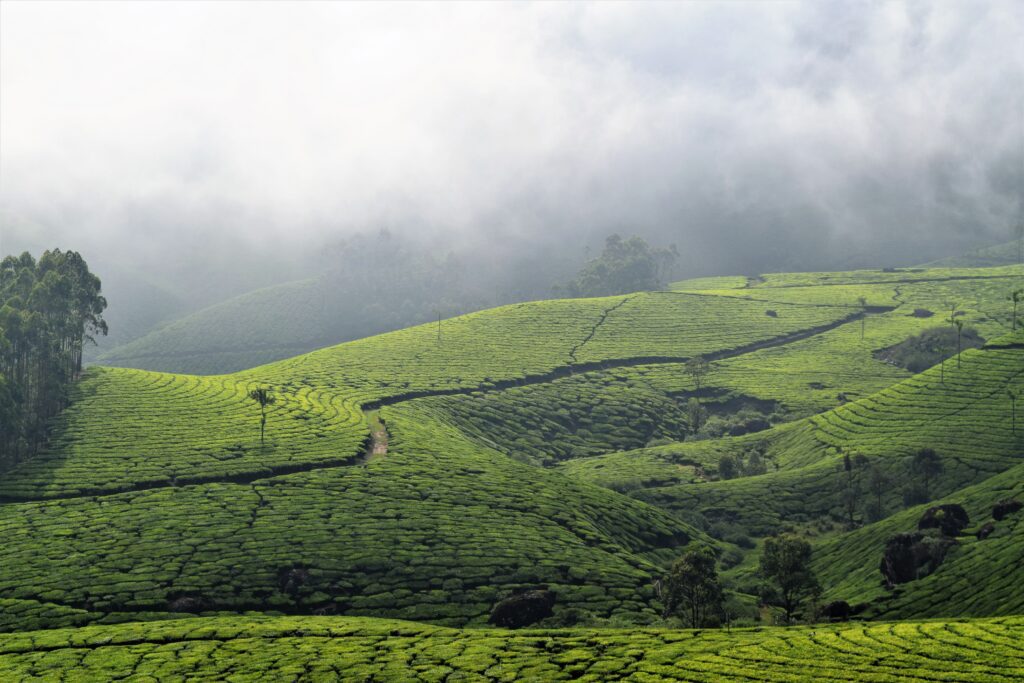
Nilgiri Orthodox tea comes from the Nilgiri region of Tamil Nadu, where the combination of altitude, soil, temperature, rainfall and humidity creates a distinctive growing environment.
Tea Board describes Nilgiri Orthodox tea as delicately fragrant and highly aromatic, with floral notes, a bright golden-yellow liquor and a brisk character. It attributes these qualities to the interaction of plant genetics, soil chemistry, elevation, temperature, rainfall and humidity in the Nilgiri district. Cool, dry and misty conditions are particularly important in developing the volatile compounds associated with its aroma.
The Battle Beyond India’s Borders
For Indian tea, getting a GI registered in India is only the first step. The harder question is what happens when the same tea reaches an overseas market. A GI is a territorial right: protection under Indian law does not automatically prevent someone in another country from using the same geographical name. Producers must therefore secure protection in individual foreign jurisdictions, where the legal mechanisms and standards can differ significantly. Tea Board itself has noted that the need to register and seek legal remedies in different jurisdictions remains a continuing challenge.
Darjeeling shows how complicated this can become. Tea Board has protected the Darjeeling name and logo through different legal mechanisms in different countries, including certification marks, collective marks and geographical-indication protection. In the UK, US, Australia and Taiwan, the Darjeeling word and logo have been protected as certification trademarks, while the European Union provides protection through the Darjeeling PGI.
The reason for using different instruments is that countries do not have one uniform system for protecting geographical names. In some jurisdictions, a GI may be protected directly as a geographical indication; in others, a certification or collective trademark may provide the available route. This can make international enforcement more expensive and complicated than simply registering a name once.
The history of Darjeeling protection also shows that the threat is not hypothetical. Tea Board has had to challenge attempts to register or use “Darjeeling” for products and services beyond tea. WIPO has documented cases in which the Board faced difficulties because national trademark laws did not always allow it to oppose a mark at the application stage when the goods involved were unrelated to tea. In France, for example, WIPO records that the Tea Board faced a legal system under which an objection to a similar trademark could not be made at the application stage when the goods were different from those covered by the GI.
There have also been cases involving the Assam name and the Darjeeling logo. Tea Board’s records show that it has filed oppositions and cancellation actions in foreign markets against attempts to register or use protected Indian tea names and marks.
The European Union illustrates what stronger protection can achieve. India applied for protection of Darjeeling under the EU’s geographical-indication system in 2007, and Darjeeling received Protected Geographical Indication (PGI) status in 2011. Within the EU, the protection extends beyond straightforward use of the name. Unlike the baseline protection required under TRIPS for most products, the EU’s GI regime protects Darjeeling against misuse, imitation and evocation, including certain uses accompanied by terms such as ‘style’, ‘type’, ‘method’ or ‘imitation’.
For Indian tea, the international GI battle has three dimensions: getting protection, enforcing protection and maintaining authenticity. Registration gives a legal right, but exercising that right abroad may require separate registrations, objections, negotiations and court proceedings.
Turning Origin into Value
The economic promise of a GI lies in differentiation. Tea is traded globally as both a commodity and a collection of specialised products. The more a tea can distinguish itself through origin, quality, reputation and authenticity, the greater the possibility of moving away from pure price competition.
A GI can help with that process by turning geographical origin into a legally protected market signal. Consumers who recognise Darjeeling, Kangra, Assam Orthodox or Nilgiri Orthodox are not simply buying dried tea leaves; they are buying an association with a particular place and its characteristics.
But a GI should not be treated as a magic formula for higher prices. The price of tea depends on many factors: quality, grade, processing method, scarcity, season, demand, branding, market access and the bargaining position of producers. A GI can protect the reputation attached to an origin, but it does not automatically create a premium or guarantee that the premium will reach growers.
This distinction matters particularly for Indian tea. The purpose of GI protection is not simply to make a packet of tea more expensive. It is to prevent the economic value of a geographical reputation from being appropriated by products that do not genuinely come from that place.
Yet the final question is distribution: who captures the value created by the name? A GI can protect the reputation of a place, but growers and producers still need effective certification, marketing, enforcement, market access and collective organisation to capture a meaningful share of the resulting value.
That is why the story of GI and Indian tea is ultimately not just a story about a label. It is about the economics of origin.
Darjeeling, Kangra, Assam and Nilgiri show how India’s diverse tea landscapes can become distinctive identities in global markets. A GI provides the legal framework to defend those identities. The larger challenge is to turn that protection into sustainable value—for the tea industry, for producers and for the communities whose landscapes give Indian tea its character.