On September 13, 2026, India’s Ministry of Defence (MoD) released its Annual Report 2025–26, documenting a year shaped by Operation Sindoor, military preparedness along the China border, and efforts to strengthen domestic defence capabilities. Among its notable disclosures is the Indian Air Force’s reported destruction of a Pakistani special-mission aircraft at a distance of 314 kilometres using the S-400 air-defence system. The report also records a reduction in Chinese People’s Liberation Army (PLA) deployments opposite India’s northern borders during 2025, even as the Indian Army maintains readiness along the Line of Actual Control (LAC).
Taken together, these developments offer a picture of India’s defence establishment responding to both recent operational experience and longer-term security challenges. The report presents Operation Sindoor as an illustration of the armed forces’ capabilities, while its account of the subsequent review acknowledges gaps in unmanned systems and counter-drone technologies. Along the northern border, a reduction in Chinese deployments has eased some immediate pressures, but has not removed the need for continued military preparedness.
From Terror Strikes to a Wider Conflict
Operation Sindoor followed the April 22, 2025 terrorist attack in Pahalgam, Jammu and Kashmir, in which 26 people were killed. On the night of May 6–7, Indian forces struck nine identified terrorist targets in Pakistan and Pakistan-occupied Jammu and Kashmir. According to the Ministry’s account, the strikes were intelligence-led and calibrated, with the stated objective of targeting terror infrastructure while avoiding civilian and military targets. The report frames the operation as part of a changed Indian response to terrorism.
What followed was a four-day military confrontation that extended beyond the initial strikes. Pakistan launched coordinated drone and missile attacks against Indian military installations, prompting India to deploy its air-defence network and strike Pakistani military infrastructure.
The report’s account of the confrontation highlights the range of military capabilities employed during the operation. It also provides details of specific engagements and deployments that help explain how the armed forces responded as the conflict expanded.
The 314-km S-400 Engagement
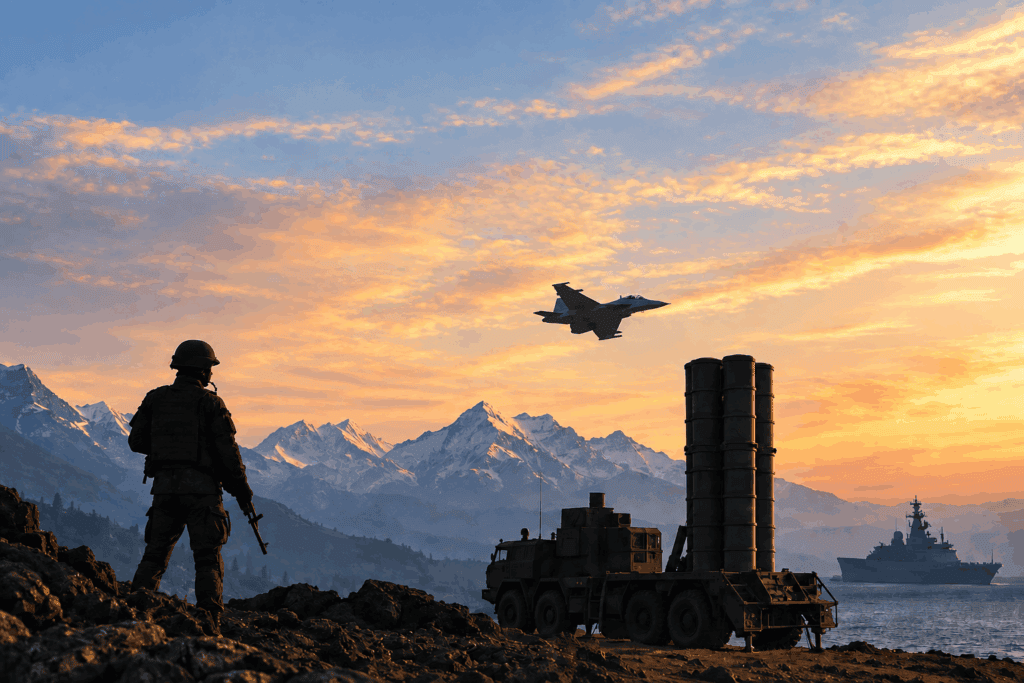
One of the report’s most notable disclosures concerns an Indian S-400 unit that reportedly engaged and destroyed a Pakistani special-mission aircraft at a distance of 314 kilometres during Operation Sindoor. The engagement was described as the longest surface-to-air engagement of its kind by the Indian Air Force.
According to the account, Indian radars tracked the target without emitting before the missile was guided towards it. However, the Ministry’s public account does not identify the aircraft’s specific type or provide a complete technical description of the engagement. Media speculation has suggested that the target may have been an airborne early warning and control or electronic-intelligence platform, but this identification remains unconfirmed in the report.
The operation also involved strikes against Pakistani military infrastructure, including aircraft hangars, runways, radars, surface-to-air missile locations, and command-and-control centres. The identified facilities included Nur Khan, Rahim Yar Khan, Sargodha, and Jacobabad.
The Navy’s Strategic Signal
The Navy’s role adds a maritime dimension to the Ministry’s account of Operation Sindoor. According to the report notes, Indian Navy Special Forces elements equipped with precision munitions participated in strikes on terror infrastructure on May 6–7, 2025. The public account does not identify the unit, target, weapon, or method of delivery. It therefore does not establish that MARCOS specifically carried out the strike.
Beyond these reported activities, the Navy deployed frontline ships, a Carrier Battle Group, and submarines in the North Arabian Sea. It maintained maritime domain awareness and readiness to strike selected targets at sea and on land if ordered. The Ministry presents this posture as contributing to Pakistan’s decision to seek a ceasefire on May 10.
The naval deployment thus forms part of the report’s broader account of the military response, extending beyond the immediate air and land dimensions of the confrontation.
Drones Expose the Next Battlefield Challenge
While the report details the capabilities demonstrated during Operation Sindoor, its post-operation review turns to the challenges that remain. The Ministry records a comprehensive assessment of military capability gaps, with particular emphasis on force restructuring, greater jointness among the three services, and the integration of emerging technologies. The review identifies unmanned aerial systems (UAS), counter-unmanned aerial systems (C-UAS), loitering munitions, air defence, and electronic warfare as priority areas.
A key qualification concerns the domestic defence industry. The report acknowledges that Indian industry has been unable to provide some niche products in the UAS, counter-UAS, and loitering-munition domains. This points to a gap between the ambition of defence self-reliance and the specialised technologies available to the armed forces. The challenge is not simply to manufacture drones domestically, but to produce the systems required by the military at the necessary scale and within operational timelines.
The Army has proposed nine fast-track development projects under ADITI and DISC, with directions for the Department of Defence Production to take them up as iDEX projects. The report also refers to a Core Committee on UAS and C-UAS, alongside a proposal for a dedicated special-purpose vehicle to accelerate research, development, and procurement.
These initiatives are accompanied by changes to the Army’s force structure. The report outlines the creation of Rudra Brigades, Shaktibaan Regiments, Divyastra Batteries, and Bhairav Battalions, alongside the integration of new equipment. Orders have been issued for 15 Bhairav Battalions, intended for specialised tasks in hybrid warfare and high-tempo operations. A phased plan also envisages establishing an Ashni drone platoon in every infantry battalion.
The emphasis on integrating unmanned systems into the Army’s organisational structure suggests that drones are being treated as a broader component of military operations rather than equipment confined to specialised units. However, establishing new formations and announcing induction plans are only part of the process. Their operational effectiveness will depend on training, maintenance, reliable supplies, and integration into existing command structures.
Self-Reliance Is Not Yet Self-Sufficiency
The capability gaps identified in the post-Sindoor review also provide context for the Ministry’s wider push to strengthen India’s domestic defence-industrial base. According to the report notes, 159 of 175 ammunition variants have been indigenised, or approximately 91%. The Ministry also describes a phased ten-year roadmap to expand domestic production and protect stocks against supply-chain disruptions.
The Army has developed in-house drone manufacturing capacity with small and medium enterprises. It reports 819 drones manufactured, including surveillance, armed, and first-person-view platforms. The report also refers to LAKSHYA-PT, precision-targeting software developed with ADRIN, intended to improve target acquisition and reduce dependence on foreign agencies.
These figures indicate progress in domestic production, but they do not establish the extent of operational self-sufficiency. The reported share of indigenised ammunition variants, for instance, does not reveal the domestic value-added content of each item, production volumes, or the availability of stocks during a prolonged conflict. Similarly, the cumulative number of drones manufactured does not show how many are operationally deployed, how serviceable they are, or how they perform under combat conditions.
The Ministry’s acknowledgement of gaps in specialised drone technologies is particularly relevant in this context. It suggests that indigenisation remains an ongoing process involving specialised research, production capacity, testing, and the ability to respond quickly to military requirements. Domestic manufacturing is an important part of that process, but the availability of equipment that meets operational needs is what ultimately matters.
China’s Drawdown, India’s Continued Readiness
The report’s assessment of the northern borders presents a different security picture from its account of Operation Sindoor. It records a “significant reduction” in PLA deployments opposite India’s northern borders during 2025. At the same time, China continued to maintain 10 Combined Arms Brigade-sized forces in areas along the LAC and in traditional training areas. The Indian Army’s deployment across sectors along the LAC is described as robust and prepared for contingencies.
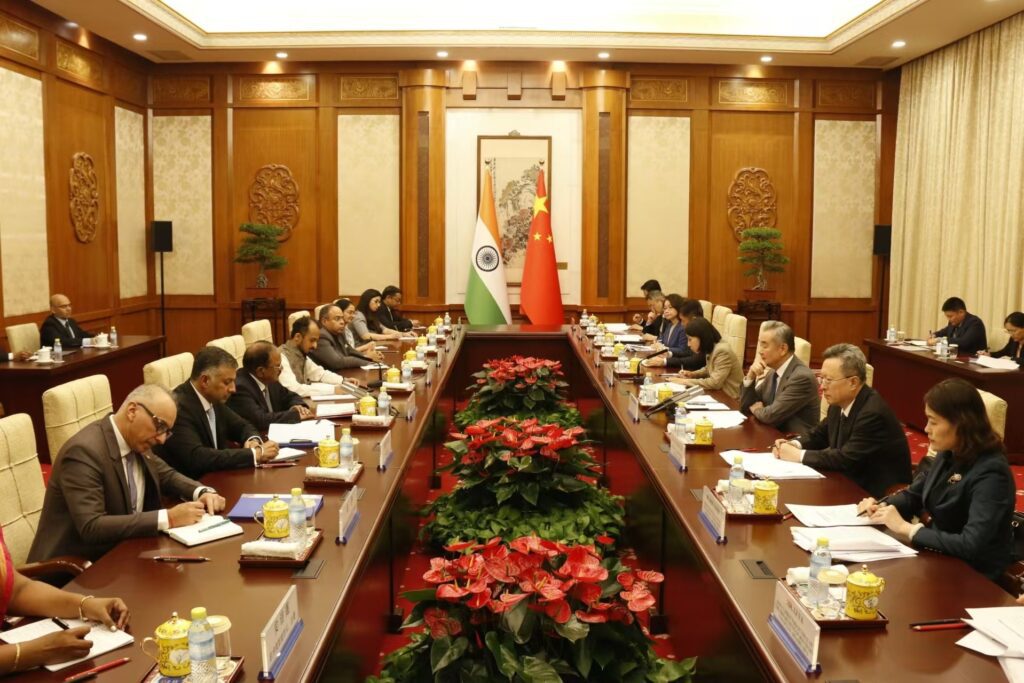
This assessment follows years of military tension after the 2020 eastern Ladakh crisis. The improvement in conditions has been linked to political, diplomatic, and military engagement, including meetings of the Working Mechanism for Consultation and Coordination, the resumption of Special Representatives’ talks, and Corps Commander-level discussions.
The reduction in deployments is a notable development, but it does not establish that the boundary dispute has been resolved or that military risks have disappeared. A drawdown in particular areas does not necessarily imply a corresponding reduction in the capacity to reinforce them. Nor does the report establish that China has dismantled its broader military infrastructure or given up the ability to mobilise.
India’s continued emphasis on readiness reflects this uncertainty. Diplomatic engagement and military preparedness remain parallel requirements in the Ministry’s assessment, rather than alternatives to one another.
Jammu and Kashmir: Security Gains, Persistent Risks
The report also records improvements in the security situation in Jammu and Kashmir. It notes zero stone-pelting incidents in 2025 and says that only one local youth joined terrorist organisations during the year. It also reports six infiltration attempts along the Line of Control (LoC), during which 12 Pakistani terrorists were killed.
However, the figures also point to continuing security challenges along the western frontier. Ceasefire violations along the LoC reportedly rose from two in 2024 to 163 in 2025, with 124 recorded during Operation Sindoor. The Ministry says the situation stabilised considerably following director general of military operations-level talks on May 10 and 12, while acknowledging that uncertainty persists.
Drone intrusions constitute another part of this security picture. The report records 863 intrusions during 2025, with 237 drones brought down. It also describes the use of indigenous spoofers and jammers to counter the threat. The drones reportedly carried narcotics, war-like material, or no payload.
The figures therefore present a mixed account of the security situation: improvements in some indicators alongside continued infiltration attempts, ceasefire violations, and drone activity. The report’s emphasis on counter-drone capabilities connects these challenges along the western frontier with the wider modernisation priorities identified after Operation Sindoor.
From Battlefield Lessons to Military Reform
Across these different theatres and capability areas, the report points to a common challenge: translating operational experience and policy announcements into lasting military capability. New formations require trained personnel, reliable communications, maintenance, and a steady supply of equipment. Drone programmes need testing and doctrine alongside production targets. Indigenisation, meanwhile, must deliver systems in sufficient numbers, ensure timely repairs, and meet the services’ operational requirements.
The capability gaps acknowledged in the report underline the distinction between announcing reforms and making them work in the field. Operation Sindoor has provided the armed forces with recent operational experience, but converting those lessons into durable capability will depend on procurement timelines, coordination among the services, research institutions, and industry, and whether the changes produce measurable improvements in operational readiness.
Note: This explainer has been researched, edited, and fact-checked by India’s World staff and prepared with AI assistance.