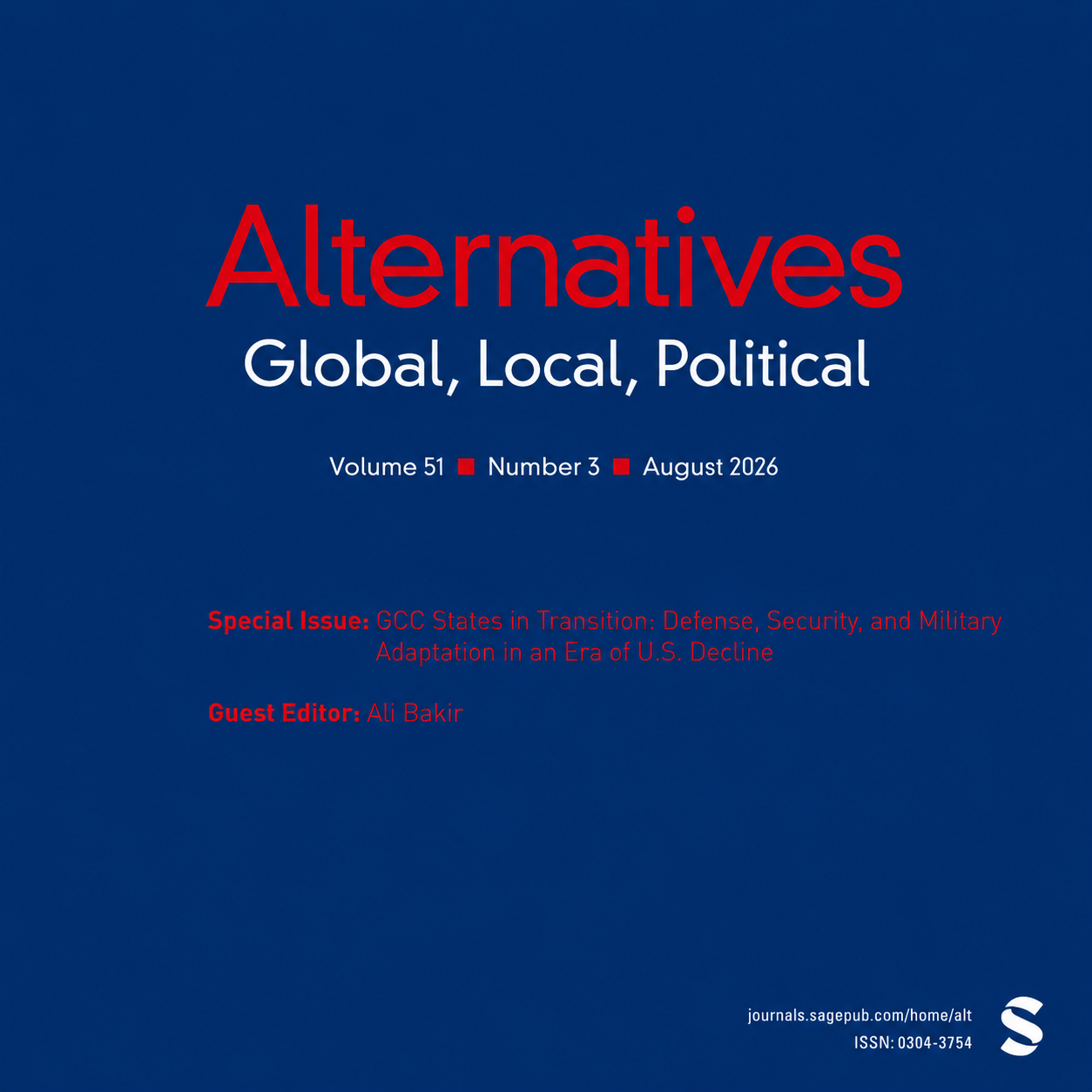
The article “The Middle Power Paradox: Material Capabilities and the Crisis of Multilateralism”, published online in Alternatives: Global, Local, Political (2026), tests a long-standing claim in international relations theory against fresh data. The author, Prof. Hakan Mehmetcik, asks whether a country’s commitment to international cooperation weakens as it grows richer and militarily stronger. He terms this the “Power Paradox”, the expectation that once a state accumulates enough hard power it no longer needs the United Nations, peacekeeping, or foreign aid to protect its interests, and so quietly withdraws from them.
Mehmetcik argues that this claim has been tested almost exclusively against rising Global South powers such as Turkey and Brazil, while the cooperative reputation of Western middle powers has been treated as fixed and beyond question. His contribution is to test both groups on the same terms. He selects 15 middle powers, excluding the United States and China, and divides them into two clusters. The Traditional cluster covers established Western democracies (Australia, Canada, Netherlands, Norway, South Korea, Sweden). The Emerging cluster covers Global South states often seen as more assertive or revisionist (Brazil, India, Indonesia, Mexico, Nigeria, Russia, Saudi Arabia, South Africa, Turkey).
To compare them, Mehmetcik builds two measures. One captures raw power, combining a state’s share of world GDP and world military spending. The other captures cooperative behaviour through three things a state actually does: how closely its UN votes track the global consensus, how many peacekeepers it sends relative to its population, and how much development aid it gives as a share of national income. He then examines whether more power goes with less cooperation. One methodological choice carries real weight for his argument. He measures UN voting alignment against the global median rather than a Western voting bloc, on the reasoning that treating cooperation as agreement with Washington or Brussels would define multilateralism as loyalty to the West and smuggle the very Eurocentric assumption he wants to interrogate back into the measurement.
The findings do not fit the conventional story. Taken together, the 15 states show almost no relationship between power and cooperation. The interesting pattern appears only when the sample is split.
Among the Traditional Western powers, the relationship is strong and runs in the direction the Power Paradox predicts. Norway and Sweden, with relatively modest material weight, contribute the most, sustaining peacekeeping deployments and development aid above 0.79% of national income. Canada and Australia, with greater material capacity, contribute markedly less to both. Mehmetcik reads this as “capability-complacency”, arguing that the wealthiest states in the group have grown secure enough to reduce their investment in the institutions they helped build, retreating into what he terms “checkbook diplomacy” rather than boots on the ground. The implication is that the cooperative identity of Western middle powers may not be a settled moral commitment at all, but a habit of the less powerful that erodes as power grows.
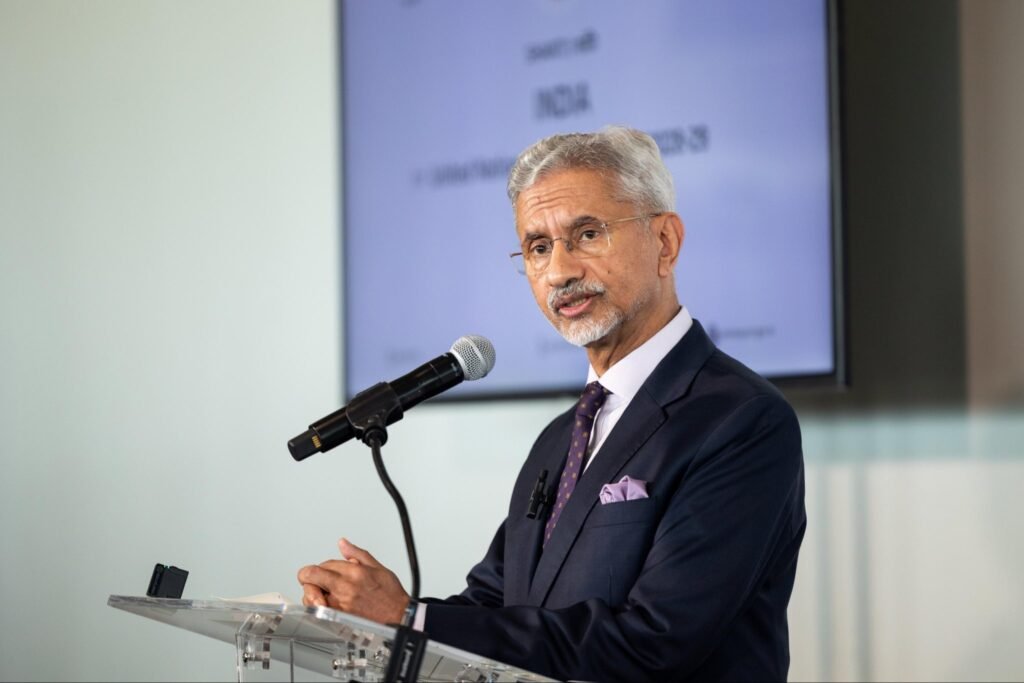
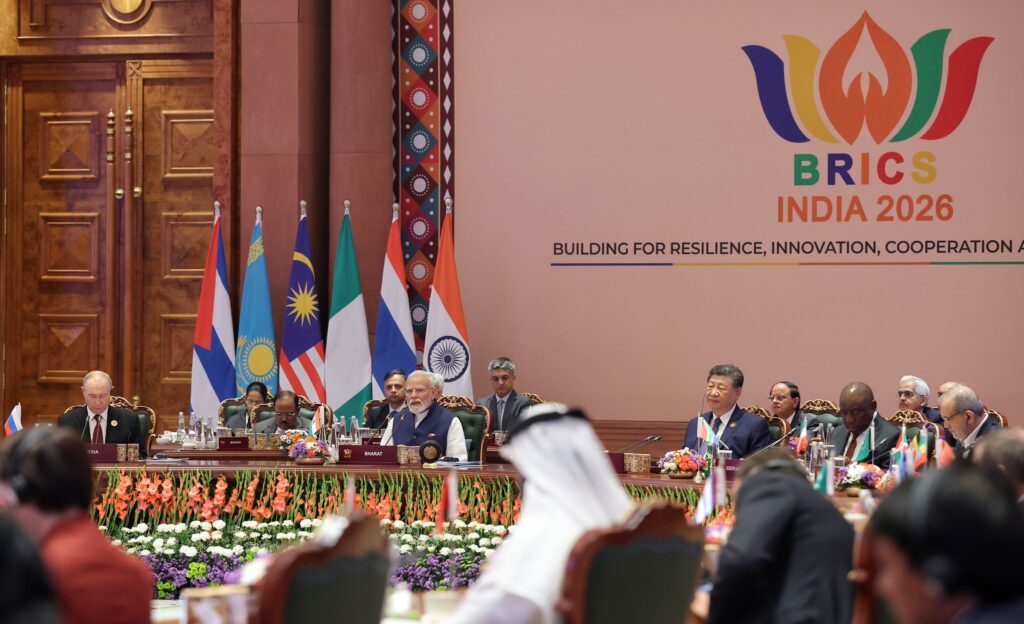
The Emerging cluster refuses to behave as a single bloc, and this is the article’s sharpest observation. Rather than a uniform pattern, it splits into two paths. Russia and Turkey follow a unilateralist route, using military strength abroad and drifting from UN consensus as their capabilities expand. Turkey complicates even this, since its aid spending remains above average even as its interventions in Syria, Libya, and Nagorno-Karabakh mark it as assertive, which Mehmetcik reads as a unilateralism that is selective rather than total. India, Indonesia, and South Africa follow the opposite path. Despite considerable material power, they record the highest cooperation scores in the entire sample, anchored by heavy peacekeeping commitments. India alone contributes more than 5,300 uniformed personnel. For these states, multilateral institutions appear to amplify their standing rather than constrain their freedom, so power and cooperation reinforce one another instead of pulling apart.
Mehmetcik is careful about what this establishes. With only six and nine countries in each group, the numbers cannot prove a relationship, and he says so plainly, presenting the results as a directional signal that larger and longer studies would need to confirm rather than as settled findings. He also flags that a single year of data cannot separate a structural pattern from a one-off, noting that Sweden’s peacekeeping contribution fell late in 2024 after a deployment ended, which alone shifts the Traditional cluster’s result.
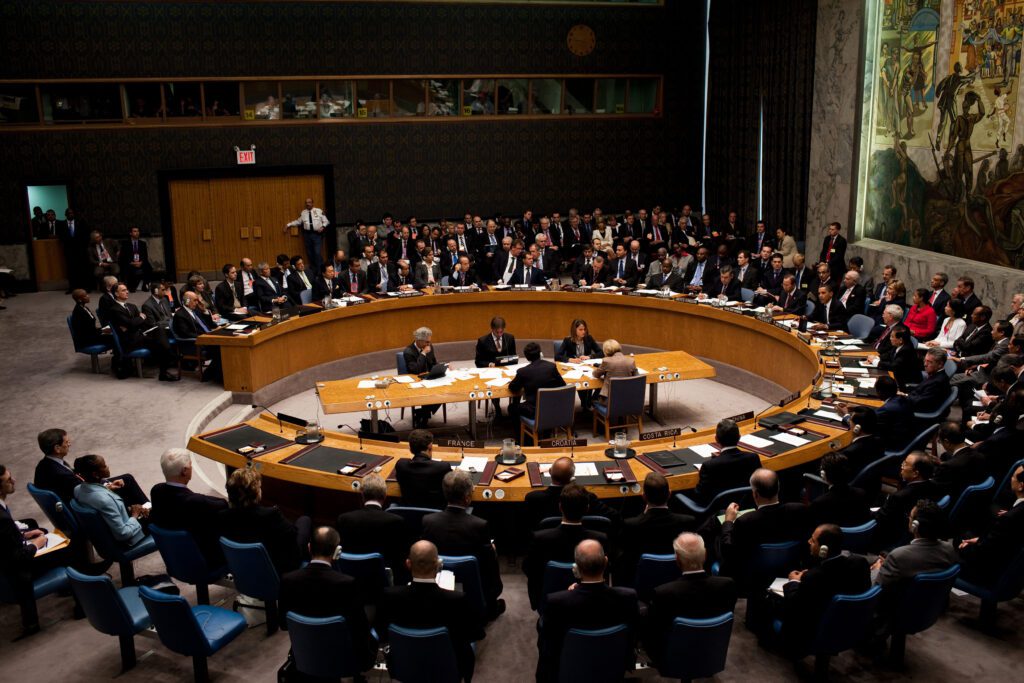
The wider value of the paper lies in where it relocates the problem. The disengagement it detects is strongest among Canada and Australia, not among the Global South states usually blamed for straining the system, while India and Indonesia emerge as its most reliable contributors. That inversion lands at a moment when the argument has stopped being abstract. Through 2025 and into 2026, the United States under President Trump has withheld funding across the UN regular budget and peacekeeping operations, and moved to eliminate most such contributions in its 2026 budget request, leaving the organisation, in the Secretary-General’s words, facing “the risk of imminent financial collapse”. The consequences fall directly on the burden-sharing Mehmetcik measures: the UN has ordered missions to cut spending by 15% and repatriate a quarter of their uniformed personnel, sending roughly one in four peacekeepers home even as violence in Congo, the Sahel, and the Middle East intensifies.
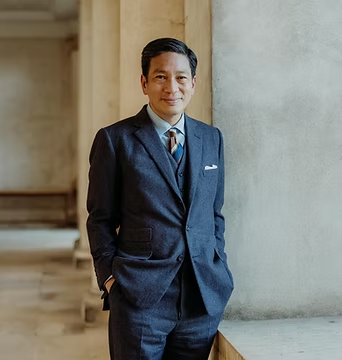
This shifts the operational load onto exactly the states his data identifies as the system’s functional backbone. At Davos in January 2026, middle powers debated whether to fill the gap, with Singapore’s Tharman Shanmugaratnam warning that collective problems require collective solutions and that everyone has to contribute their share of the burden, while Finland’s Alexander Stubb argued that any durable multilateral order must change its power structure to give agency to the larger players of the Global South. Whether the wealthy Traditional powers can be drawn back into physical burden-sharing, and whether functionalist Southern states such as India will keep subsidising a system that grants them limited institutional recognition, are the open questions Mehmetcik’s framework poses. His numbers are exploratory, but the pressures they anticipate are now visible in the UN’s accounts.