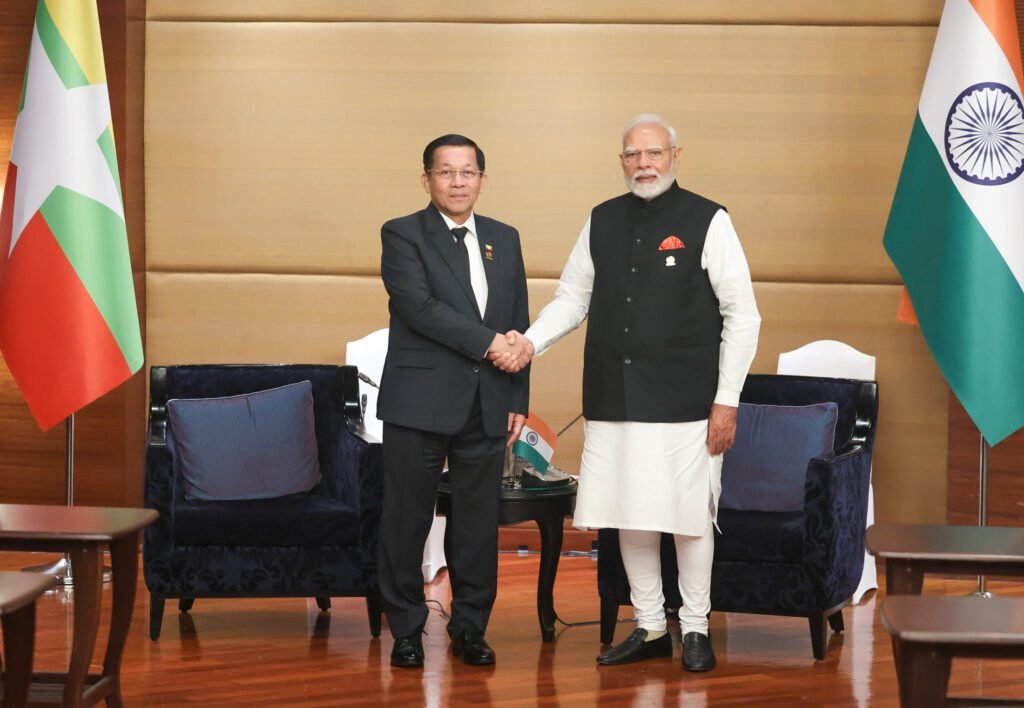
Myanmar’s junta chief, Min Aung Hlaing, was recently sworn in as President. While organisations such as the United Nations have dismissed this transition as a democratic sham, it nonetheless presents a paradoxical political landscape in India’s immediate neighbourhood. This “new status quo”—the junta recalibrating itself behind a façade of democratic legitimacy—might be new terrain, but it does not mask the deepening crisis on the ground, where multiple ethnic armed groups continue to consolidate power.
Post-2021, ethnic armed groups, largely organised under the Three Brotherhood Alliance (TBA), have dominated the civil war, mounting resistance against the junta. This fragmented situation has prompted India to redesign its foreign policy, seeking a balance in engagement with Myanmar’s military leadership in Naypyitaw. However, this evolving situation presents multiple uncertainties across India’s foreign policy frameworks. A fragile Myanmar creates strategic space for external actors, particularly China, to expand their influence and continue to alter the regional balance.