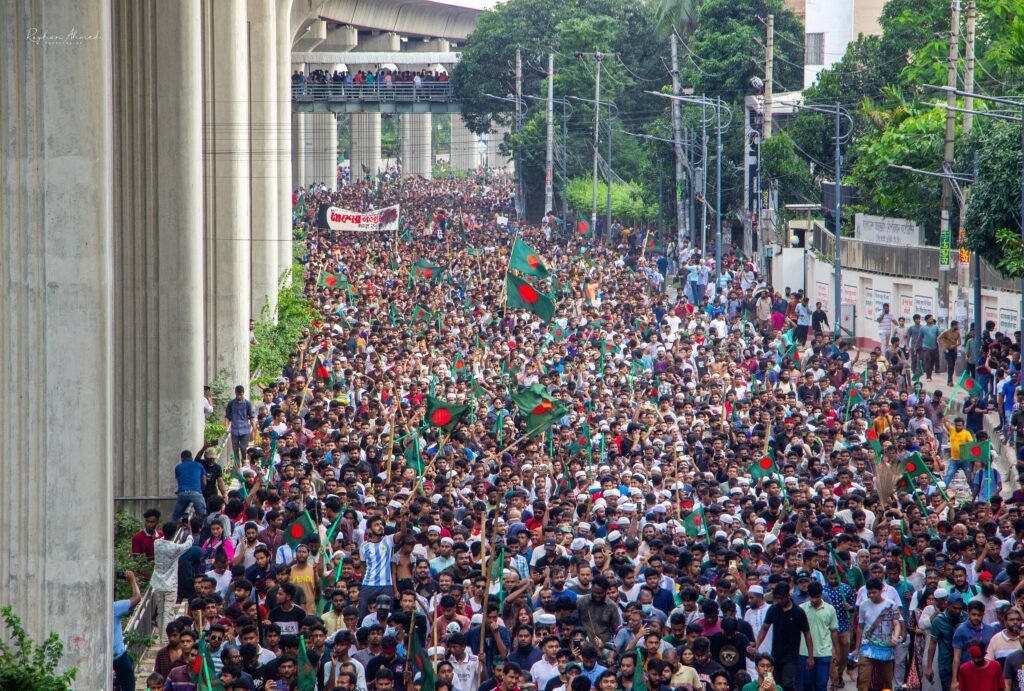
Bangladesh’s post-election transition is not merely a domestic reset but a geopolitical test case. The interplay of U.S. disengagement, India’s uneasy repositioning, and China’s assertive expansion has turned Dhaka into a critical node in the Indo-Pacific. As these forces converge, the question is no longer abstract: will external powers reinforce its transition, or inadvertently push it closer to China?
Bangladesh’s February 2026 elections marked the formal close of one of the most turbulent political transitions in South Asian history. The August 2024 student-led Monsoon Revolution, which ousted Prime Minister Sheikh Hasina, produced an interim period under Muhammad Yunus and culminated in the Bangladesh Nationalist Party’s landslide victory, delivering Tarique Rahman to power. The transition in Bangladesh presents a test of whether Washington and New Delhi can function as reinforcing forces in the same strategic space, or whether their own frictions and misaligned interests will force Dhaka to navigate a contested environment on its own, and inevitably lead it towards Beijing by default.