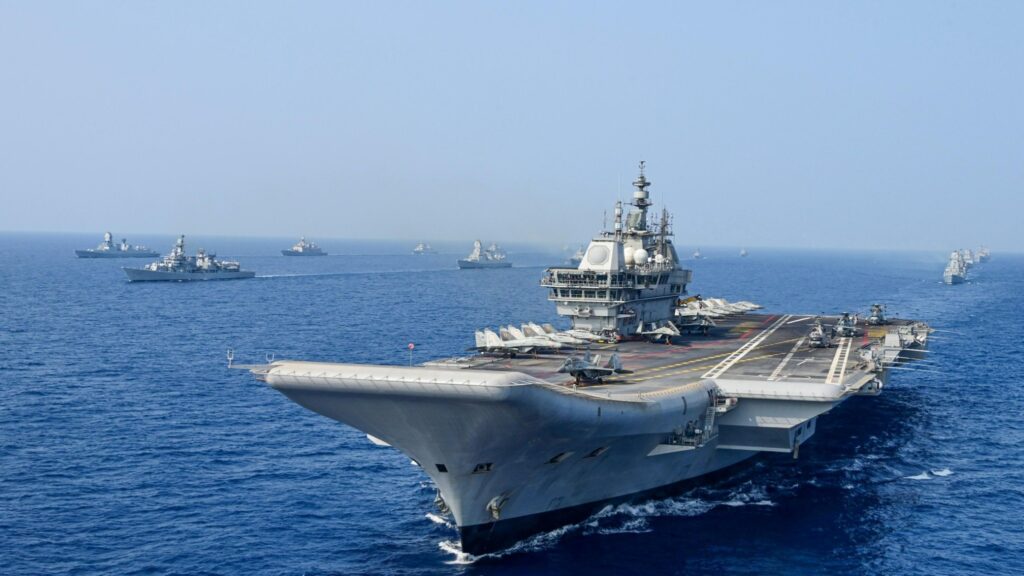
The Indo-Pacific has entered a period of unusual strategic uncertainty. Donald Trump’s decision to revert the name of the U.S. Indo-Pacific Command to the U.S. Pacific Command has reignited questions about Washington’s long-term commitment to the region. Coming amid debates over American retrenchment, shifting alliance priorities and growing demands for allies to shoulder greater security responsibilities, the move has fuelled speculation that the United States may be recalibrating its Indo-Pacific strategy. Whether these concerns ultimately prove justified or not, they have reinforced a reality already shaping regional diplomacy: countries across the Indo-Pacific are increasingly looking to strengthen partnerships among themselves rather than relying exclusively on American leadership.
It was against this backdrop that Prime Minister Narendra Modi embarked on a three-nation tour of Indonesia (6–8 July), Australia (8–10 July) and New Zealand (10–11 July) 2026. More than a routine diplomatic exercise, the visit underscored India’s determination to deepen its engagement with key Indo-Pacific partners at a time of geopolitical flux. Across the three countries, New Delhi concluded agreements spanning defence, maritime security, critical minerals, energy, digital technologies, agriculture, education and trade. While each agreement addresses a specific bilateral priority, together they reveal a broader strategic objective: building a resilient network of partnerships capable of sustaining a stable, secure and prosperous Indo-Pacific regardless of how the wider balance of power evolves.
Indonesia (6–8 July): India’s ASEAN Pivot Gets a Strategic Upgrade
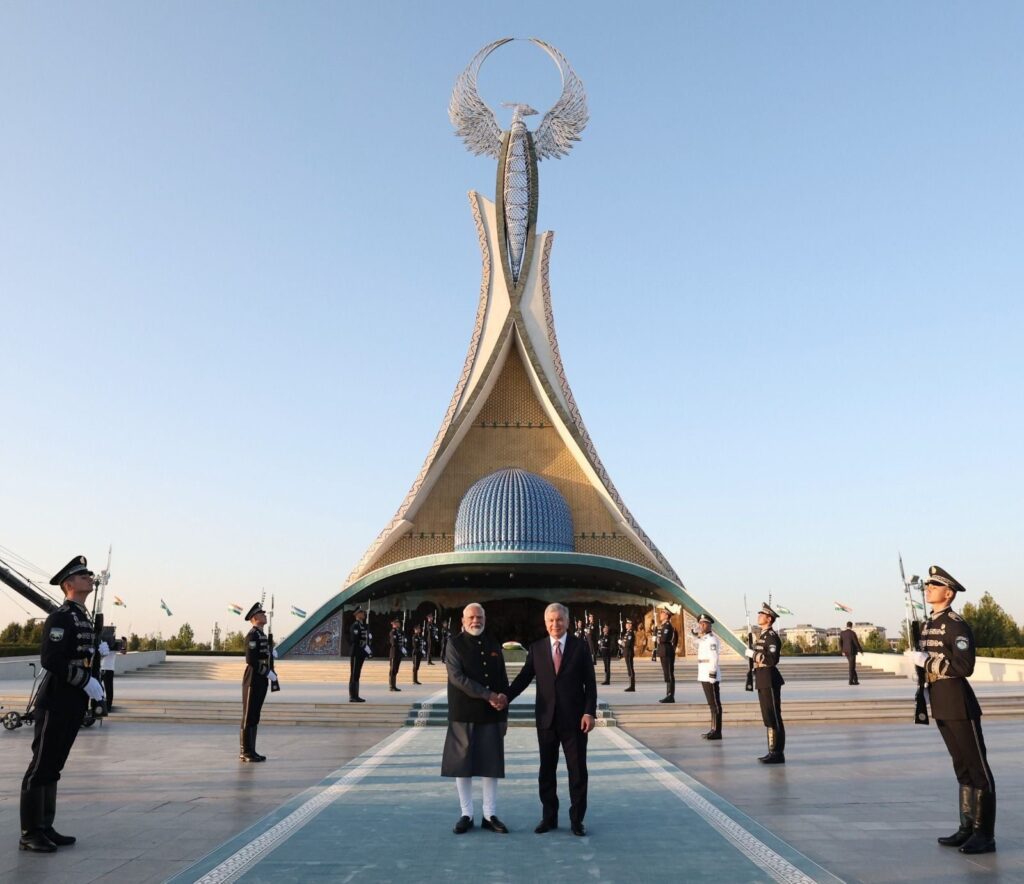
Indonesia was the first stop on Prime Minister Narendra Modi’s three-nation Indo-Pacific tour, signalling Jakarta’s central place in India’s Act East Policy, MAHASAGAR vision and Indo-Pacific strategy. At the invitation of President Prabowo Subianto, Modi undertook a State Visit from 6–8 July, receiving a ceremonial welcome at Istana Merdeka before holding bilateral and delegation-level talks covering defence, maritime security, critical minerals, trade, digital connectivity, space and regional affairs. The visit also carried a strong civilisational message. Modi addressed the Indonesian Parliament at the invitation of Speaker Puan Maharani, joined President Prabowo in inaugurating India’s restoration project at the UNESCO-listed Prambanan Temple Complex in Yogyakarta, and interacted with the Indian diaspora. The visit produced 14 agreements and six major announcements, but its defining achievement was the elevation of defence cooperation through the BrahMos missile system and Astra missile collaboration, alongside a series of agreements designed to strengthen resilient supply chains and maritime security in the Indo-Pacific.
Key Agreements
1. Cooperation on BrahMos Missile System
- Indonesia became the third overseas partner, after the Philippines and Vietnam, to procure the BrahMos supersonic cruise missile.
- The agreement significantly expands India’s defence exports and deepens defence-industrial cooperation.
- It strengthens Indonesia’s maritime deterrence in one of the world’s most strategically important sea lanes.
2. Air-to-Air Missile Cooperation Agreement
- Marks the first international cooperation involving India’s indigenous Astra beyond-visual-range air-to-air missile.
- Opens new opportunities for defence technology collaboration and co-production.
- Demonstrates the growing maturity of India’s indigenous defence industry.
3. Extension of the MoU and Implementation Agreement on Maritime Safety and Security Cooperation
- Renews bilateral cooperation on maritime safety and security.
- Expands cooperation in maritime domain awareness, search and rescue, coastal surveillance and humanitarian assistance.
- Includes a new implementing arrangement between BAKAMLA RI and the Indian Coast Guard.
4. MoU on Cooperation in the Field of Minerals and Technology of Steel Supply Chain
- Strengthens cooperation in critical minerals, steel technologies and downstream industries.
- Supports resilient supply chains for advanced manufacturing and clean-energy technologies.
- Complements a new strategic joint venture between SAIL and PT Krakatau Steel.
5. Strategic Joint Venture between SAIL and PT Krakatau Steel
- Explores establishment of a stainless-steel slab manufacturing facility in Indonesia.
- Strengthens industrial cooperation under India’s supply-chain diversification strategy.
- Supports greater integration between Indian and Indonesian manufacturing sectors.
6. MoU on Research, Technology and Innovation Cooperation
- Creates a framework for collaboration between research institutions and innovation ecosystems.
- Supports cooperation in emerging technologies and industrial research.
- Builds upon the inaugural India–Indonesia Joint Commission Meeting on Science and Technology.
7. Extension of the Framework Agreement on Cooperation in Exploration and Uses of Outer Space for Peaceful Purposes
- Renews long-standing cooperation in civilian space activities.
- Expands collaboration in satellite applications, earth observation and space research.
- Reinforces ISRO–BRIN cooperation, including support for India’s Gaganyaan programme.
8. MoU on Cooperation in Telecommunications Technologies and Services
- Promotes collaboration in digital infrastructure and telecommunications.
- Supports digital transformation and greater connectivity between the two countries.
- Complements the launch of Indonesia Open Network (ION) based on India’s ONDC architecture.
Other Agreements
The remaining agreements focused on expanding cooperation in:
- Agriculture and allied sectors.
- Medical products regulation between CDSCO and BPOM.
- Professional health workforce development.
- Disaster management between NDMA and Indonesia’s disaster management agency.
- Election management and electoral technologies between the Election Commission of India and KPU.
- Development of rare-earth magnets through cooperation between NFTDC, Midwest Ltds. and PT PERMINAS.
Major Announcements
Beyond the signed agreements, six announcements stood out:
- India will support the conservation and restoration of the UNESCO-listed Prambanan Temple Complex in Yogyakarta.
- Indonesia will deploy a Liaison Officer to India’s Information Fusion Centre–Indian Ocean Region (IFC-IOR) in Gurugram.
- India will supply 100 tonnes of DWR-162 wheat seeds to strengthen Indonesia’s food security.
- Both countries will commemorate 2026–27 as the “Tagore–Dewantara Year of Cultural and Educational Diplomacy.”
- IIM Bangalore will establish a branch campus at Singhasari Special Economic Zone.
- Indonesia launched the Indonesia Open Network (ION) based on India’s Open Network for Digital Commerce (ONDC) architecture.
At a Glance
Dates: 6–8 July 2026
Cities: Jakarta and Yogyakarta
Leader Met: President Prabowo Subianto
Outcome Documents: 14 agreements and 6 major announcements
Headline Outcome: Defence cooperation reached a new level through the BrahMos missile system, Astra missile collaboration, and renewed maritime security cooperation.
Strategic Focus: Defence exports, maritime security, critical minerals, digital connectivity and strengthening India’s ASEAN engagement.
Australia (8–10 July): Elevating a Comprehensive Strategic Partnership
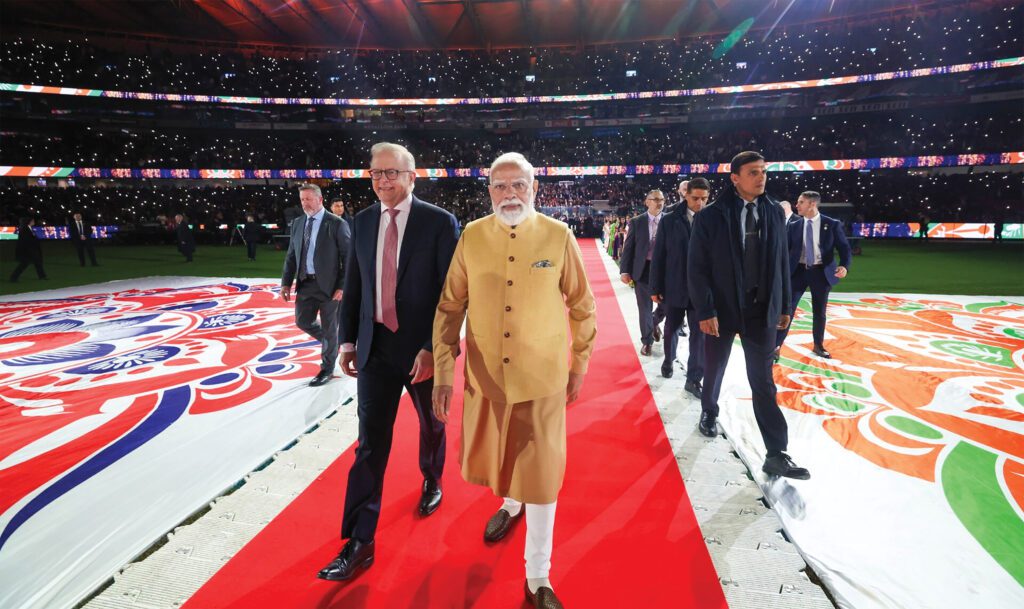
Australia was the second stop on Prime Minister Narendra Modi’s Indo-Pacific tour and arguably its strategic centrepiece. Modi travelled to Melbourne for the Third India–Australia Annual Summit, where he was welcomed by Prime Minister Anthony Albanese. Besides formal bilateral talks, Modi called on Governor-General Sam Mostyn, addressed the India–Australia CEOs Forum, interacted with leading Australian business executives, and participated in the community event “Melbourne Meets Modi” at Marvel Stadium, attended by thousands from the Indian diaspora. In a symbolic gesture highlighting the growing people-to-people relationship, Modi and Albanese also visited the Melbourne Cricket Ground (MCG), where they met leading cricketers and promoted sporting cooperation. The summit marked a significant milestone in bilateral ties. The two leaders adopted a new Joint Declaration on Defence and Security Cooperation, replacing the 2009 framework, and concluded 18 outcome documents covering defence, maritime security, civil nuclear energy, critical minerals, clean energy, education, emerging technologies, science, skills, culture and investment. Collectively, the outcomes reflected the transformation of India-Australia relations from a primarily economic partnership into one of the Indo-Pacific’s most comprehensive strategic relationships.
Key Agreements
1. Joint Declaration on Defence and Security Cooperation
- Replaces the 2009 Joint Declaration on Security Cooperation, providing a modern framework suited to the evolving Indo-Pacific security environment.
- Expands cooperation in military interoperability, maritime domain awareness, defence industries, cyber security, counter-terrorism and humanitarian assistance.
- Identifies ASEAN, the Pacific Islands Forum (PIF), IORA and UNCLOS as key areas for strategic cooperation
2. Maritime Security Collaboration Roadmap (MSCR)
- Establishes a roadmap for closer maritime cooperation across the Indian Ocean.
- Enhances information sharing, capability development and operational coordination.
- Complemented by a new MoU between the Indian Coast Guard and Australia’s Maritime Border Command.
3. Australia–India Partnership for Cyber, Critical Technologies and Supply Chains (PACTS)
- Builds upon the 2020 Cyber and Critical Technology Framework.
- Expands cooperation on cyber security, critical technologies, digital resilience and trusted supply chains.
- Reflects both countries’ efforts to reduce vulnerabilities in emerging technologies.
4. India–Australia Joint Statement on Energy Security
- Reaffirms cooperation on reliable, affordable and sustainable energy.
- Strengthens collaboration in renewable energy, electrification and clean-energy technologies.
- Supports long-term energy resilience amid geopolitical disruptions.
5. Administrative Arrangement under the India–Australia Civil Nuclear Agreement
- Operationalises the 2014 Civil Nuclear Agreement.
- Enables long-term Australian uranium exports to India under IAEA safeguards.
- Reinforces cooperation in peaceful nuclear energy.
6. India–Australia Sports Collaboration Roadmap
- Establishes cooperation in high-performance sports and sports science.
- Supports preparations for the 2030 Commonwealth Games (Ahmedabad) and the 2032 Brisbane Olympics.
- Identifies Para-sports as a priority area for collaboration.
7. Skill Development and Mining Centre of Excellence
- Establishes a Centre of Excellence in Mining and Mining Equipment, Technology and Services (METS) at NSTI Bhubaneswar.
- Promotes collaboration between India’s Ministry of Skill Development and Western Australia’s TAFE.
- Supports workforce development for the critical minerals sector.
Other Agreements
Beyond the headline strategic agreements, the two countries also concluded several sector-specific arrangements aimed at strengthening long-term institutional cooperation:
- Letter of Intent to Flinders University to establish its campus in Bengaluru, expanding Australia’s higher education footprint in India.
- Letter of Approval to Victoria University to establish its campus in Gurugram, reinforcing educational partnerships.
- Letter of Intent between NCVET and the Australian Skills Quality Authority (ASQA) to strengthen quality assurance, vocational education standards and workforce mobility.
- MoU between Geoscience Australia (GA) and the Geological Survey of India (GSI) on advanced mineral exploration, geological mapping and capacity building.
- Traditional Knowledge Digital Library (TKDL) Access Agreement between CSIR and IP Australia, improving patent examination and protection of India’s traditional knowledge.
- MoU between CSIR and the University of Melbourne on collaborative research, drug discovery, researcher exchanges and faculty cooperation.
- MoU between the Satyajit Ray Film and Television Institute (SRFTI) and Griffith Film School to promote collaboration in filmmaking, cinema education and joint workshops.
Major Outcomes
Beyond the signed agreements, several outcomes highlighted the growing strategic depth of the India-Australia partnership:
- Annual Defence Ministers’ Dialogue: The two leaders announced the establishment of an Annual Defence Ministers’ Dialogue, institutionalising high-level defence consultations.
- Military Education Cooperation: Australia invited an Indian military instructor to join the Australian Defence College during 2028–29, reflecting growing trust in defence education and professional military exchanges.
- Return of Cultural Artefacts: Australia announced the voluntary repatriation of three Chola-era artefacts—the Nandi, Bhadrakali Trident and Karttikeya sculpture—to India, further strengthening cultural ties.
- CECA Negotiations: Both Prime Ministers reaffirmed their commitment to the early conclusion of the Comprehensive Economic Cooperation Agreement (CECA) to unlock greater trade and investment.
- Critical Minerals and Supply Chains: The leaders reaffirmed cooperation on secure critical mineral supply chains and supported stronger partnerships between governments, research institutions and industry.
- Australia–India–Indonesia Trilateral: The two sides agreed to deepen cooperation through the Australia–India–Indonesia trilateral mechanism, particularly in maritime domain awareness, the blue economy and marine pollution.
At a Glance
Dates: 8–10 July 2026
City: Melbourne
Leader met: Prime Minister Anthony Albanese
Outcome documents: 18
Headline outcome: New Joint Declaration on Defence and Security Cooperation
Strategic focus: Defence, critical minerals, maritime security and resilient supply chains
New Zealand (10–11 July): India’s Strategic Opening to the South Pacific
Prime Minister Narendra Modi concluded his three-nation Indo-Pacific tour with a landmark visit to Auckland, becoming the first Indian Prime Minister to visit New Zealand in four decades. Hosted by Prime Minister Christopher Luxon, Modi received a ceremonial welcome at Government House, held delegation-level talks with Luxon, addressed the India–New Zealand Business Forum, interacted with the Indian diaspora, and witnessed a showcase of New Zealand’s sporting innovation. The visit built on the momentum generated by Luxon’s visit to India in 2025 and marked a decisive shift in bilateral relations. The two leaders elevated ties to a Strategic Partnership, unveiled the India–New Zealand Roadmap to 2030, and signed 10 agreements while announcing eight major initiatives.
Key Agreements
1. Memorandum of Arrangement on Maritime Cooperation
- Establishes a framework for enhanced maritime cooperation in the Indo-Pacific.
- Promotes dialogue, operational coordination, information sharing and joint maritime activities.
- Reinforces the shared commitment to a free, open and rules-based Indo-Pacific.
2. Arrangement concerning Mutual Logistics Support
- Enables reciprocal logistics support between the Indian Navy and the New Zealand Defence Force.
- Improves interoperability during exercises, deployments and approved operations.
- Represents a significant step in practical defence cooperation.
3. Implementation Arrangement on Hydrography and Nautical Cartography
- Expands cooperation in hydrographic surveys and nautical chart production.
- Facilitates sharing of hydrographic data, technical expertise and training.
- Enhances maritime safety and navigation across the Indo-Pacific.
4. Arrangement establishing a Joint Working Group on Counter-Terrorism
- Creates a permanent mechanism for counter-terrorism cooperation.
- Facilitates information exchange and coordination against terrorism and violent extremism.
- Complements broader cooperation on cyber security and transnational crime.
5. Memorandum of Cooperation on Disaster Risk Management
- Strengthens cooperation between India’s NDMA and New Zealand’s NEMA.
- Focuses on earthquake resilience, tsunami preparedness and coastal hazard mitigation.
- Promotes knowledge exchange, policy dialogue and capacity building.
6. Memorandum of Cooperation on Animal Husbandry and Dairying
- Establishes cooperation in livestock management, dairy production and veterinary sciences.
- Encourages technology transfer and sharing of best practices.
- Supports sustainable agricultural development and food security.
7. India–New Zealand Joint Action Plan on Sport
- Creates a framework for cooperation in high-performance sport and sports science.
- Covers coaching, sports medicine and athlete development.
- Builds on the long-standing sporting ties between the two countries.
Other Agreements
The remaining agreements focused on expanding institutional and people-to-people cooperation:
- Memorandum of Arrangement on Tourism to promote tourism, increase visitor flows and strengthen economic ties.
- Memorandum of Arrangement between the National Maritime Heritage Complex (Lothal) and the New Zealand Maritime Museum, supporting collaboration on maritime heritage.
- Arrangement on Cultural Cooperation between the two governments to promote exchanges in arts, heritage and cultural initiatives.
Major Announcements
Beyond the signed agreements, eight major initiatives were announced:
- India–New Zealand Strategic Partnership and Roadmap to 2030, elevating bilateral ties and providing a structured roadmap for cooperation across trade, defence, maritime security, tourism, culture and Indo-Pacific affairs.
- Target to double bilateral trade to NZ$7 billion (₹35,000 crore) by 2030, supported by the newly concluded India–New Zealand Free Trade Agreement.
- Annual Maritime Security Dialogue to strengthen coordination, cooperation and information sharing.
- New Zealand joined the Maritime Security Pillar of India’s Indo-Pacific Oceans Initiative (IPOI), focusing on combating Illegal, Unreported and Unregulated (IUU) fishing.
- New Zealand joined the Global Biofuels Alliance, expanding cooperation on clean energy and sustainable fuels.
- Launch of the Kiwifruit Action Plan and establishment of Centres of Excellence in Nagaland and Uttarakhand to enhance agricultural productivity.
- MoU between NCPOR and the University of Canterbury to strengthen Antarctic and polar research.
- MoU between NIFTEM-K and Massey University to expand cooperation in food technology, research and academic exchanges.
At a Glance
Dates: 10–11 July 2026
City: Auckland
Leader Met: Prime Minister Christopher Luxon
Outcome Documents: 10 agreements and 8 major announcements
Headline Outcome: Launch of the India–New Zealand Strategic Partnership and adoption of the Roadmap to 2030, marking the first visit by an Indian Prime Minister to New Zealand in 40 years.
Strategic Focus: Maritime security, defence cooperation, trade, disaster resilience, agriculture and India’s engagement with the South Pacific.
Viewed individually, the visits to Indonesia, Australia and New Zealand produced a diverse set of agreements spanning defence, maritime security, critical minerals, technology, education and agriculture. Viewed together, however, they reveal something larger. Each stop addressed a different pillar of India’s Indo-Pacific strategy: Indonesia reinforced India’s maritime and defence engagement with ASEAN; Australia deepened cooperation on strategic capabilities, supply chains and regional security; and New Zealand opened a new chapter in India’s engagement with the South Pacific.
At a time when questions persist about the future of American engagement in the Indo-Pacific, India appears to be pursuing a different course. Rather than relying on formal alliances or grand strategic declarations, New Delhi is steadily building a dense network of partnerships that enhance resilience, diversify economic and technological cooperation, and strengthen regional stability. Modi’s three-nation tour was therefore more than a diplomatic itinerary—it offered a glimpse of how India intends to shape the Indo-Pacific through practical cooperation, trusted partnerships and sustained strategic engagement.