The Visit and Why It Mattered
India and Nepal share a very close relationship shaped by history, geography, culture, economic interdependence and deep social ties. India is Nepal’s largest trading partner and its principal gateway to seaports. The two countries share an open border, while cooperation with Nepal is important for India’s border security, river management and stability along the Himalayan frontier. Yet, their relationship has periodically been strained by territorial disputes, disagreements over water-sharing and Nepal’s concerns about its economic dependence on India.
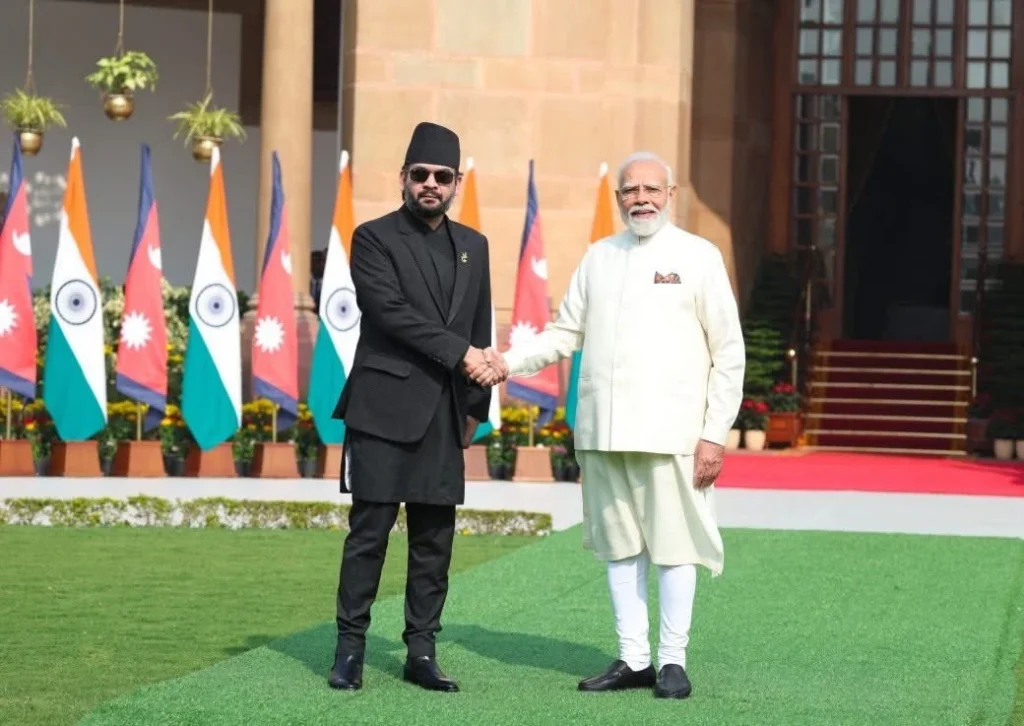
Against this backdrop, Nepalese Prime Minister Balendra Shah’s first visit to India since taking office in March 2026 carried significance beyond a routine diplomatic engagement. Shah leads a government that emerged from a major political shift in Nepal, and the visit offered an early opportunity for both sides to establish the direction of their relationship under the new administration. For New Delhi, it was an opportunity to engage Nepal’s new political leadership and maintain its position as Kathmandu’s principal economic and development partner. The visit also took place against the backdrop of India and China’s competition for influence in Nepal.
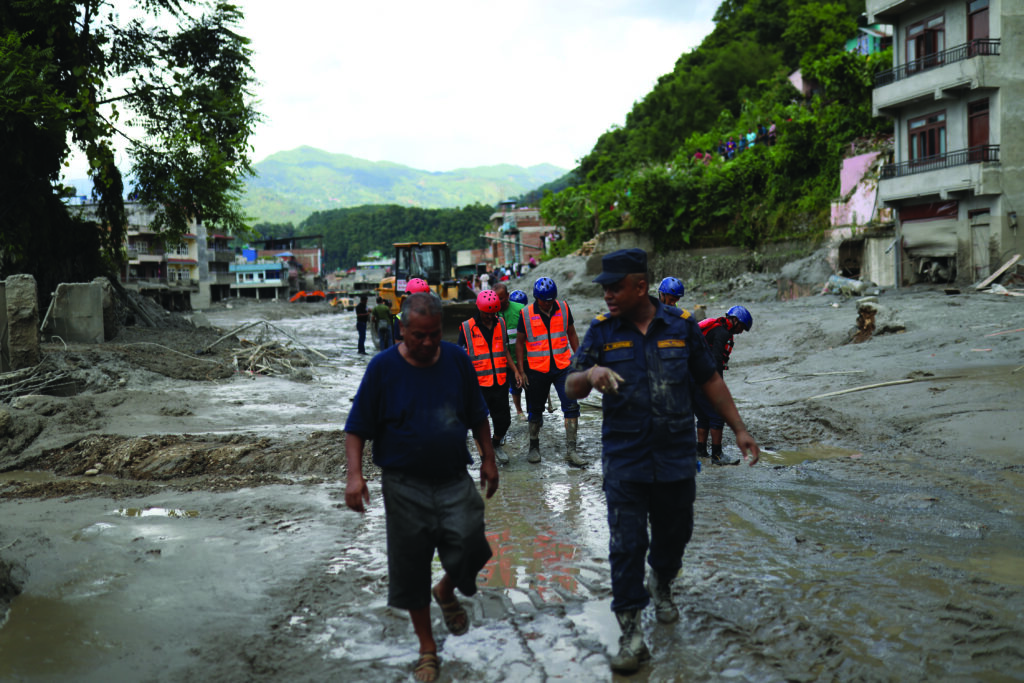
The timing was important for another reason. Nepal is still dealing with the aftermath of the devastating floods of August 2026, which killed around 1,500 people, left more than 5,200 missing and destroyed roads, bridges, homes and energy infrastructure. India was among the first countries to provide assistance. Reconstruction, therefore, featured prominently in the discussions, alongside Nepal’s demands for improved transit and air connectivity and greater access to the Indian market.
During his two-day visit on 22–23 November, Shah held talks with Indian Prime Minister Narendra Modi in New Delhi. The two sides announced a ₹15,000 crore development cooperation package, comprising a ₹3,500 crore grant for reconstruction and infrastructure and an ₹11,500 crore line of credit for energy projects. They also exchanged eight memoranda of understanding (MoUs) and adopted a Joint Vision for a “Viksit Bharat and Samunnat Nepal”, outlining priorities for future cooperation.
Key Outcomes
The talks produced a joint press release, a joint vision document, and eight memoranda of understanding (MoUs). Some outcomes are immediate; others require funding or technical work. The two joint documents and the Indian government’s list of outcomes are the primary records.
- Development finance. India announced a ₹15,000 crore (NPR 24,000 crore) development cooperation package: a ₹3,500 crore grant for reconstruction and infrastructure, and an ₹11,500 crore rupee-denominated line of credit for energy projects. Project selection and disbursement terms remain to be agreed. This is not an all-grant package.
- Ports, trade, and industry. Prime Minister Narendra Modi announced access to Deendayal Port at Kandla for Nepal’s transit trade, with Paradip to follow once the required infrastructure is ready. Operating arrangements still need to be worked out. India also announced an Agro-Industrial Park in Chitwan, which it will support with grant assistance. The vision document calls for reviewing trade frameworks, exploring border industrial zones, and developing information technology parks.
- Rail, roads, and aviation. The leaders flagged off the Sarayu–Kamala Express between Ayodhya and Janakpur, inaugurated the Dharchula–Darchula bridge, and laid the foundation stone for an Integrated Check Post at Banbasa. They noted progress on the check posts at Bhairahawa, Sunauli, and Dodhara Chandani and on Nepal’s East–West Railway. The survey for the proposed Raxaul–Kathmandu electrified broad-gauge railway line has been finalised. The B345 Kathmandu–Bhairahawa–Lucknow route is to become bidirectional, subject to technical consultations.
- Energy and fuel. The leaders virtually laid the foundation stone for the 669 MW Lower Arun project, dedicated Phase II of the Motihari–Amlekhgunj pipeline, and laid the foundation stone for a petroleum terminal in Jhapa. The terminal is linked to the planned Siliguri–Jhapa pipeline; a cross-border gas pipeline will be explored. Lower Arun still awaits financial closure.
- Institutions, education, and skills. The eight MoUs cover forensic science, police and civil-service training, Ayurveda, satellite communications, urban development, healthcare, livestock and fisheries. The joint press release says an offshore Indian Institute of Technology (IIT) campus would be set up; the vision document says the possibility will be explored. The vision document also lists scholarships in law, technology, and artificial intelligence, a vocational training institute, and an Indian Council of Agricultural Research Centre of Excellence in Nepal. No partner or timetable is named.
- Digital links and disaster resilience. The sides agreed to speed up cross-border retail payments, building on the Unified Payments Interface (UPI)–National Payments Interface (NPI) remittance link launched in June 2026, and Nepal may consider using India’s PM Gati Shakti platform. They also agreed to real-time, two-way hydrometeorological data-sharing, glacial-lake monitoring, and early warnings. A High-Level Monitoring Group will meet at least every six months and report to the Joint Commission.
Contentious Issues Left Unresolved
The clearest political opening concerns the 1950 Treaty of Peace and Friendship. The joint vision document says that existing bilateral agreements, including the treaty, could be reviewed by mutual consent within an updated and forward-looking legal framework. It does not commit either side to amendments. Articles 6 and 7 provide for reciprocal treatment in economic activity, residence, property, trade and movement. Critics in Nepal have questioned the circumstances in which the treaty was signed.
The Eminent Persons’ Group (EPG), formed in 2016 to review bilateral ties, is absent from the published outcomes. It completed its report in 2018, but the two governments had not formally received it, according to a 2019 Lok Sabha answer. Following the talks, Foreign Secretary Vikram Misri described the report as a matter of the past, indicating that India favours a forward-looking approach to reviewing bilateral ties.
The boundary dispute also remains unresolved. On 20 May 2020, Nepal published a revised political and administrative map showing Kalapani, Lipulekh and Limpiyadhura within its borders. A subsequent constitutional amendment incorporated the revised map into Nepal’s national emblem. India administers the area and rejects Nepal’s claim. Susta, along the Gandak River, is another disputed stretch of the border, where differences have arisen partly because of changes in the river’s course. The joint press release records progress on boundary-pillar maintenance and directs the two foreign secretaries to address outstanding issues, but does not alter either side’s territorial claims.
Gorkha recruitment also remains unresolved. In August 2022, Kathmandu suspended the planned recruitment of Nepali Gorkhas into the Indian Army, arguing that the four-year Agnipath scheme was inconsistent with the 1947 tripartite agreement involving India, Nepal and the United Kingdom. Recruitment remained suspended ahead of Shah’s visit.
On 4 November 2026, India’s Cabinet approved an additional two-year engagement for the 75 per cent of Agniveers not selected for regular service after their initial four years. The remaining 25 per cent will be offered regular employment on merit, as envisaged under the original scheme. After the additional two years, the other 75 per cent will also be offered enrolment as regular soldiers, subject to their willingness and selection criteria. The revised arrangement does not address Kathmandu’s objections to Agnipath, and neither government announced a resumption of recruitment during Shah’s visit.
Pancheshwar remains a major test of water cooperation. During their talks, the two leaders directed the Pancheshwar Development Authority and the Joint Committee on Water Resources to finalise the Detailed Project Report (DPR) and advance implementation. Under the 1996 Mahakali Treaty, electricity generated by the project is to be shared equally, while project costs are to be apportioned according to the benefits received by each country. The principal disagreements concern the valuation of irrigation and flood-control benefits, existing water-use rights and their implications for each country’s share of the project costs. These differences have continued to delay agreement on the DPR.
The B345 aviation agreement marks a limited advance in connectivity. India and Nepal agreed to make the existing Kathmandu–Bhairahawa–Lucknow route bidirectional. However, technical details, particularly the altitude permitted for aircraft flying through Indian airspace before landing at Bhairahawa, remain unresolved. Other proposed international air routes remain under discussion.
India’s power-trade rules continue to complicate Nepal’s hydropower plans. The Ministry of Power issued its Guidelines for Import/Export of Electricity in 2018, followed by the Central Electricity Authority’s procedure for approving cross-border electricity trade in 2021. Clause 6.3 restricts electricity imports from projects whose generating companies have ownership, effective control, funding or beneficial ownership linked to a third country with which India shares a land border, where no bilateral power-sector cooperation agreement exists. In practice, this has affected projects involving Chinese-linked investment or funding. Although the provision does not expressly prohibit a project simply because a Chinese contractor built it, Nepali developers have reported difficulties securing approvals for projects involving Chinese contractors and equipment
Future Trajectory: What to Watch Through 2027
The first test will be whether the financing package moves from announcement to implementation. The ₹3,500 crore grant requires identified projects and clear timelines, while the ₹11,500 crore line of credit will depend on viable project proposals and adequate transmission capacity. The High-Level Monitoring Group, which is to meet at least every six months, will be important in tracking progress and resolving implementation delays ahead of the next Joint Commission meeting in 2027.
Power trade offers Nepal an opportunity to expand its export earnings and narrow its trade deficit. A January 2024 agreement set a target of increasing Nepal’s electricity exports to India to 10,000 MW within ten years. This is a target rather than a guaranteed purchase commitment. Achieving it will depend on new hydropower generation, cross-border transmission infrastructure and access to the Indian electricity market. Projects such as Lower Arun and the proposed Inaruwa–New Purnea and Dodhara–Bareilly transmission lines will be important to this effort.
Trade figures underline the imbalance in the bilateral relationship. According to the Indian Embassy in Kathmandu, merchandise trade between the two countries reached US$9.39 billion in Indian financial year (FY) 2025–26. Indian exports to Nepal stood at US$7.45 billion, while Nepal’s exports to India were US$1.94 billion. India also received 81.1 per cent of Nepal’s total exports in Nepali FY2024–25 and accounted for 62.3 per cent of its total merchandise trade. The Kandla port arrangement and proposed industrial parks will matter if they help reduce transit costs, improve market access and enable Nepali businesses to diversify their exports.
The RSP’s lack of a communist political lineage does not, by itself, guarantee closer alignment with India. As Anil Giri, a senior journalist with The Kathmandu Post, one of Nepal’s leading English-language newspapers, noted in a BBC Hindi interview, the 2015 blockade proved disastrous for ordinary Nepalis, pushing many to look towards China and giving communist parties an opportunity to mobilise anti-India nationalism. This experience continues to inform Nepal’s concerns about its dependence on India. It also underlines why New Delhi cannot assume that ideological distance from Beijing will translate into strategic alignment with India. Reliable transit, respectful diplomacy and the delivery of commitments will matter.
Note: This explainer has been researched, edited, and fact-checked by India’s World staff and prepared with AI assistance.